
Plataea, Greece — History & Facts
What if beauty was never meant to be finished? This notion resonates deeply in a landscape where the raw essence of nature unfurls like a secret whispered among the hills. The promise of ecstasy lies not in perfection but in the unending dialogue between land and sky. Look to the horizon in Plataea, Greece, where mountains rise majestically against a placid sky, their peaks kissed by light. The foreground invites you to wander through lush greenery, while vivid strokes of blue and gold transport you to a sun-drenched moment in time.
Notice how the brushwork dances with spontaneity, suggesting movement and life, each stroke a celebration of the ephemeral beauty of the scene. The painting captures the contrast between serenity and grandeur, inviting contemplation on the transitory nature of existence. The interplay of sunlight and shadow evokes a sense of peace that belies the tumultuous history of the region. Here, the artist's attention to detail reveals a deeper narrative about the land’s enduring spirit, a testament to its resilience amidst change. In 1848, Lear, an English artist known primarily for his illustrations and limericks, was traversing Greece, drawn to its landscapes and ancient ruins.
This was a time of great upheaval in Europe, yet the artist sought refuge in the natural world, translating his experiences into vibrant works. At this juncture in his life, he was developing his unique style, one that would later influence the Romantic movement and define his legacy beyond mere travel sketches.
More Artworks by Edward Lear
Browse all →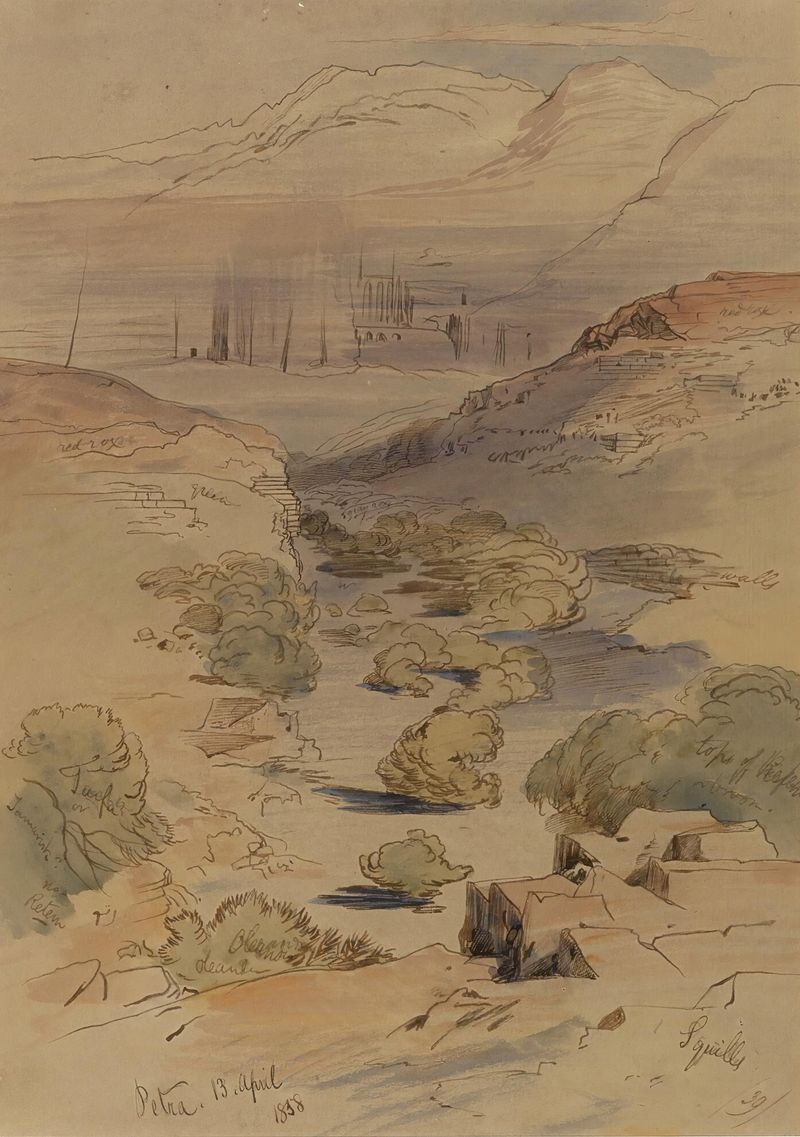
Petra
Edward Lear
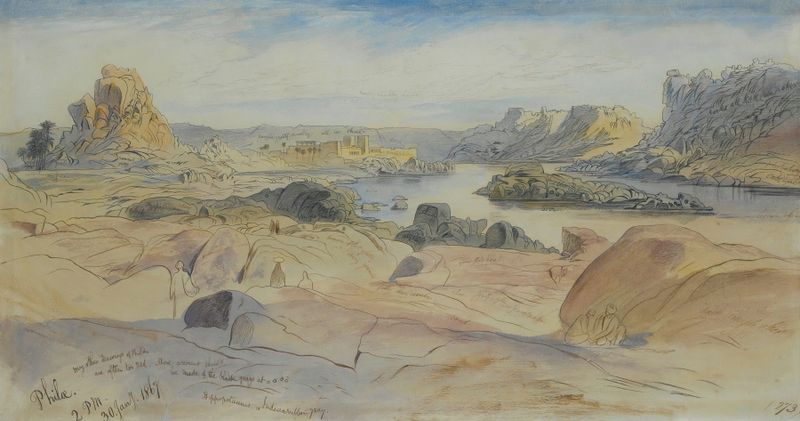
Philae, Egypt
Edward Lear
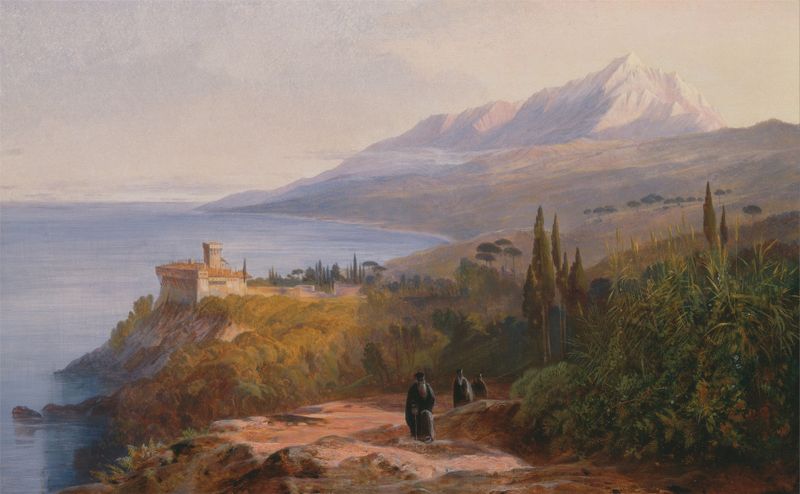
Mount Athos and the Monastery of Stavronikétes
Edward Lear
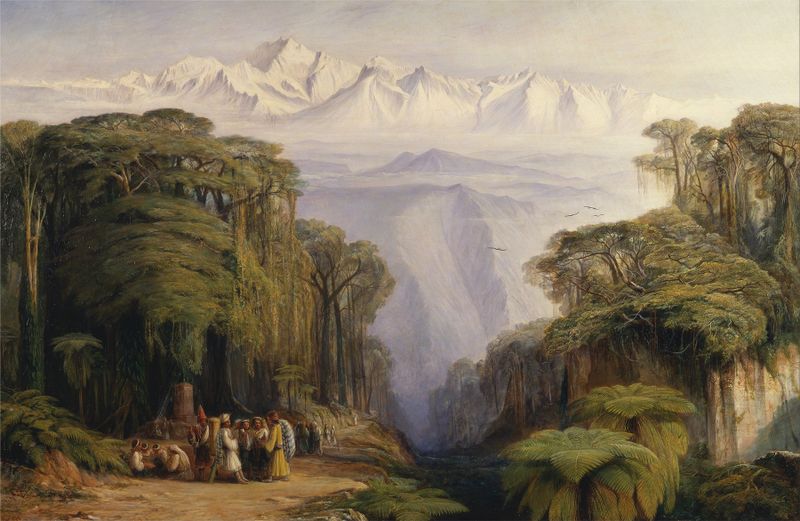
Kangchenjunga from Darjeeling
Edward Lear
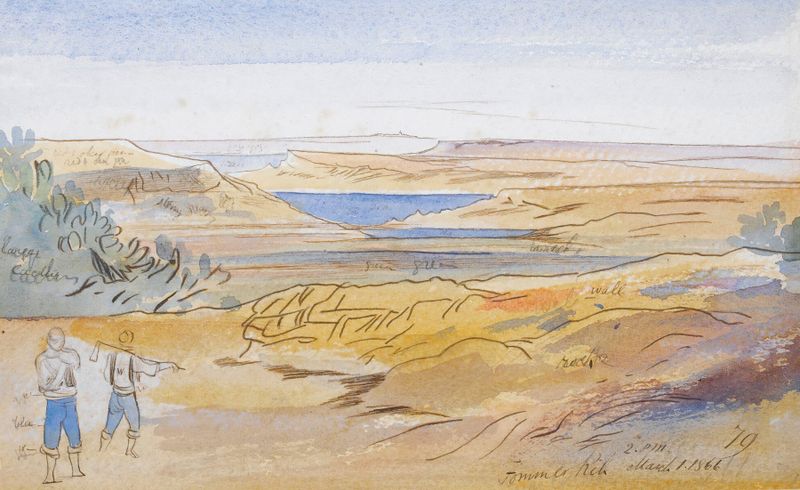
Fomm Ir-Rih, Malta
Edward Lear
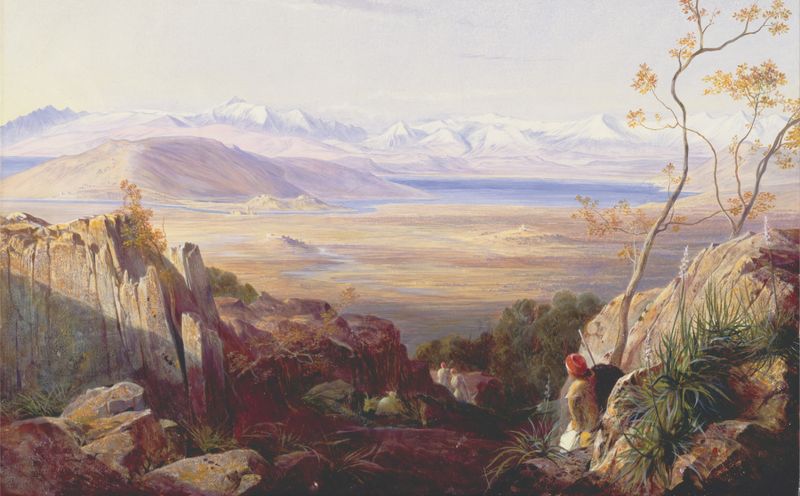
Butrinto, Albania
Edward Lear
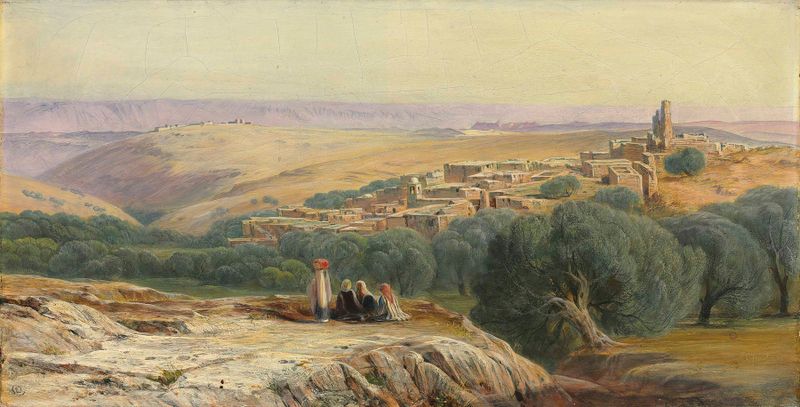
The Plains of Bethany
Edward Lear

Karnak, 9-30 pm, 22 January 1867
Edward Lear
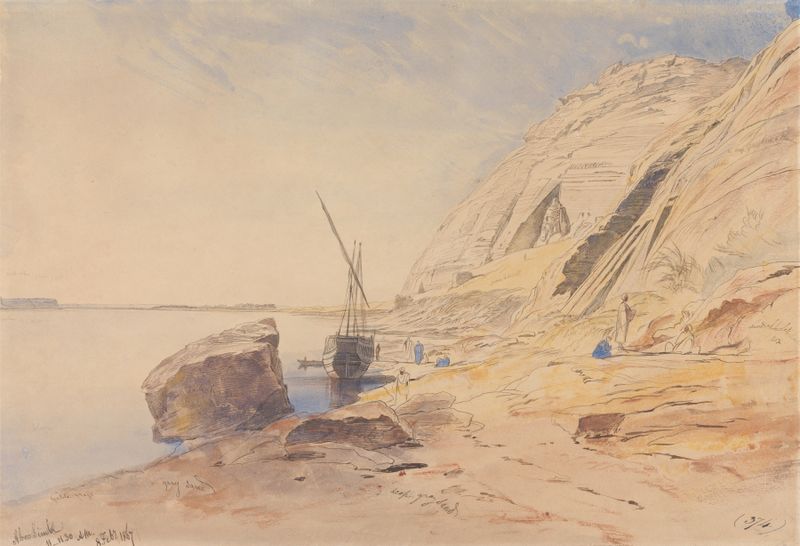
Abu Simbel, 11-11;30 am, 8 February 1867 (374)
Edward Lear

A View Of Mount Athos And The Pantokrator Monastery, Greece
Edward Lear





