Poludnie pri rieke — History & Facts
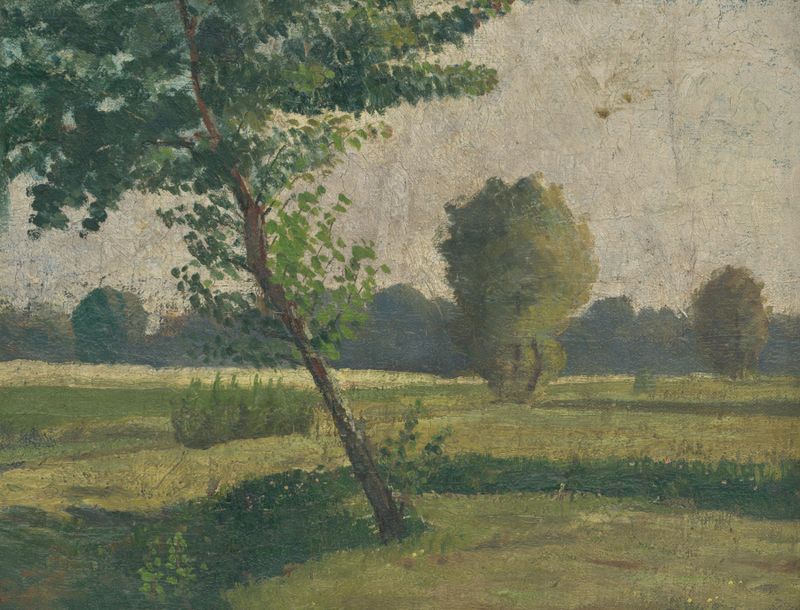
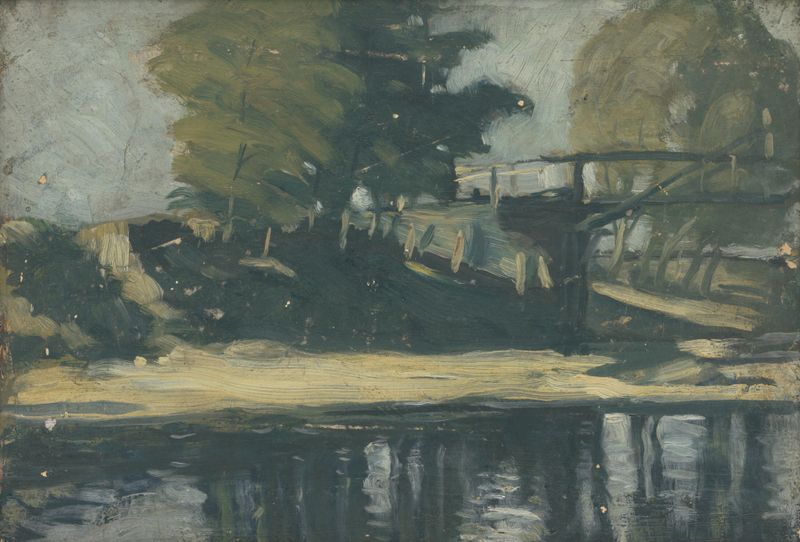
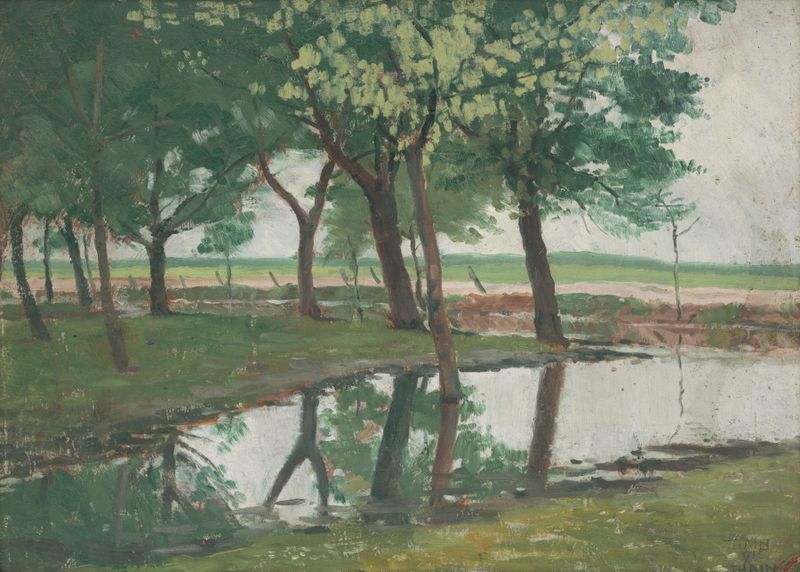
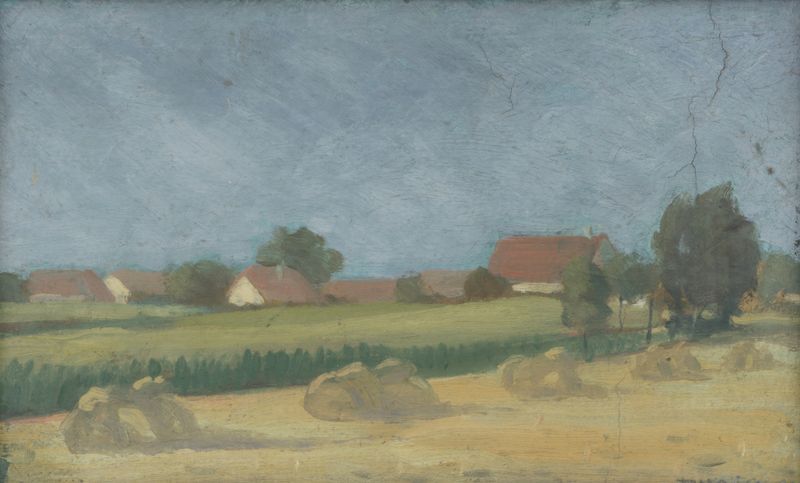
What if silence could speak through light? In Poludnie pri rieke, a stillness envelops the scene, inviting a reflective pause that whispers of hope and tranquility amid nature's embrace. Look to the center of the canvas, where the river glimmers beneath a generous sun. The gentle ripples reflect a soft palette of blues and golds, guiding your gaze toward the distant horizon. Notice how the artist employs broad, fluid brushstrokes to depict the water's movement, while the surrounding foliage is rendered with delicate precision, creating a harmonious balance between spontaneity and detail.
The interplay of light and shadow imbues the landscape with a sense of depth, making nature feel alive and welcoming. Hidden within this tranquil composition lies a poignant contrast: the fleeting nature of the moment against the permanence of the landscape. The vivid light hints at the vitality of life, yet the serene stillness evokes a sense of introspection. One can almost feel the weight of the silence, as if it tells stories of hope woven into the very fabric of the river and the trees.
This duality invites viewers to pause and consider their own narratives within the peace of the scene. In 1953, Ján Thain painted this piece while living in post-war Czechoslovakia, a country grappling with the scars of conflict yet yearning for renewal. This period saw Thain emerge as a significant voice in art, blending modernist approaches with regional influences, capturing the essence of a land in transition. Poludnie pri rieke serves not only as a personal expression but as a reflection of the resilient spirit of a nation seeking solace and hope through the beauty of nature.