
Pont basculant dans une ville — History & Facts
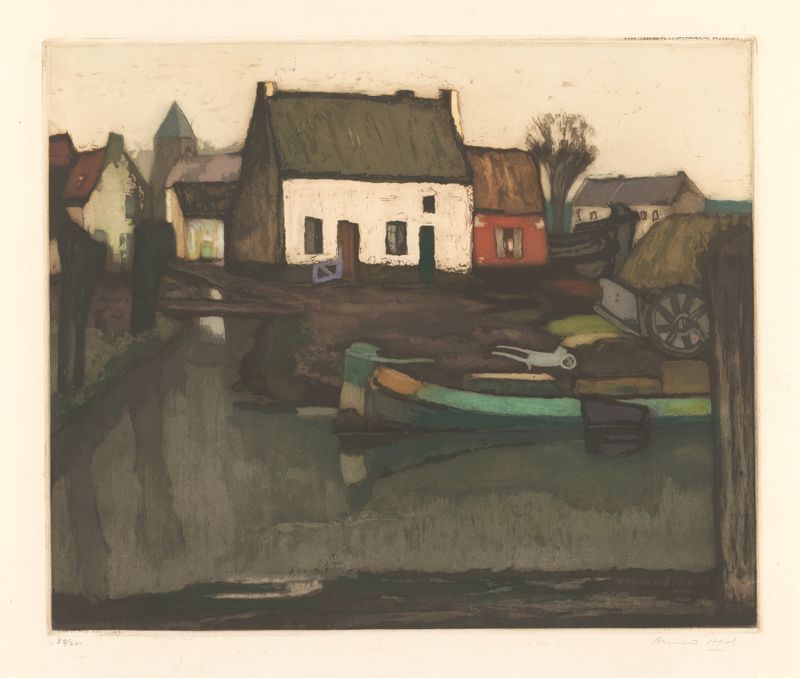
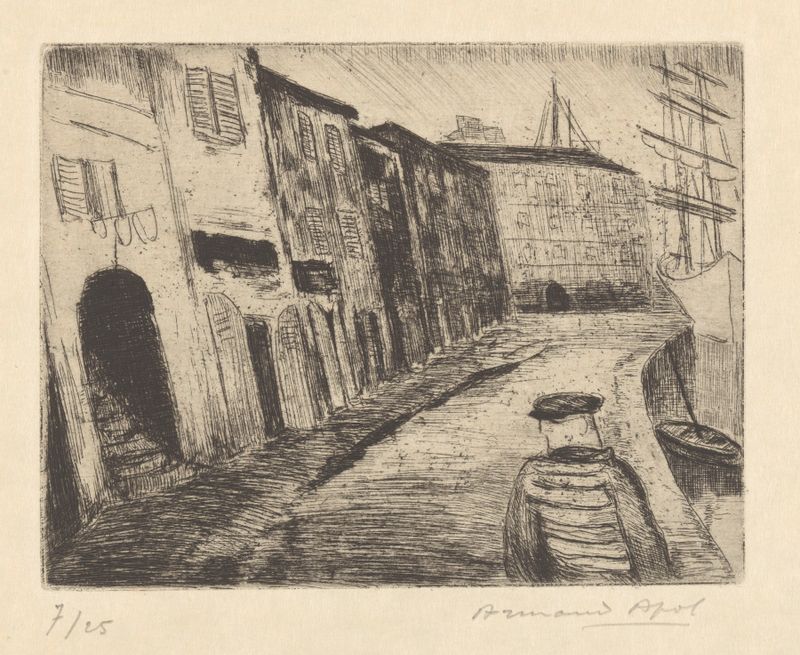
Could beauty survive in a century of chaos? In Pont basculant dans une ville, Armand Apol grapples with this profound question, inviting us to contemplate the delicate balance between human ingenuity and the tumult that surrounds it. Look to the center, where the bridge, a marvel of engineering and design, stands poised against a backdrop of muted, yet rich, earth tones. The intricate details of its structure draw the eye, while the contrasting shadows play across its surface, suggesting both strength and vulnerability. Notice how the soft light bathes the scene, illuminating the quiet city beneath, hinting at life yet untouched by the storm of revolution that looms in the periphery. As you explore the canvas further, pay attention to the juxtaposition of stability and a sense of impending change.
The poised bridge symbolizes progress and connection, yet it is surrounded by an atmosphere of uncertainty—echoing the possible disruptions of the era. Each stroke of paint captures the tension between beauty and chaos, reflecting a world caught in the grip of transition where nature and industry coexist in an uneasy harmony. Apol created this piece in the early 20th century, a time marked by social upheaval and technological advancement across Europe. Living amidst the turmoil of the First World War and the rapidly changing landscape of modern art, the artist sought to express the resilience of beauty against the backdrop of revolution.
This work stands as a testament to his belief in the enduring spirit of creativity amid the storm.
More Artworks by Armand Apol
Browse all →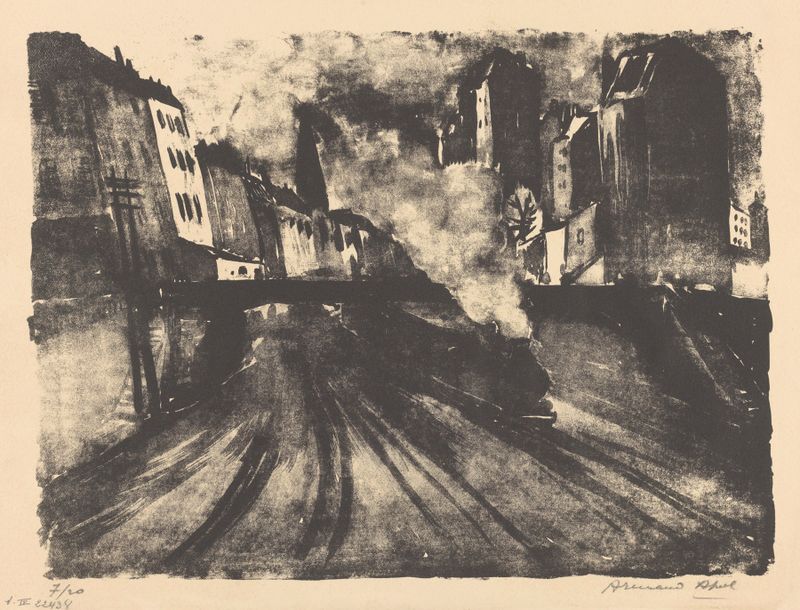
More Architecture Art
Browse all →
The statue of Liberty
Frédéric Auguste Bartholdi

View of Houses in Delft, Known as ‘The Little Street’
Johannes Vermeer

View of Houses in Delft, Known as ‘The Little Street’
Johannes Vermeer

The Cathedral in Rouen. The portal, Grey Weather
Claude Monet

The yellow house
Vincent van Gogh

The Church in Auvers-sur-Oise, View from the Chevet
Vincent van Gogh