
Porche sud de la Cathédrale de Lausanne — History & Facts
What secret hides in the quiet of the canvas? In a world where decay is often dismissed, there lies a beauty waiting to be unveiled. Focus on the intricate architecture dominating the left side, where the soft lines of the cathedral’s facade almost breathe with age. Notice how the muted palette, filled with earth tones and whispers of gray, captures the essence of time’s gentle but relentless touch. The careful strokes suggest both grandeur and decline, inviting the eye to wander through the weathered textures that tell stories of past glory. As you delve deeper, the contrast between the stone’s stoicism and the encroaching foliage becomes apparent.
The creeping vines symbolize nature’s quiet reclamation, a poignant reminder of impermanence. The scene encapsulates a moment where man-made beauty is met with the inevitability of entropy, prompting reflections on both artistic aspiration and human fragility. Samuel Prout painted this scene in 1839, during a period marked by romanticism and a growing interest in capturing the sublime in nature. Living in England, he traveled through Europe, drawing inspiration from its historical landscapes.
At this time, artists were increasingly fascinated by the interplay between architecture and the natural world, as society grappled with the effects of industrialization on heritage and environment.
More Artworks by Samuel Prout
Browse all →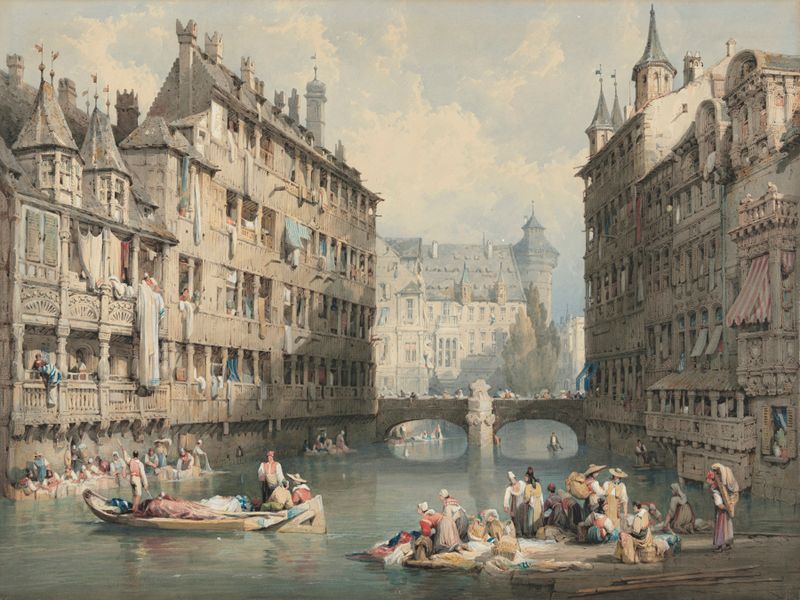
View of Nuremberg
Samuel Prout

The Doge’s Palace and the Grand Canal, Venice, looking west
Samuel Prout
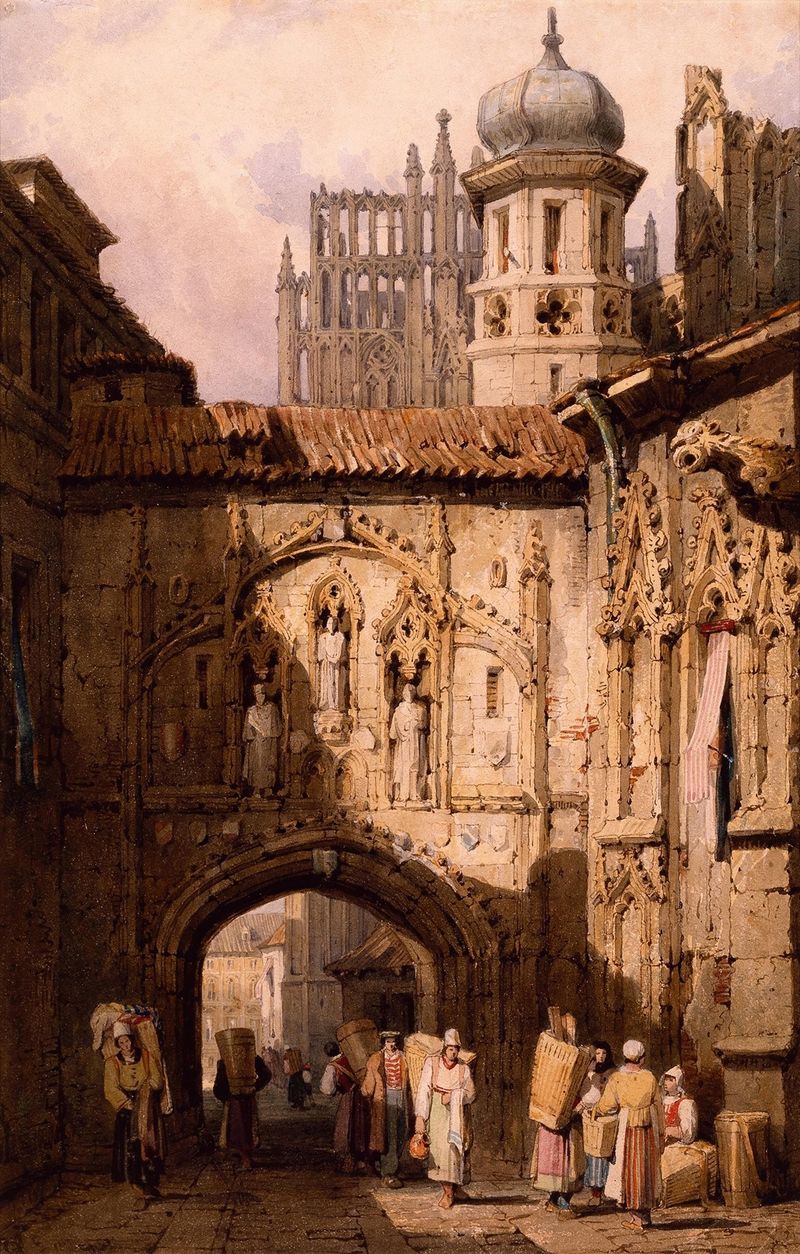
A View in Nuremberg.
Samuel Prout
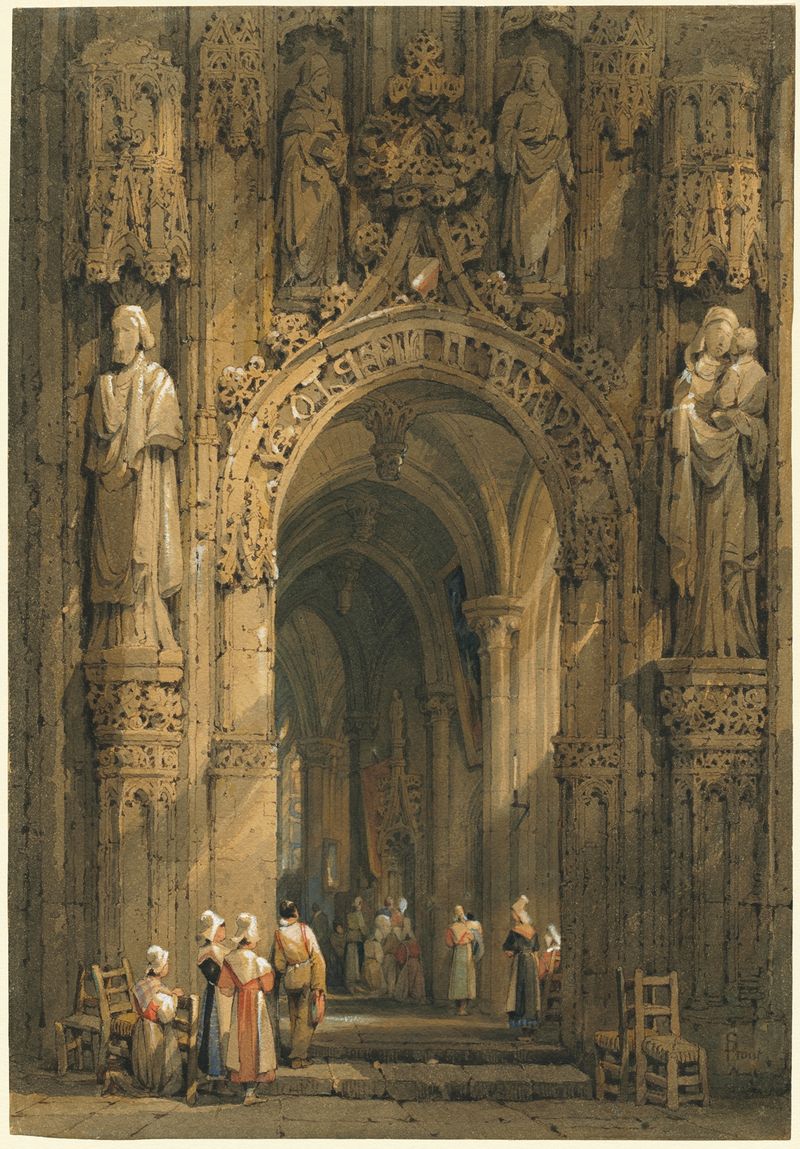
Interior of a Cathedral
Samuel Prout

San Giorgio dei Greci, Seen from an Arcade
Samuel Prout
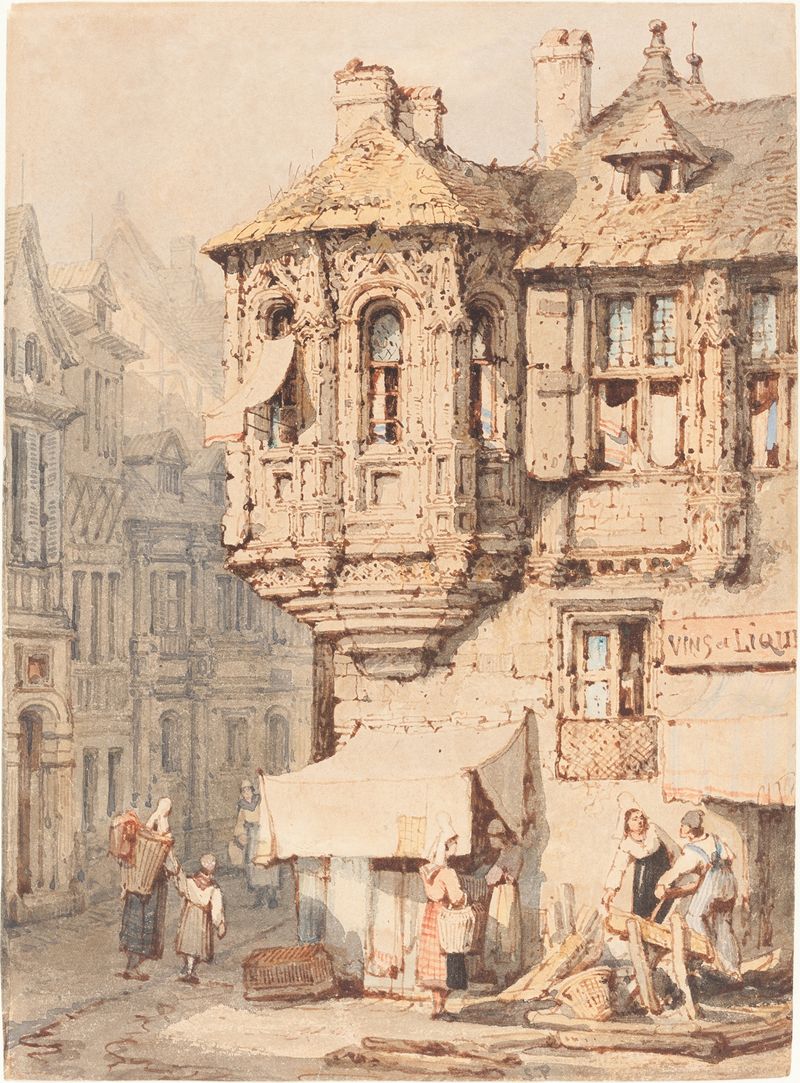
French Street Scene with a Medieval Turret
Samuel Prout
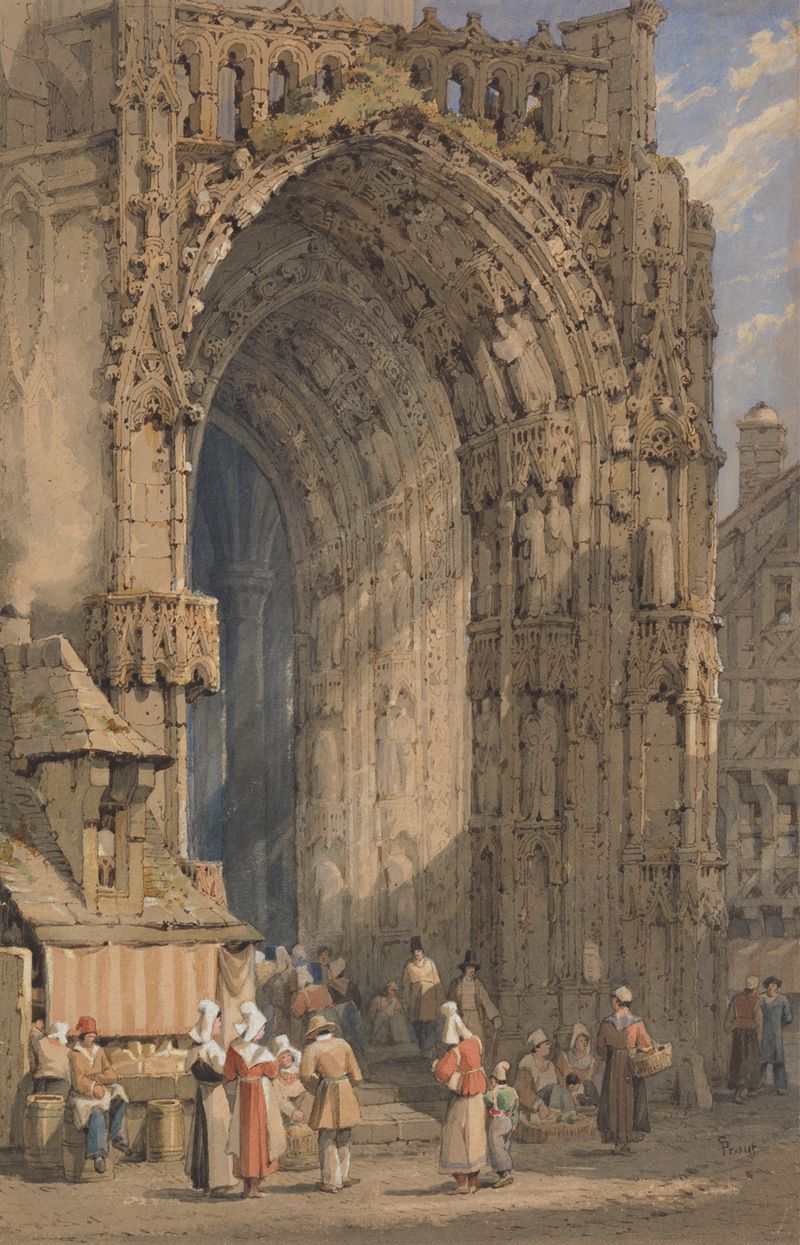
The Porch, Reims Cathedral
Samuel Prout
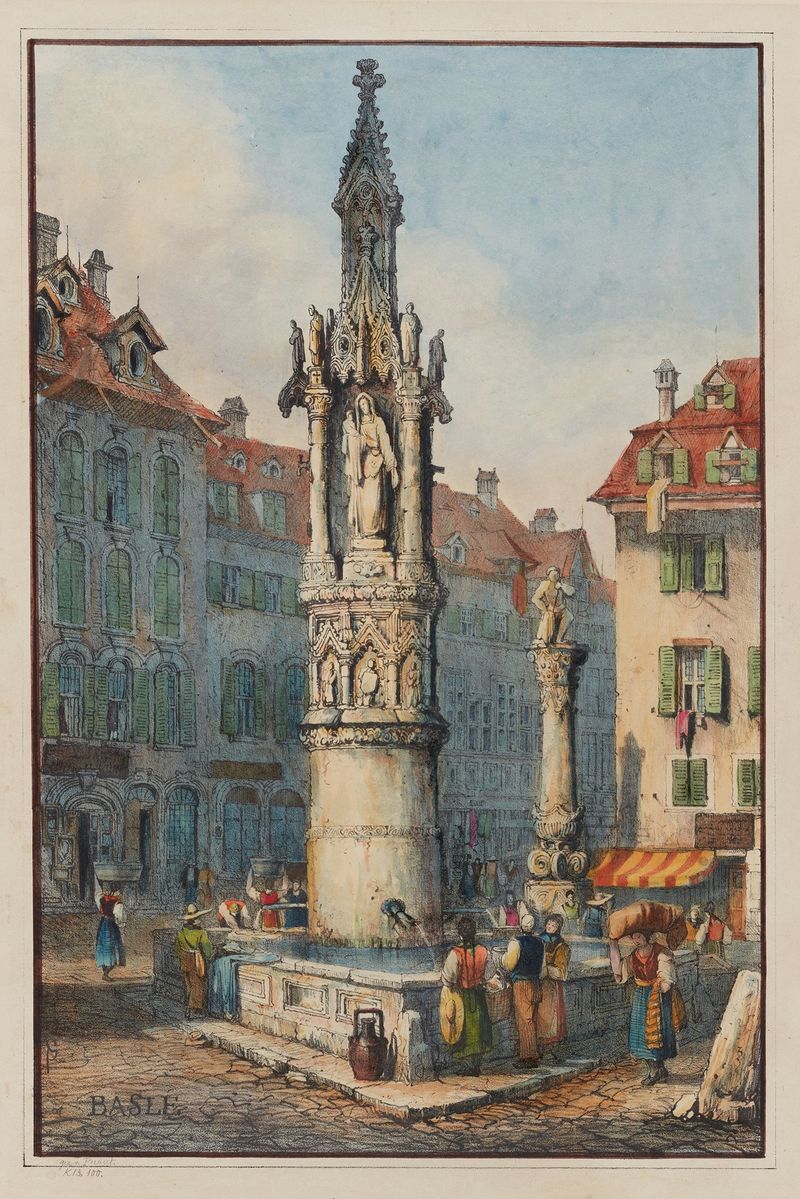
Basle
Samuel Prout

Marketplace at Bruges
Samuel Prout

Coastal Scene with Beached Boats in Foreground
Samuel Prout
More Architecture Art
Browse all →
The statue of Liberty
Frédéric Auguste Bartholdi

View of Houses in Delft, Known as ‘The Little Street’
Johannes Vermeer

View of Houses in Delft, Known as ‘The Little Street’
Johannes Vermeer

The Cathedral in Rouen. The portal, Grey Weather
Claude Monet

The yellow house
Vincent van Gogh

The Church in Auvers-sur-Oise, View from the Chevet
Vincent van Gogh