
Portrait of a Florentine Lady — History & Facts
What first catches the eye in Portrait of a Florentine Lady is the quiet command in her gaze, a look that seems to weigh the viewer as much as she is being observed. The painter, Alessandro Allori, has chosen a moment of poised stillness: the sitter’s face is turned just slightly, her lips closed, her eyes direct but not unkind. Light falls cleanly across her forehead and cheek, drawing attention to the luminous skin and the intricate pearl headpiece that crowns her hair.
The ruff at her neck, edged in gold, frames her face like the petals of a flower, while the pearls at her throat echo the cool restraint of her expression. Every detail—the embroidery, the delicate lace, the measured palette of violets and golds—signals wealth, but also the discipline and formality expected of a woman of her standing. This portrait belongs to the world of sixteenth-century Florence, where the Medici court set the tone for fashion, manners, and the arts. Portraits like this were not mere likenesses but statements of lineage, virtue, and social ambition, often commissioned to mark marriages or alliances.
The date, 1550, places the work in a period when Florentine painters were refining the lessons of Bronzino and the Mannerist circle, favoring elegance and precision over open emotion. Little is recorded about this particular sitter or the journey of this painting, now held in the collection of the Emak Labin Foundation, but the image itself preserves the aspirations and anxieties of a society where appearances mattered deeply. Look again at her eyes: they are watching, and perhaps waiting, across the centuries.
More Artworks by Alessandro Allori

Francesco de' Medici
Alessandro Allori
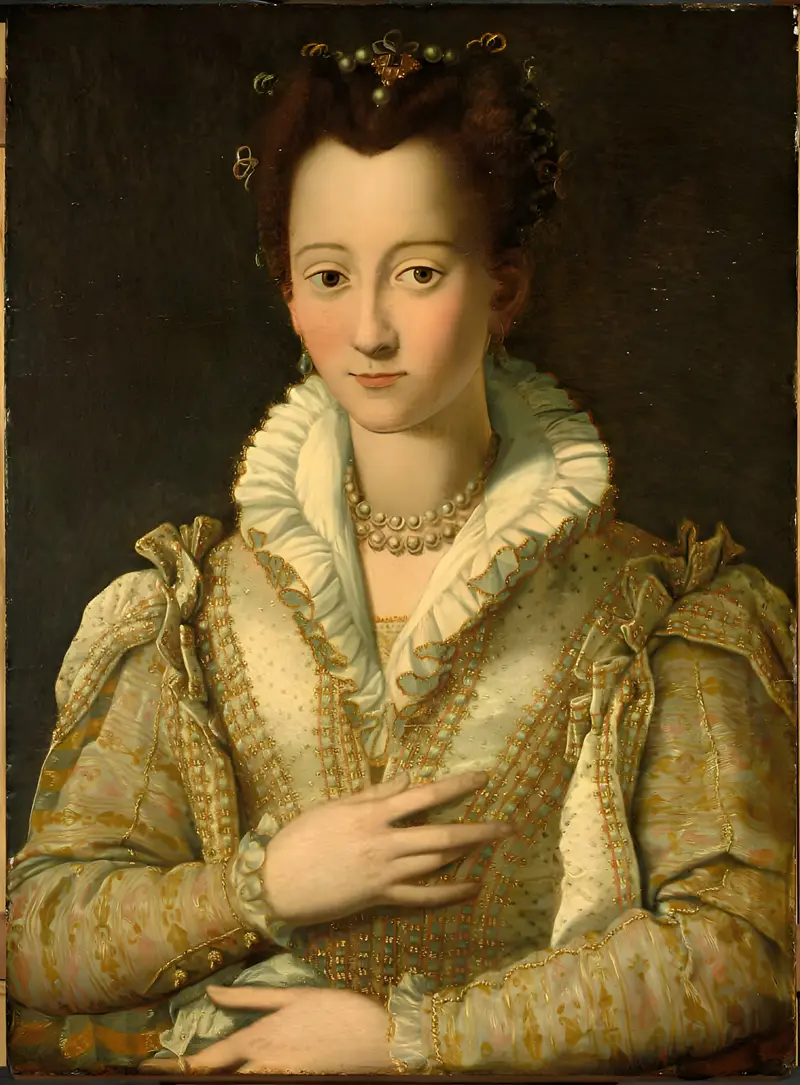
Portrait of a Woman
Alessandro Allori

The Abduction of Proserpine
Alessandro Allori
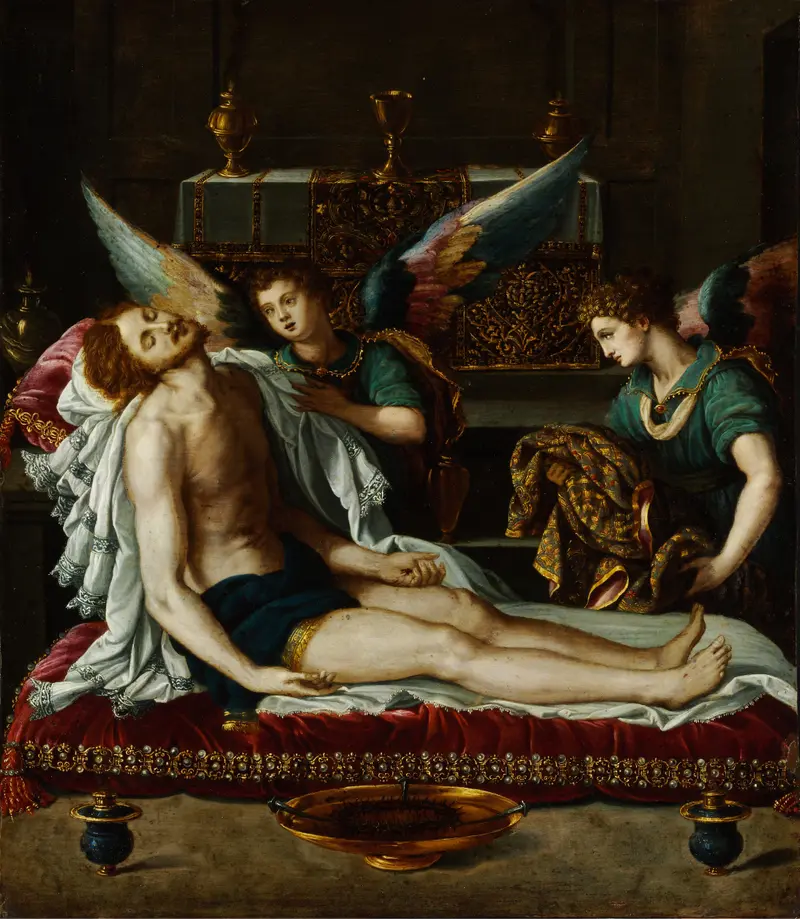
The Body of Christ Anointed by Two Angels
Alessandro Allori
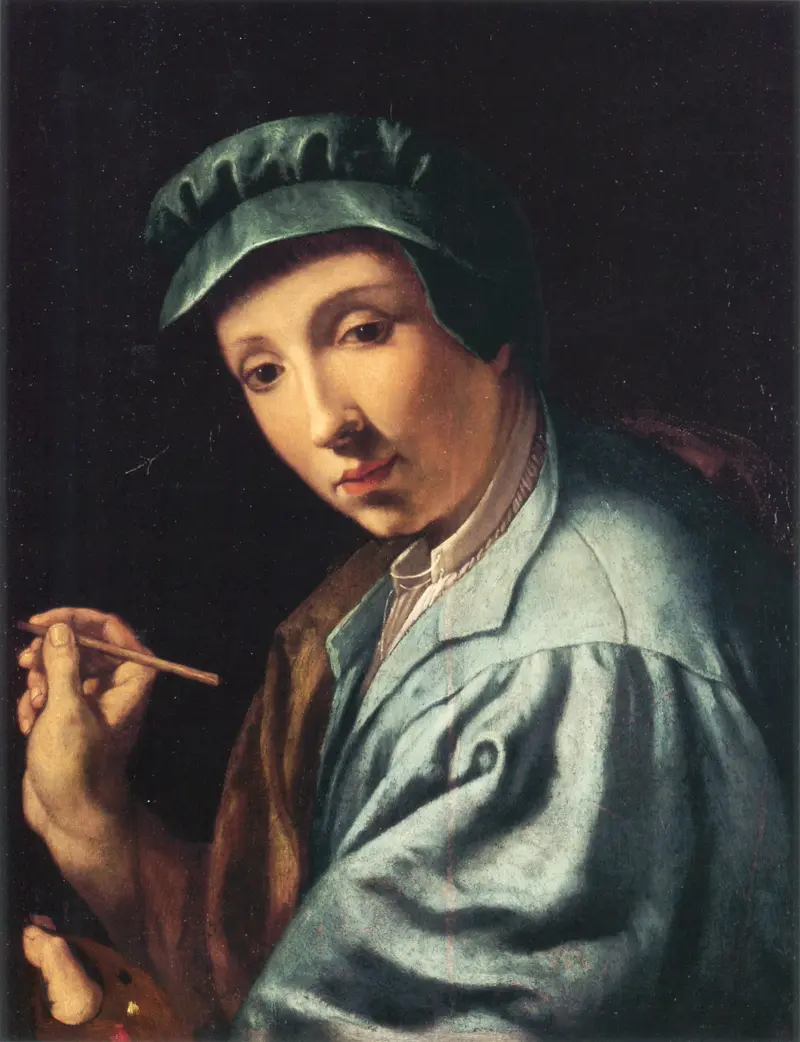
Self-portrait
Alessandro Allori
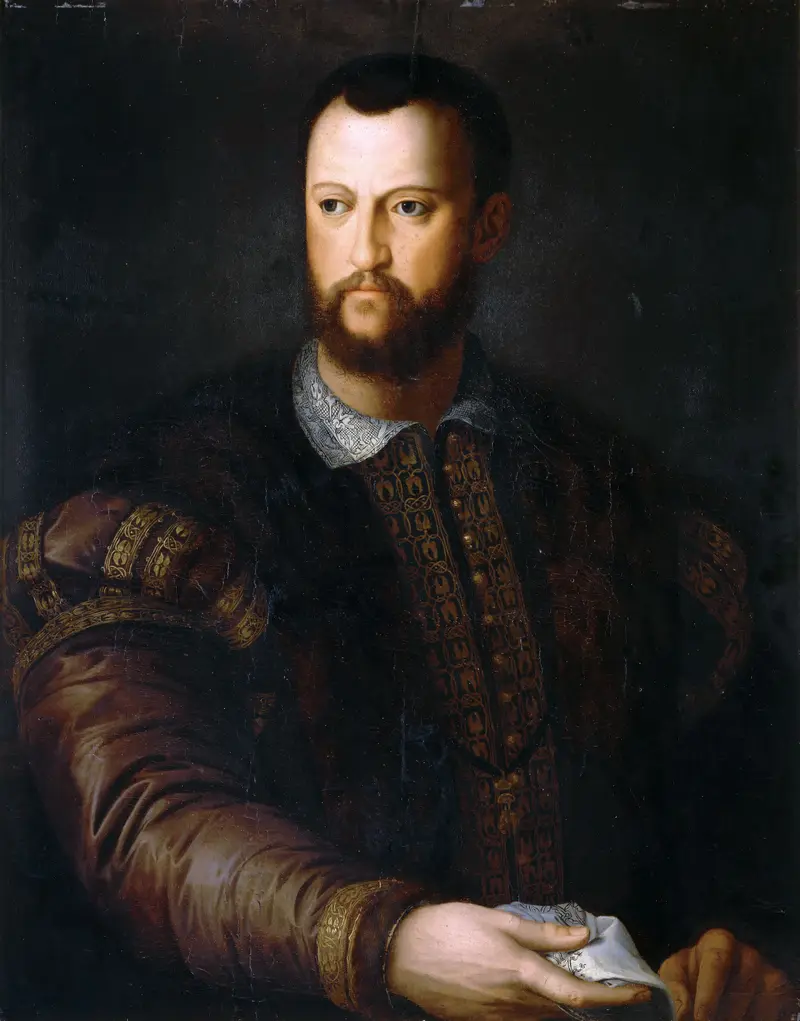
Portrait of Cosimo I de' Medici
Alessandro Allori
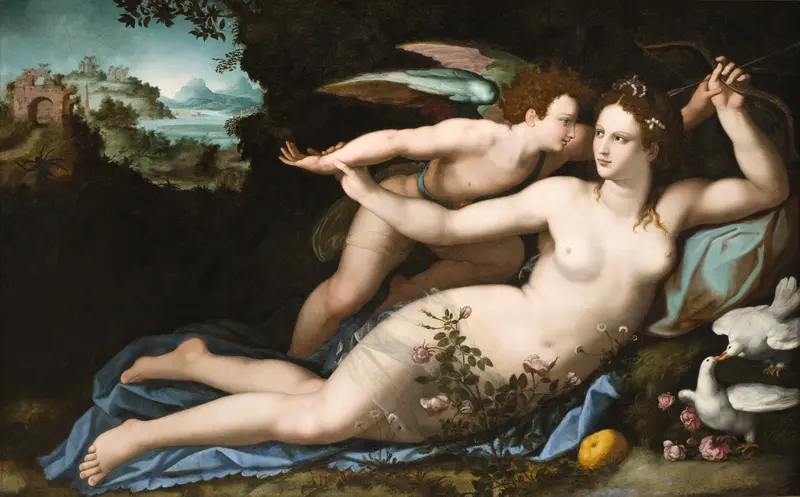
Venus disarming Cupid
Alessandro Allori
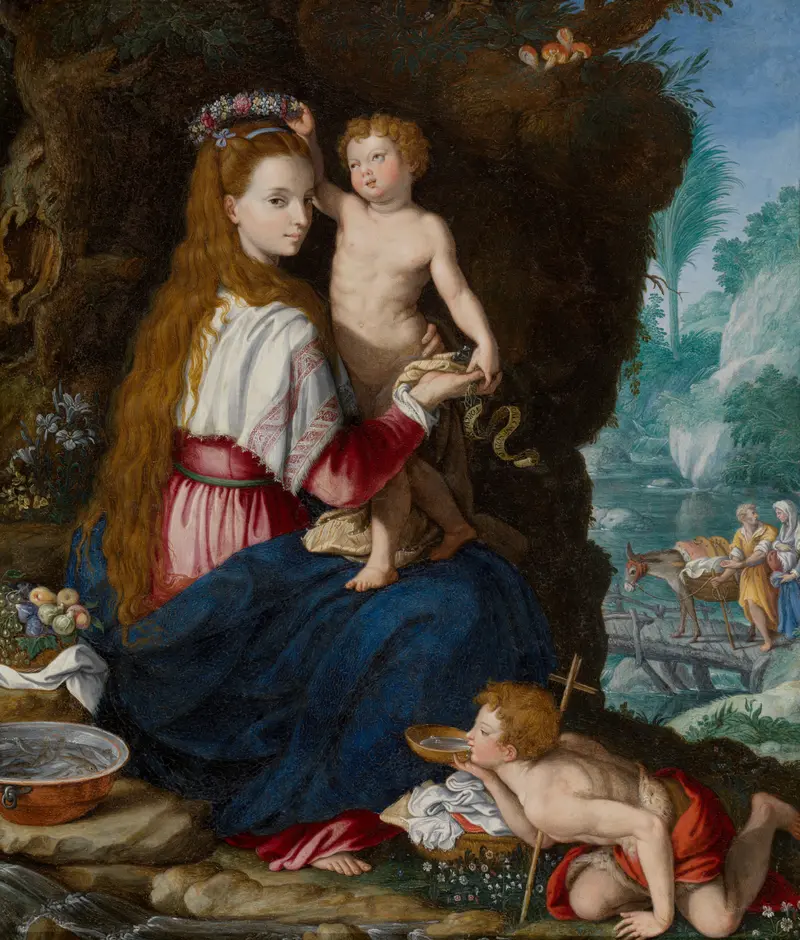
Madonna with Little Saint John
Alessandro Allori
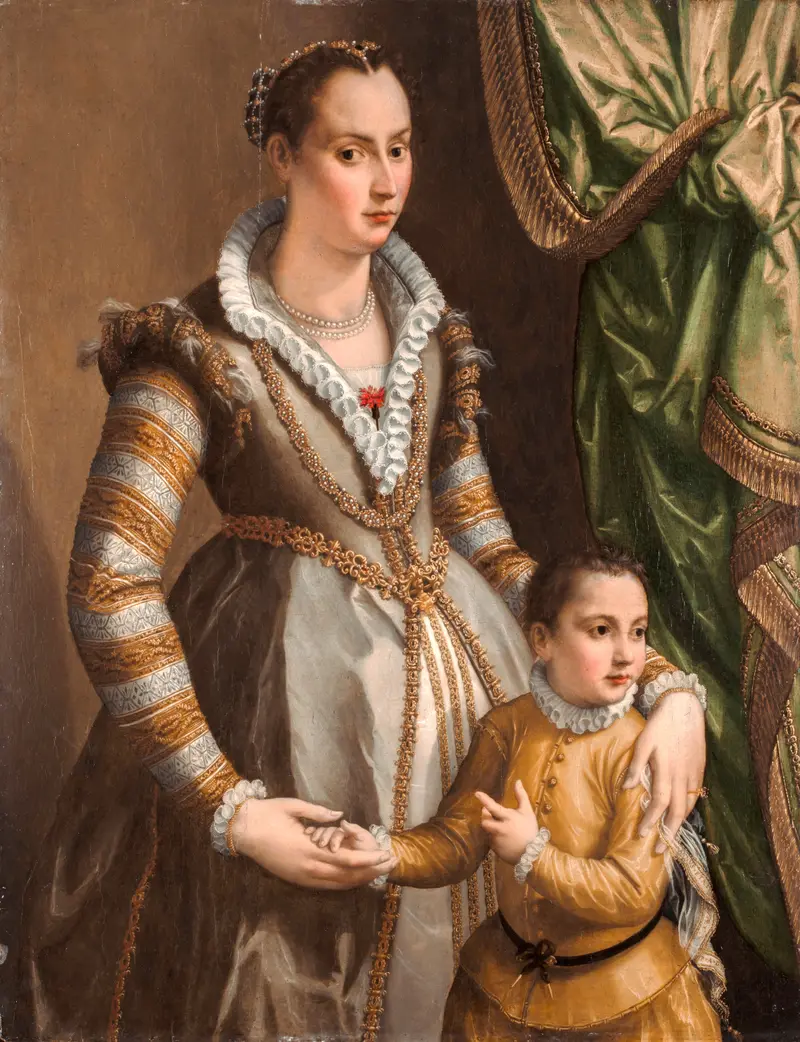
Portrait of a Noblewoman with her Son
Alessandro Allori
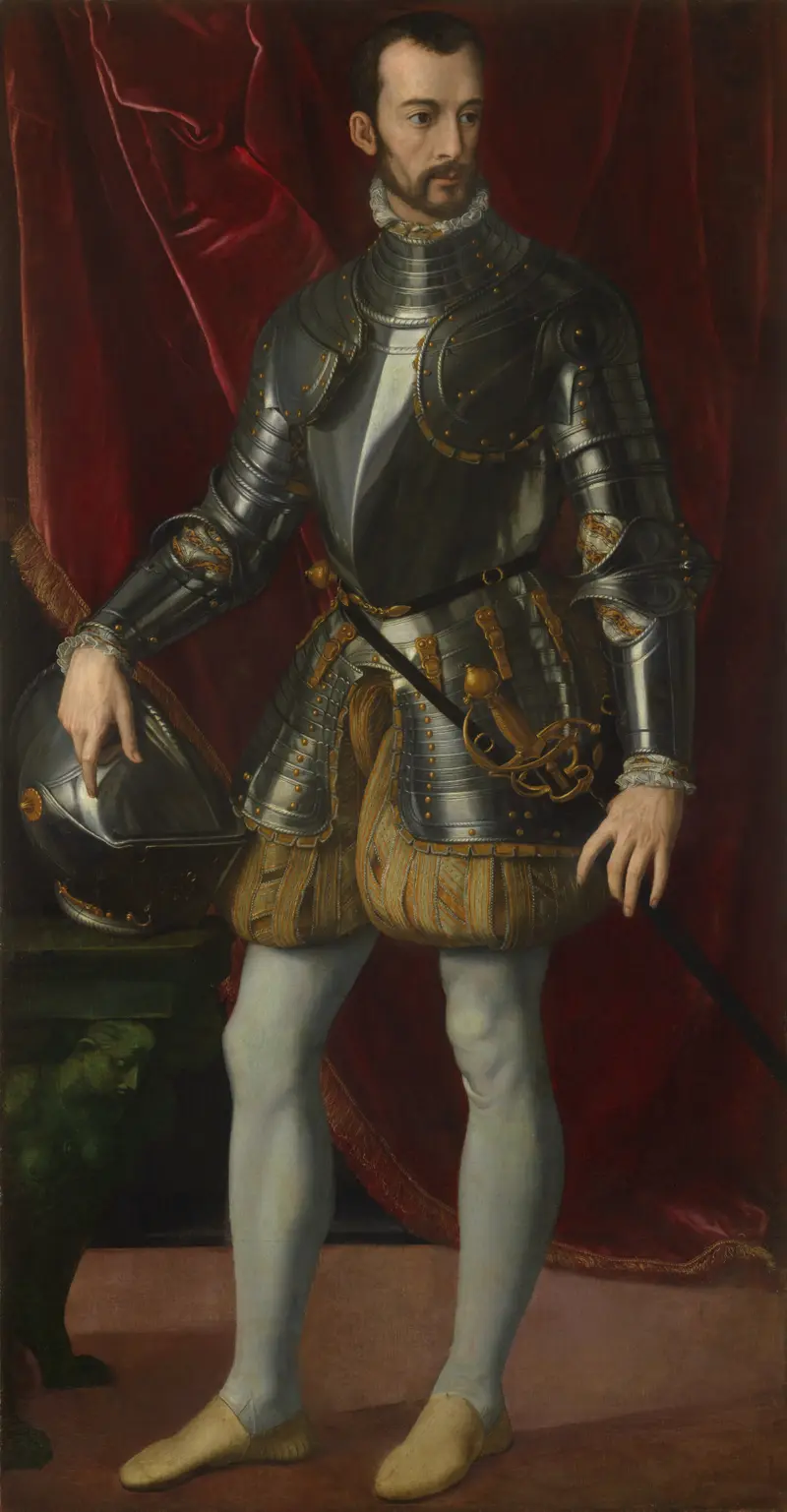
Portrait of Francesco I de' Medici
Alessandro Allori





