
Portrait of a Seated Old Woman with Clasped Hands — History & Facts
No one knows for certain who the sitter is in Portrait of a Seated Old Woman with Clasped Hands, but for centuries, viewers have speculated she might be Rembrandt’s own mother, Neeltgen Willemsdr van Zuytbrouck. This persistent rumor, though never proven, speaks to the painting’s uncanny intimacy: the woman’s presence feels both deeply personal and universally familiar. Painted in 1661, when Rembrandt was facing bankruptcy and personal hardship, the work stands as a testament to his enduring fascination with age, dignity, and the human soul.
The sitter’s identity remains a mystery, yet her image has become one of the most recognizable examples of Rembrandt’s late portraiture. The old woman sits quietly, hands clasped in her lap, her gaze turned slightly down and away from the viewer. Rembrandt illuminates her face and hands with a gentle, golden light, drawing attention to the fine wrinkles and the tender way her fingers intertwine. Her simple dark dress and white cap suggest modesty, perhaps even widowhood, while the lack of adornment focuses all attention on her expression—a mixture of resignation, wisdom, and quiet strength.
Unlike the idealized old women of Rubens or the comic types of Jan Steen, Rembrandt gives us a sitter who is both ordinary and monumental, her humanity rendered with unflinching honesty. The clasped hands, a motif Rembrandt returned to often, may suggest prayer, patience, or acceptance. The painting’s early provenance is uncertain; it was likely created as a private commission or study, rather than for a grand patron. Over the centuries, it has passed through several hands, sometimes attributed to Rembrandt’s workshop or followers, but technical analysis and stylistic comparison have confirmed it as an authentic work from the master’s late period.
Today, Portrait of a Seated Old Woman with Clasped Hands is celebrated as a prime example of Rembrandt’s late style—marked by loose brushwork, earthy tones, and a profound psychological depth. Its journey from an Amsterdam studio to the walls of major collections reflects both the shifting fortunes of Rembrandt himself and the enduring power of his art to move viewers across generations.
More Artworks by Rembrandt van Rijn

The Return of the Prodigal Son
Rembrandt van Rijn

The Crucifixion
Rembrandt van Rijn

Rembrandt and Saskia in the Scene of the Prodigal Son
Rembrandt van Rijn

Self-Portrait in a heavy Fur Cap: Bust
Rembrandt van Rijn

Portrait of a Young Woman
Rembrandt van Rijn

Portrait of Hendrickje Stoffels
Rembrandt van Rijn

Portrait of Rembrandt
Rembrandt van Rijn

Portrait of the Artist
Rembrandt van Rijn

Portraits of Jean Pellicorne and his Son Casper
Rembrandt van Rijn
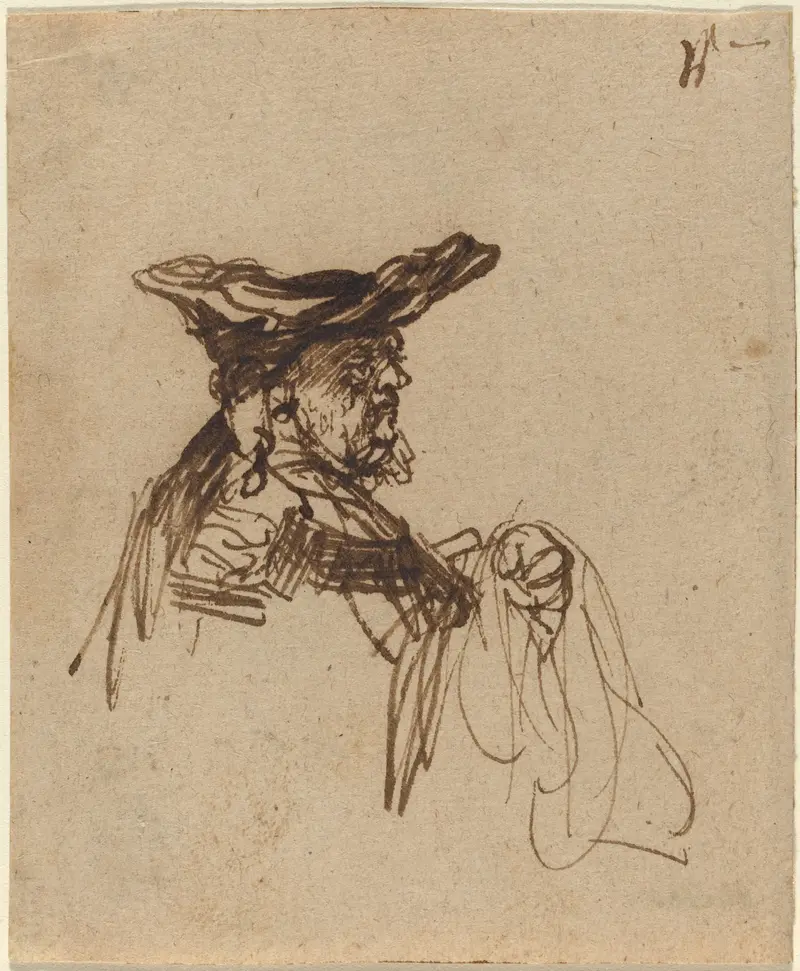
Bust of an Elderly Man in a Flat Cap
Rembrandt van Rijn





