
Portraits of Jean Pellicorne and his Son Casper — History & Facts
When Rembrandt van Rijn painted Portraits of Jean Pellicorne and his Son Casper in 1633, he was at the height of his popularity among Amsterdam’s wealthy merchant class. This pair of portraits was commissioned by Jean Pellicorne, a prosperous merchant of Walloon descent, who sought to immortalize both himself and his young son at a time when the Dutch Republic was flourishing. The paintings were originally conceived as pendant portraits—a fashionable format among the elite, allowing family members to be displayed side by side, yet each commanding their own canvas.
The commission is notable for capturing not only the sitters’ likenesses but also their social aspirations during the Dutch Golden Age. Rembrandt chooses to present Jean Pellicorne seated, dressed in sober black with a delicate white ruff, his hand resting on a book—a gesture that signals learning and piety. Beside him, young Casper stands, his posture attentive, his gaze directed outward, suggesting both filial respect and the promise of the next generation. The interplay of light across their faces and hands draws the viewer’s attention to their expressions: Jean’s composed authority and Casper’s youthful earnestness.
The subtle rendering of textures—the crisp lace, the soft velvet—demonstrates Rembrandt’s unrivaled skill in capturing material reality. Unlike the more theatrical portraits of Anthony van Dyck, Rembrandt’s approach is intimate, focusing on inner character rather than outward display. The history of these portraits reflects the shifting fortunes of their subjects and the enduring appeal of Rembrandt’s art. After remaining in private collections for centuries, the paintings eventually entered the collection of the Museo del Prado, where they are now displayed.
Their pendant nature was long recognized, though the works were sometimes separated in sales and catalogues, a fate common to family portraits of the period. Today, reunited, they offer a glimpse into both Rembrandt’s early Amsterdam years and the aspirations of the Dutch mercantile class. The precise medium—likely oil on canvas, as was Rembrandt’s custom—remains a subject of scholarly note, but the impact of the portraits is undiminished.
More Artworks by Rembrandt van Rijn

The Return of the Prodigal Son
Rembrandt van Rijn

The Crucifixion
Rembrandt van Rijn

Rembrandt and Saskia in the Scene of the Prodigal Son
Rembrandt van Rijn

Self-Portrait in a heavy Fur Cap: Bust
Rembrandt van Rijn

Portrait of a Seated Old Woman with Clasped Hands
Rembrandt van Rijn

Portrait of a Young Woman
Rembrandt van Rijn

Portrait of Hendrickje Stoffels
Rembrandt van Rijn

Portrait of Rembrandt
Rembrandt van Rijn

Portrait of the Artist
Rembrandt van Rijn
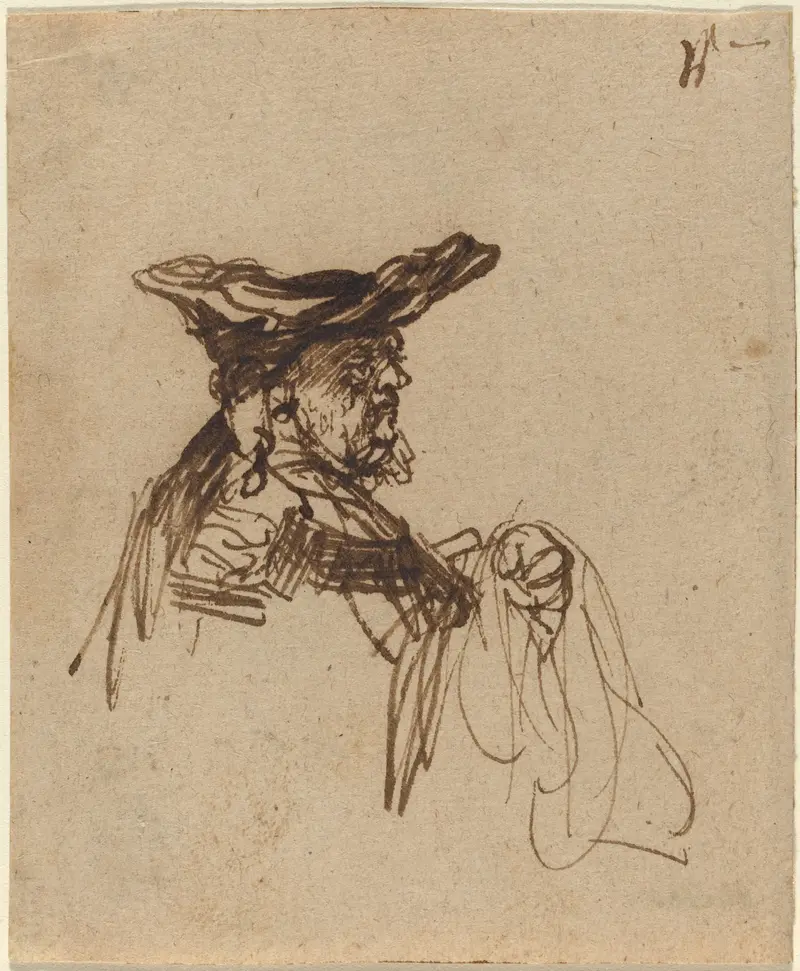
Bust of an Elderly Man in a Flat Cap
Rembrandt van Rijn





