
Portrait of a woman with gloves — History & Facts
The identity of the sitter in Portrait of a woman with gloves remains one of the enduring mysteries of seventeenth-century Dutch portraiture. While Frans Hals often painted prominent citizens of Haarlem, this woman's name has never been securely attached to the canvas, despite centuries of speculation and research. The painting's sense of intimacy and informality—so characteristic of Hals—has led some to wonder if she was a family member or someone close to the artist.
Unlike many of his commissioned works, no archival record has surfaced to link this portrait to a specific patron or occasion, leaving her story tantalizingly incomplete. The woman stands, gloved hands gently clasped, her gaze meeting the viewer with a composed yet lively expression. The gloves she holds, a symbol of status and propriety in the Dutch Golden Age, suggest wealth and refinement, while the sober black dress and delicate lace reflect the restrained elegance favored by the Dutch bourgeoisie. Hals’s brushwork is brisk and animated, especially in the rendering of the lace and the subtle play of light across her face, which gives her a sense of immediacy and presence.
Unlike the more formal, static portraits of Rembrandt, Hals captures a fleeting moment, as if the sitter has just turned to greet us. The directness of her gaze and the casual gesture of her hands invite the viewer into a private world, balancing dignity with approachability. The painting’s early history is obscure; no documentation survives to clarify its original ownership or journey through the centuries. It likely remained in private hands for much of its existence, typical for single-figure portraits of this kind in the Dutch Republic.
Only in the nineteenth or twentieth century did Portrait of a woman with gloves enter public collections, where it has since been recognized as a prime example of Hals’s mature style. Today, it stands as a testament to Frans Hals’s unique ability to capture character and vitality, even when the sitter’s name—and much of her story—remains lost to time.
More Artworks by Frans Hals

Banquet of the Officers of the St George Civic Guard
Frans Hals

Portrait of Jacob Pietersz Olycan (1596-1638)
Frans Hals

Laughing Cavalier
Frans Hals

Militia Company of District XI under the Command of Captain Reynier Reael, Known as ‘The Meagre Company’
Frans Hals

Regentesses of the Old Men's Alms House
Frans Hals
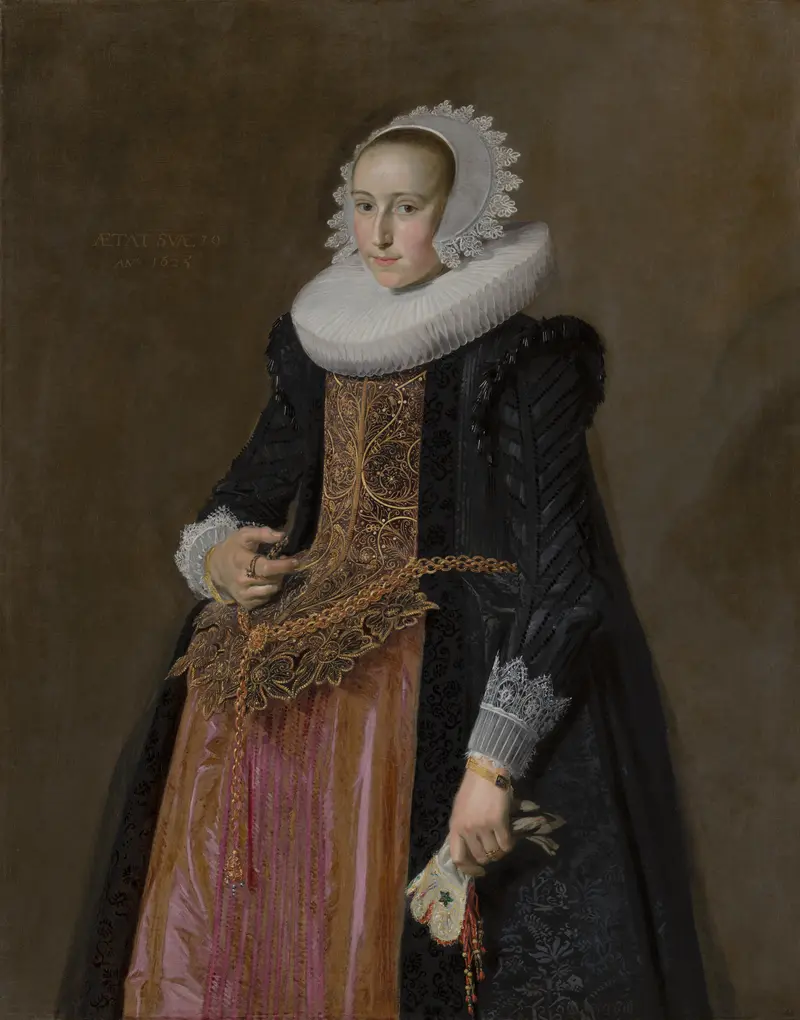
Portrait of Aletta Hanemans (1606–1653)
Frans Hals

Portrait of a Married Couple, Likely Isaac Abrahamsz Massa and Beatrix van der Laen
Frans Hals
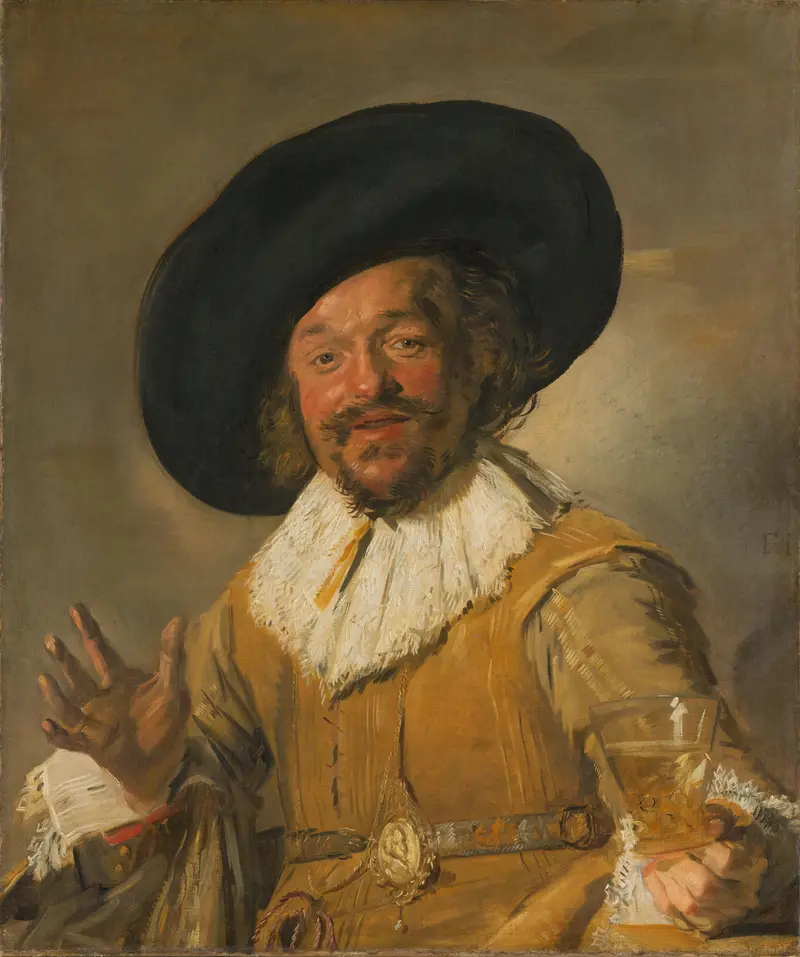
The Merry Drinker
Frans Hals

Portrait of Paulus Verschuur
Frans Hals

Portrait of Pieter van den Broecke
Frans Hals





