
Portrait of a Young Man — History & Facts
No one knows for certain who the young man is in Portrait of a Young Man by Tintoretto, painted in 1582, and this mystery has made the work a subject of fascination and debate for centuries. While some have proposed Venetian nobles or scholars as possible sitters, no definitive identification has ever emerged, and the lack of attributes or heraldic clues only deepens the enigma. The painting stands as a rare example of Tintoretto’s late portraiture, created during a period when he was more often occupied with vast religious commissions for Venetian confraternities.
Its anonymity has allowed viewers across generations to project their own stories onto the sitter’s direct gaze, making the painting a mirror for the imagination as much as a record of a real individual. The young man meets the viewer’s eye with a steady, almost challenging look, his lips pressed in a subtle line that suggests both confidence and reserve. He wears a dark, unadorned doublet, the simplicity of his attire drawing attention to his face, which is illuminated by a soft, angled light that carves out his features against the shadowed background. There are no props or symbols to declare his profession or status—unlike the elaborate costumes and emblems seen in Titian’s portraits of Venetian patricians—leaving only the intensity of his expression and the painter’s brushwork to speak for him.
The focus on psychological presence over external display marks a shift in Venetian portraiture, one that Tintoretto explores with a sense of immediacy and realism. The painting’s early history is largely undocumented, a common fate for portraits whose sitters remain unidentified. It likely remained in private hands for generations before entering the public sphere, its attribution to Tintoretto secure thanks to the distinctive handling of paint and the energetic, fluid modeling of the face. Today, Portrait of a Young Man is recognized as a significant example of late sixteenth-century Venetian portraiture, reflecting both the artist’s mature style and the period’s growing interest in individuality.
It hangs now in a major museum collection, where its enigmatic sitter continues to invite speculation and admiration, a silent witness to the enduring power of Tintoretto’s art.
More Artworks by Tintoretto
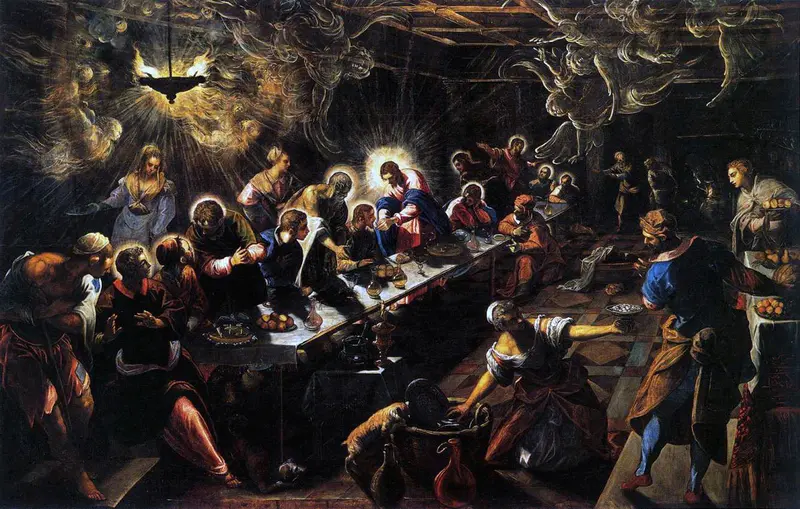
The Last Supper
Tintoretto
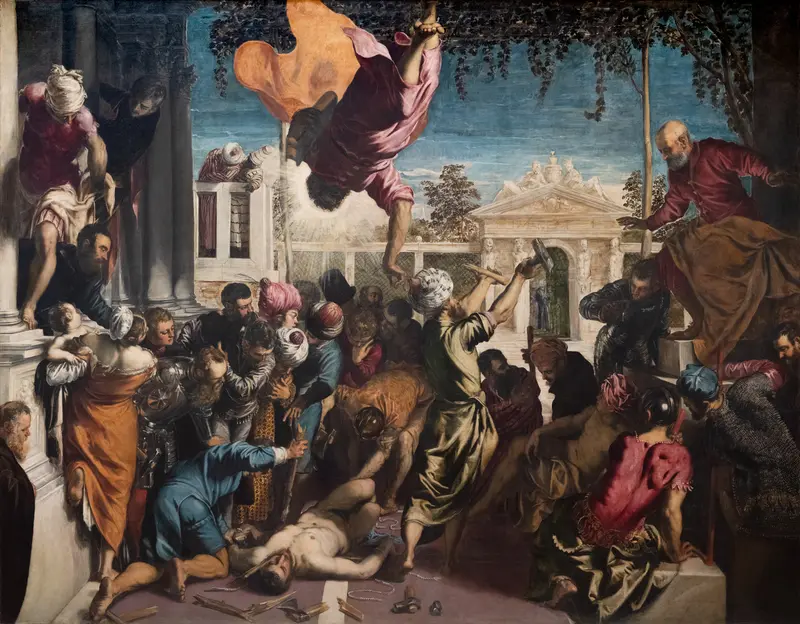
The Miracle of the Slave
Tintoretto
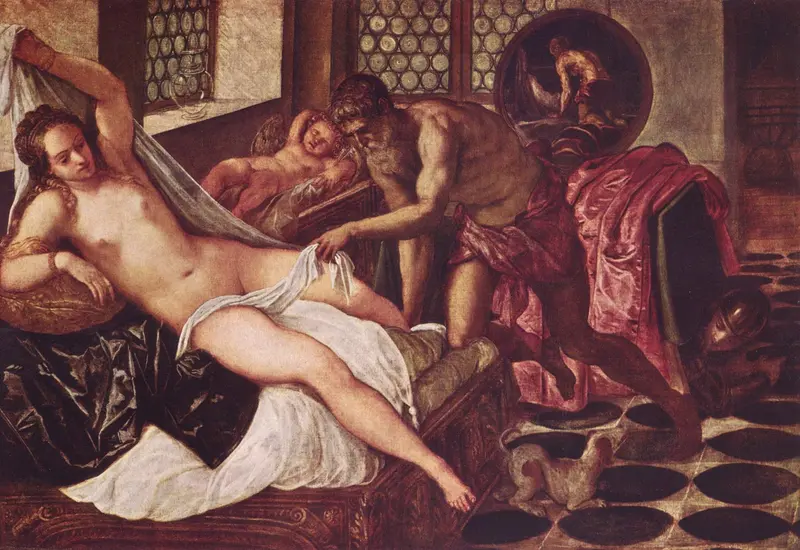
Venus and Mars Surprised by Vulcan
Tintoretto

Adoration of the Shepherds
Tintoretto
Adoration of the Magi
Tintoretto
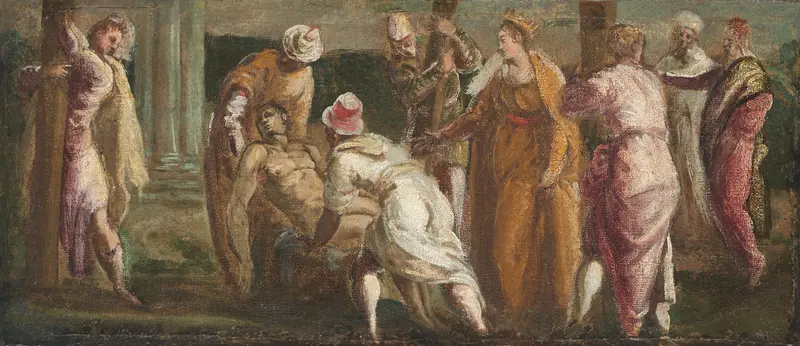
Saint Helen Testing the True Cross
Tintoretto
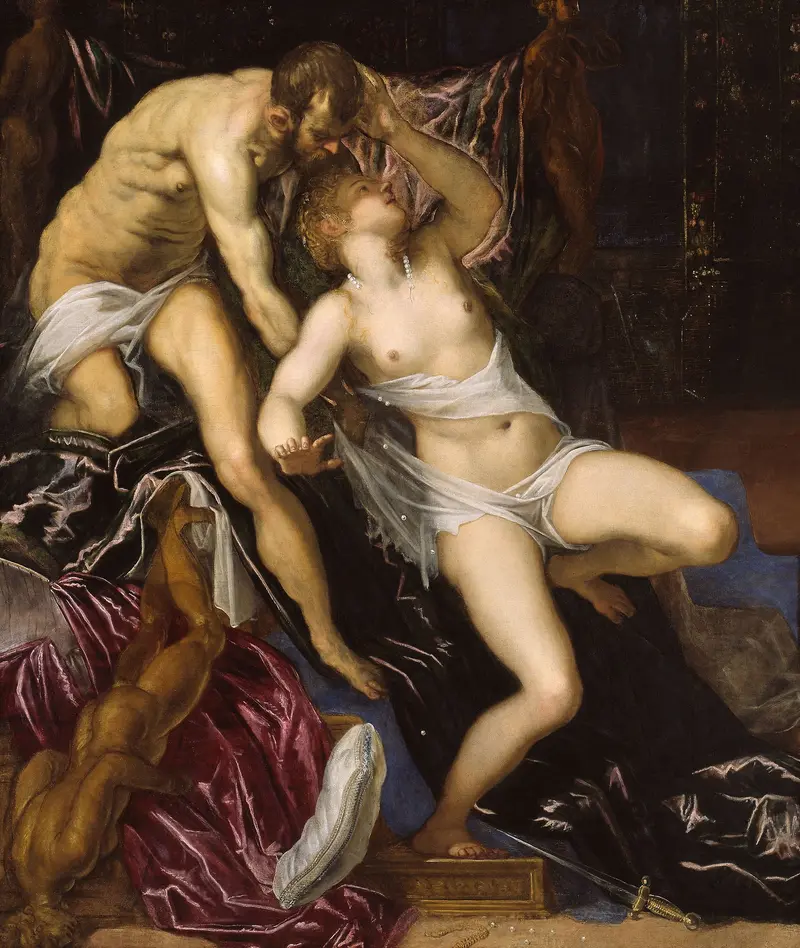
Tarquin and Lucretia
Tintoretto
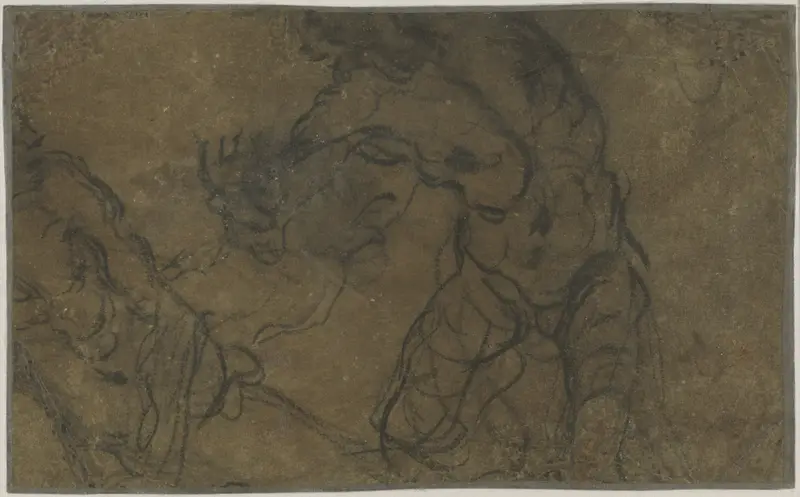
Two Male Figures in Motion (verso)
Tintoretto
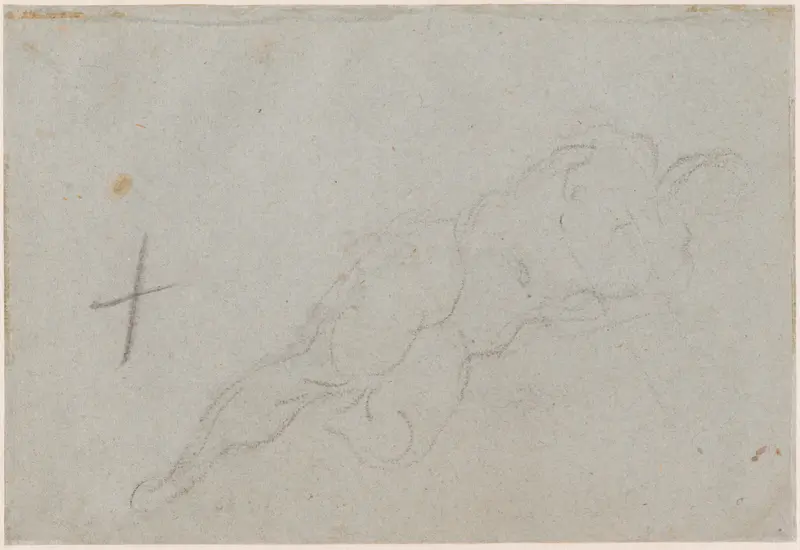
A Female Nude [verso]
Tintoretto
Veduta Kopra
Tintoretto





