
Portrait of an unknown with necklace — History & Facts
No one knows the name of the sitter in Portrait of an unknown with necklace, nor the exact circumstances of its creation, yet the painting’s authorship by Taras Shevchenko—the celebrated Ukrainian poet and artist—makes it an object of enduring fascination. Painted in 1838, the same year Shevchenko was granted his freedom from serfdom, this portrait stands at the threshold of his transformation from servant to national figure. The work’s anonymity has led to speculation: was the sitter a benefactor, a friend, or simply a model from Shevchenko’s circle in St.
Petersburg? The absence of a name has only deepened the painting’s allure, inviting viewers to imagine the lost stories behind its creation. The sitter meets the viewer’s gaze with a calm directness, her hand resting gently at her collar, fingers just touching the necklace that gives the painting its title. The necklace itself—a simple string of beads—draws the eye and may hint at personal or social significance, perhaps a token of affection or a symbol of modest prosperity. The soft modeling of the face, set against a muted background, focuses attention on the subject’s thoughtful expression and the subtle play of light across her features.
Unlike the grand, formal portraits of the Russian court, such as those by Karl Bryullov, Shevchenko’s approach is intimate, almost confessional, emphasizing the sitter’s individuality over her status. The result is a portrait that feels both specific and universal, a study in quiet dignity. The physical history of Portrait of an unknown with necklace is as enigmatic as its subject. The medium remains uncertain—possibly oil, possibly watercolor—reflecting the challenges of cataloguing Shevchenko’s early works, many of which were produced under straitened circumstances.
There is no record of a commission or early exhibition, and the painting’s provenance before its arrival in a public collection is unclear. Today, it is recognized as an important example of Shevchenko’s portraiture, illustrating his sensitivity to character and social context at a time when Ukrainian identity was under pressure. The painting stands as a testament to Shevchenko’s dual legacy as both artist and chronicler of his people’s inner lives.
More Artworks by Taras Shevchenko
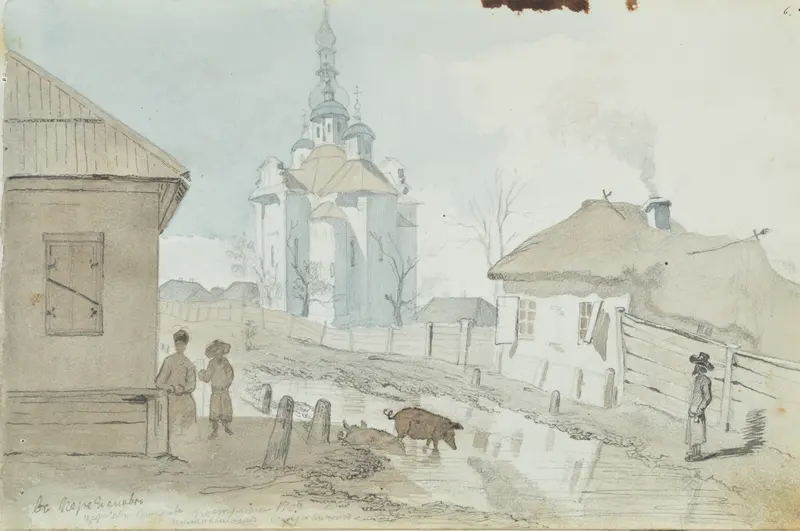
1845 Sh Sketchbook f.06r
Taras Shevchenko

1845 Sh Sketchbook f.04r
Taras Shevchenko

1848 Bilia vohnu
Taras Shevchenko
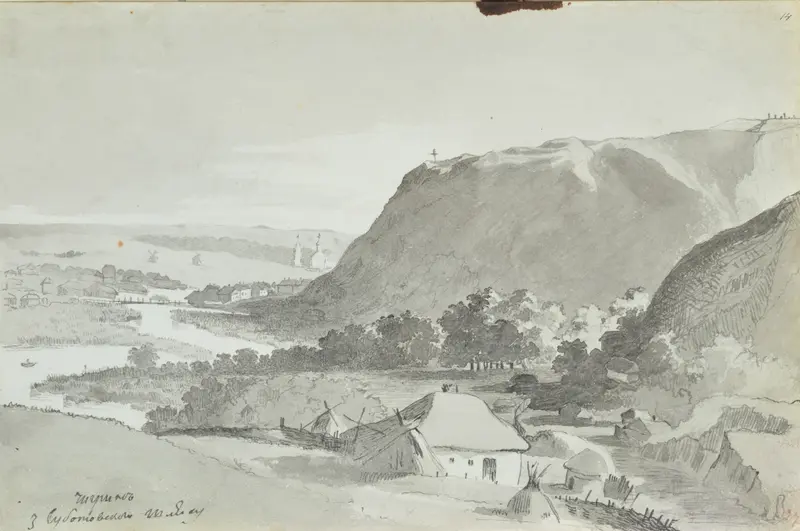
1845 Sh Sketchbook f.14r
Taras Shevchenko
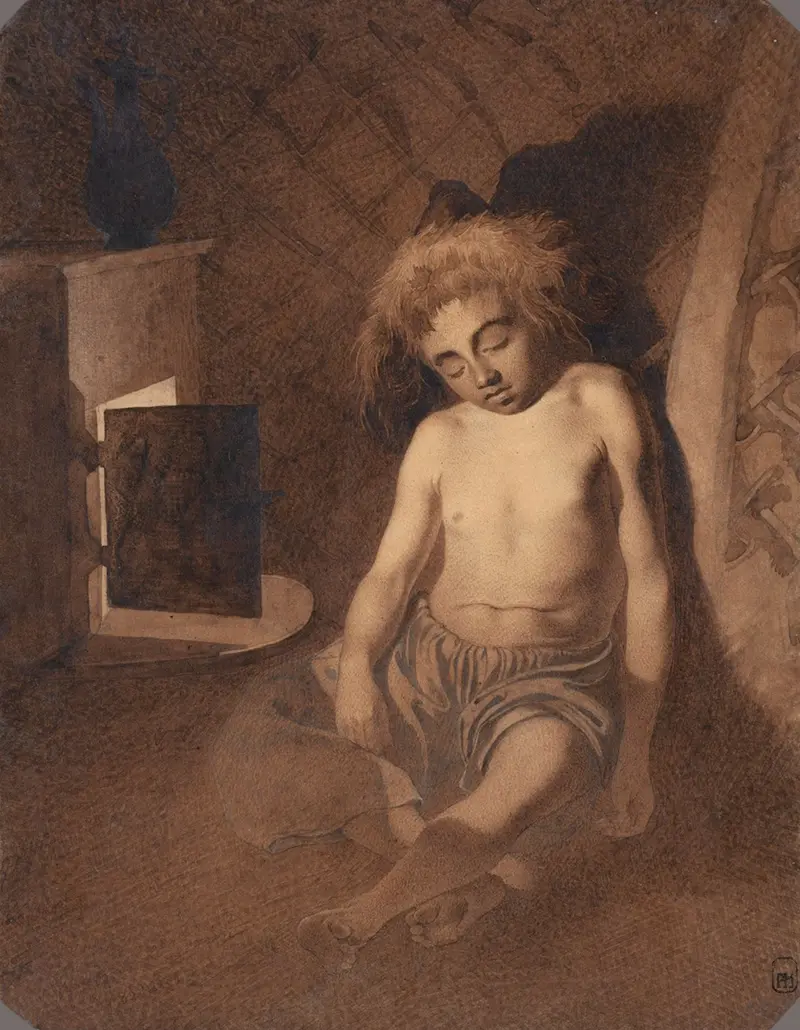
1848 Hlopcyk zasnuv
Taras Shevchenko
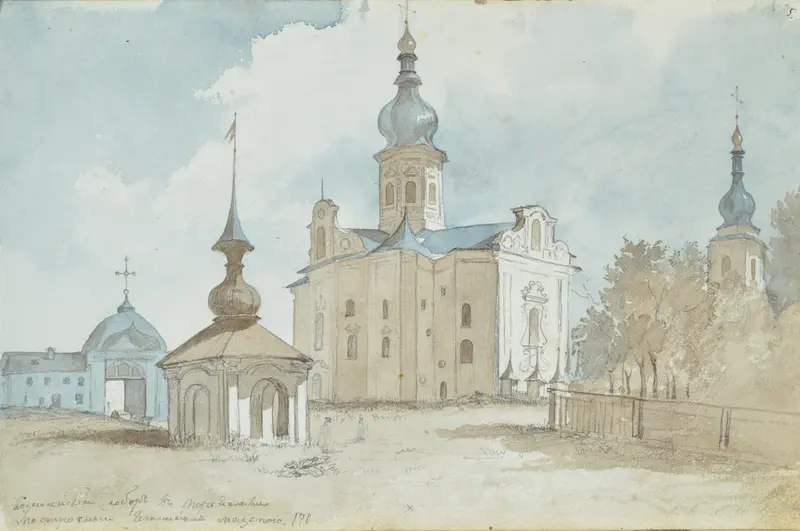
1845 Sh Sketchbook f.05r
Taras Shevchenko
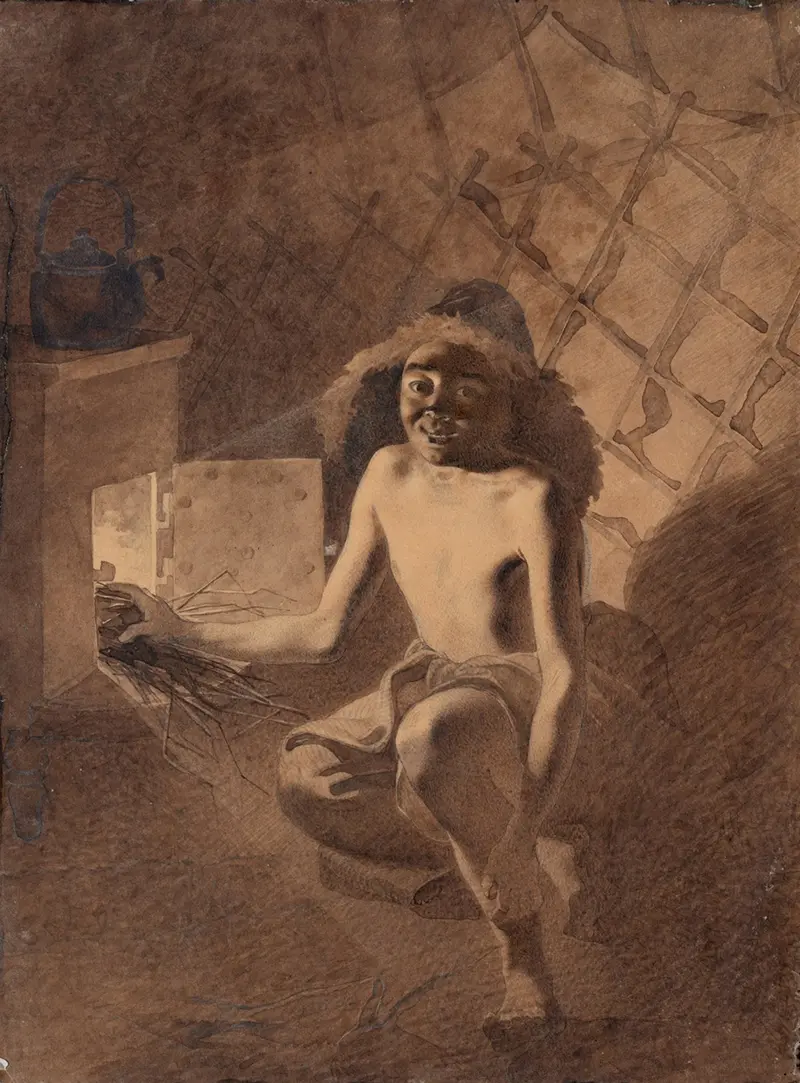
1848 Hlopcyk rozpalije
Taras Shevchenko
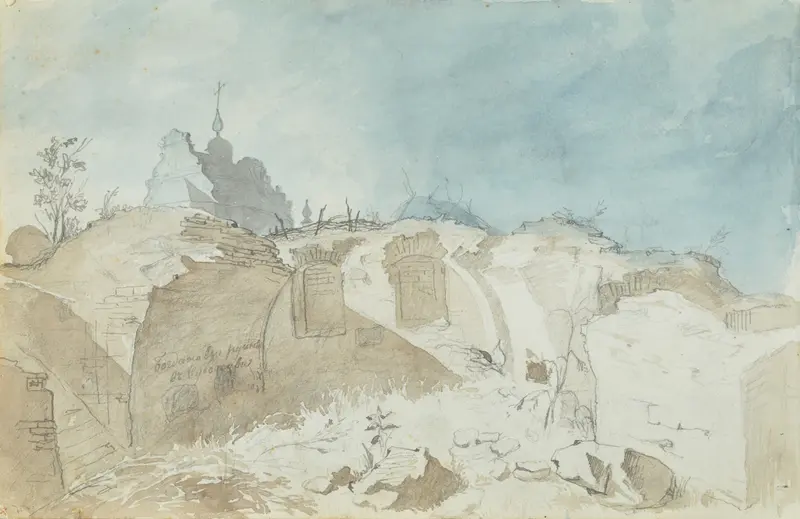
1845 Sh Sketchbook f.12v
Taras Shevchenko
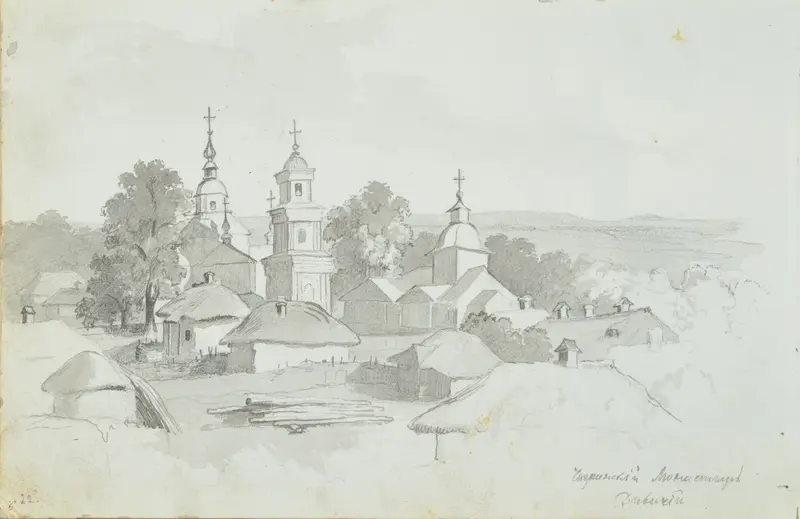
1845 Sh Sketchbook zz f.11v
Taras Shevchenko
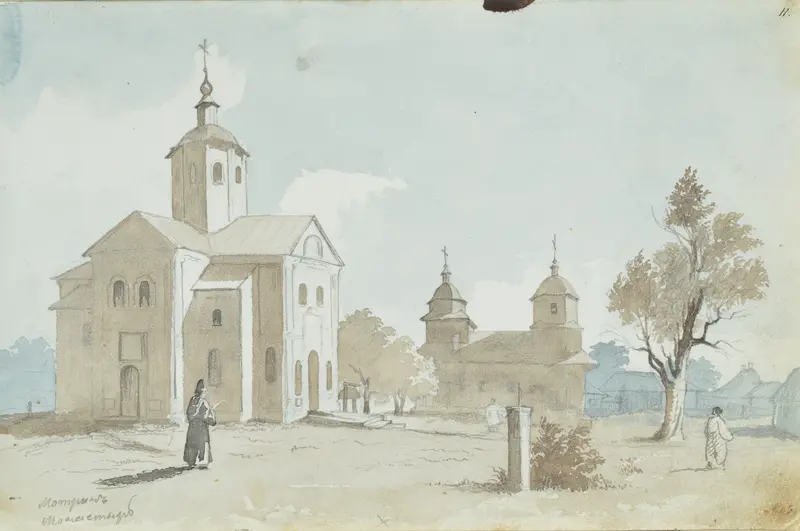
1845 Sh Sketchbook f.11r
Taras Shevchenko





