
Portrait of John, 2nd Lord Monson (1727-1774), and his eldest son, John (1753-1805), in the grounds of Broxbornebury Park, Hertfordshire — History & Facts
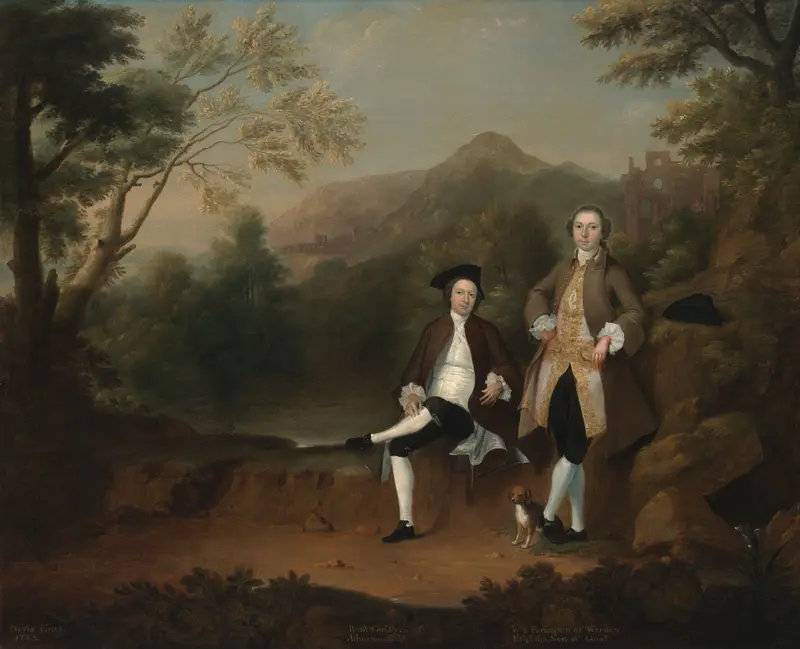
A sense of measured calm settles over the scene, where the sweep of green parkland is as much the subject as the figures themselves. The eye is drawn first to the dignified pair seated beneath the broad branches of an oak: an older man, composed and formal in brown coat and white stockings, and a small child, hand in hand with his father, standing with a gentle, almost tentative poise. The presence of a black-and-white dog, sitting alertly in the foreground, adds a note of domestic warmth and loyalty.
Light falls softly across the grass, guiding the gaze toward the stately house in the distance, its pink façade glowing against the trees—an emblem of lineage and estate. The palette is restrained, the brushwork careful, all in service of a mood that is both reserved and quietly affectionate. Works such as this, painted in the 1750s, were the preserve of the landed gentry, who sought to record not only their likenesses but their place within the ordered world of their estates. Portraits set in parkland became a favored genre in mid-eighteenth-century England, signaling both wealth and the cultivated ideals of family and property.
Arthur Devis was known for these carefully composed group portraits, where sitters are often shown in harmonious relation to the land they owned or aspired to. Commissioned to commemorate lineage and inheritance, these paintings were displayed in country houses as public affirmations of stability and continuity. Though history has kept few traces of this particular canvas beyond its presence in the Christie's collection, its quiet pride and measured affection invite the viewer to linger over every detail, from the distant deer to the clasped hands beneath the tree.
More Artworks by Arthur Devis
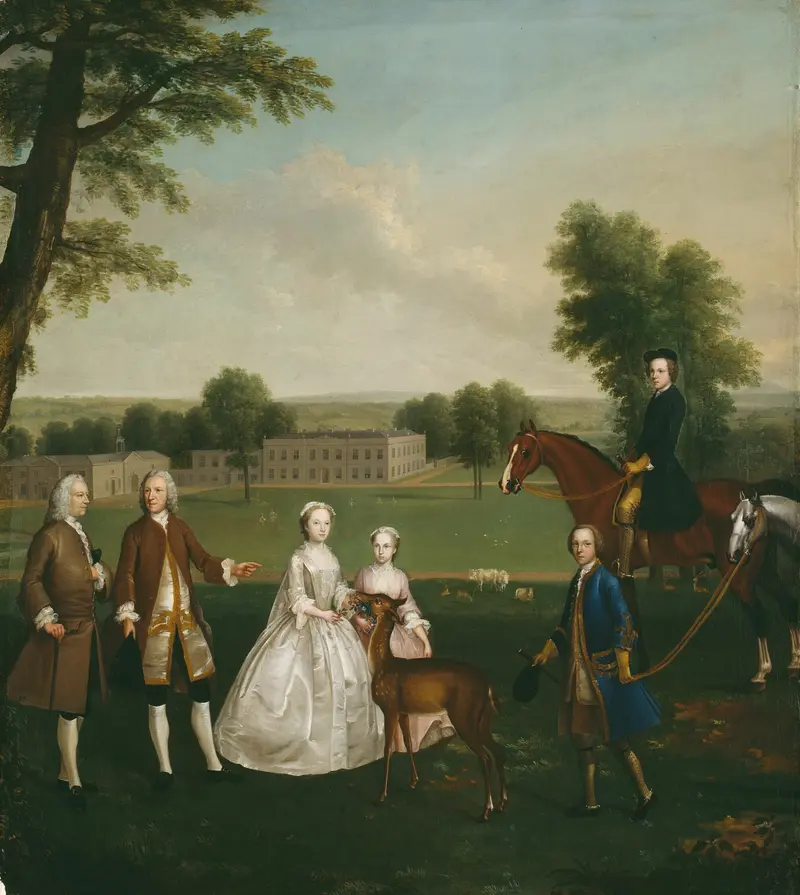
Thomas Lister and Family at Gisburne Park
Arthur Devis

Sir John Shaw and his Family in the Park at Eltham Lodge, Kent
Arthur Devis
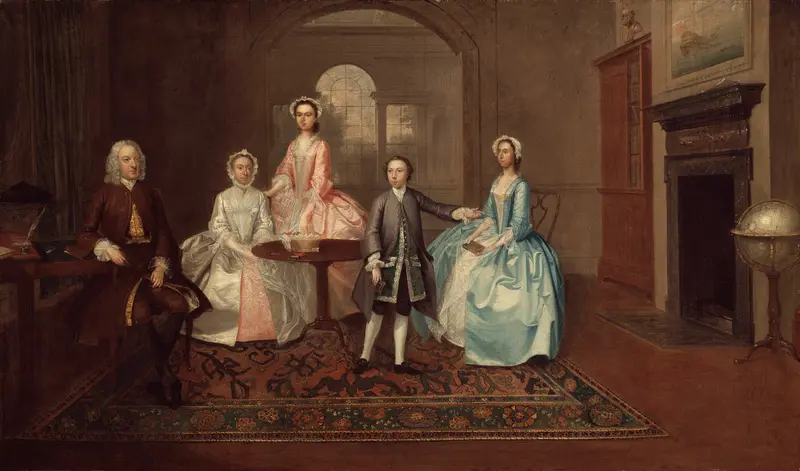
John Thomlinson and His Family
Arthur Devis
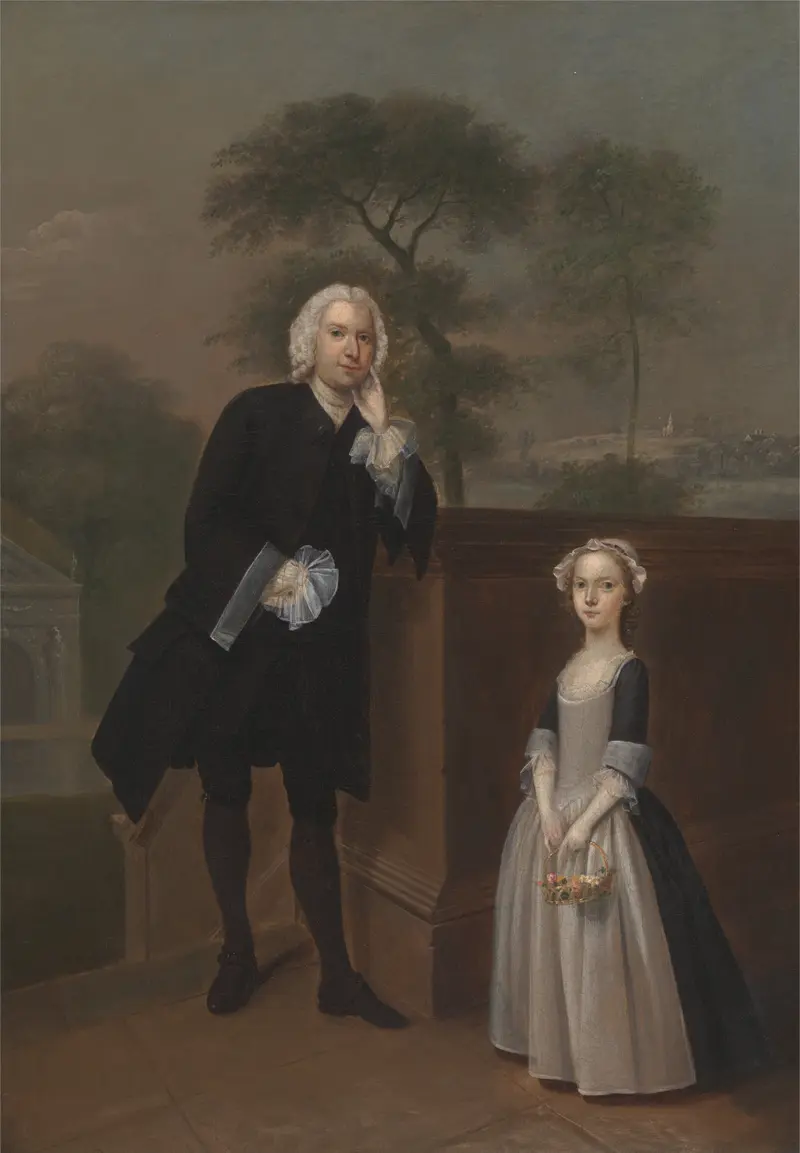
An Unknown Man with His Daughter
Arthur Devis
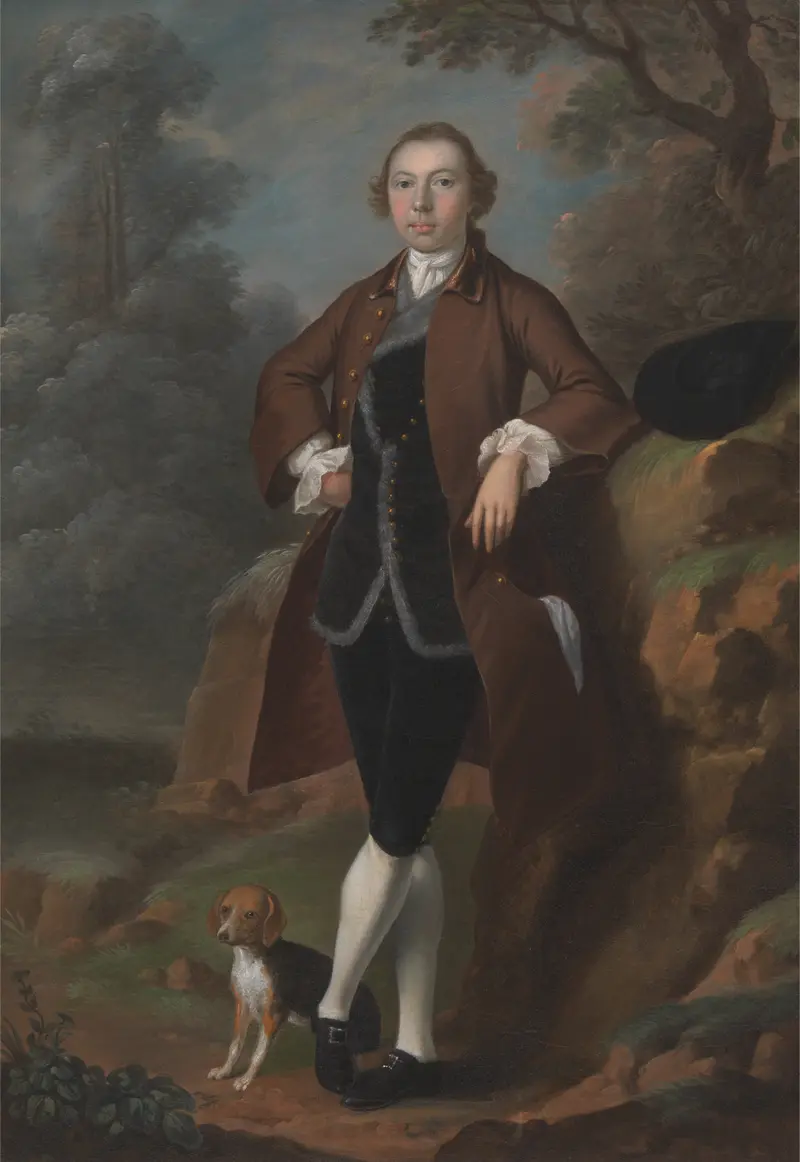
William Farington of Shawe Hall, Lancashire
Arthur Devis
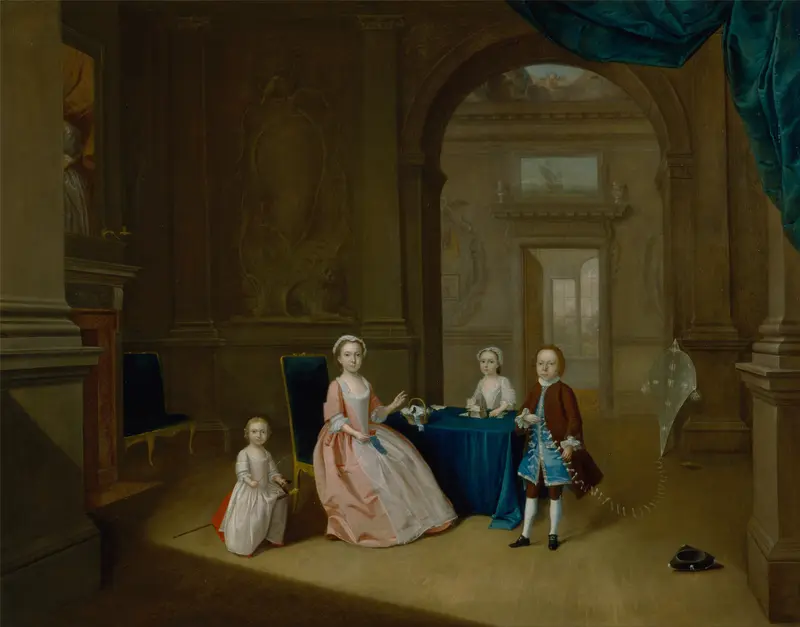
Children in an Interior
Arthur Devis
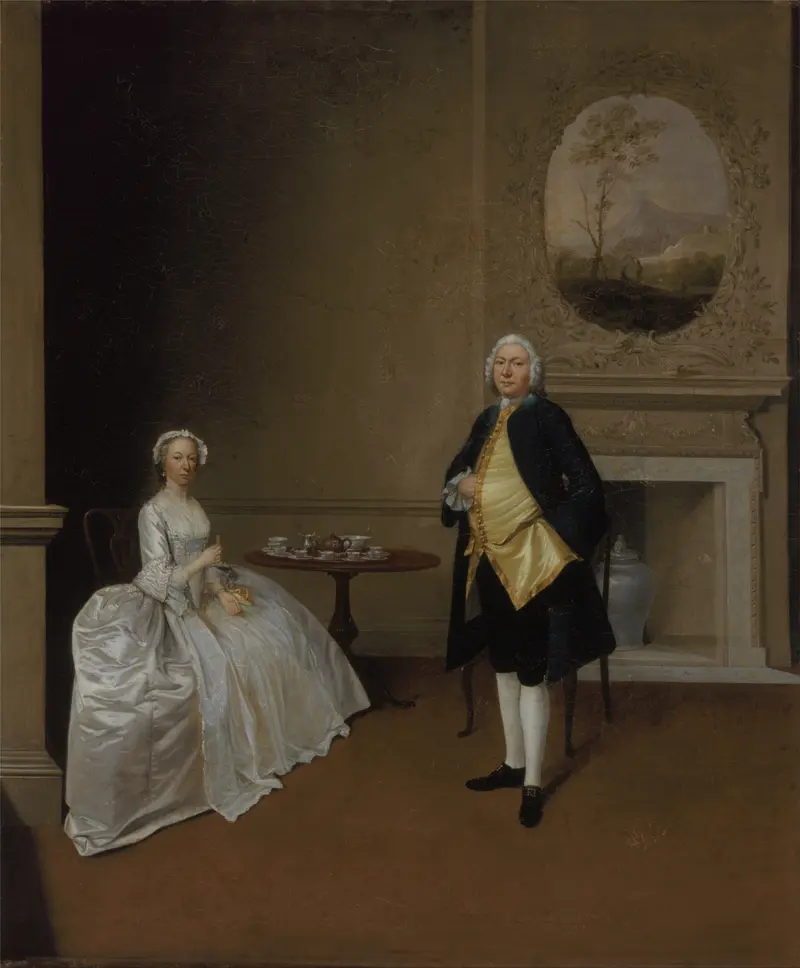
A Couple, Traditionally Identified as Mr. and Mrs. Hill
Arthur Devis
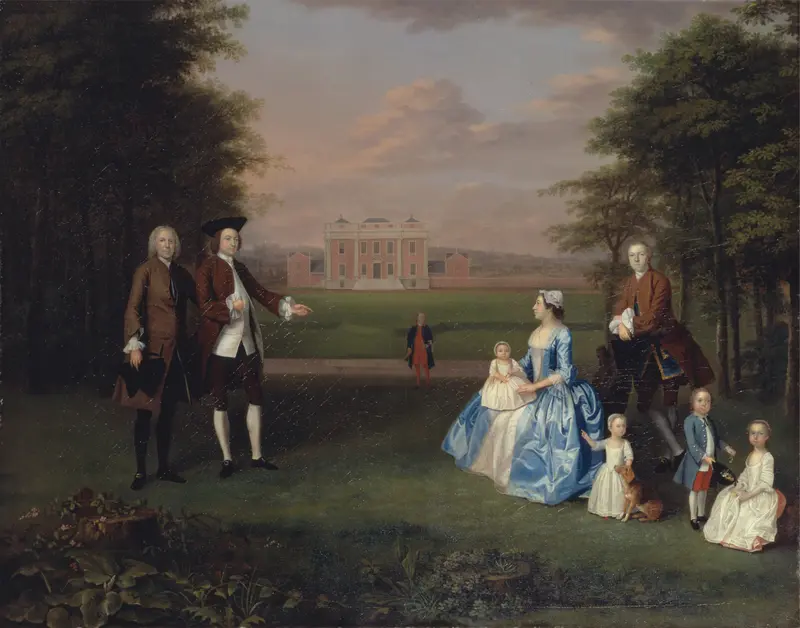
Robert Gwillym, Elizabeth Gwillym (née Atherton), and Their Family
Arthur Devis
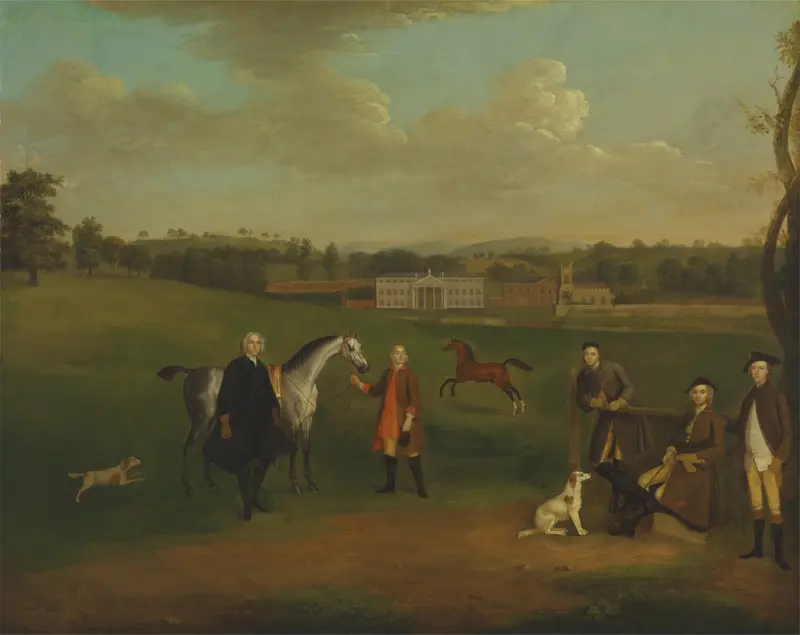
Leak Okeover, Rev. John Allen and Captain Chester at Okeover Hall, Staffordshire
Arthur Devis
Robert Gwillym of Atherton and William Farington of Werden
Arthur Devis





