
Portrait of Pietro Lando and Francesco Donato — History & Facts
Two doges, two lifetimes of power: in Portrait of Pietro Lando and Francesco Donato, Tintoretto brings together a pair of Venetian rulers who never sat for a joint portrait in life. Both men had guided Venice through storms—Donato during the fraught years of the Ottoman wars, Lando in the wake of the League of Cambrai. Yet by 1570, when this work was painted, both had been dead for more than a decade.
The painting stands as a rare visual commemoration, not of a single reign, but of a shared legacy, and invites viewers to consider how Venice remembered its leaders. The scene is formal, almost ceremonial: the two doges, robed in shimmering gold brocade, face the viewer with composed dignity. Lando, older and more severe, clasps a folded document, symbol of statecraft and the endless paperwork of the Venetian Republic. Donato, his features softer, rests his hand on the arm of his chair, a gesture of calm authority.
The light, falling from the left, picks out the intricate patterns of their garments and the glint of their ducal corno, the stiff, horn-shaped cap reserved for Venice’s highest office. Unlike Titian’s single, psychologically probing doge portraits, Tintoretto chooses to emphasize the continuity of office—two rulers, one state. The precise circumstances of the painting’s commission remain unclear, but it likely formed part of a series of portraits for a Venetian public building, perhaps the Doge’s Palace, where the memory of past rulers was carefully curated. Over the centuries, the painting’s attribution has been debated, with some scholars noting the looser brushwork and dramatic contrasts typical of Tintoretto’s later period.
Today, Portrait of Pietro Lando and Francesco Donato is recognized as a testament to both the ambitions of the Venetian Republic and the restless inventiveness of Tintoretto himself, who, even in a formal commission, found ways to infuse his sitters with life and presence.
More Artworks by Tintoretto
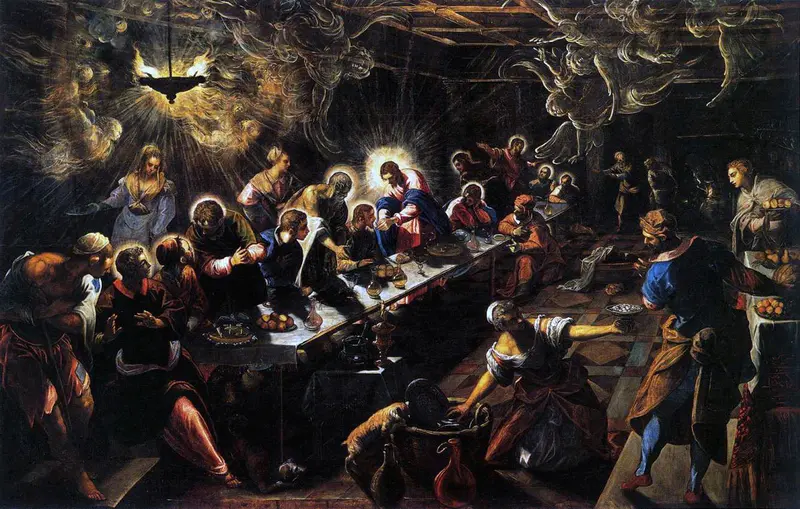
The Last Supper
Tintoretto
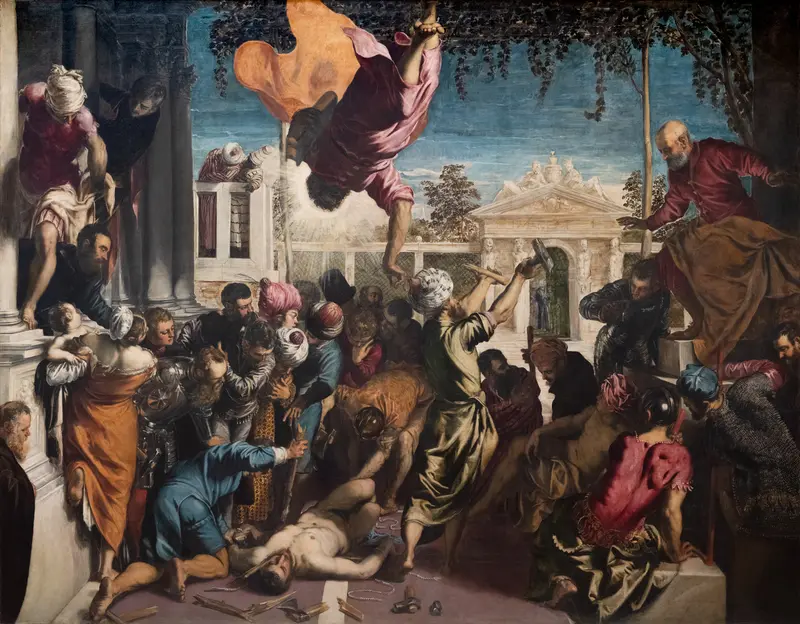
The Miracle of the Slave
Tintoretto
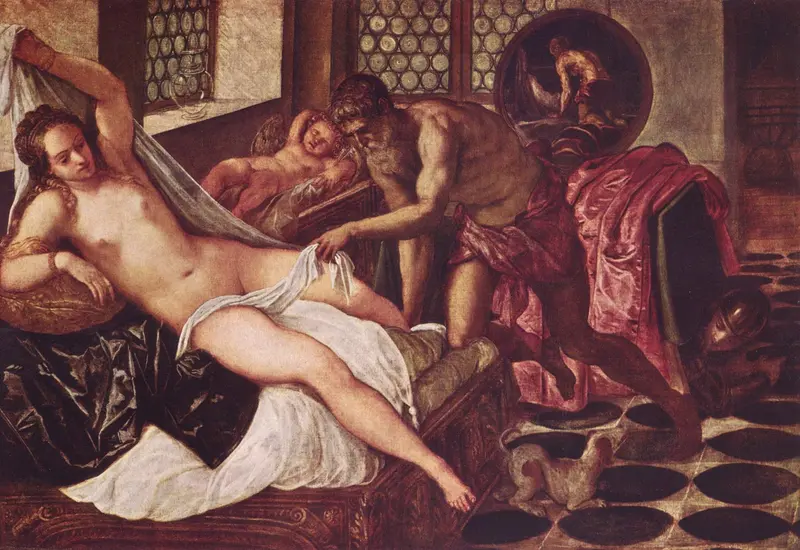
Venus and Mars Surprised by Vulcan
Tintoretto

Adoration of the Shepherds
Tintoretto
Adoration of the Magi
Tintoretto
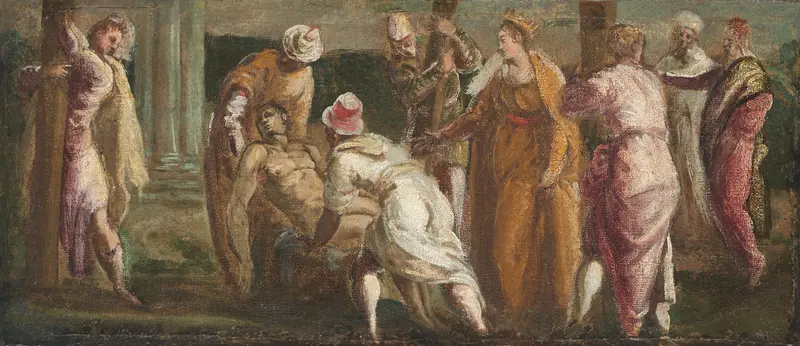
Saint Helen Testing the True Cross
Tintoretto
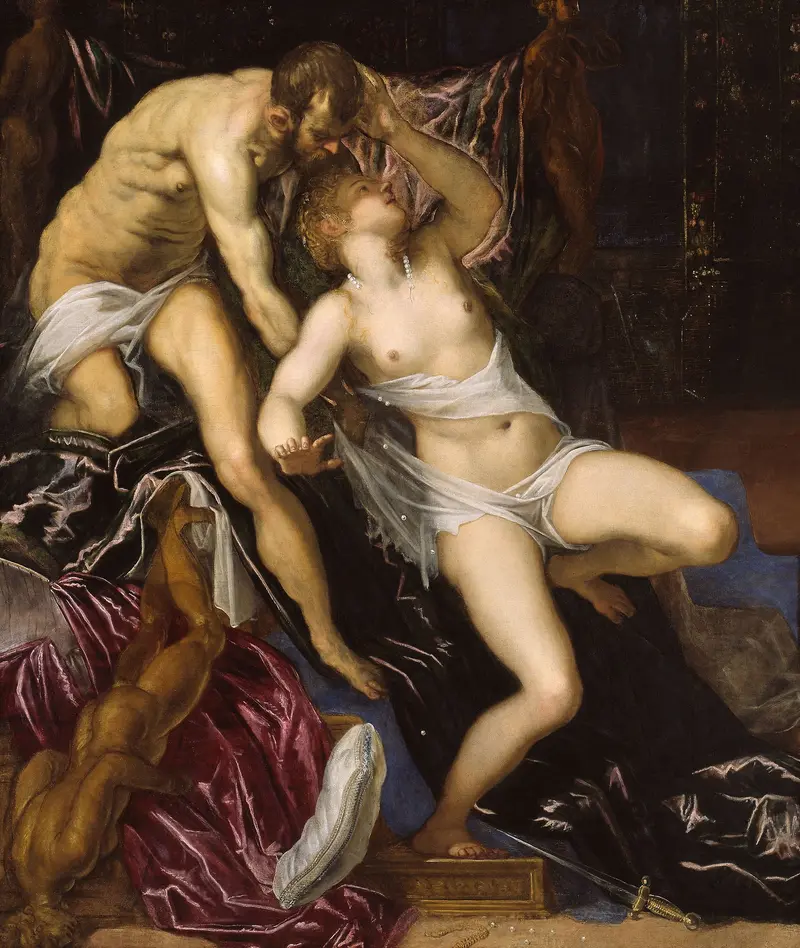
Tarquin and Lucretia
Tintoretto
Two Male Figures in Motion (verso)
Tintoretto
A Female Nude [verso]
Tintoretto
Veduta Kopra
Tintoretto





