Portrait Sketch ‘Aunt and Nephew’ — History & Facts
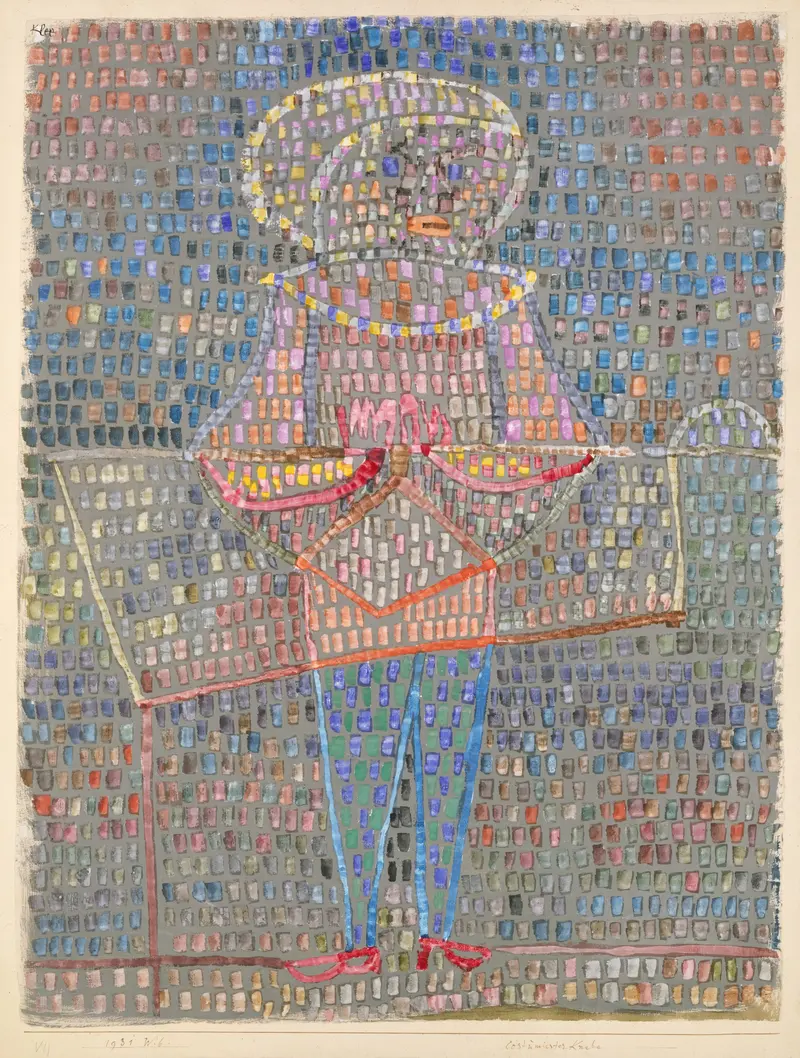
In Portrait Sketch ‘Aunt and Nephew’, Paul Klee uses a palette of muted colors, primarily browns, greens, and soft yellows. The figures are stylized and simplified, with the aunt and nephew depicted in a close, intimate pose. Klee's characteristic lines and shapes create a sense of warmth and connection between the two subjects.
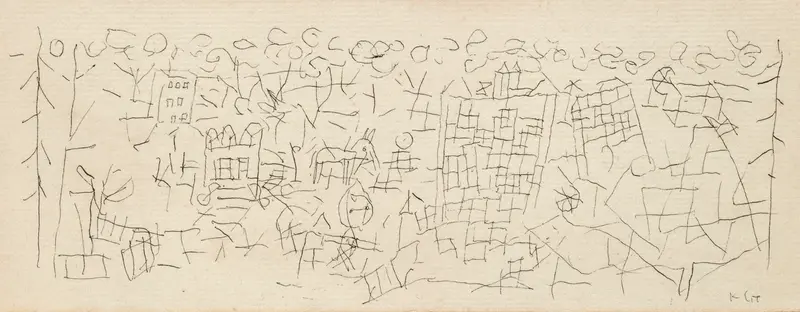
The background is minimal, focusing the viewer's attention on the figures themselves. This work is executed in ink on paper, showcasing Klee's skill in drawing and his unique approach to form. The dimensions are approximately 25 x 35 cm, making it a small yet impactful piece. The sketch captures the essence of the relationship between the aunt and nephew without excessive detail.
Klee's use of line and color reflects his modernist style, emphasizing emotional expression over realism. Paul Klee, a Swiss artist, was a key figure in the development of Expressionism and Modernism. This sketch, created in the 1930s, reflects Klee's interest in family and personal relationships. Interestingly, Klee often used simple forms and colors to convey complex emotions.
His works, including this one, continue to influence contemporary art and are celebrated for their playful yet profound qualities.