Portrait Sketch of a Costumed Lady — History & Facts
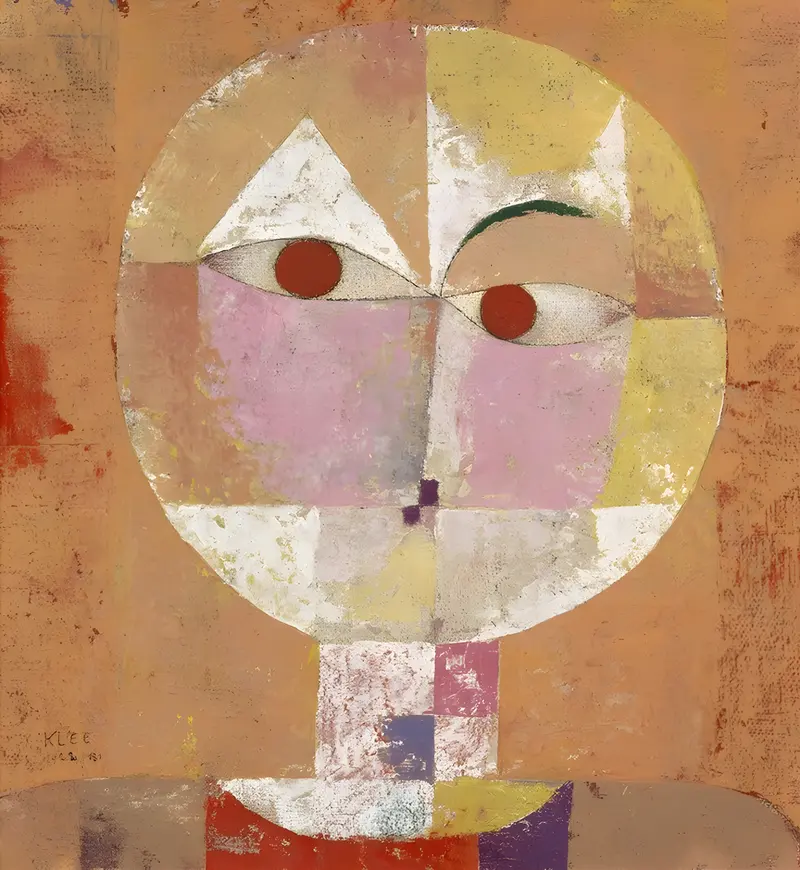
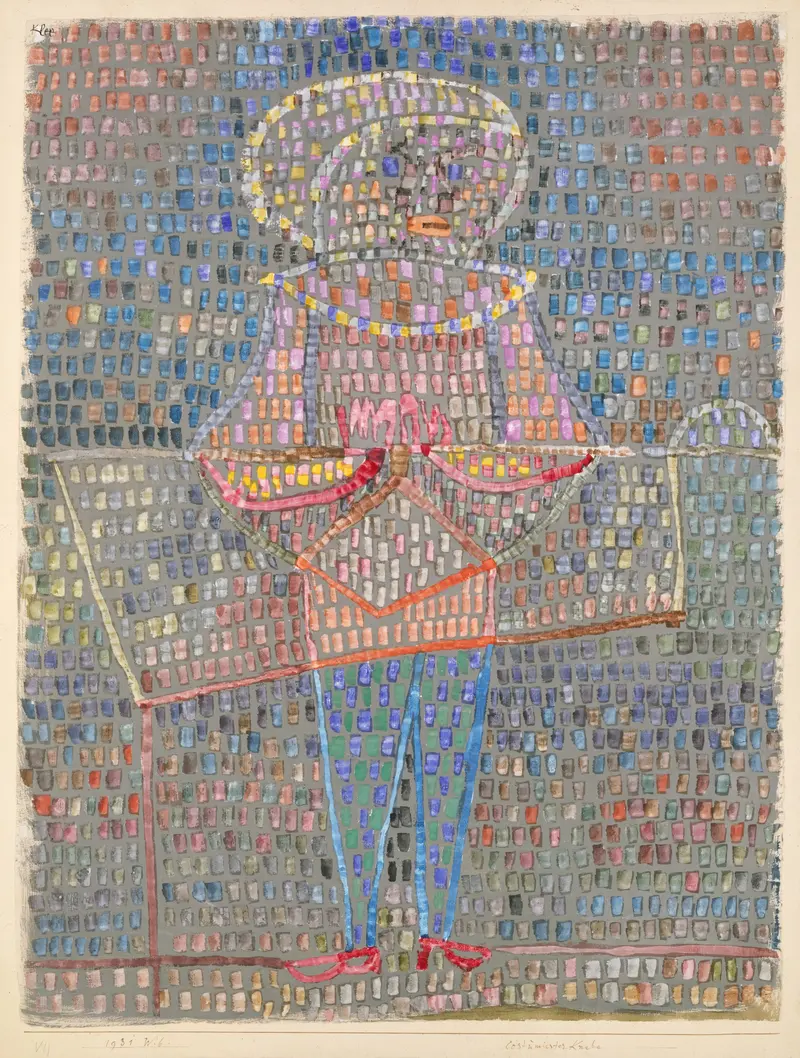
In Portrait Sketch of a Costumed Lady, Paul Klee presents a striking figure of a woman adorned in elaborate attire. The colors are vibrant, with bold reds, blues, and yellows that create a lively atmosphere. The lady's expression is both playful and mysterious, inviting viewers to ponder her story.
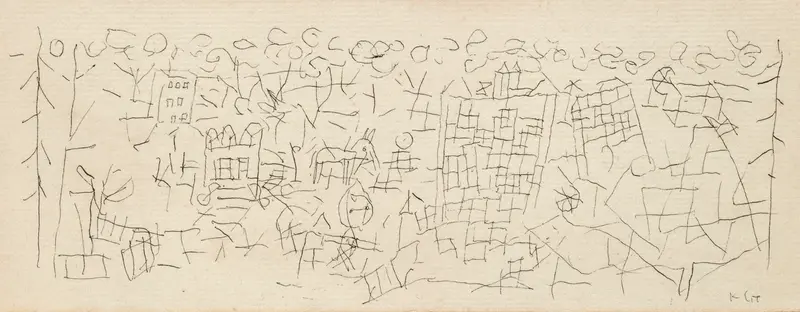
The background is minimal, allowing the figure to dominate the composition. This artwork is executed in ink on paper, showcasing Klee's signature style of combining whimsical forms with intricate details. The lines are fluid and expressive, capturing the essence of the subject with simplicity. The use of color is intentional, enhancing the emotional impact of the piece.
Viewers can appreciate the delicate balance between abstraction and representation in Klee's work. Paul Klee was a key figure in the early 20th-century art movement known as Expressionism. This sketch, created around the 1920s, reflects his interest in the interplay of color and form. Interestingly, Klee often drew inspiration from children's art, believing that their unfiltered creativity could inform his own practice.
Portrait Sketch of a Costumed Lady exemplifies this approach, merging innocence with sophistication.