Portret van kardinaal Albert van Brandenburg op 34-jarige leeftijd — History & Analysis
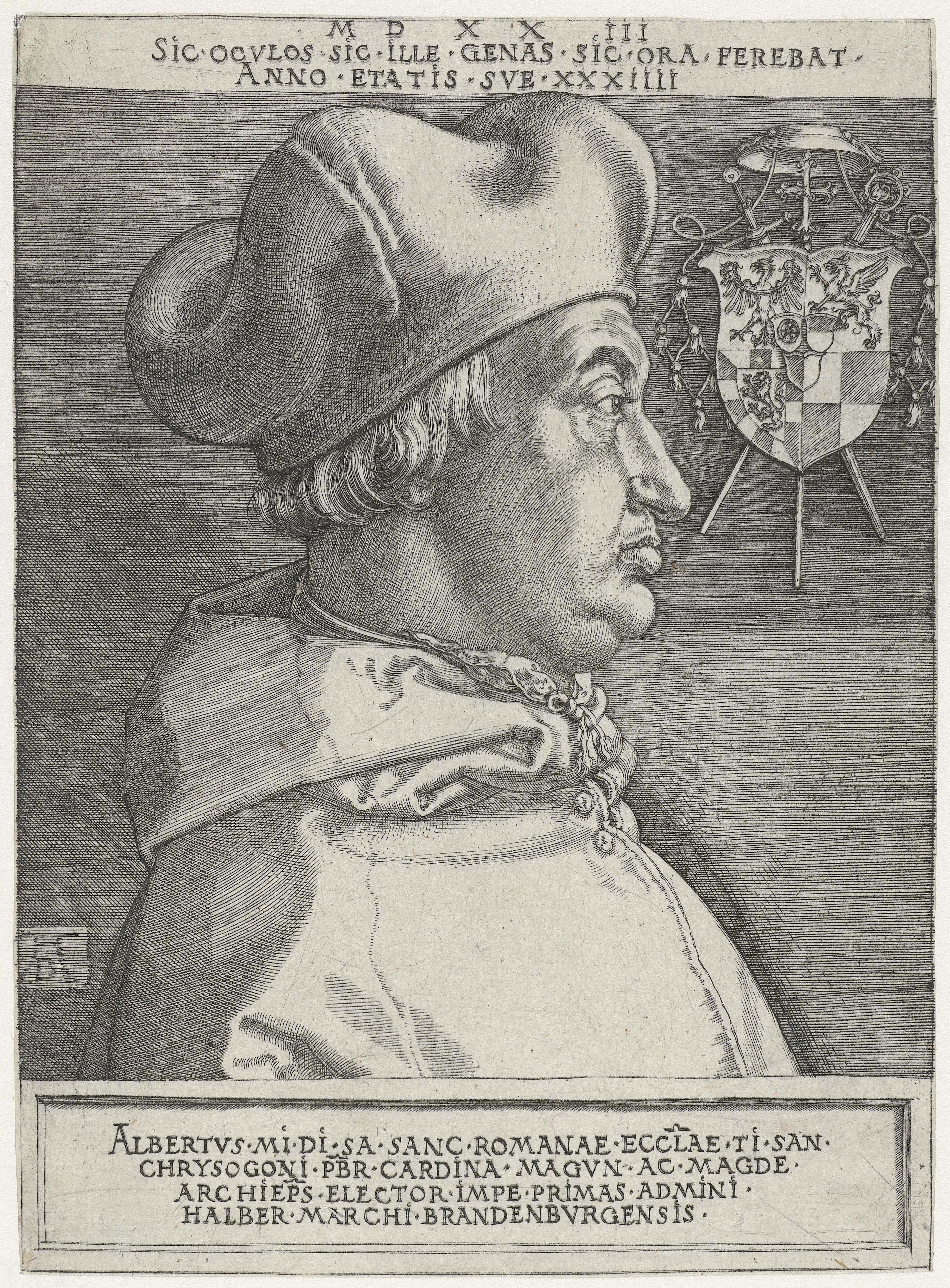
Could a single brushstroke hold eternity? In *Portret van kardinaal Albert van Brandenburg op 34-jarige leeftijd*, the weight of presence and absence intertwines, encapsulating a moment that resonates through the ages. Focus first on the dignified figure of the cardinal, his intense gaze piercing through time. Notice how the light falls upon his elaborately embroidered robes, casting subtle shadows that highlight the intricate details of the fabric. The warm, earthy tones juxtaposed with deep blacks evoke a sense of solemnity, while the background remains muted, allowing the cardinal's presence to dominate the canvas. Dürer’s meticulous technique is evident in the careful rendering of texture, especially in the cardinal’s hair, which flows like a dark river across his forehead, adding to the portrait's gravity. Delve deeper into the layers of meaning; the contrast between the cardinal's youthful visage and the heavy regalia he wears speaks to the tension of ambition and the burdens of power. His expression, both contemplative and stern, hints at an inner turbulence, possibly a foreshadowing of the loss of innocence that often accompanies high office. The subtle encroachment of darkness at the edges of the painting suggests mortality, a reminder that even those who wield great influence are not exempt from the passage of time. Dürer painted this piece in 1523, during a period marked by artistic innovation and personal introspection. Living in Nuremberg, he was at the forefront of the Northern Renaissance, experimenting with perspective and detail. At this time, Cardinal Albert was embroiled in the politics of the Church, a context that may have influenced the solemnity and depth of the portrait. The artist’s work reflects both the era's complexity and his own evolution as a master of portraiture.