
Portret van Pierre de Jélyotte — History & Facts
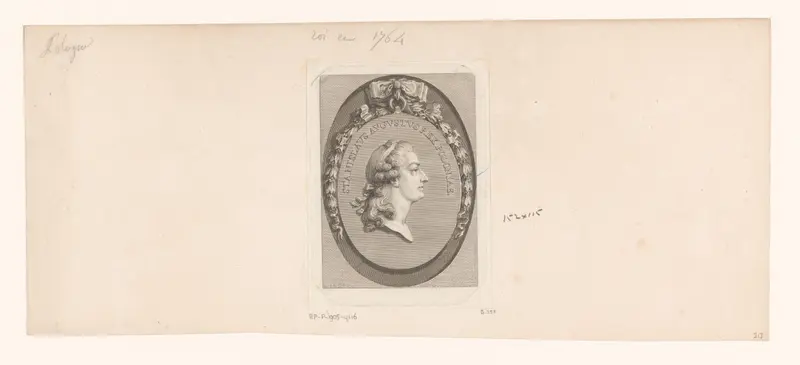
What first catches the eye here is the crisp, medallion-like profile of a man whose bearing suggests both dignity and a hint of theatrical flair. The sitter’s powdered wig, tied with a ribbon, and the high-collared coat speak to a world of ceremony and performance. The artist, Augustin de Saint-Aubin, frames Pierre de Jélyotte within a simulated stone oval, topped with a bow—a visual cue that this is a portrait meant for admiration, almost as if it were a medal struck in honor of its subject.
The fine, controlled lines of the print draw attention to the sitter’s thoughtful gaze and the assured set of his mouth, hinting at a personality shaped by public life. This print belongs to the world of late eighteenth-century France, when engravings such as this were both commemorative and promotional—celebrating figures of music, art, and the stage. Pierre de Jélyotte was a famed operatic tenor, and portraits like this would have circulated among admirers and patrons, cementing his reputation beyond the theater. Augustin de Saint-Aubin was known for his deft touch with the burin, capturing not just likeness but a sense of the sitter’s social role.
Though history has kept few traces of this particular print’s journey, its careful execution and formal presentation invite us to imagine the circles in which it once moved—among music lovers, collectors, and the Parisian elite. Look again at the engraved textures and the poised silhouette: this is how fame was made visible in the age of Enlightenment salons.
More Artworks by Augustin de Saint-Aubin

Parade
Augustin de Saint-Aubin
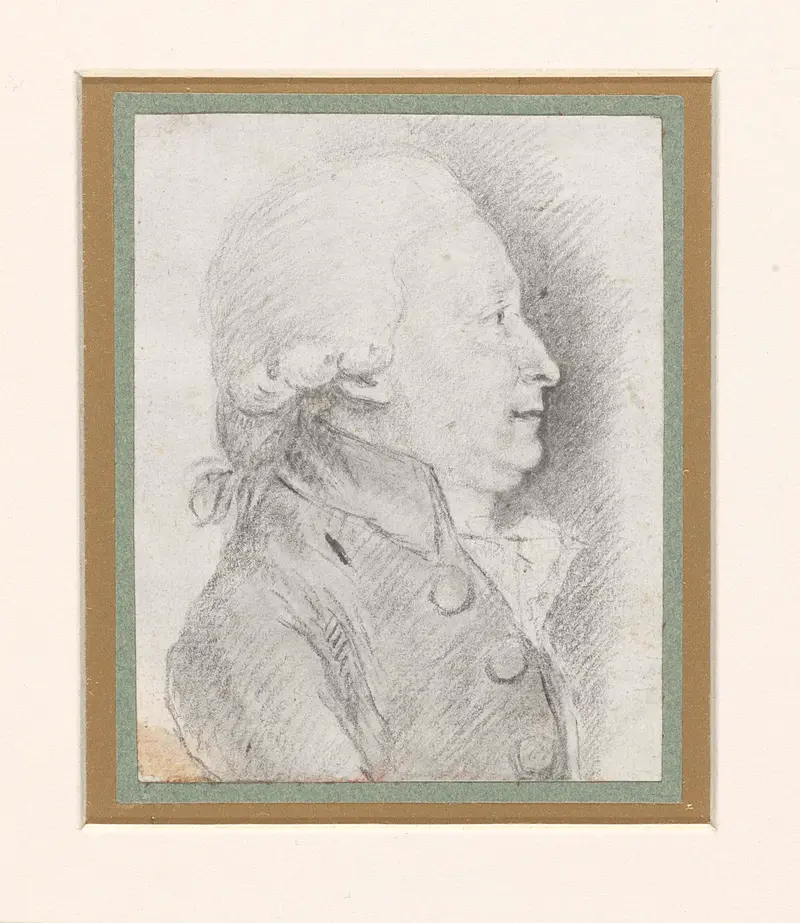
Profielportret van een oudere man met pruik
Augustin de Saint-Aubin
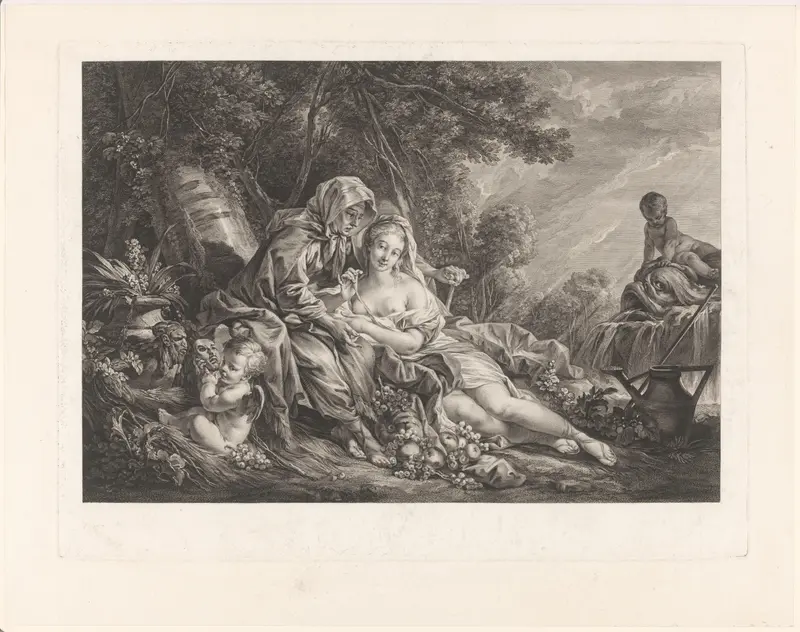
Vertumnus en Pomona in een parklandschap
Augustin de Saint-Aubin
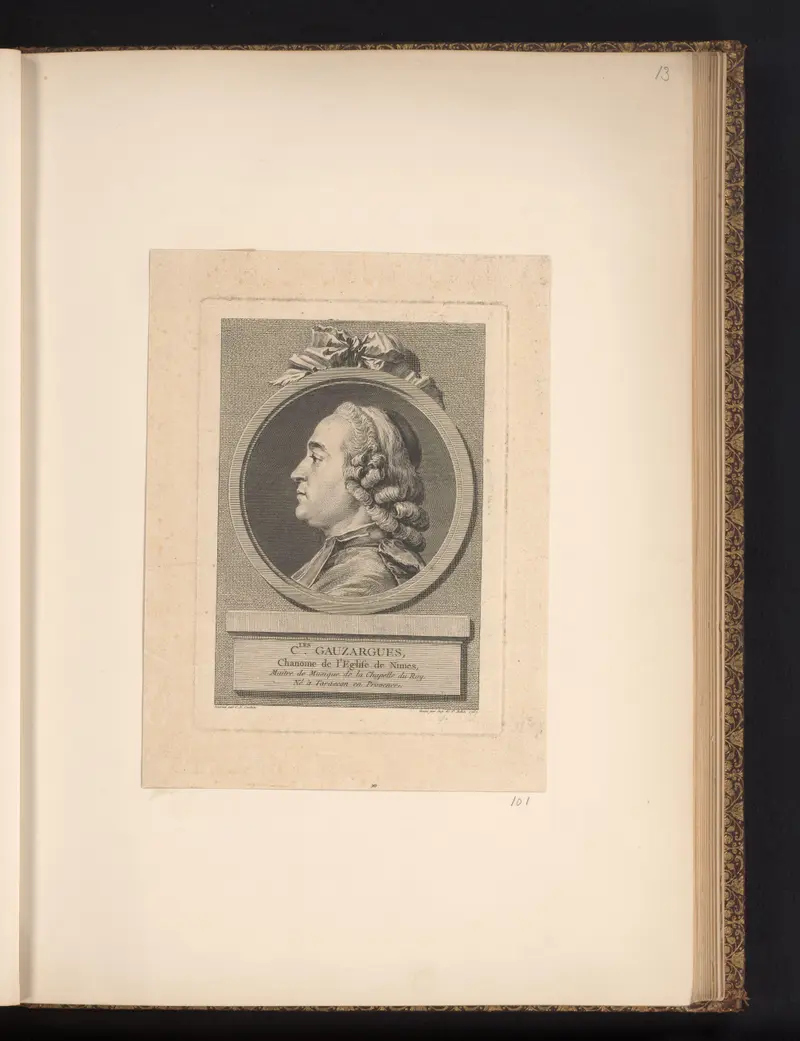
Portret van Charles Gauzargues
Augustin de Saint-Aubin
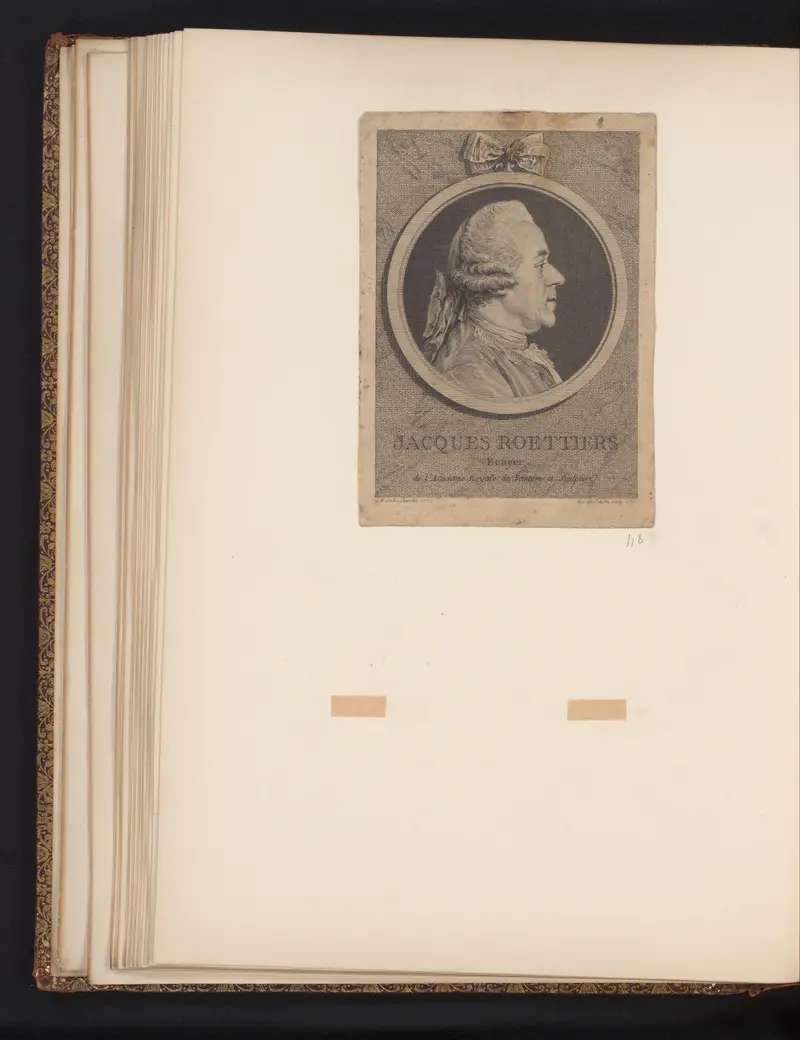
Portret van Jacques Roëttiers III
Augustin de Saint-Aubin
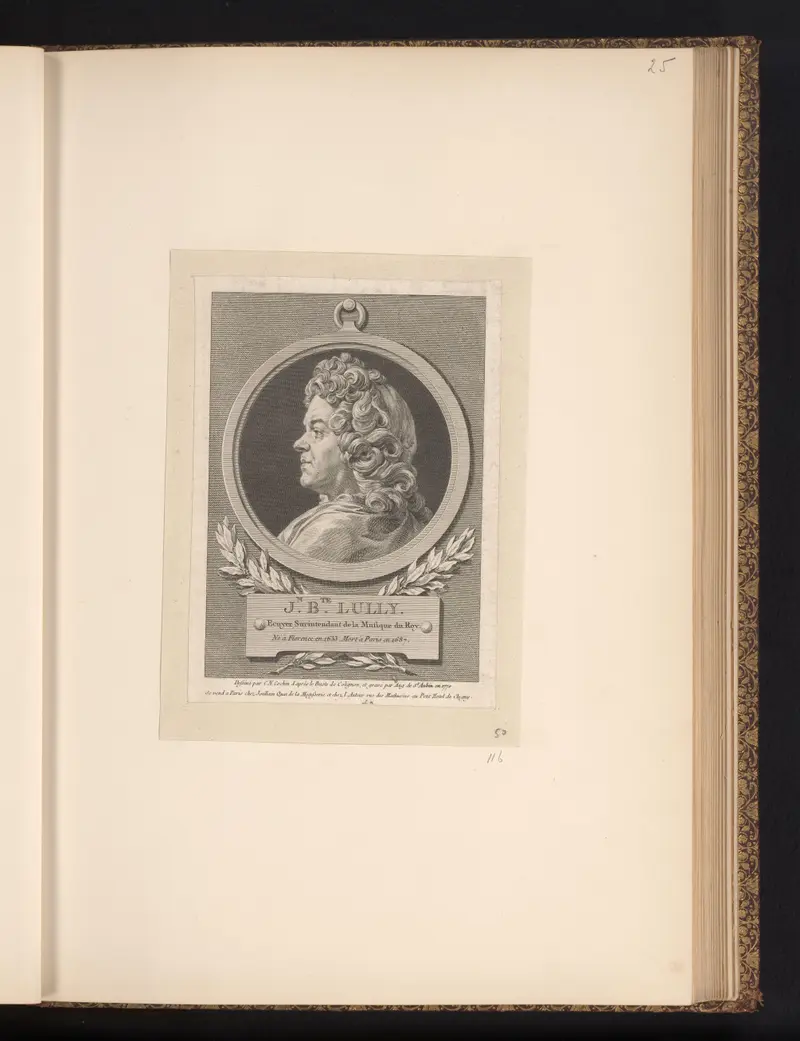
Portret van Jean-Baptiste Lully
Augustin de Saint-Aubin
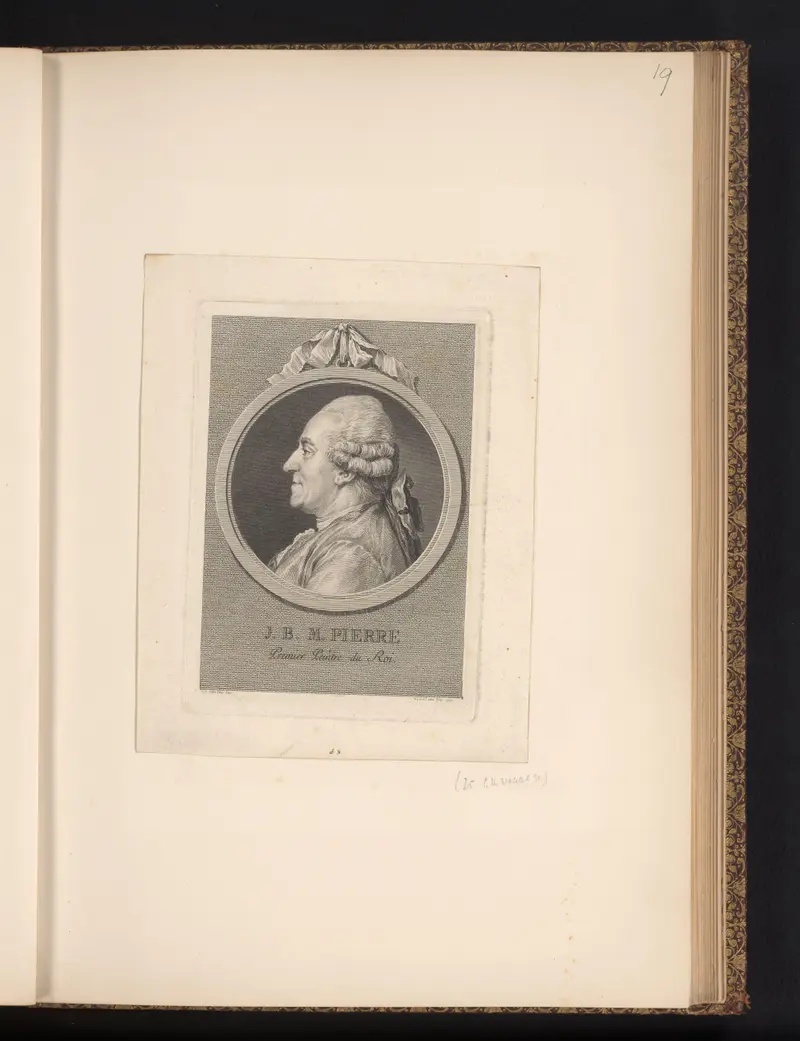
Portret van Jean Baptiste Marie Pierre
Augustin de Saint-Aubin
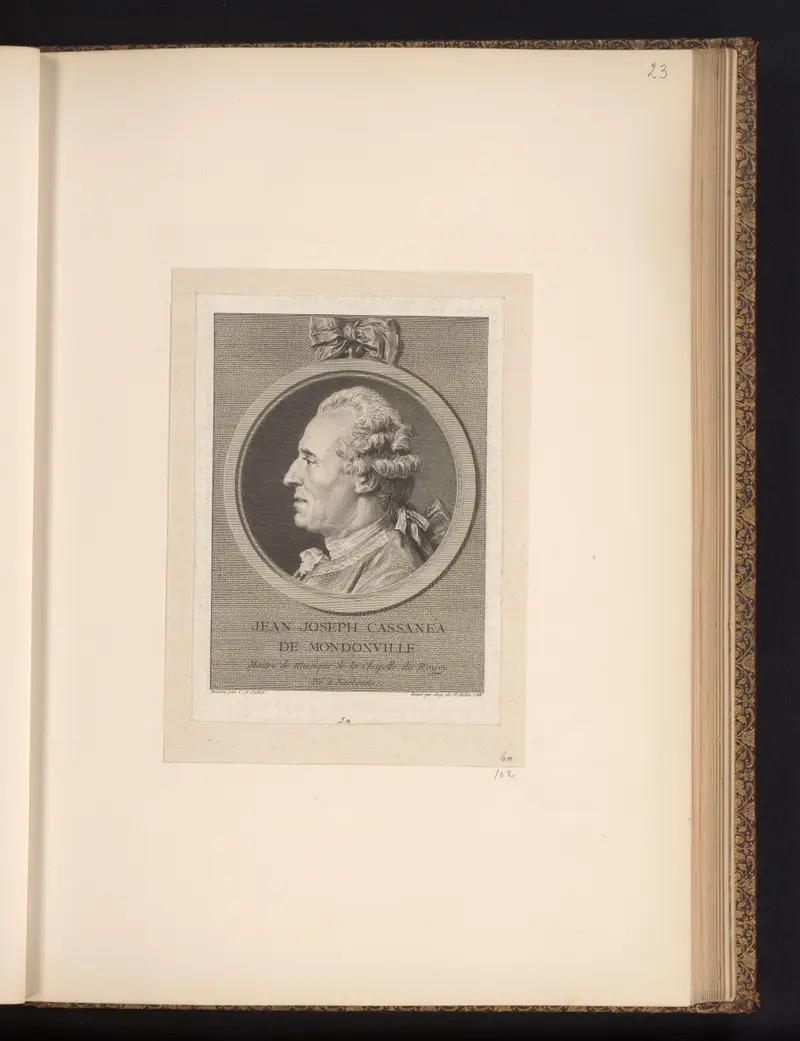
Portret van Jean-Joseph Cassanéa de Mondonville
Augustin de Saint-Aubin
Portret van Joseph Charles Roëttiers
Augustin de Saint-Aubin
Portret van Stanislaus II Augustus van Polen
Augustin de Saint-Aubin





