
Presenting the Loaf to the Tsar (The Frog Princess) — History & Facts
What draws the eye first in Presenting the Loaf to the Tsar (The Frog Princess) is the theatrical exchange at its center: a young man, head held high, offers a fantastical loaf crowned with miniature onion domes to a richly robed tsar. The loaf itself is no mere bread, but a marvel of confection, its frosted peaks echoing the architecture of old Russia, signaling both abundance and cunning. The tsar, enthroned and bearded, leans forward with a knowing smile, his hand poised as if already savoring the taste, while courtiers in muted tones observe the ritual.
The palette is a tapestry of golds, blues, and reds, each hue reinforcing the fairy-tale luxury and the ceremonial gravity of the moment. Below, a second, almost theatrical panel frames the loaf on a table, flanked by ornate vases, as if to underscore its magical transformation from simple bread to royal tribute. Works like this, inspired by Russian folklore and fairy tales, flourished in the late 19th and early 20th centuries, when artists such as Ivan Bilibin brought the world of Slavic legend to life through illustration. These images were often commissioned for storybooks or as part of the burgeoning movement to reclaim and celebrate national heritage through art.
The date noted by the source, 2011-11-17, marks its presence in a modern online collection, but the style unmistakably harks back to the golden age of Russian illustration, when artists blended folk motifs with Art Nouveau influences. History has kept few traces of the journeys of individual illustrations like this, but their purpose remains clear: to enchant, to instruct, and to invite viewers to linger over every whimsical, painstaking detail. Let your gaze return to the loaf itself—part feast, part fairy-tale castle, and entirely a work of imagination.
More Artworks by Ivan Bilibin

Ivan Tsarevich and the Firebird
Ivan Bilibin

View Of The Nile
Ivan Bilibin
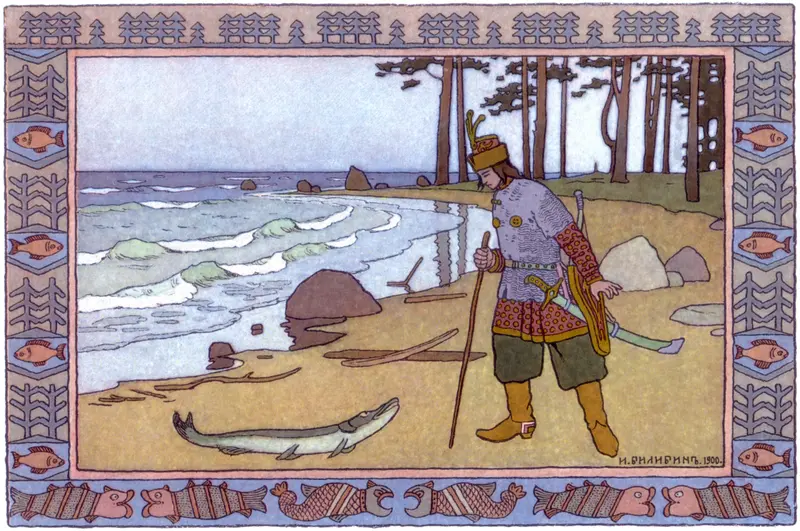
Ivan Tsarevich and the Pike (The Frog Princess)
Ivan Bilibin
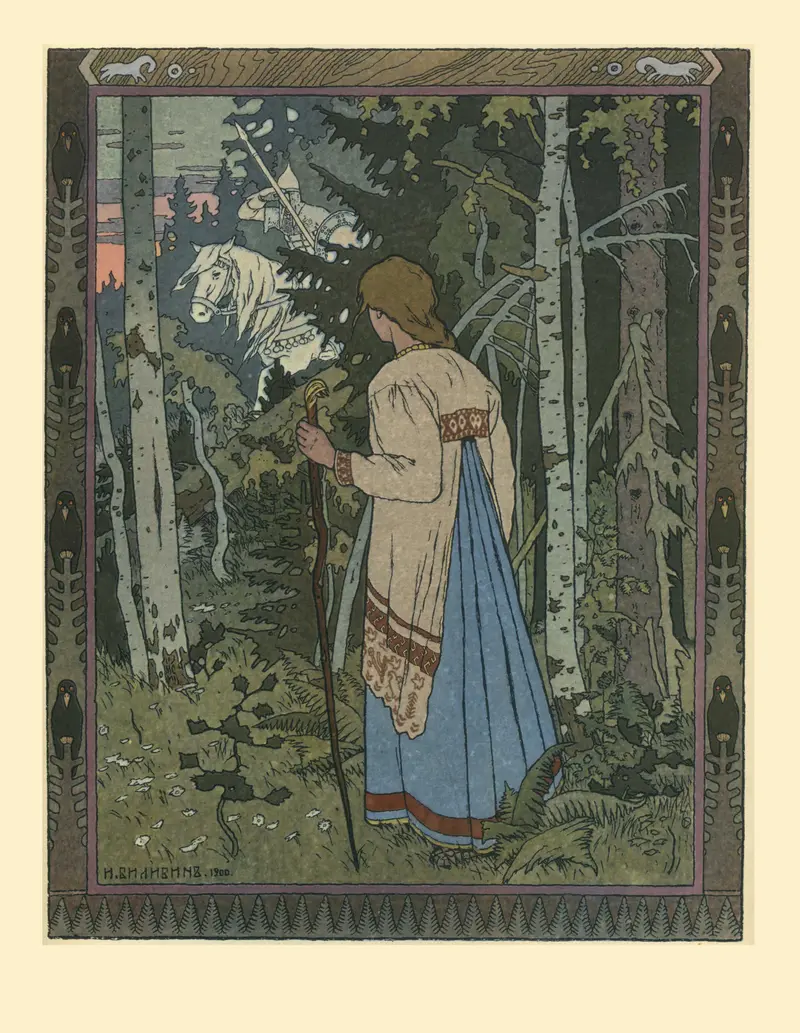
The White Horseman (Vasilisa the Beautiful)
Ivan Bilibin
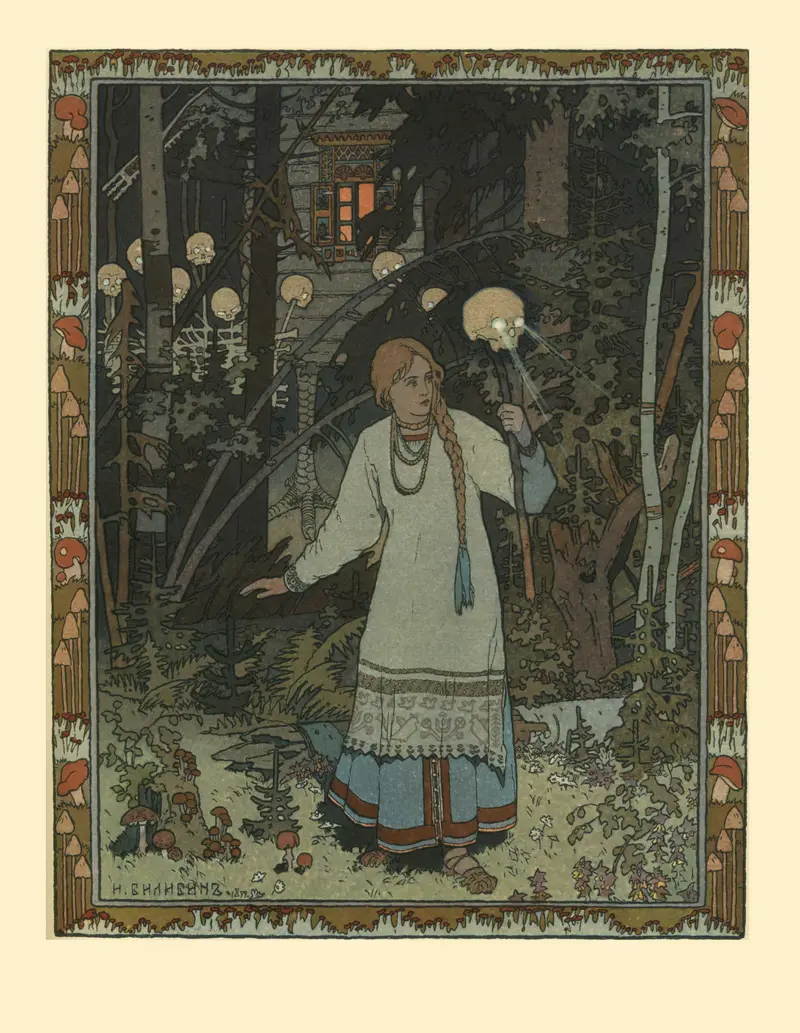
Vasilisa the Beautiful at the Hut of Baba Yaga
Ivan Bilibin
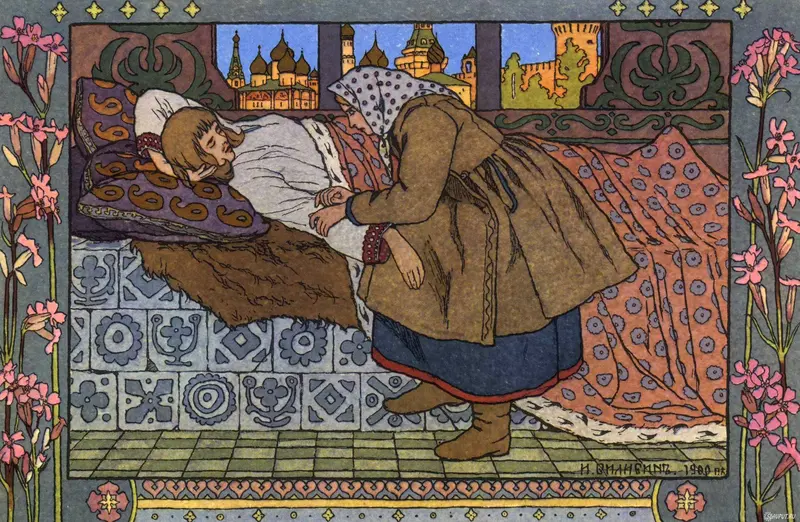
The Maiden Finds Finist (The Feather of Finist the Falcon)
Ivan Bilibin
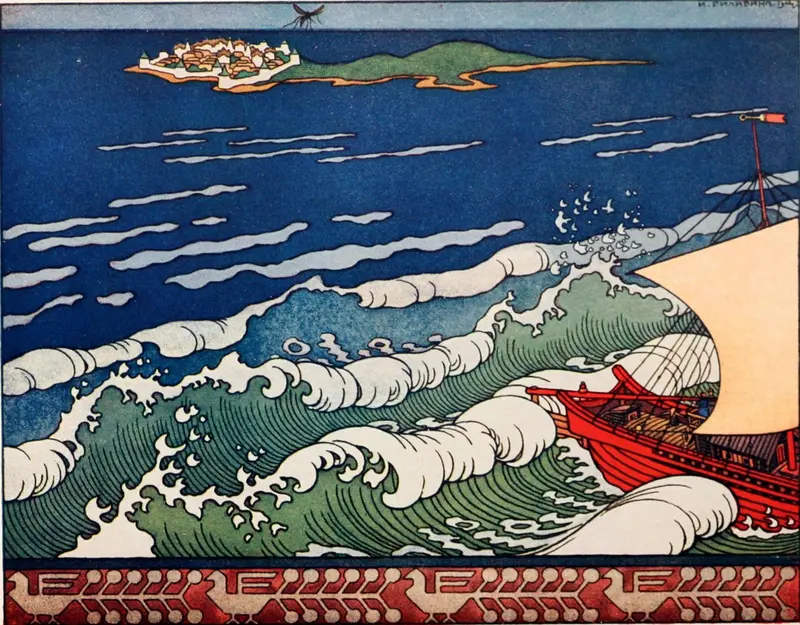
The Ship on the Stormy Sea
Ivan Bilibin
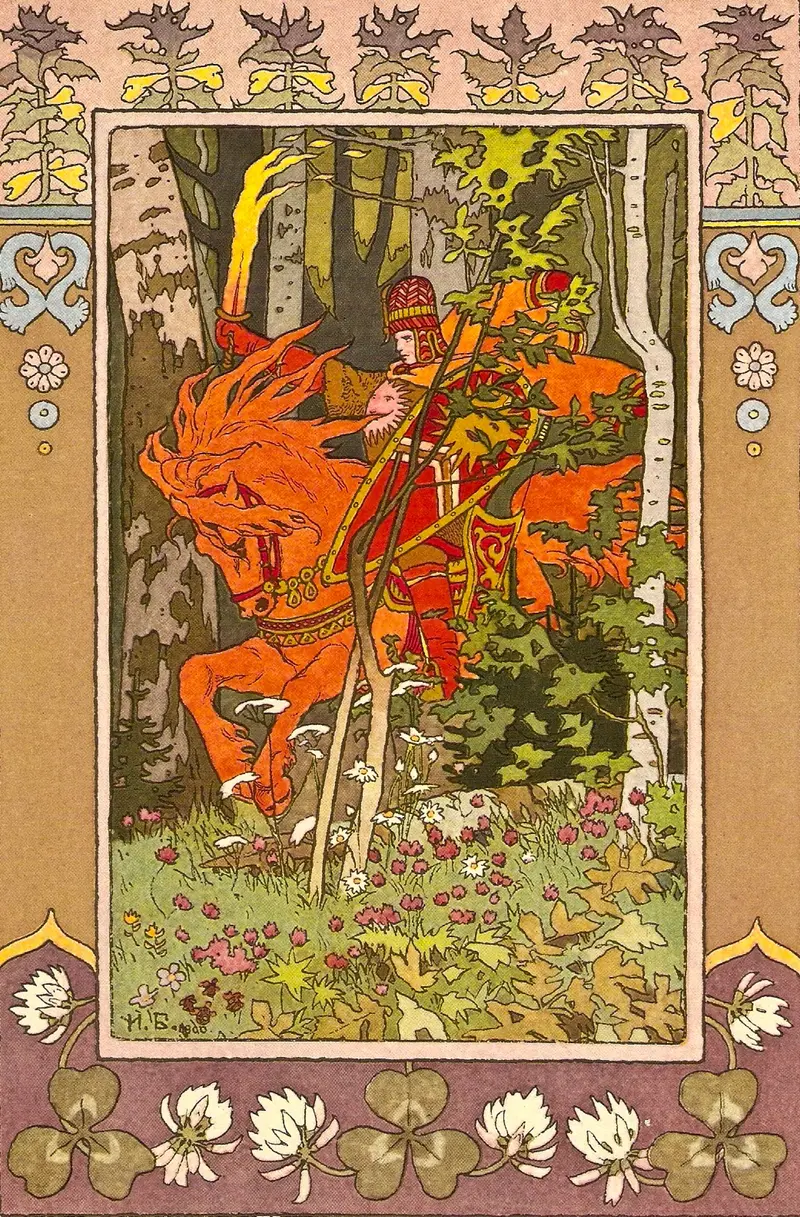
The Red Horseman (Vasilisa the Beautiful)
Ivan Bilibin
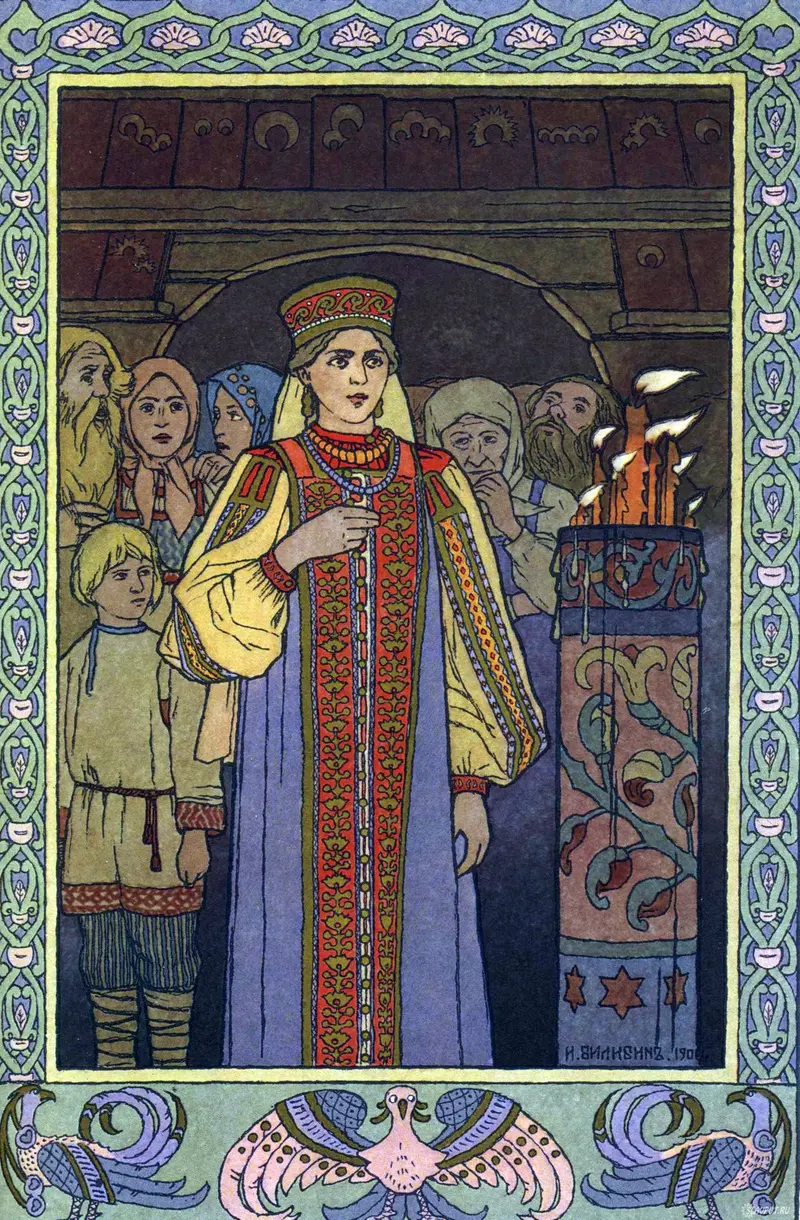
Maryushka and Her Sisters (The Feather of Finist the Falcon)
Ivan Bilibin
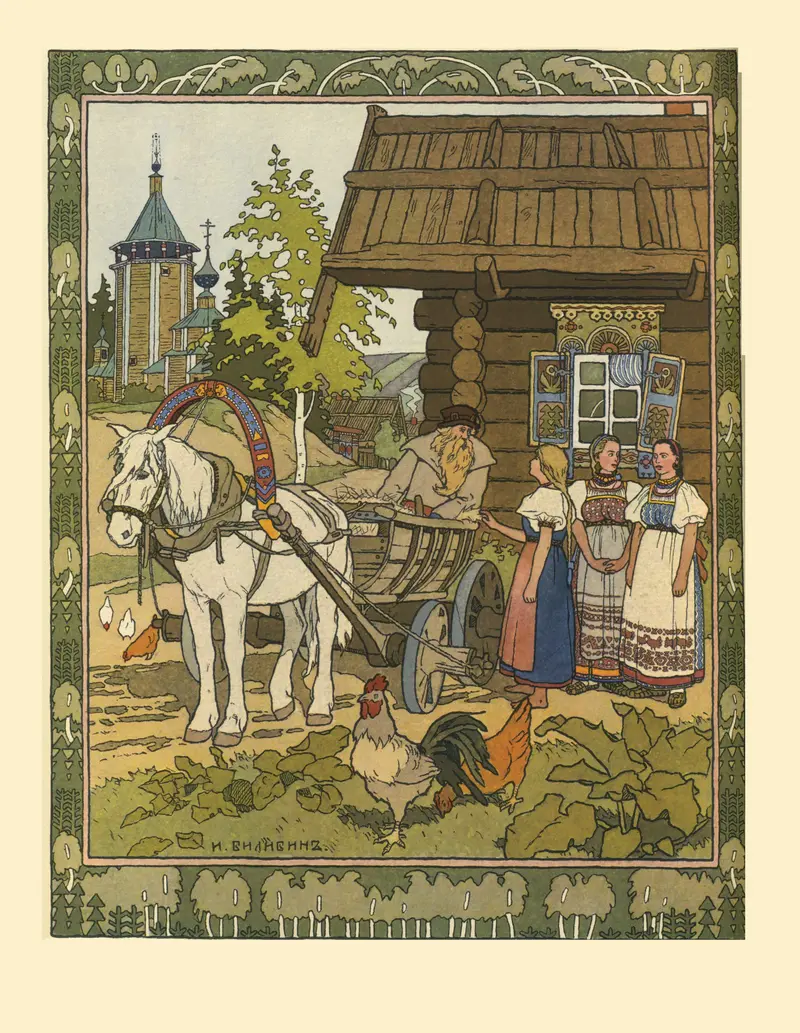
At the Maiden's Farmstead (The Feather of Finist the Falcon)
Ivan Bilibin
More Genre Scene Art

Banquet of the Officers of the St George Civic Guard
Frans Hals

Rembrandt and Saskia in the Scene of the Prodigal Son
Rembrandt van Rijn

Bal du moulin de la Galette
Pierre-Auguste Renoir

Quadrille at the Moulin Rouge
Henri de Toulouse-Lautrec

A Burial at Ornans
Gustave Courbet

When Will You Marry?
Paul Gauguin