Prickly Poppy with Beetle and Ants — History & Facts
What first seizes the viewer in Prickly Poppy with Beetle and Ants is the sense of a living world unfolding on a single stalk. The eye is drawn upward by the jagged, almost architectural leaves, each spine rendered with a precision that seems to bristle off the page. At the summit, a pale yellow poppy blooms, its petals creased and alive, while a beetle perches atop, antennae alert.
Below, a caterpillar inches along, a second beetle glistens with a shell of deep mahogany, and a moth, wings outstretched, anchors the composition. The insects are not mere decoration: each is caught in a moment of purposeful motion, their presence turning the plant into a stage for the drama of metamorphosis and survival. This work belongs to the world of early eighteenth-century natural history, when artists like Maria Sibylla Merian transformed the study of plants and insects into both science and art. Created in 1705 for her celebrated Metamorphosis insectorum surinamensium, Merian’s illustrations were painted from life in Suriname, at a time when European audiences were hungry for knowledge of the Americas’ strange flora and fauna.
Such works were commissioned by collectors, scientists, and wealthy patrons eager to possess the wonders of distant lands. The careful observation, life-sized scale, and vivid detail seen here reflect the era’s merging of curiosity and order, as well as Merian’s own pioneering vision. Look again at the poppy and its inhabitants; each thorn, wing, and segment is a testament to a moment when art and discovery were inseparable.
More Artworks by Maria Sibylla Merian
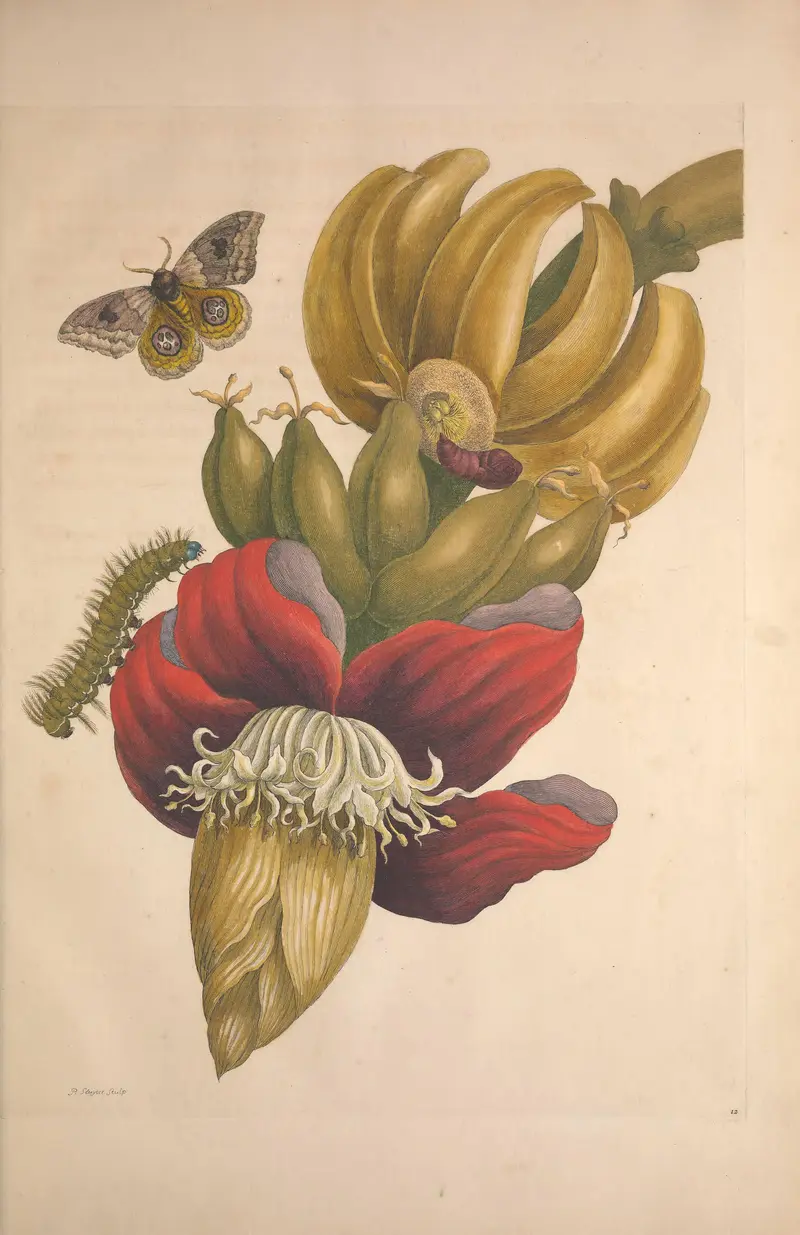
Banana with Bullseye Moth and Caterpillar
Maria Sibylla Merian
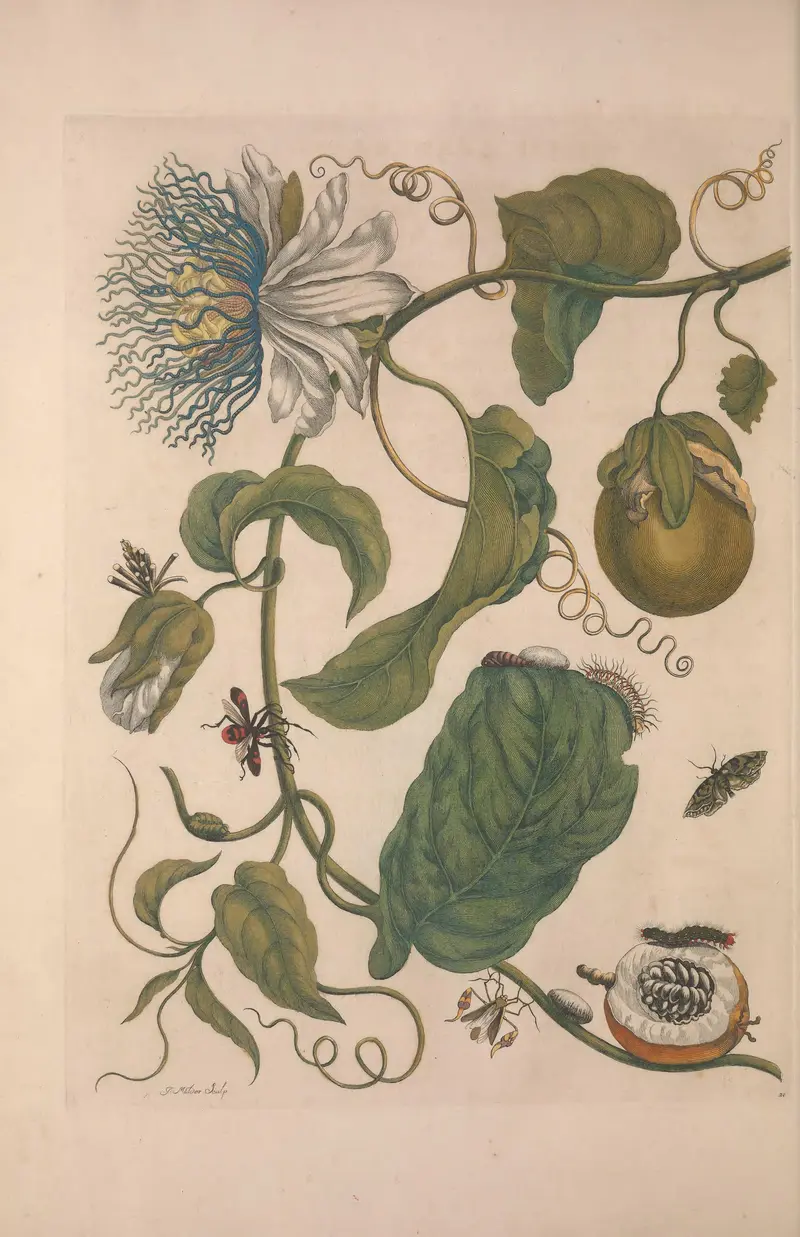
Passionflower with Caterpillars and Insects
Maria Sibylla Merian
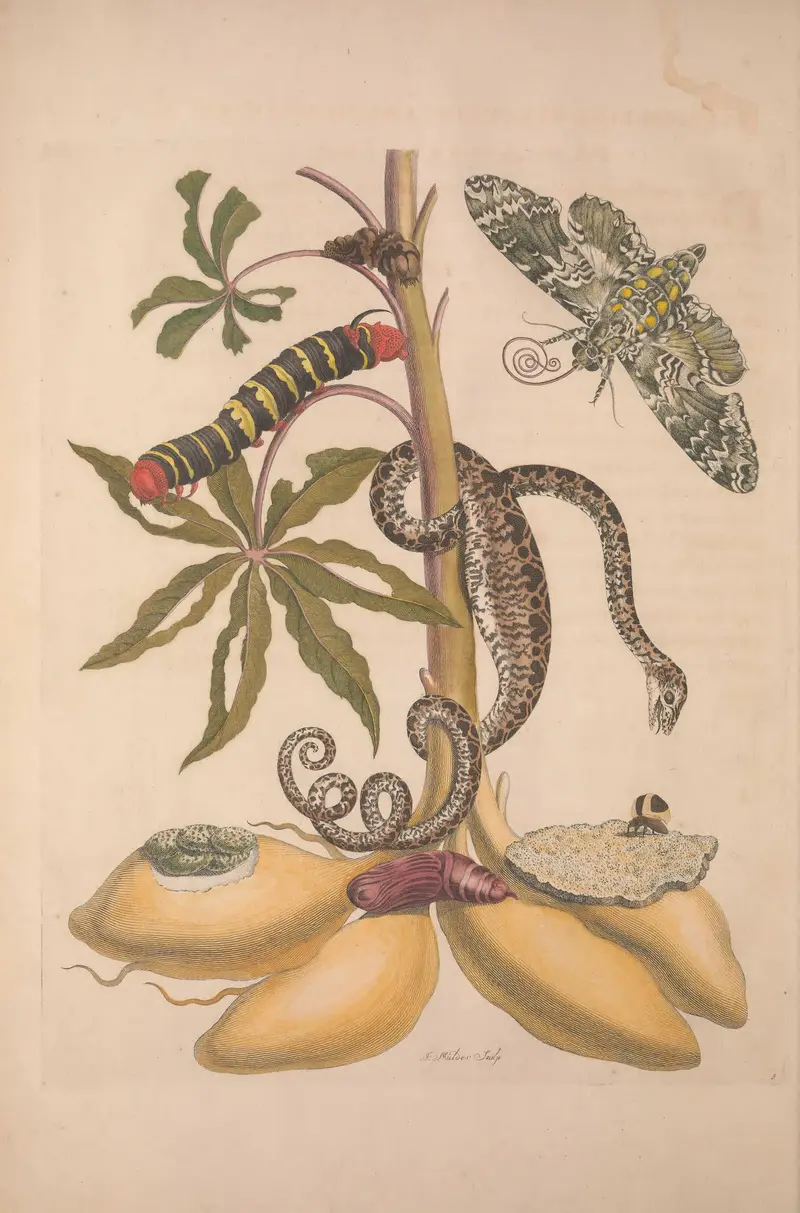
Cassava Root with Tree Boa and Sphinx Moth
Maria Sibylla Merian
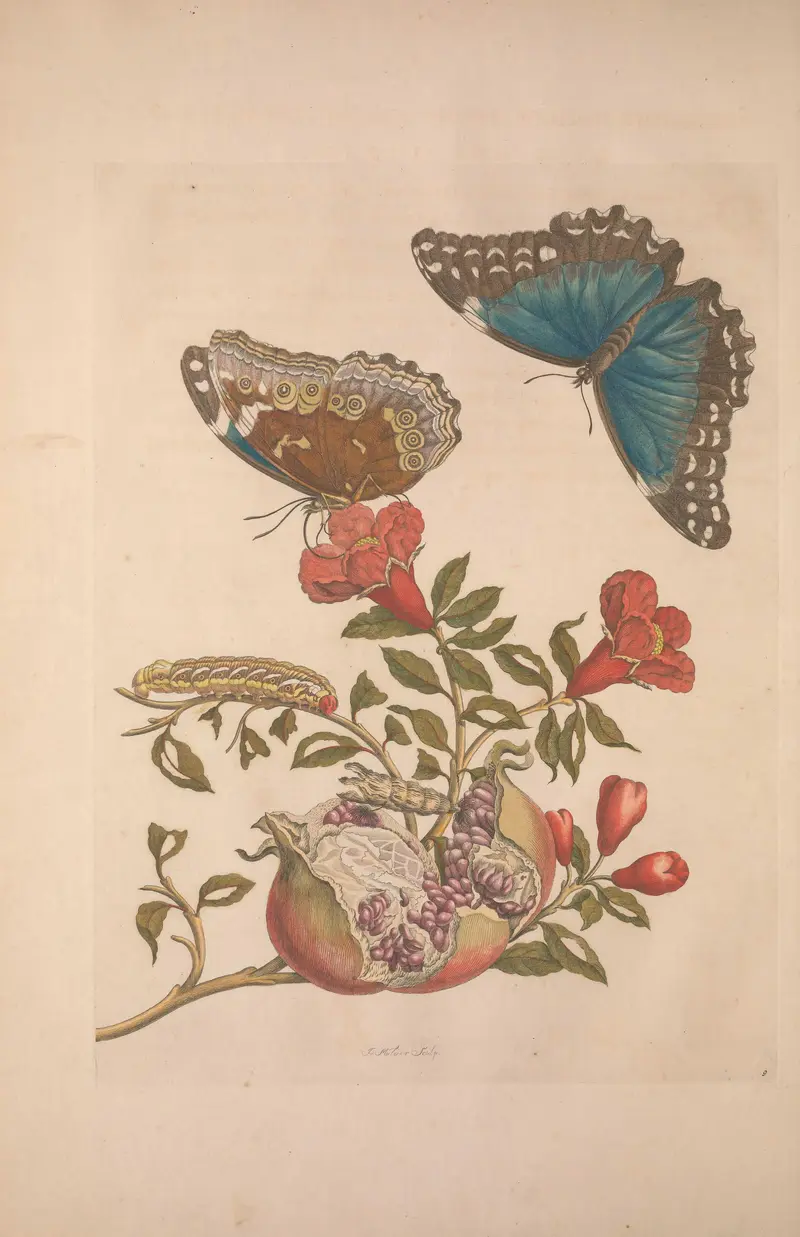
Pomegranate with Caterpillar, Pupa and Blue Butterfly
Maria Sibylla Merian
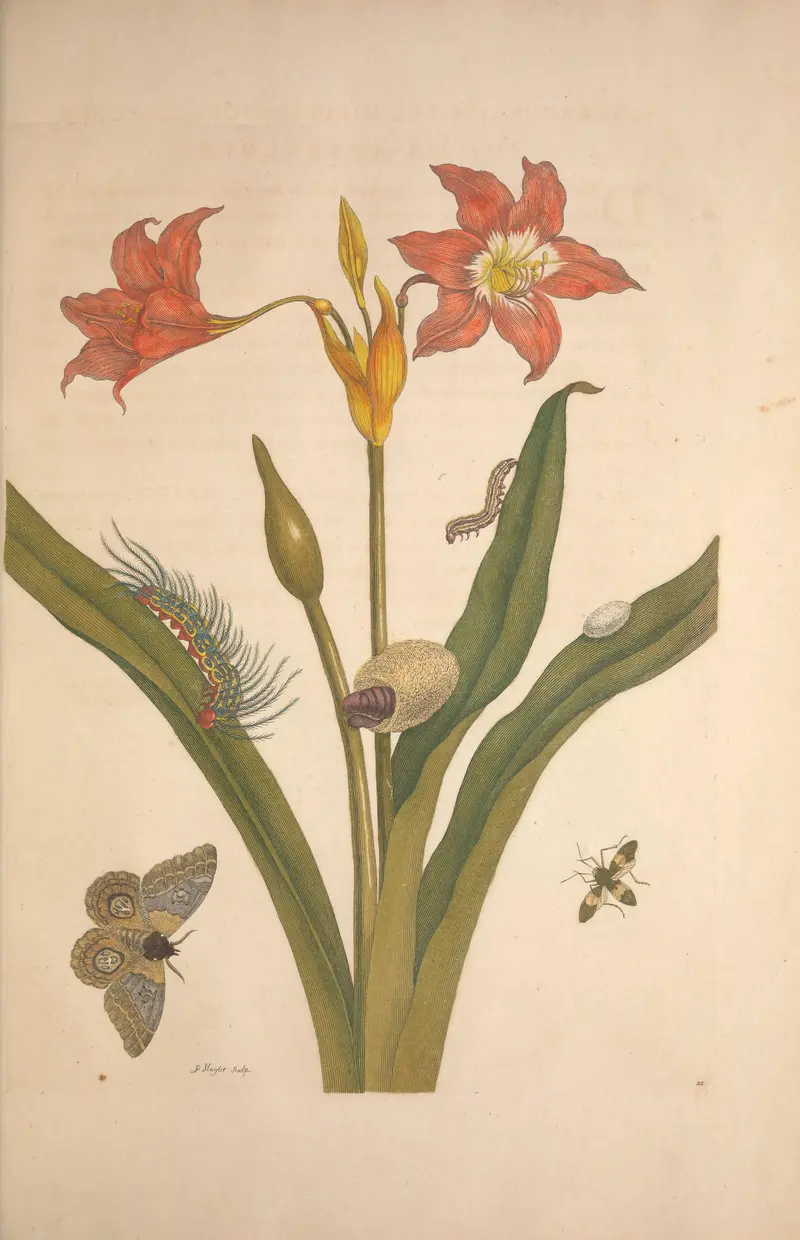
Red Amaryllis Lily with Moth and Caterpillars
Maria Sibylla Merian
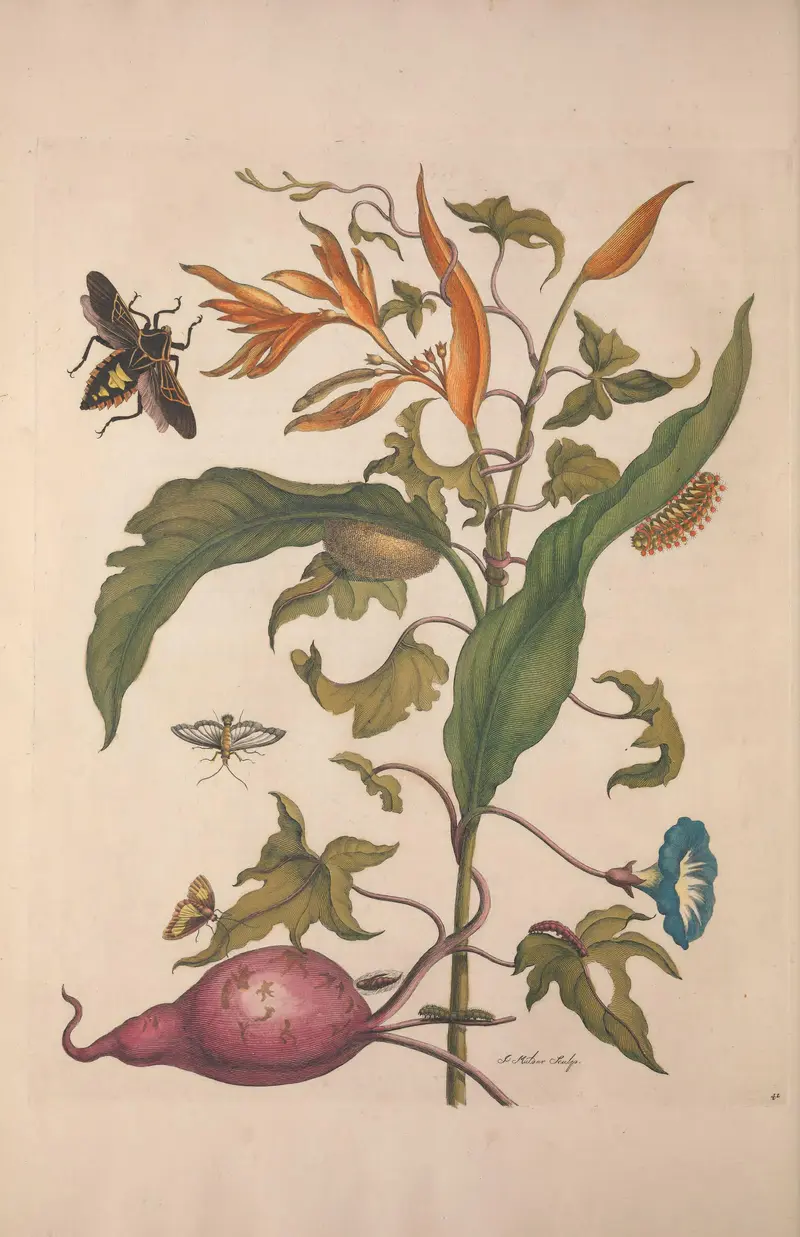
Sweet Potato with Beetle and Butterfly
Maria Sibylla Merian
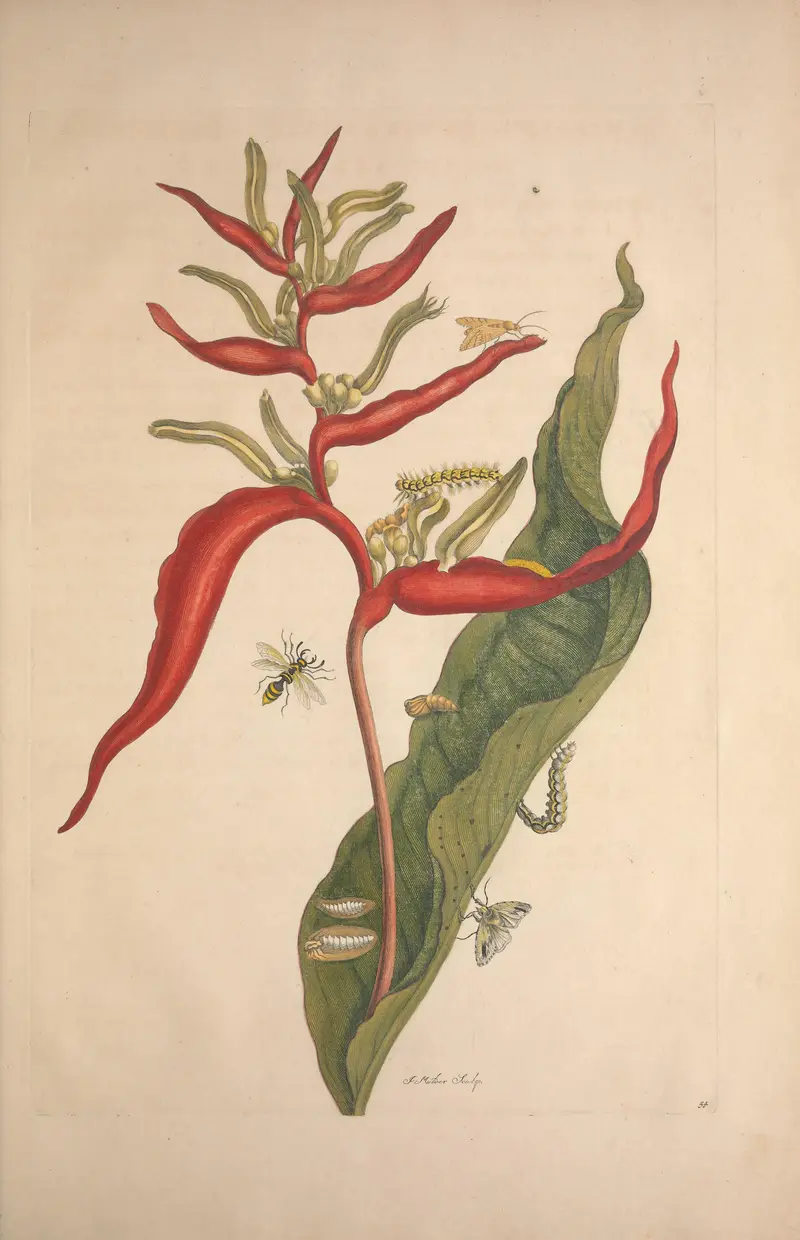
Heliconia with Moth
Maria Sibylla Merian
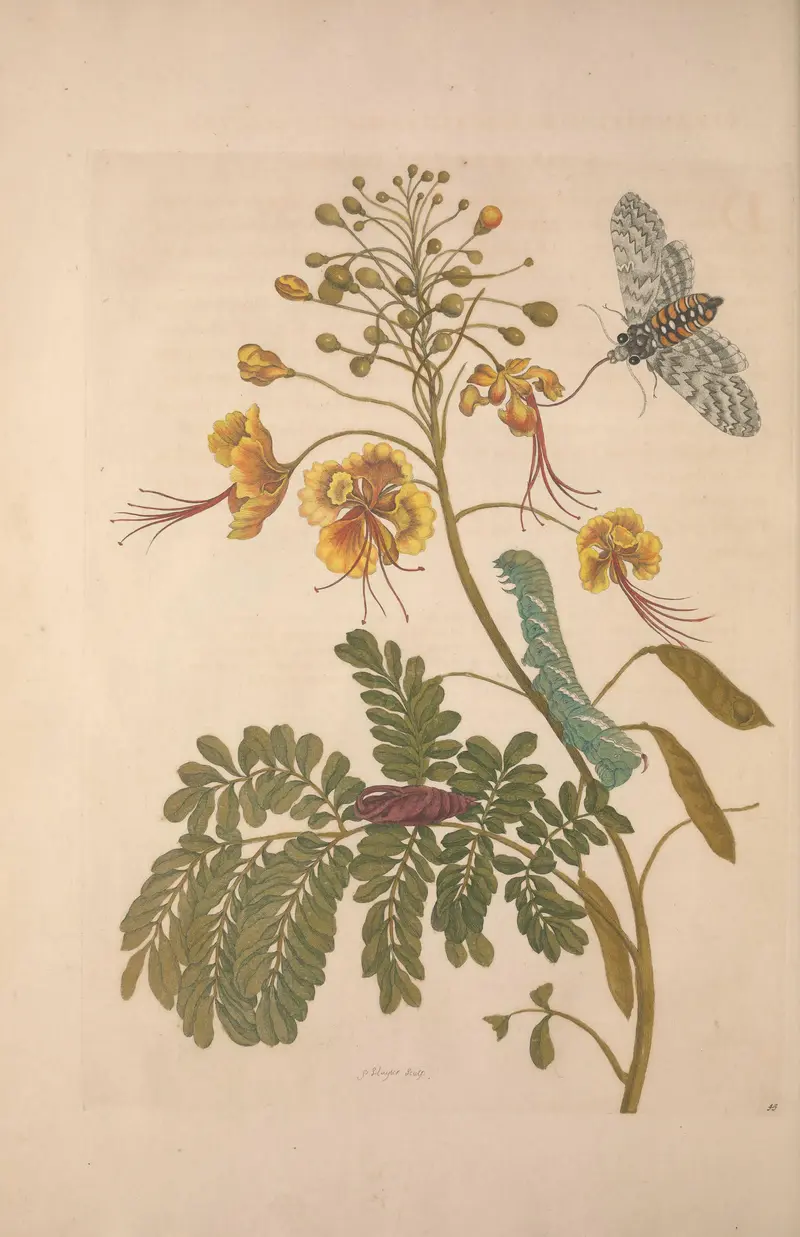
Mimosa with Moth and Caterpillar
Maria Sibylla Merian

Grapevine with Caterpillar and Moth
Maria Sibylla Merian
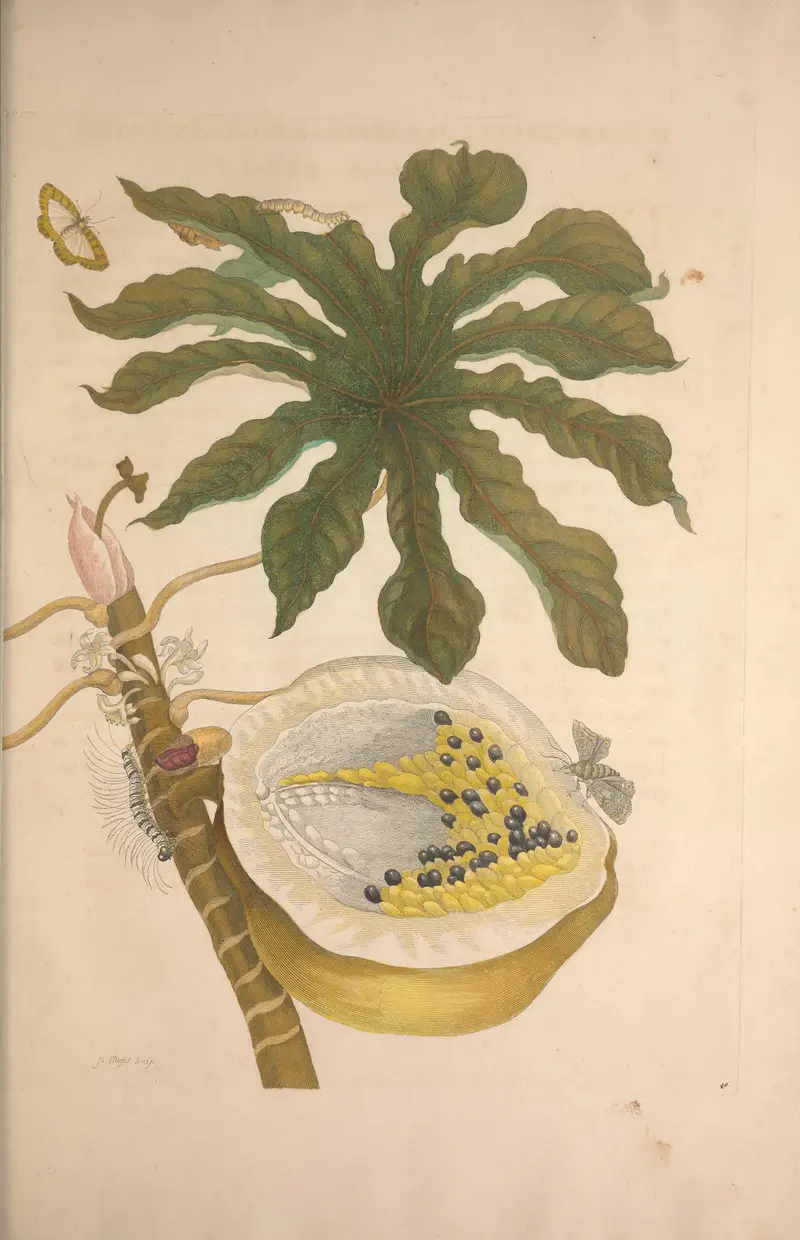
Papaya with Moth and Caterpillar
Maria Sibylla Merian