
Près d’Arles, ou Le Mas d’Arles — History & Facts
Can paint confess what words never could? In Près d’Arles, ou Le Mas d’Arles, the raw emotions hidden within the vibrant colors resonate with an unspoken intensity, revealing the artist's inner turmoil. Focus on the foreground where the fiery reds and oranges of the earth almost pulse under the weight of the sun. Notice how the stark contrast of the cool blue sky casts a looming shadow over the landscape, setting a dramatic tension between serenity and conflict. The brushstrokes are thick and expressive, suggesting both freedom and aggression, inviting you to explore the narrative woven into the land itself. Delve deeper into the composition, where the solitude of the farmhouse stands resilient against nature’s fervor.
The twisted trees bend and sway as if caught in an unseen struggle, symbolizing a profound disquiet beneath the apparent tranquility. This contrast between harmony and violence hints at the complexities of rural life that Gauguin himself grappled with, reflecting a world both beautiful and brutal. In 1888, Paul Gauguin resided in Arles, a place where he sought artistic inspiration and personal salvation. This period marked a turning point in his career, as he wrestled with the chaos of his own existence while interacting with contemporaries like Vincent van Gogh.
The painting captures not just a moment in time, but the essence of an artist standing at the crossroads of creativity and conflict, searching for meaning in a fragmented world.
More Artworks by Paul Gauguin
Browse all →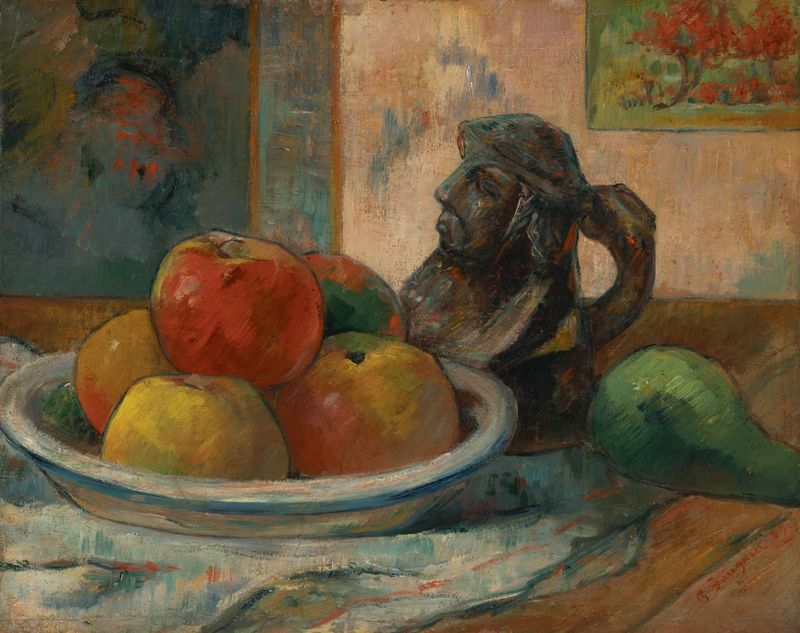
Still Life with Apples, a Pear, and a Ceramic Portrait Jug
Paul Gauguin
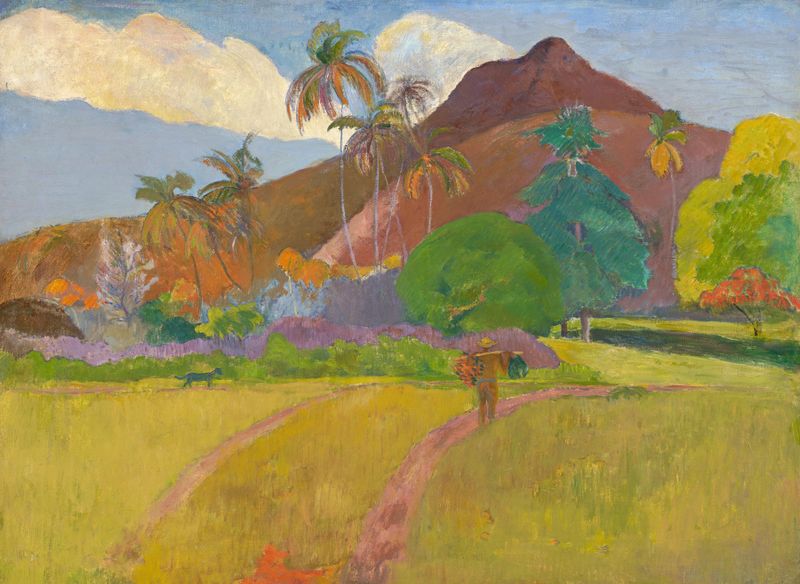
Tahitian Landscape
Paul Gauguin

Landscape near Pont-Aven
Paul Gauguin

No te aha oe riri (Why Are You Angry?)
Paul Gauguin
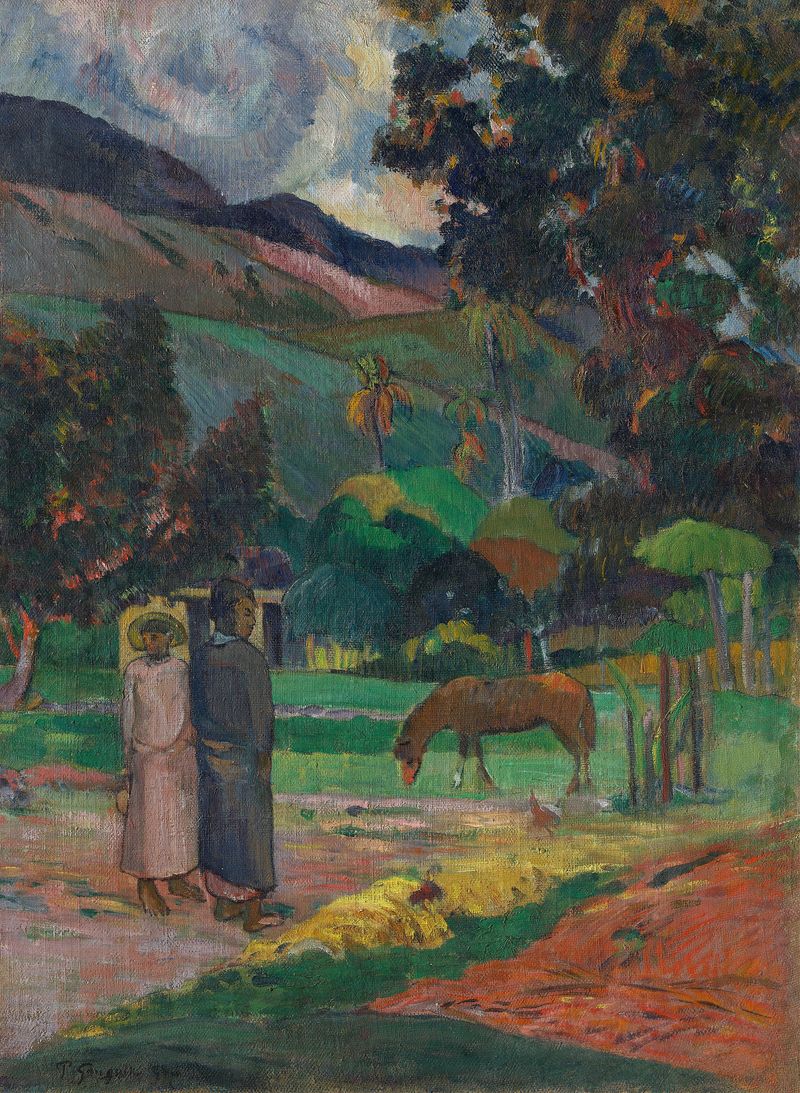
Tahitian Landscape
Paul Gauguin
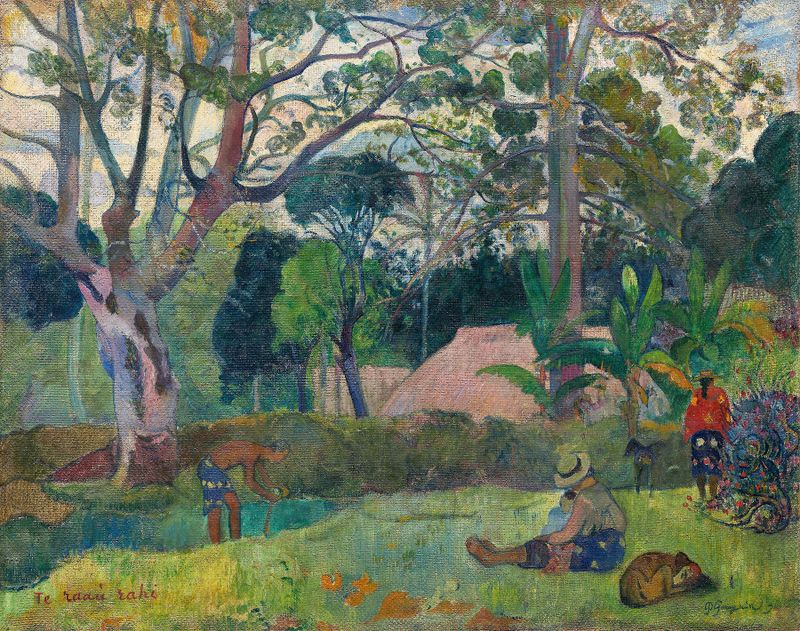
Te raau rahi (The Big Tree)
Paul Gauguin

Landscape at Le Pouldu
Paul Gauguin

Landscape of Brittany
Paul Gauguin

Poèmes Barbares
Paul Gauguin
Mahana no atua (Day of the God)
Paul Gauguin





