
Rabbato, Gozo, Malta — History & Facts
Could a single brushstroke hold eternity? In the delicate intertwining of hues and textures, one finds the essence of longing and loss that transcends time. Focus first on the horizon, where muted blues and soft golds blend seamlessly, creating a serene yet melancholic backdrop. The gentle curves of the landscape lead the eye to the quaint village nestled against the hills, where tiny cottages exude a sense of quiet resilience. Notice how the brushstrokes capture the interplay between light and shadow, evoking an atmosphere both tranquil and poignant, reflecting Lear's mastery of color and emotion. There’s a palpable tension between the idyllic scenery and the underlying grief that lingers in the air.
Small details—a solitary figure on the path, the distant mountains cloaked in mist—speak to a world steeped in solitude. The choice of palette, with its soft pastels mingling with deeper tones, suggests a yearning for connection amid the vastness of existence, hinting at the artist's own personal struggles during this period. In 1866, Lear painted this piece while living in Italy, a time marked by both artistic exploration and profound personal grief following the loss of loved ones. As a prominent figure in the Victorian art scene, he was known for his landscapes and limericks, exploring the delicate balance between joy and sorrow.
This work emerges from a moment of reflection, capturing not just a place, but the complex interplay of memory, love, and the passage of time.
More Artworks by Edward Lear
Browse all →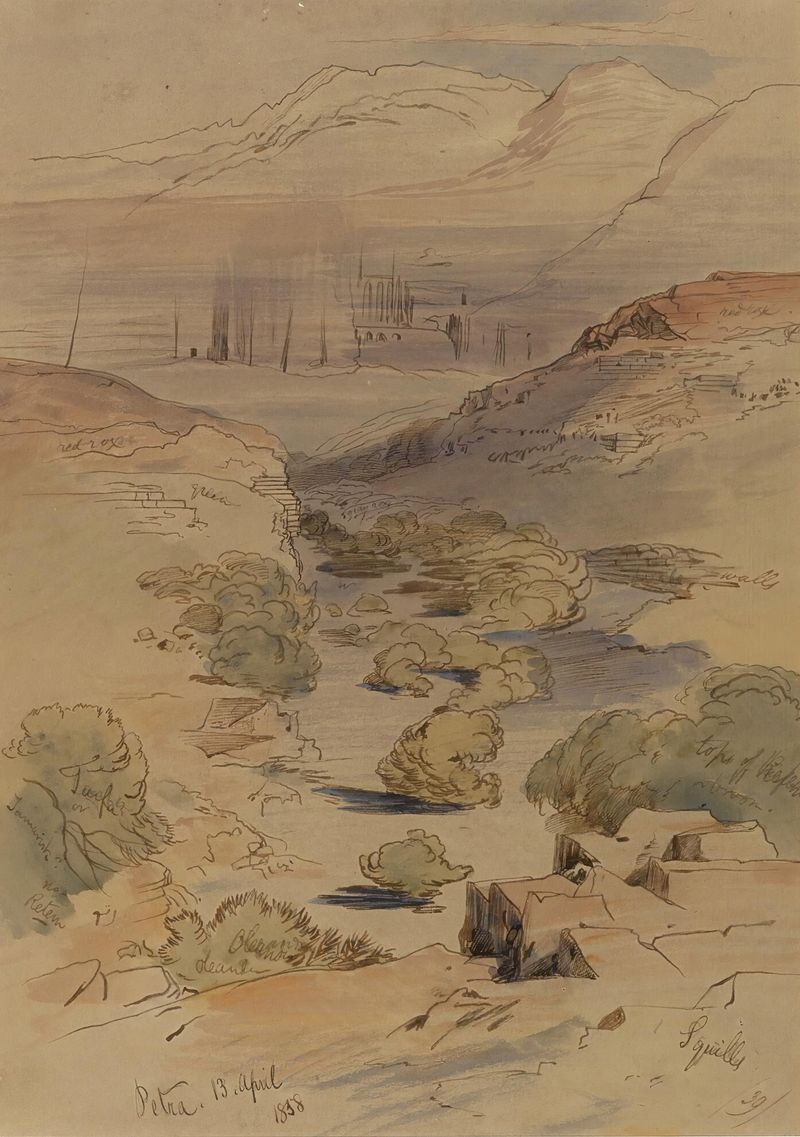
Petra
Edward Lear
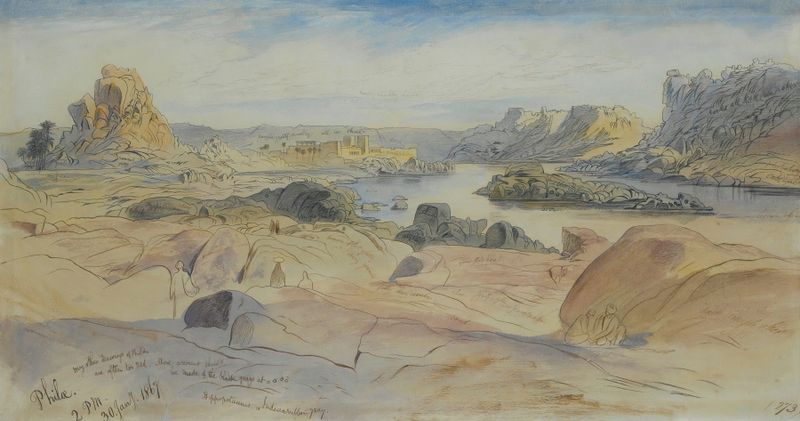
Philae, Egypt
Edward Lear
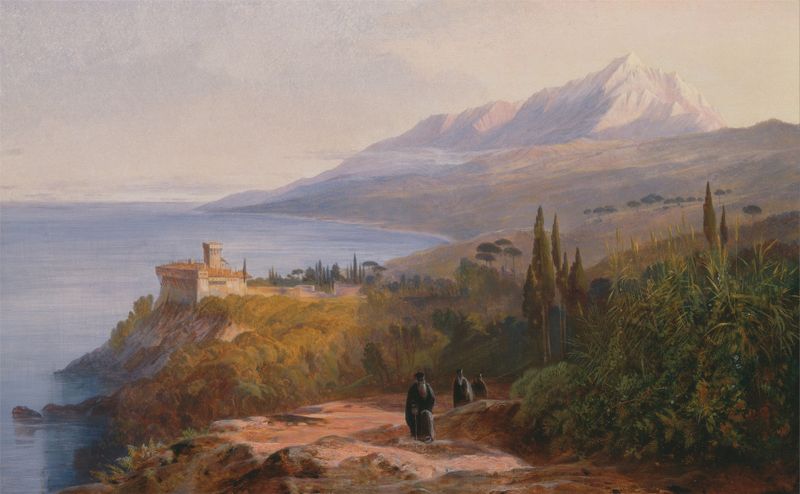
Mount Athos and the Monastery of Stavronikétes
Edward Lear
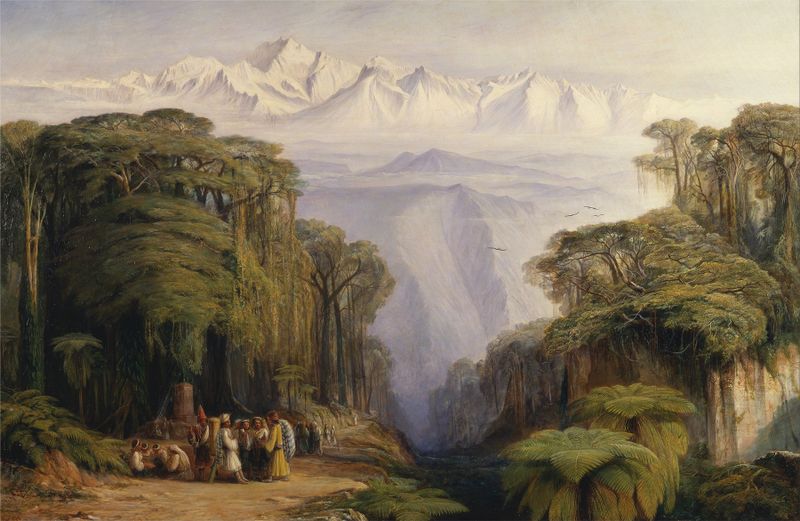
Kangchenjunga from Darjeeling
Edward Lear
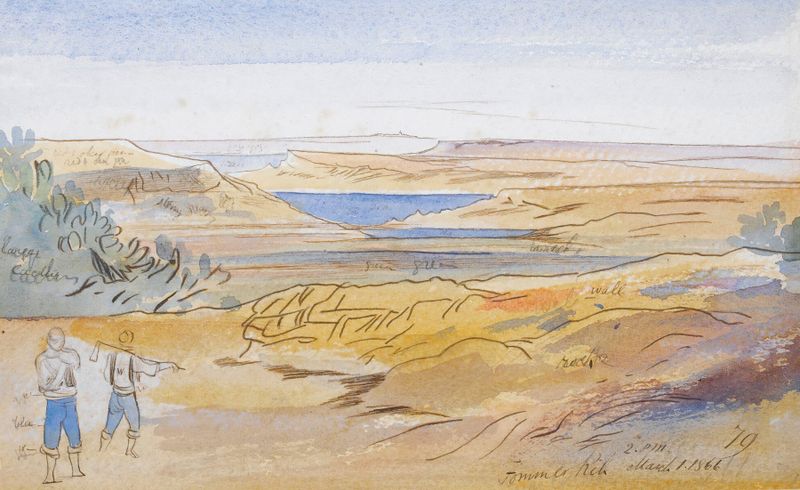
Fomm Ir-Rih, Malta
Edward Lear
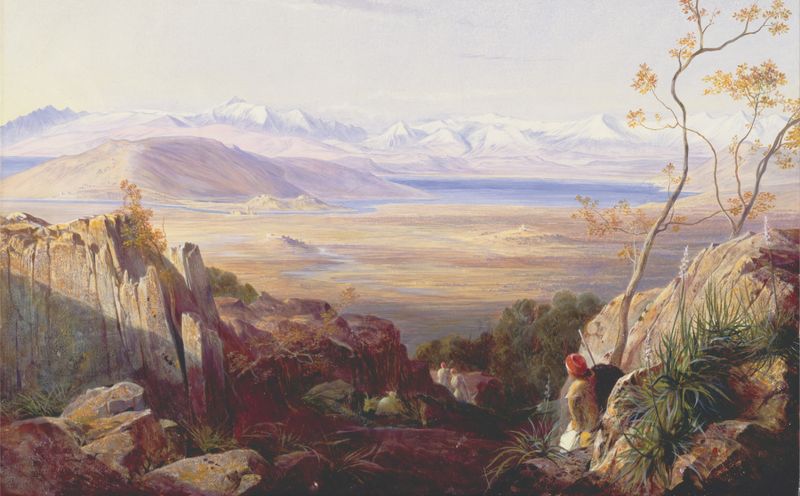
Butrinto, Albania
Edward Lear
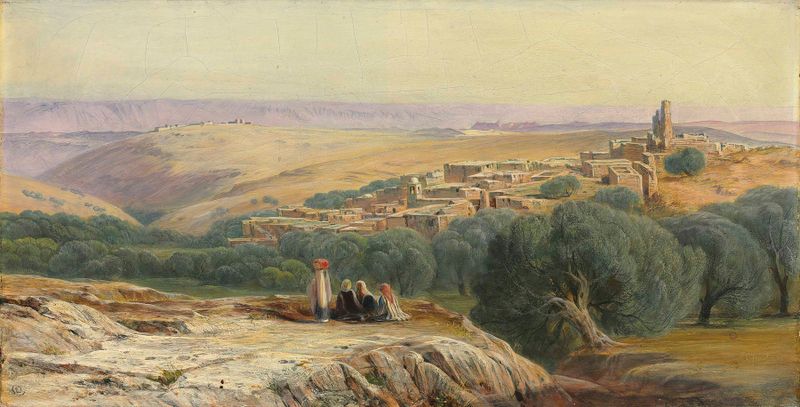
The Plains of Bethany
Edward Lear

Karnak, 9-30 pm, 22 January 1867
Edward Lear
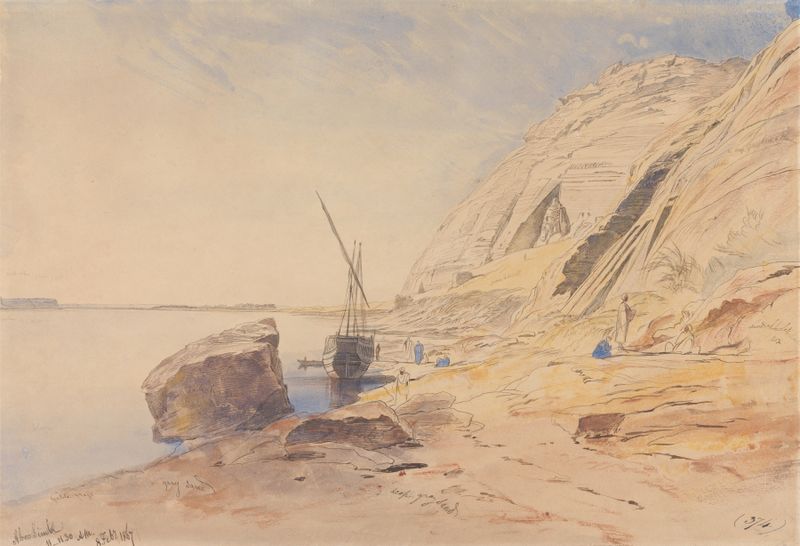
Abu Simbel, 11-11;30 am, 8 February 1867 (374)
Edward Lear

A View Of Mount Athos And The Pantokrator Monastery, Greece
Edward Lear





