
Rast an der Landstraße — History & Facts
Can paint confess what words never could? In Rast an der Landstraße, the brushwork captures a moment where stillness meets the ever-present specter of mortality, urging the viewer to ponder life’s fleeting nature amidst the tranquility of the landscape. Look to the left at the sun-drenched figure, a traveler resting beneath the sprawling branches of a sturdy tree. The light filters through the lush green foliage, casting playful patterns on the ground where the traveler sits. Notice how the rich earth tones of the path contrast with the vibrant greens, creating a vivid narrative of serenity against the backdrop of life’s journey.
The delicate interplay of shadow and light serves to emphasize the warmth of the sun while hinting at the inevitable passage of time. As you take in the full scene, the solitary figure embodies a profound introspection, a silent acknowledgment of his mortality. The tree provides shelter, yet it simultaneously represents the cycle of life, a reminder of growth and decay. The gentle curves of the path winding into the distance suggest both a journey and an end, inviting the viewer to reflect on their own journey and the transient nature of existence. Johann Nepomuk Rauch painted this piece in 1830 during a time when Romanticism was flourishing in Europe, reflecting themes of nature, introspection, and the human condition.
Living in Bavaria, he was immersed in a cultural landscape that celebrated the beauty of the natural world, even as it grappled with the complexities of existence. This work stands as a poignant reminder of the delicate balance between life and the inexorable approach of mortality.
More Artworks by Johann Nepomuk Rauch
Browse all →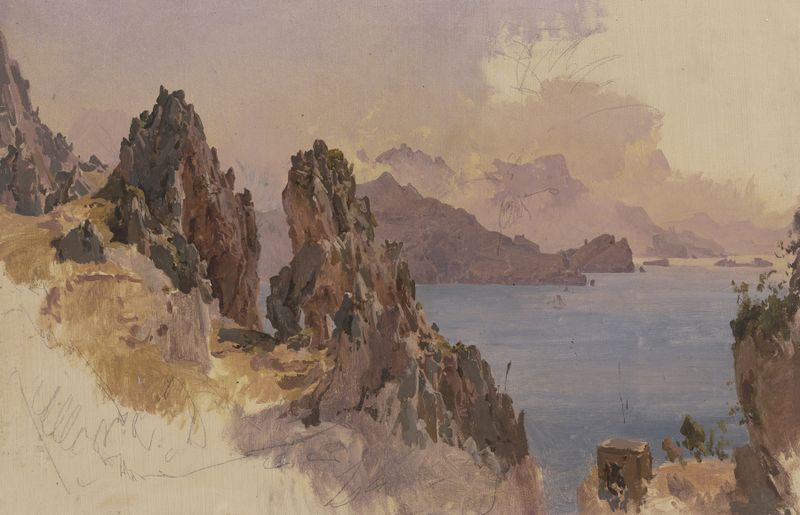
Süditalienische Felsenküste
Johann Nepomuk Rauch
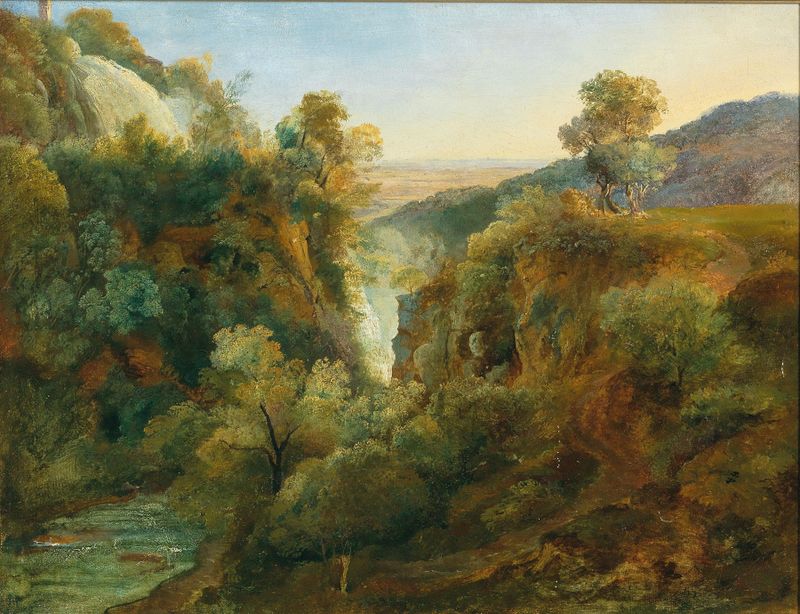
Wasserfall bei Tivoli
Johann Nepomuk Rauch
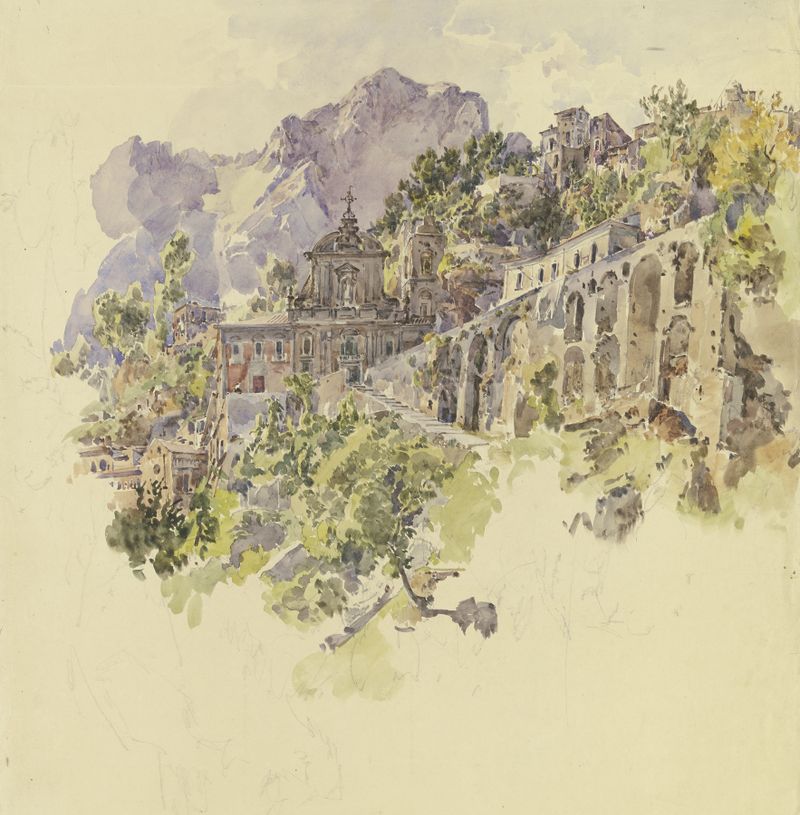
Kloster im Gebirge mit großen Terrassen und Treppen
Johann Nepomuk Rauch

Felsabhang mit Bäumen bei Nemi
Johann Nepomuk Rauch

La Marina grande del Vico
Johann Nepomuk Rauch
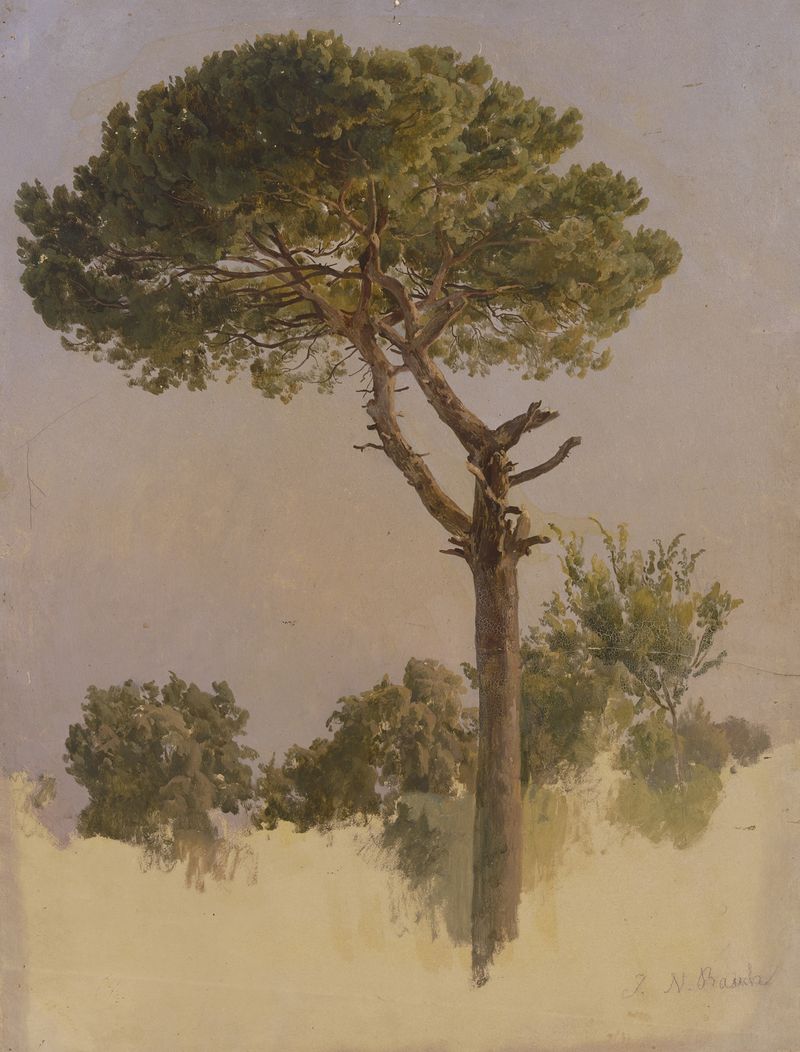
Pinienbaum bei S. Nicola da Tolentino in Rom
Johann Nepomuk Rauch
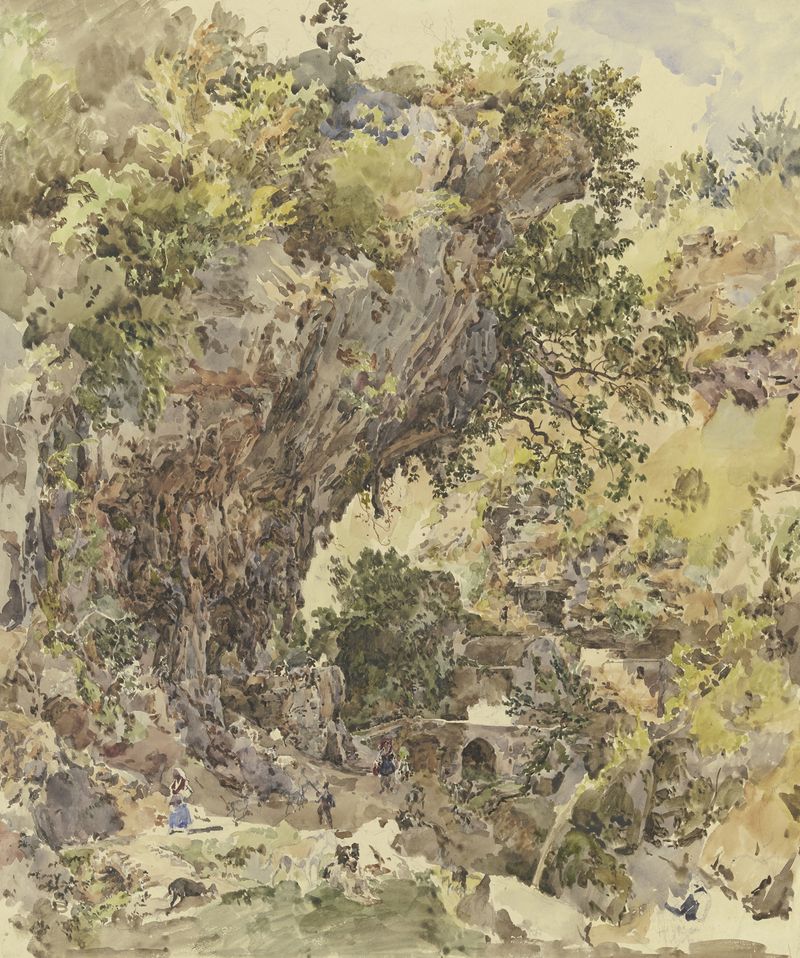
Gebirgslandschaft mit einer Brücke und vielen Figuren, links eine großartige Felspartie
Johann Nepomuk Rauch

Fuori la grotta di Posilipo
Johann Nepomuk Rauch

Wasser-Reservoir in Tivoli
Johann Nepomuk Rauch
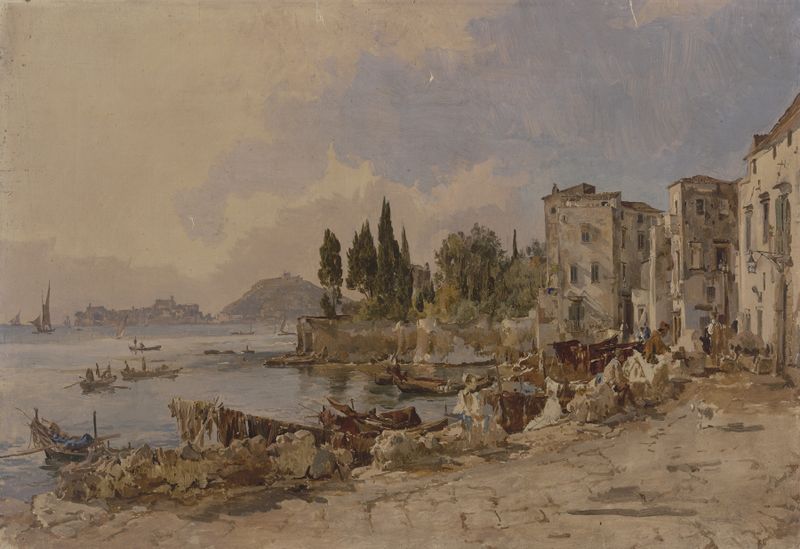
Molo di Gaeta
Johann Nepomuk Rauch





