
Felsabhang mit Bäumen bei Nemi — History & Facts
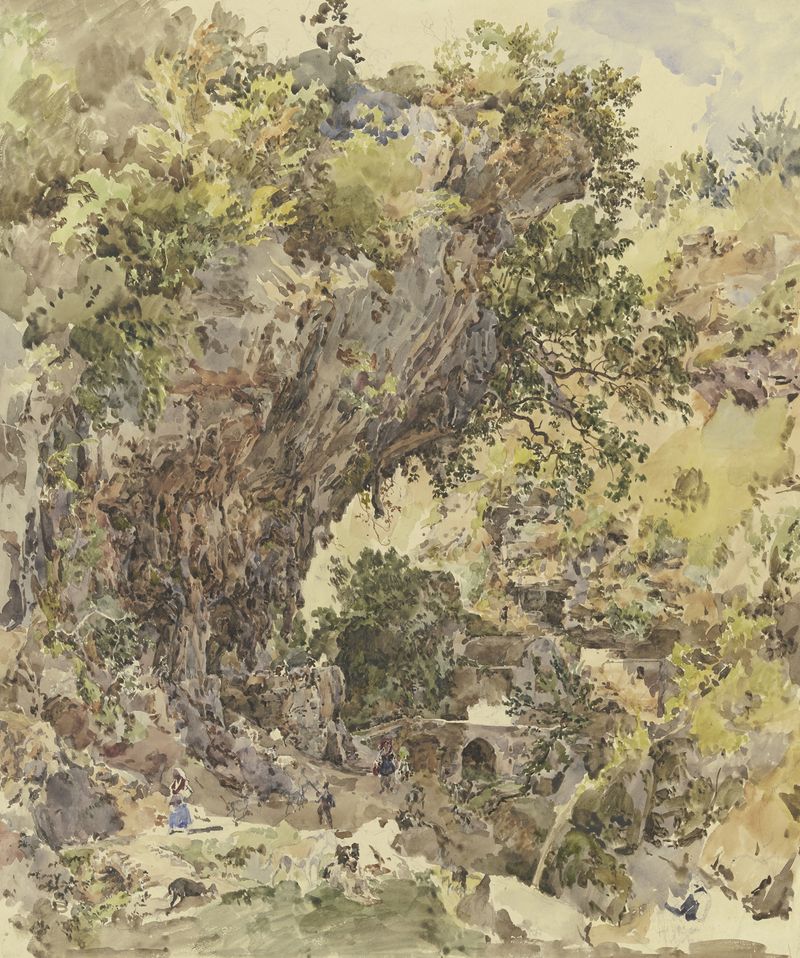
The essence of betrayal resonates deeply within the canvas, inviting reflection on the nuances of trust and loss. Nature’s serenity often hides the tumult of human emotion, and this artwork encapsulates that delicate balance. Look to the foreground, where the gnarled trees stand sentinel against a backdrop of rolling hills and a serene sky. The rich, earthy tones of the foliage contrast sharply with the cool blues and soft whites of the distant landscape, guiding your eye through a textured journey of shadow and light.
Notice how the artist uses impasto techniques, layering paint to create a tactile quality that draws you in, almost as if you can feel the crisp air of the scene. Yet, beneath the calm exterior lies an undercurrent of discord. The awkward angles of the trees suggest a struggle against unseen forces, as if they are caught in a silent conversation of betrayal, twisting away from each other. The interplay of light and shadow enhances this tension, hinting at memories that haunt the idyllic setting.
The vibrant greens might symbolize hope, yet they coexist with the darker hues of the trunks, representing the weight of past grievances. In 1845, Johann Nepomuk Rauch created this piece during a period of personal introspection and artistic evolution, having returned to Italy where he found inspiration in the landscapes of Nemi. The mid-19th century was rife with shifts in artistic expression, as the Romantic movement flourished, urging artists to explore emotional depths and connection to nature. Rauch's work reflects this ethos, merging his inner turmoil with the beauty of the external world.
More Artworks by Johann Nepomuk Rauch
Browse all →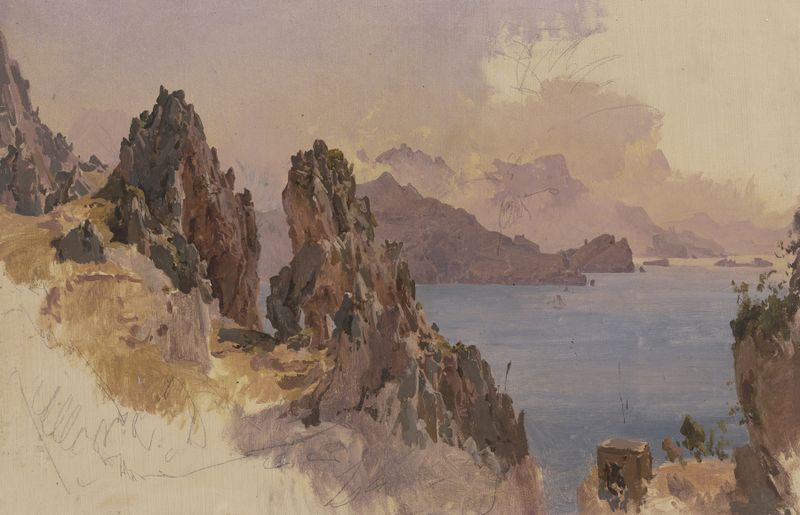
Süditalienische Felsenküste
Johann Nepomuk Rauch
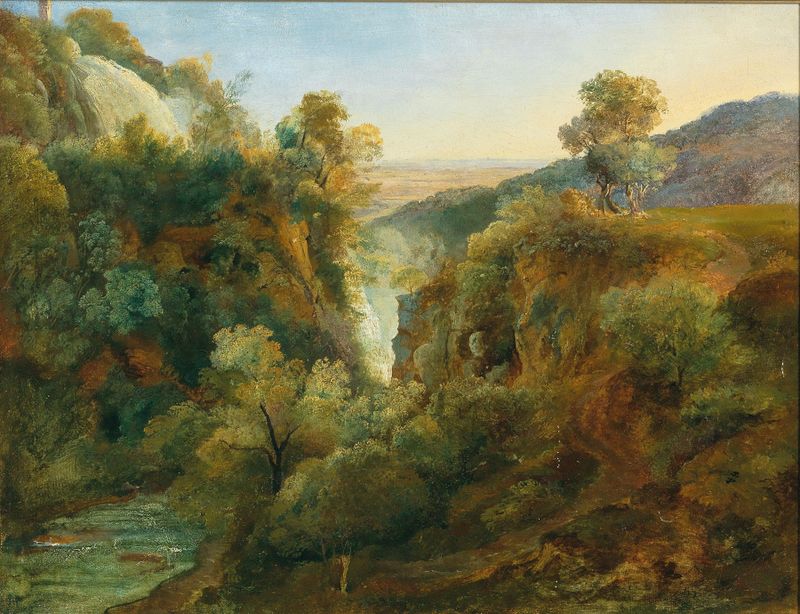
Wasserfall bei Tivoli
Johann Nepomuk Rauch
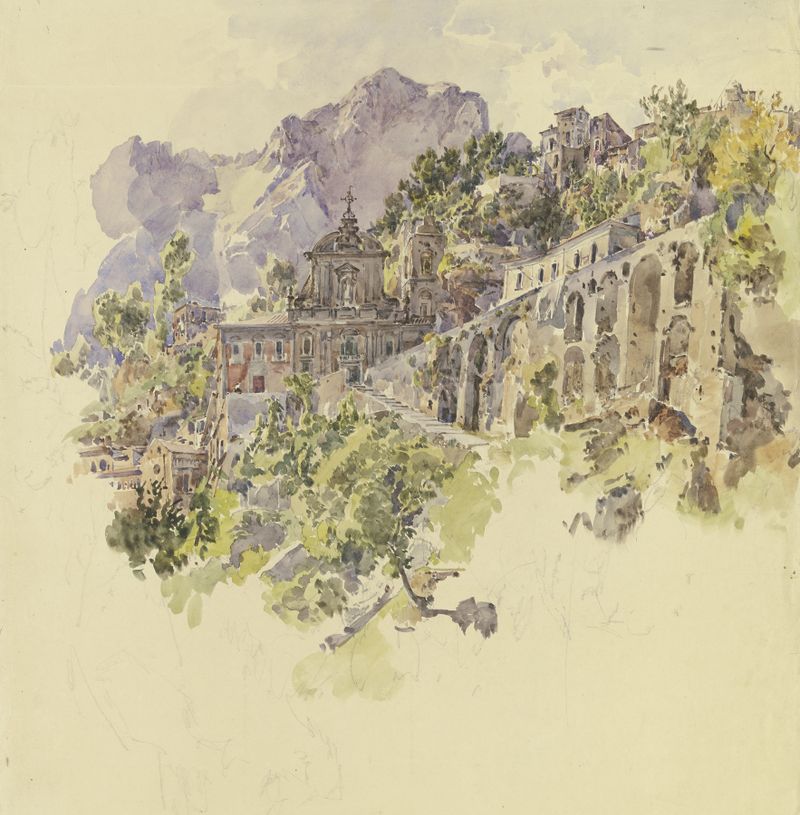
Kloster im Gebirge mit großen Terrassen und Treppen
Johann Nepomuk Rauch

La Marina grande del Vico
Johann Nepomuk Rauch
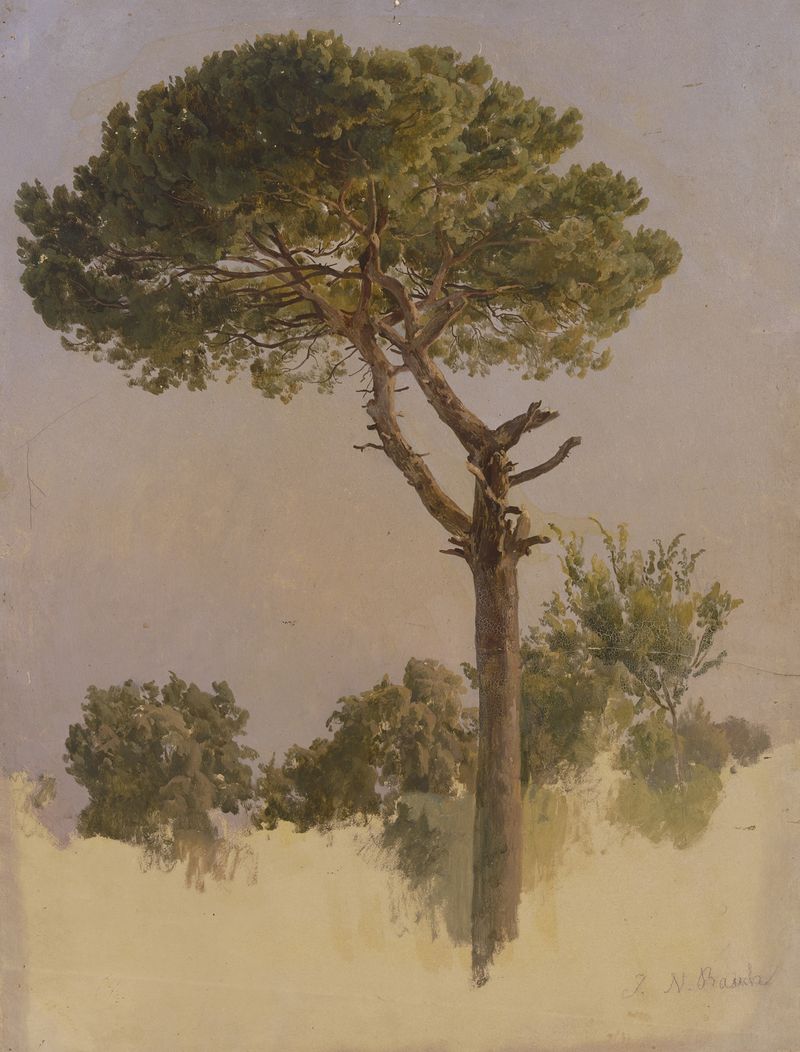
Pinienbaum bei S. Nicola da Tolentino in Rom
Johann Nepomuk Rauch
Gebirgslandschaft mit einer Brücke und vielen Figuren, links eine großartige Felspartie
Johann Nepomuk Rauch

Fuori la grotta di Posilipo
Johann Nepomuk Rauch

Wasser-Reservoir in Tivoli
Johann Nepomuk Rauch

Rast an der Landstraße
Johann Nepomuk Rauch
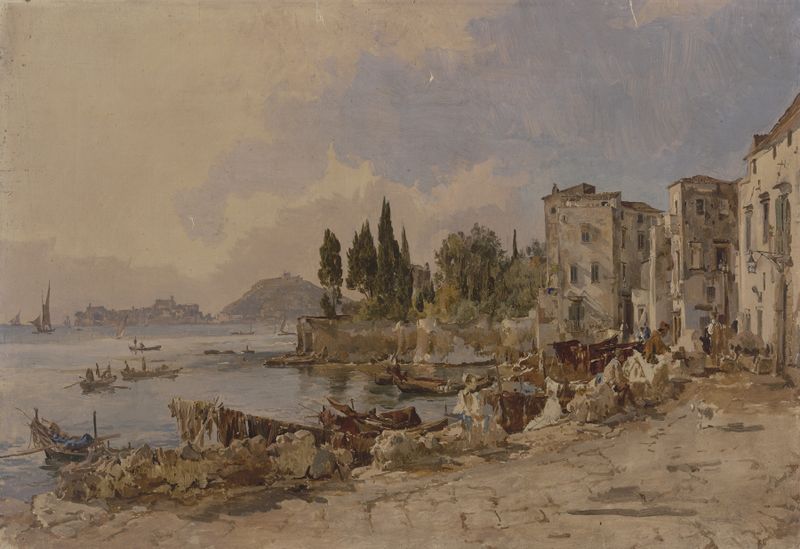
Molo di Gaeta
Johann Nepomuk Rauch





