
Wasser-Reservoir in Tivoli — History & Facts
In the stillness of Wasser-Reservoir in Tivoli, a deceptive calm cloaks an undercurrent of turmoil, echoing the violence of nature and the tumult of human emotion. Each brushstroke invites contemplation, revealing layers where serenity collides with chaos. Look to the left at the lush foliage, where verdant greens seem to vibrate with life, and then shift your gaze toward the imposing reservoir. The water’s surface, mirroring the sky, shimmers under a gentle light that bounces off the cascading edges of the structure.
Notice the play of dark shadows against the reservoir's cool blue hues, a dichotomy that illustrates the struggle between tranquility and the raw power of water. Deep within this landscape lies a contemplation of impermanence. The natural beauty surrounding the reservoir hints at the destructive potential of the very element that sustains it. Small details, like the jagged rocks peeking through the water's calm, symbolize the lurking danger beneath a placid surface.
This tension reflects not just the relationship between humanity and nature, but also the underlying violence of change that looms over the idyllic scene. Created in 1845, this piece emerged during a time of significant shift in European art and society. Johann Nepomuk Rauch worked in a period where Romanticism was gaining momentum, emphasizing emotional depth and the sublime in nature. His exploration of the reservoir captures both the grandeur and volatility of natural landscapes, mirroring the societal upheaval and revolutionary sentiments of the era.
More Artworks by Johann Nepomuk Rauch
Browse all →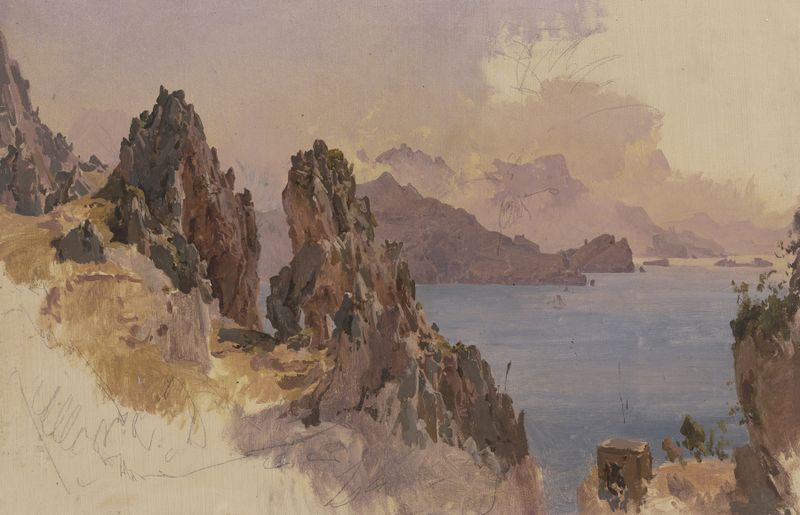
Süditalienische Felsenküste
Johann Nepomuk Rauch
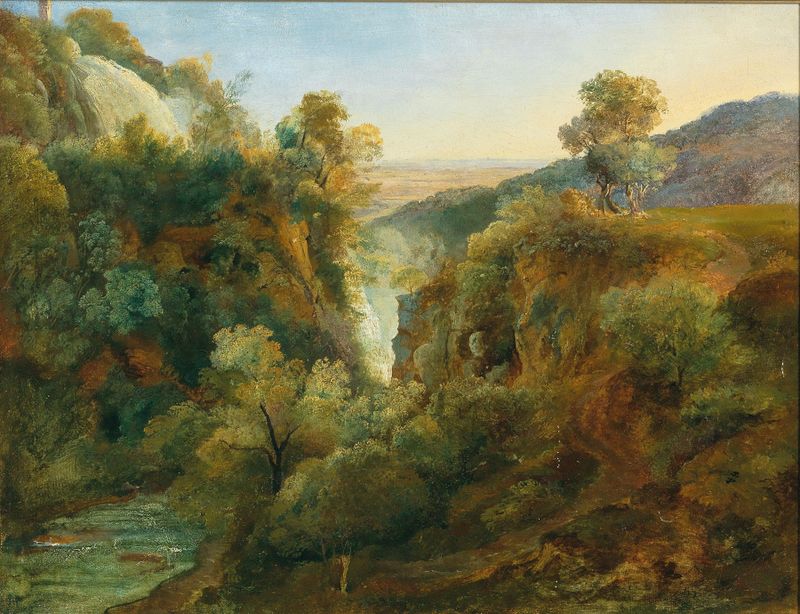
Wasserfall bei Tivoli
Johann Nepomuk Rauch
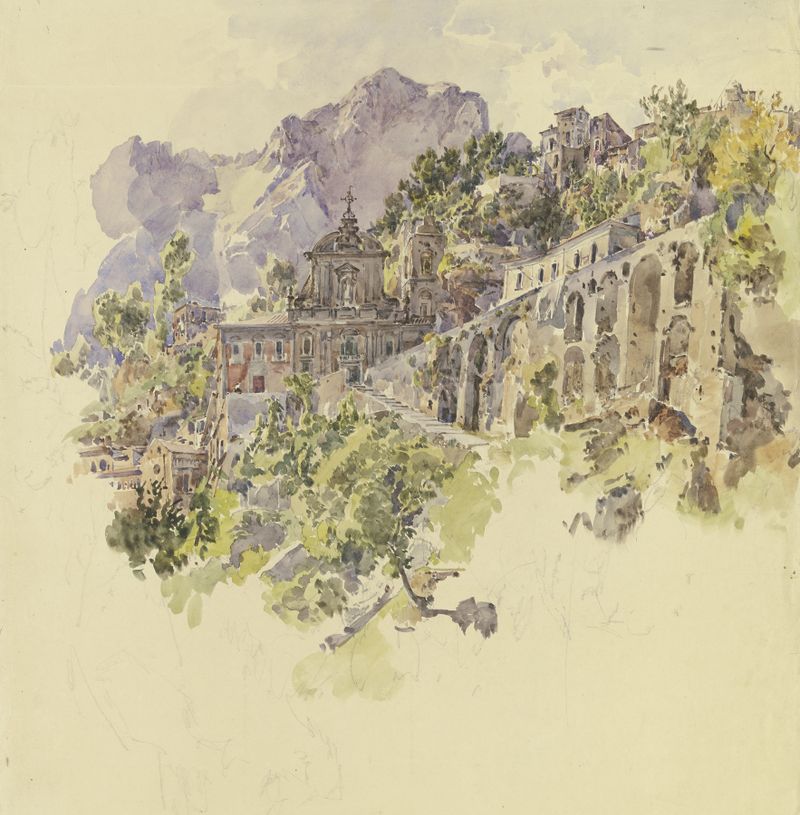
Kloster im Gebirge mit großen Terrassen und Treppen
Johann Nepomuk Rauch

Felsabhang mit Bäumen bei Nemi
Johann Nepomuk Rauch

La Marina grande del Vico
Johann Nepomuk Rauch
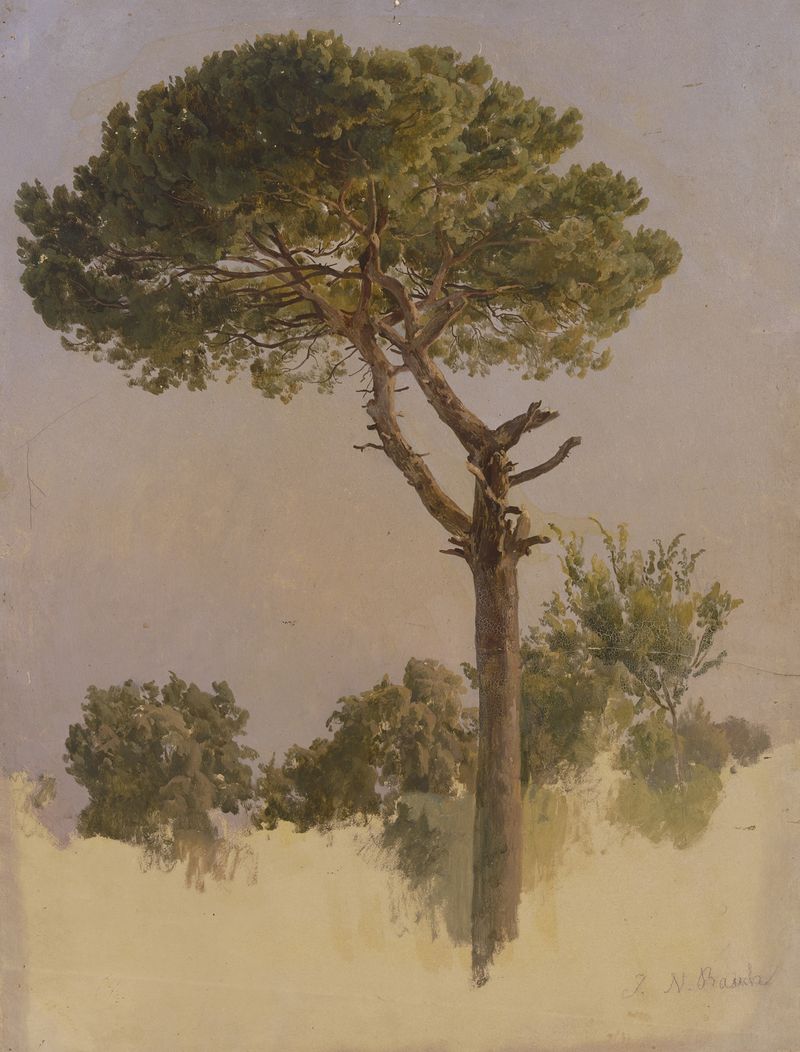
Pinienbaum bei S. Nicola da Tolentino in Rom
Johann Nepomuk Rauch
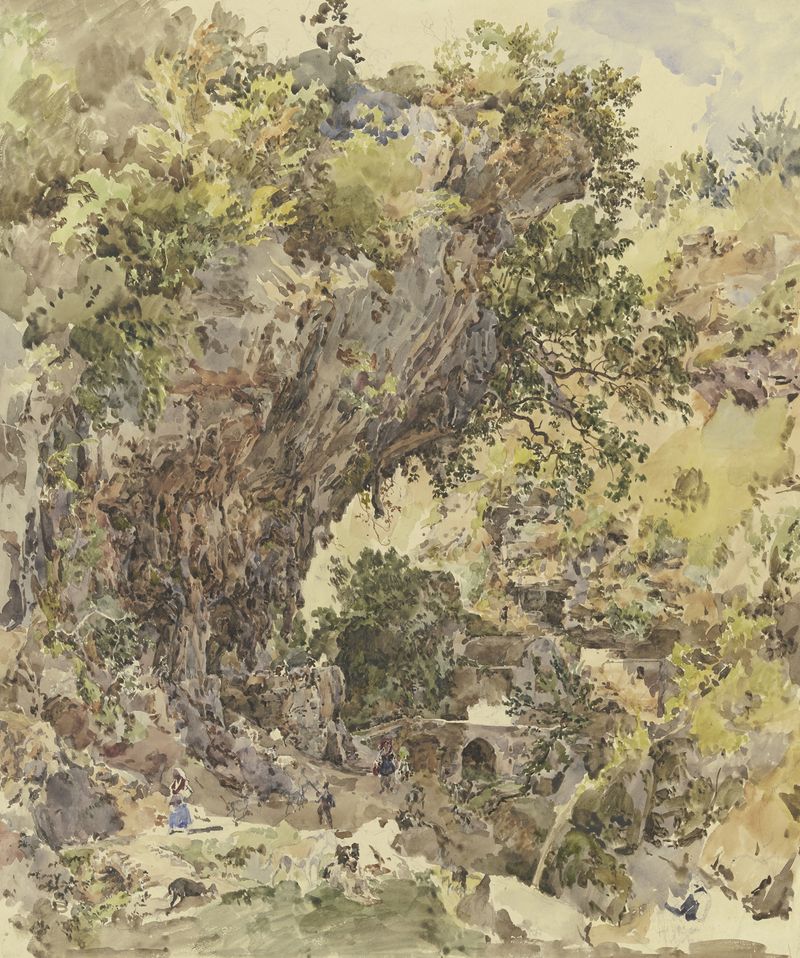
Gebirgslandschaft mit einer Brücke und vielen Figuren, links eine großartige Felspartie
Johann Nepomuk Rauch

Fuori la grotta di Posilipo
Johann Nepomuk Rauch

Rast an der Landstraße
Johann Nepomuk Rauch
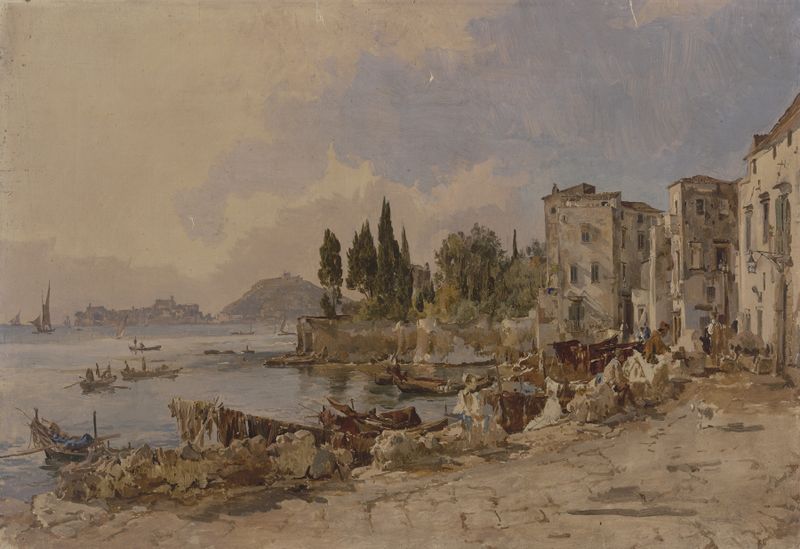
Molo di Gaeta
Johann Nepomuk Rauch





