
Molo di Gaeta — History & Facts
In the delicate interplay of light and shadow, Molo di Gaeta captures the essence of nostalgia, seducing viewers to reflect on fleeting moments forever etched in memory. Look to the center of the canvas where the sunlight dances on the tranquil waters, illuminating the spectral outlines of boats tethered to the dock. Notice how the gentle curves of the shoreline embrace the harbor, guiding the eye toward a distant horizon that hints at both exploration and longing. The palette of soft blues and warm earth tones resonates with a sense of history, while the meticulous brushwork invites you to linger in a world that feels both familiar and distant. Yet, beneath the surface beauty lies a poignant contrast—the serene tableau belies the transient nature of life.
The boats, sturdy yet vulnerable, symbolize the fragility of human endeavors amid nature's timelessness. The crumbling architecture of the dock suggests decay and the relentless passage of time, evoking an ache for the past, while the horizon teeters between hope and uncertainty, calling to the restless spirit within us all. Created between 1841 and 1847, this work emerged during a pivotal moment in European art, as Romanticism began to wane, giving way to a more modern sensibility. Rauch, a German artist, was immersed in a landscape of shifting artistic paradigms, where the exploration of memory and personal experience took center stage.
In Molo di Gaeta, he masterfully encapsulates these complexities, inviting viewers to grapple with their own remembrances and regrets, all while anchoring them to the passage of time.
More Artworks by Johann Nepomuk Rauch
Browse all →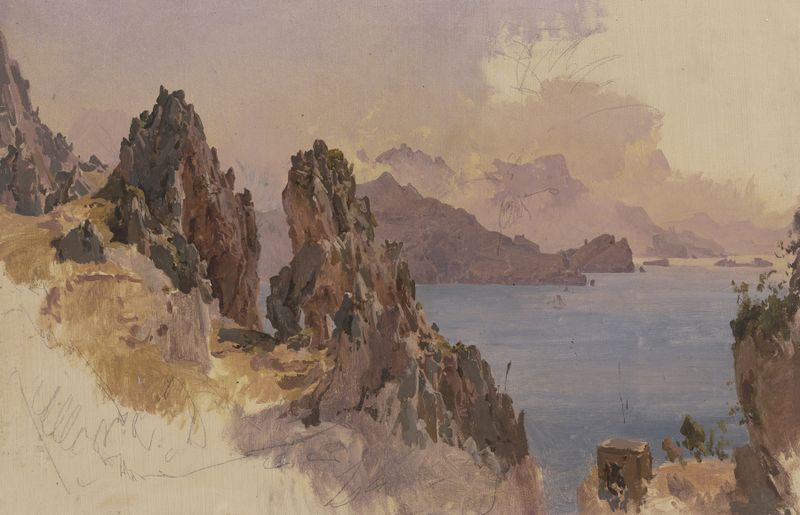
Süditalienische Felsenküste
Johann Nepomuk Rauch
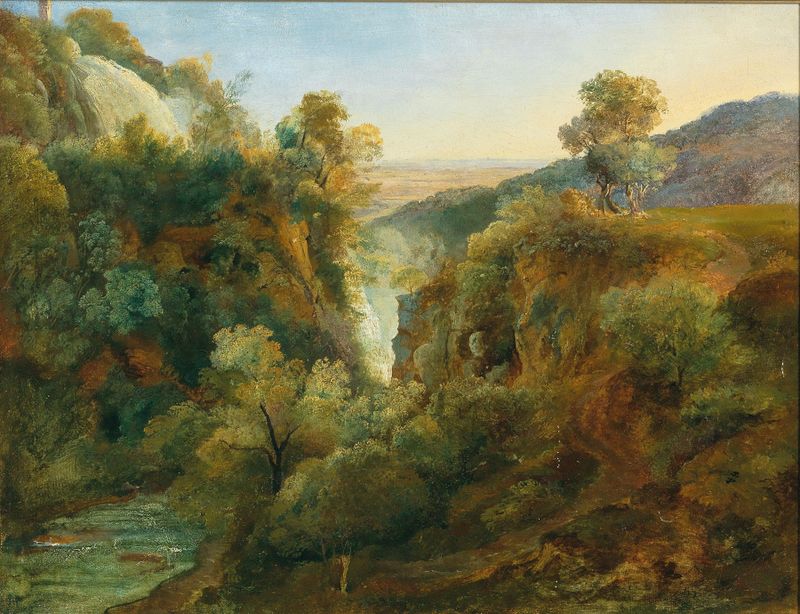
Wasserfall bei Tivoli
Johann Nepomuk Rauch
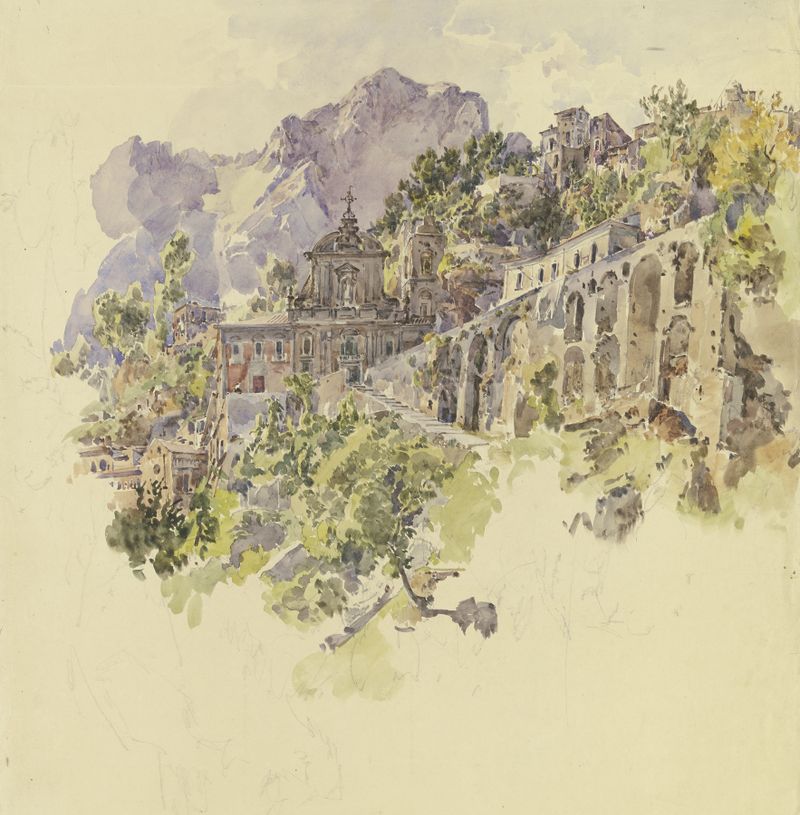
Kloster im Gebirge mit großen Terrassen und Treppen
Johann Nepomuk Rauch

Felsabhang mit Bäumen bei Nemi
Johann Nepomuk Rauch

La Marina grande del Vico
Johann Nepomuk Rauch
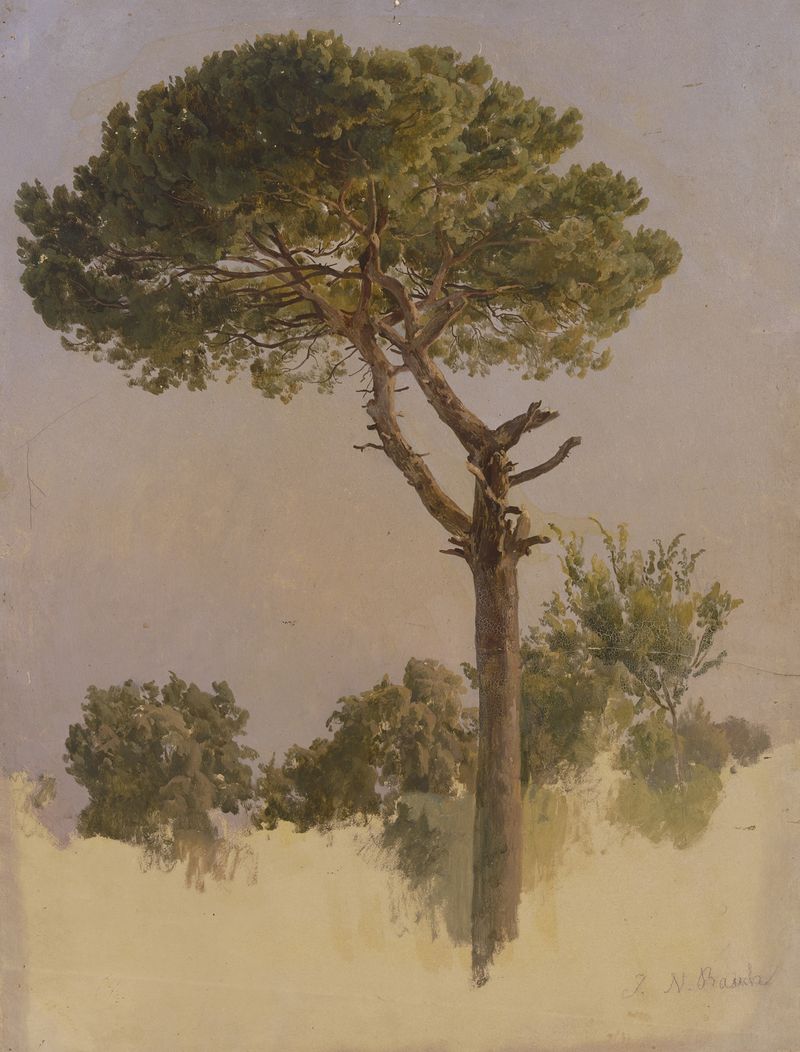
Pinienbaum bei S. Nicola da Tolentino in Rom
Johann Nepomuk Rauch
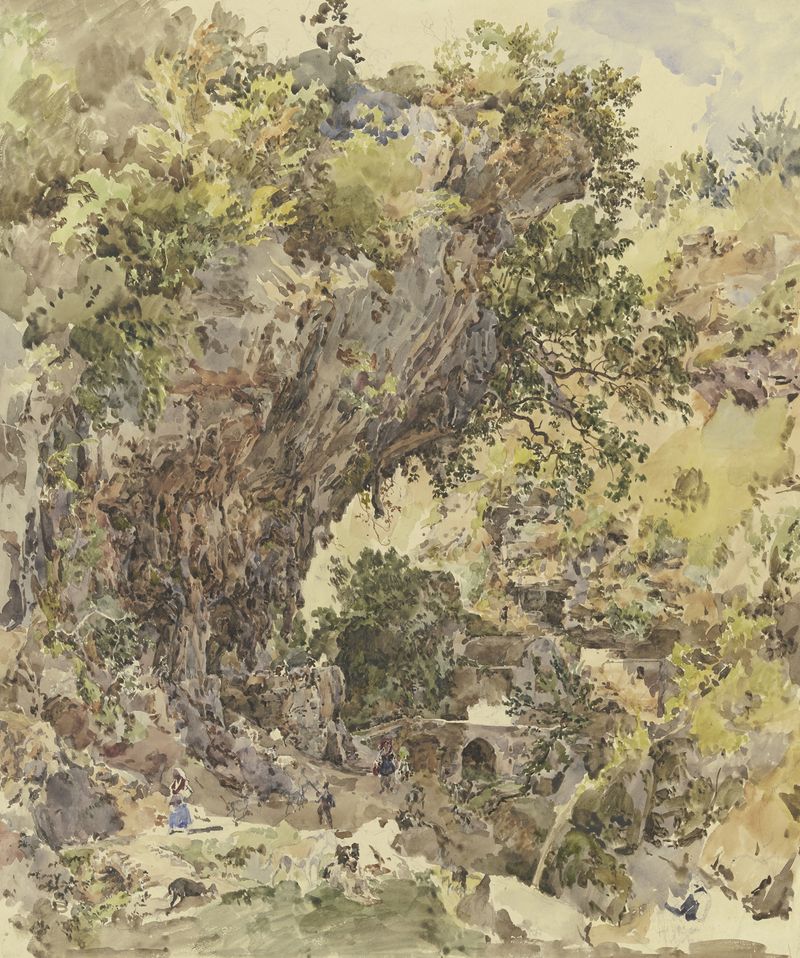
Gebirgslandschaft mit einer Brücke und vielen Figuren, links eine großartige Felspartie
Johann Nepomuk Rauch

Fuori la grotta di Posilipo
Johann Nepomuk Rauch

Wasser-Reservoir in Tivoli
Johann Nepomuk Rauch

Rast an der Landstraße
Johann Nepomuk Rauch





