
Süditalienische Felsenküste — History & Facts
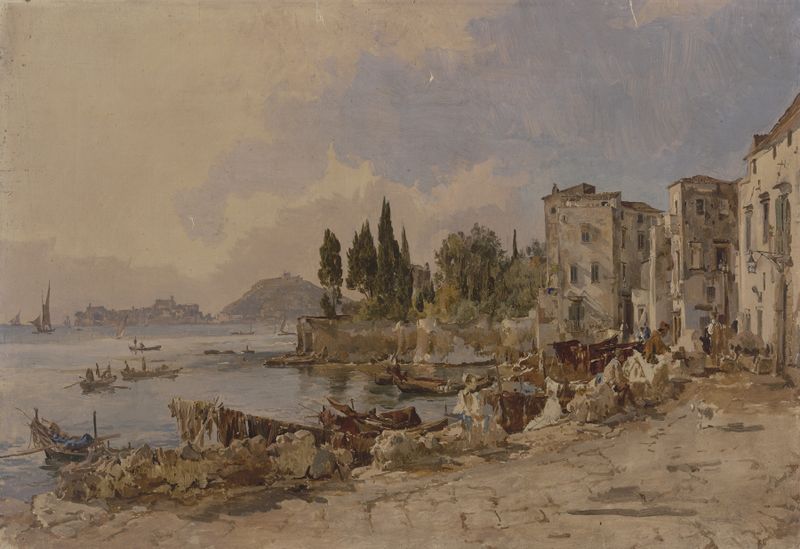
Can beauty exist without sorrow? In Johann Nepomuk Rauch's Süditalienische Felsenküste, the answer lies in the interplay of light and shadow across a rugged, yet mesmerizing coastline. Look to the left, where jagged cliffs rise against the deep azure of the sea, their textures rendered with meticulous brushstrokes that invite touch. Notice how the sunlight bathes the rocks in warm hues of ochre and burnt sienna, creating a striking contrast with the cool tones of the water below. The composition draws the eye along the shoreline, where the waves kiss the rocks, hinting at nature’s relentless power and the fragility of this serene moment. Delve deeper into the painting, and you’ll uncover layers of emotional complexity.
The vibrant colors, while inviting, also evoke a sense of isolation—a reminder of the transient beauty of nature, framed by the stoic cliffs that seem eternally watchful. The gentle lapping of the waves suggests a fleeting tranquility, juxtaposed against the ominous presence of the cliffs, embodying the duality of calmness and impending peril that characterizes the human experience. Between 1841 and 1847, Rauch immersed himself in his artistic practice in Germany, a period marked by a burgeoning appreciation for landscape painting. As Romanticism flourished, artists sought to capture nature’s sublime beauty while reflecting on the human condition.
This work stands as a testament to that ethos, revealing not just the allure of the Italian coastline, but also the underlying tensions that come with it.
More Artworks by Johann Nepomuk Rauch
Browse all →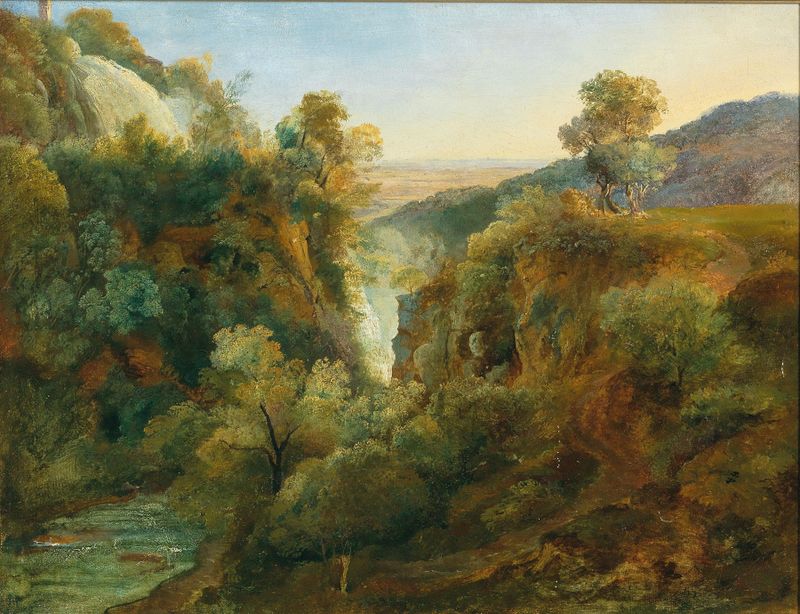
Wasserfall bei Tivoli
Johann Nepomuk Rauch
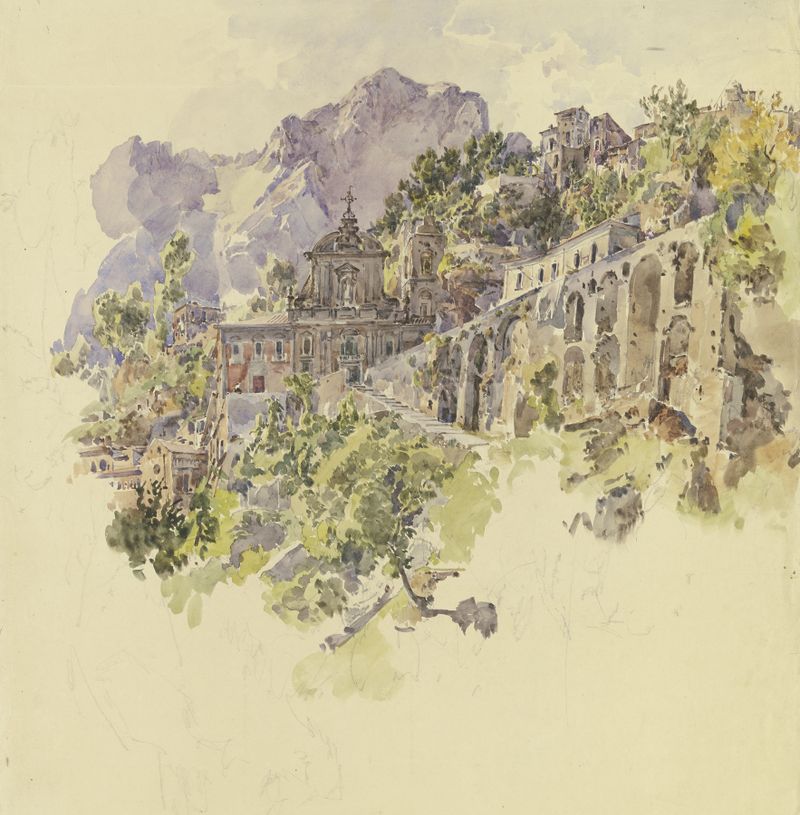
Kloster im Gebirge mit großen Terrassen und Treppen
Johann Nepomuk Rauch

Felsabhang mit Bäumen bei Nemi
Johann Nepomuk Rauch

La Marina grande del Vico
Johann Nepomuk Rauch
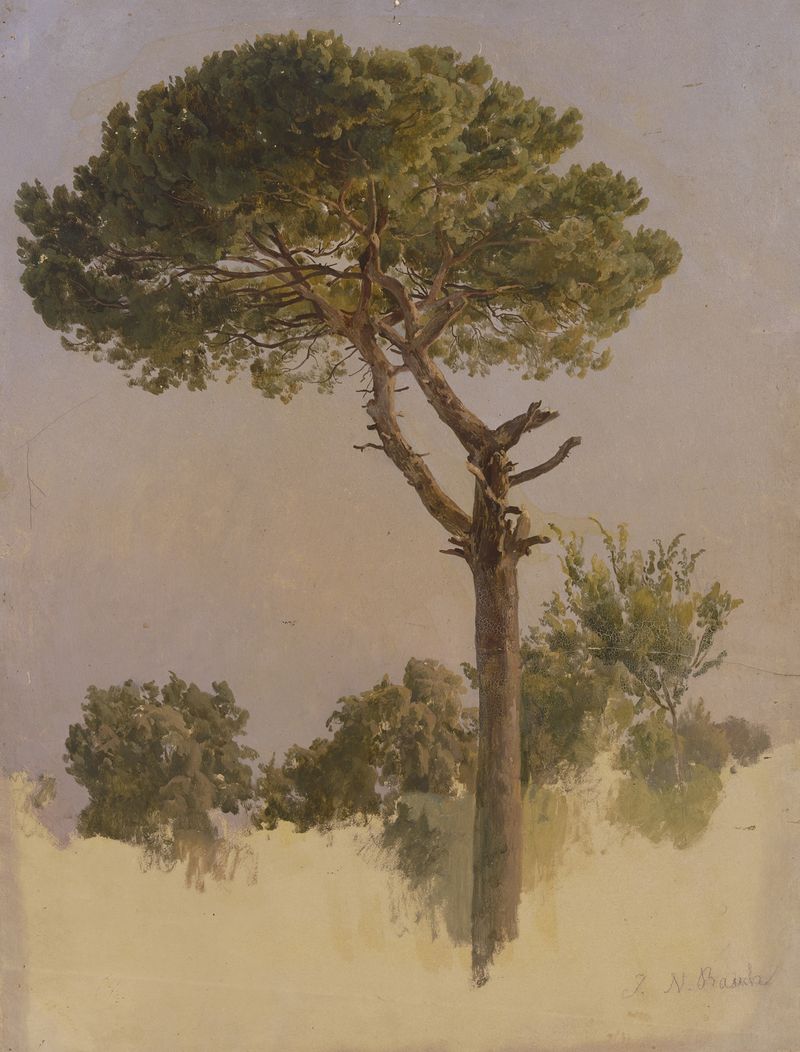
Pinienbaum bei S. Nicola da Tolentino in Rom
Johann Nepomuk Rauch
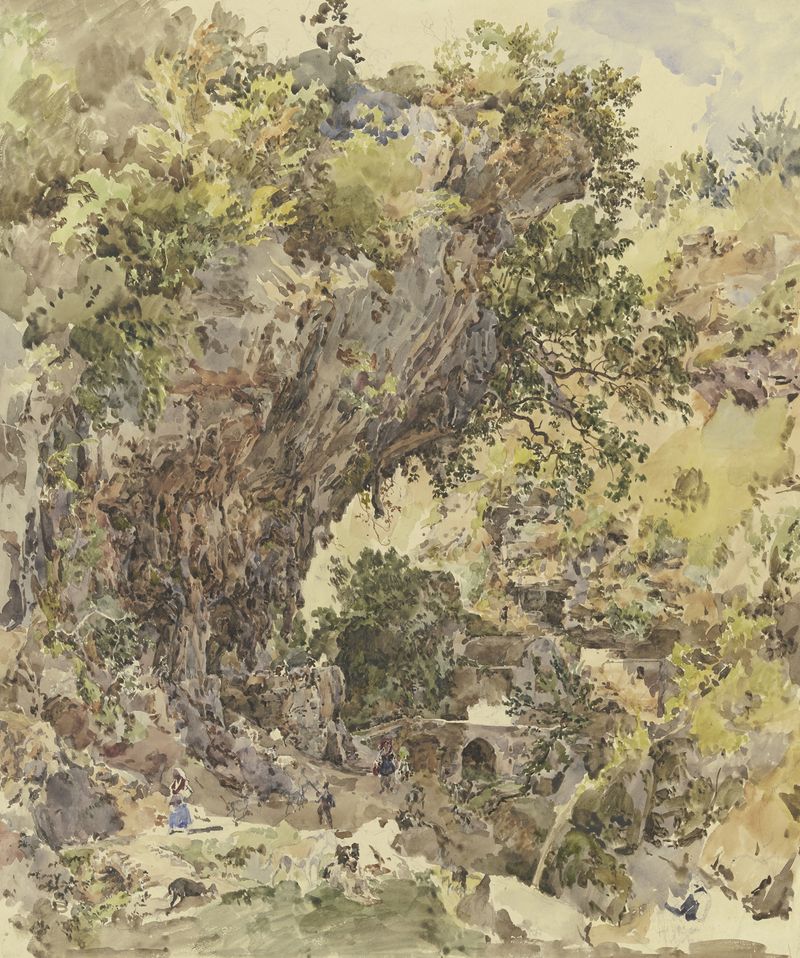
Gebirgslandschaft mit einer Brücke und vielen Figuren, links eine großartige Felspartie
Johann Nepomuk Rauch

Fuori la grotta di Posilipo
Johann Nepomuk Rauch

Wasser-Reservoir in Tivoli
Johann Nepomuk Rauch

Rast an der Landstraße
Johann Nepomuk Rauch
Molo di Gaeta
Johann Nepomuk Rauch





