
Rauferei vor dem Wirtshaus — History & Facts
What if beauty was never meant to be finished? In Heinrich Bürkel’s Rauferei vor dem Wirtshaus, the chaos of conflict reveals a poignant elegy for loss, reminding us that even in turmoil, moments of grace can be fleeting. Begin by looking to the center, where the two men grapple, their contorted bodies frozen in a struggle that feels both fierce and inevitable. The tavern looms behind them, its warm, earthy tones contrasting sharply with the raw emotion of the scene. Notice how the light filters through the trees, casting dappled shadows that dance across the ground, creating an interplay between dark and light — a metaphor for the tensions embedded in human relationships. The composition speaks volumes of the artist's intent: the figures are alive, yet their surroundings evoke a sense of nostalgia, hinting at bygone camaraderie.
One man's expression betrays an unspoken sadness, suggesting that this conflict, rather than just a physical tussle, is a manifestation of deeper grievances. The juxtaposition of the raucous activity against the calm of nature amplifies our understanding of loss — an absence that lingers even amidst the action. In the mid-1850s, Bürkel created this work while immersed in the vibrant cultural scene of Germany, where romanticism and realism intersected. He was deeply engaged with themes of everyday life, and this piece captures the raw authenticity of human experience during a time of significant social change.
It reflects his desire to connect art with reality, making the ordinary extraordinary — a poignant reminder of both beauty and loss.
More Artworks by Heinrich Bürkel
Browse all →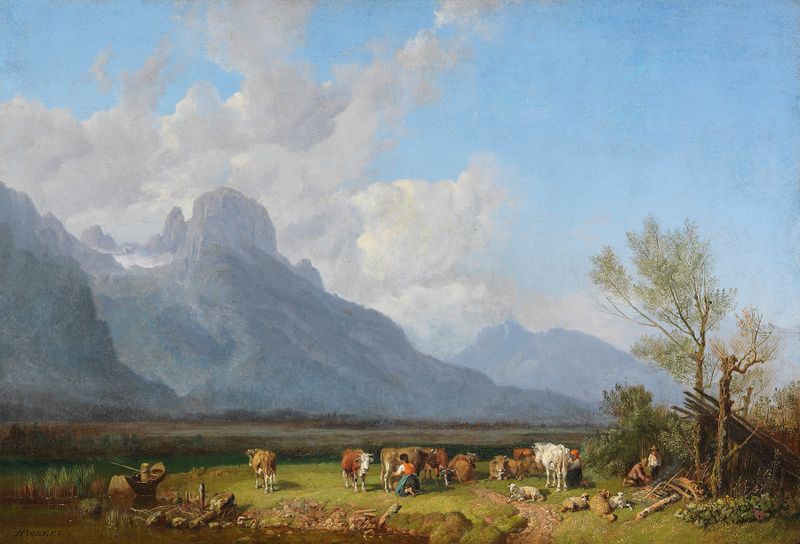
Viehhirten am Seeufer
Heinrich Bürkel
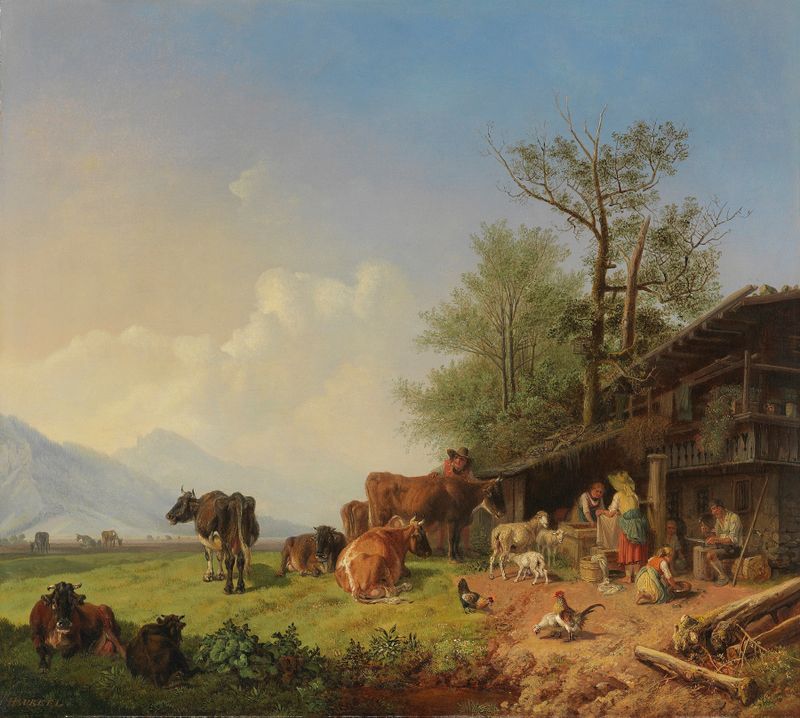
Bauernhof mit Brunnen
Heinrich Bürkel
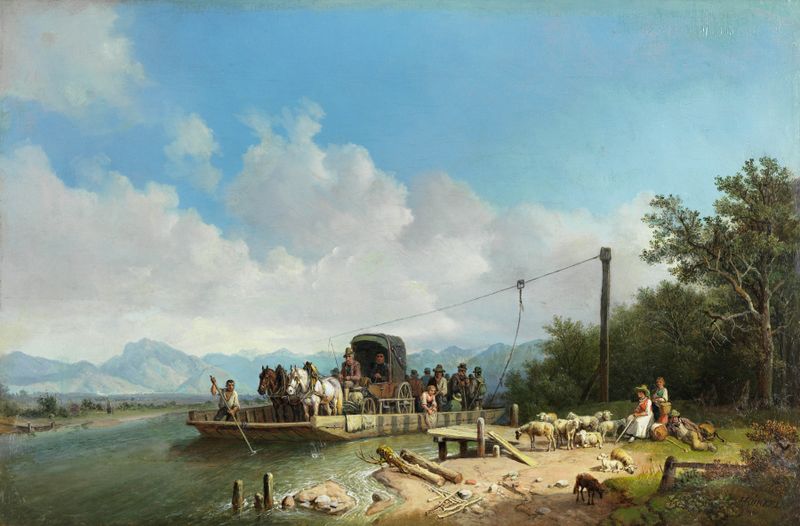
Fähre am Inn
Heinrich Bürkel

Am Dorfbrunnen in den italienischen Bergen
Heinrich Bürkel

Italienische Hirtenfamilie in der Felsenhöhle
Heinrich Bürkel
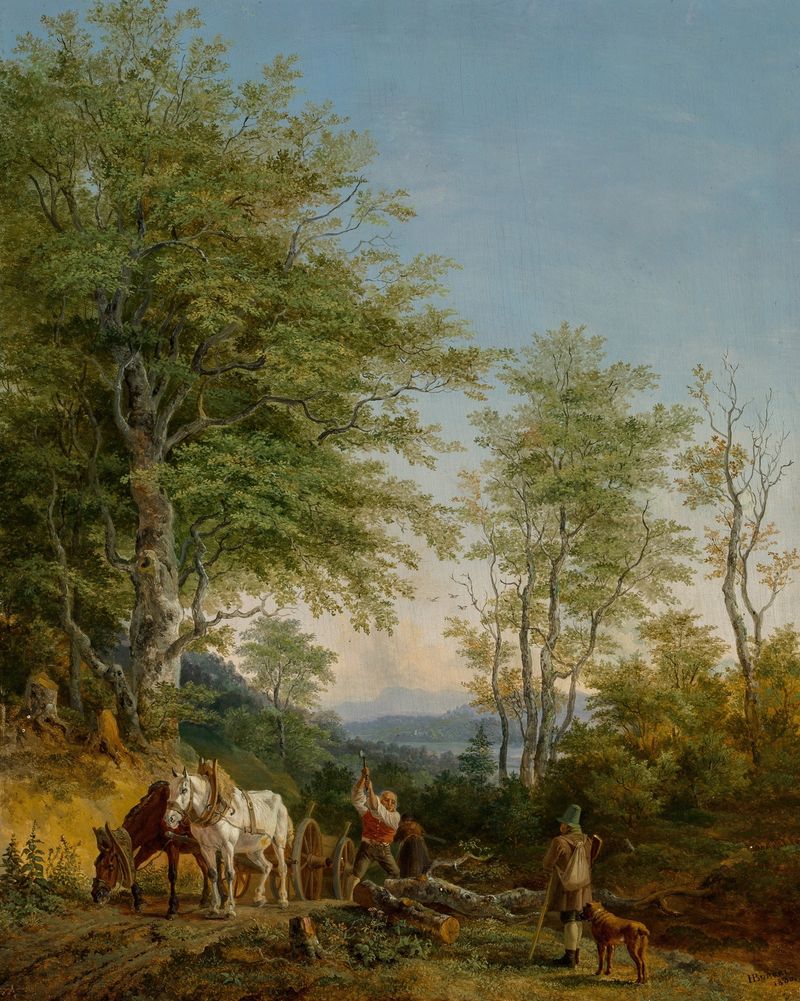
An Italianate wooded landscape with a woodcutter and his team of horses and a passerby with his dog
Heinrich Bürkel
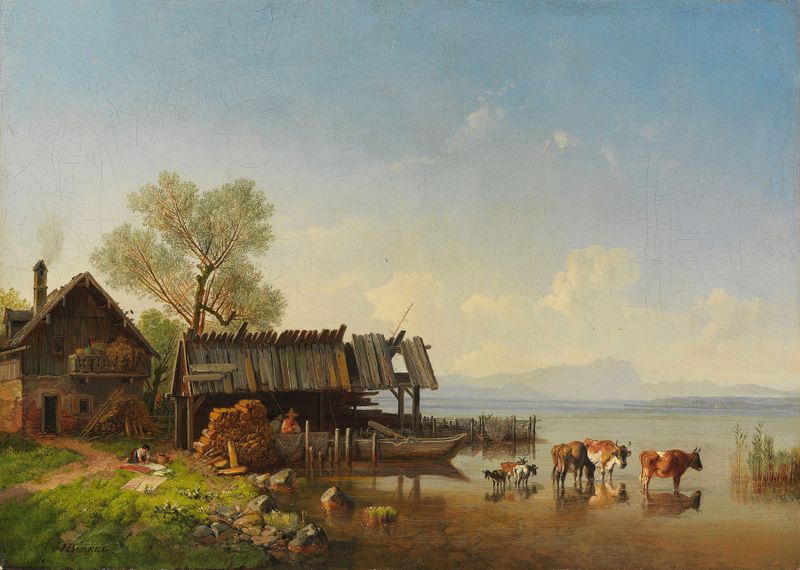
Der Starnberger See mit Blick auf das Wettersteingebirge
Heinrich Bürkel
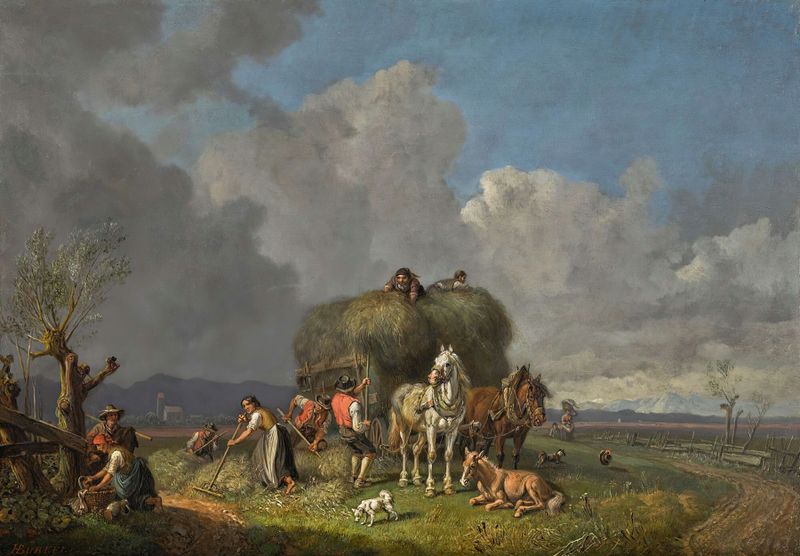
The Hay Harvest
Heinrich Bürkel
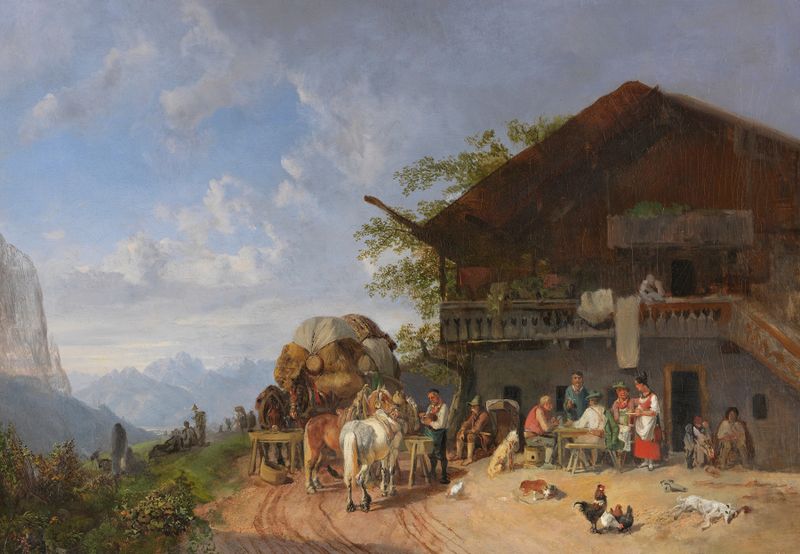
Rast vor einem Gasthof in den Bergen
Heinrich Bürkel

Blick auf den Monte Circeo
Heinrich Bürkel





