
Rauferei vor einem Wirtshaus — History & Facts
Can paint confess what words never could? In Rauferei vor einem Wirtshaus, the tumultuous energy of a brawl reveals the raw, unfiltered essence of human experience, transcending language itself. Look to the left at the vibrant chaos of bodies, limbs intertwined in a frenzied struggle, each figure painted with an energy that seems to pulse. Notice how the bold brushstrokes create a sense of movement, emphasizing the tension in their poses while the warm, earthy palette of browns and ochres contrasts sharply with the cooler tones of the tavern’s façade. The play of light around the scene highlights the animated faces, capturing expressions that oscillate between anger and exhilaration, drawing the viewer into the moment. Within this crowd, several details whisper profound truths.
The men, though engaged in conflict, reveal an underlying camaraderie, suggesting that this discord is an expression of more profound social bonds. The juxtaposition of the tavern’s openness against the enclosed struggle hints at the broader societal interactions of the time, where public and private lives collided with fervor. Each movement captured on canvas holds an emotional weight, evoking both the fragility and resilience of the human spirit amid chaos. Heinrich Bürkel painted this scene in 1853 during a period of significant political upheaval in Europe.
Living in Germany, Bürkel was deeply influenced by the Romantic movement, yet he sought to depict the everyday life of his time with a realistic lens. His focus on genuine emotions and social commentary was reflective of an era that valued the individual’s experience amid societal challenges, ensuring that his work resonated with a contemporary audience while also capturing the essence of his era.
More Artworks by Heinrich Bürkel
Browse all →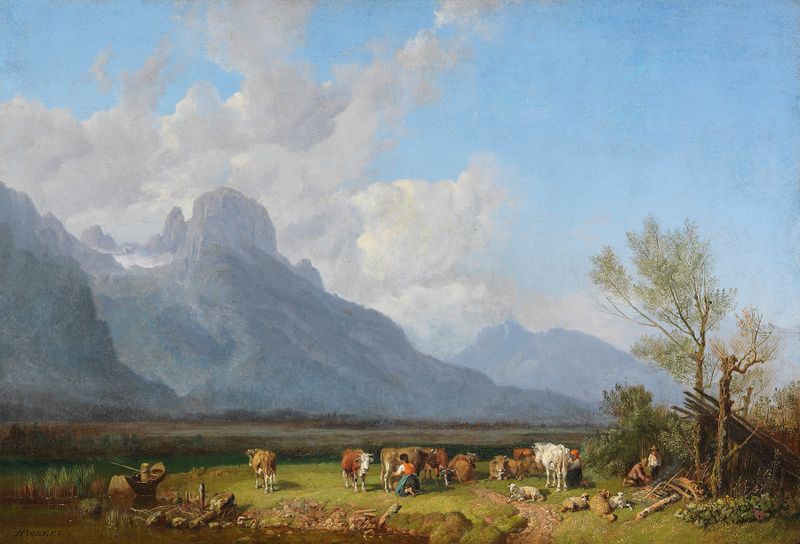
Viehhirten am Seeufer
Heinrich Bürkel
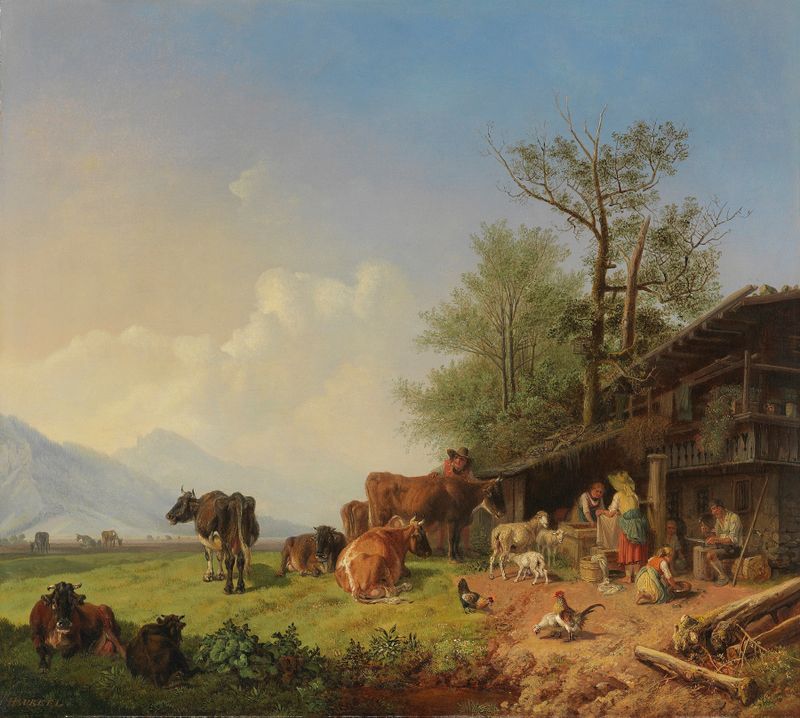
Bauernhof mit Brunnen
Heinrich Bürkel
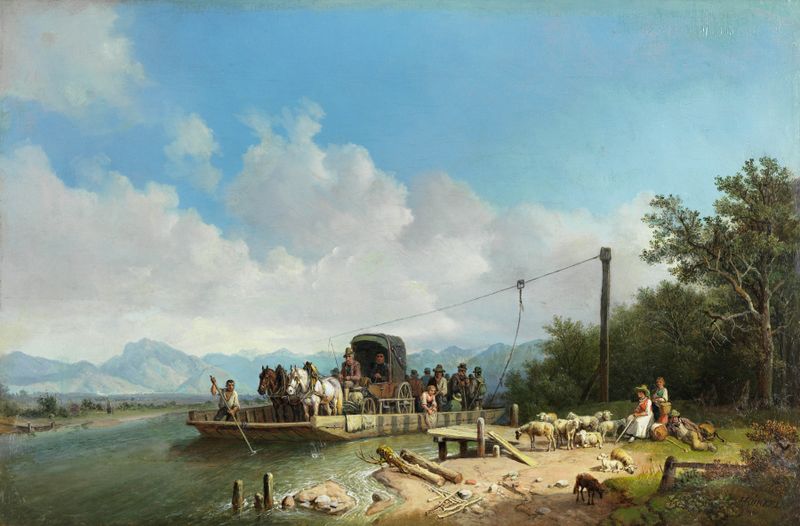
Fähre am Inn
Heinrich Bürkel

Am Dorfbrunnen in den italienischen Bergen
Heinrich Bürkel

Italienische Hirtenfamilie in der Felsenhöhle
Heinrich Bürkel
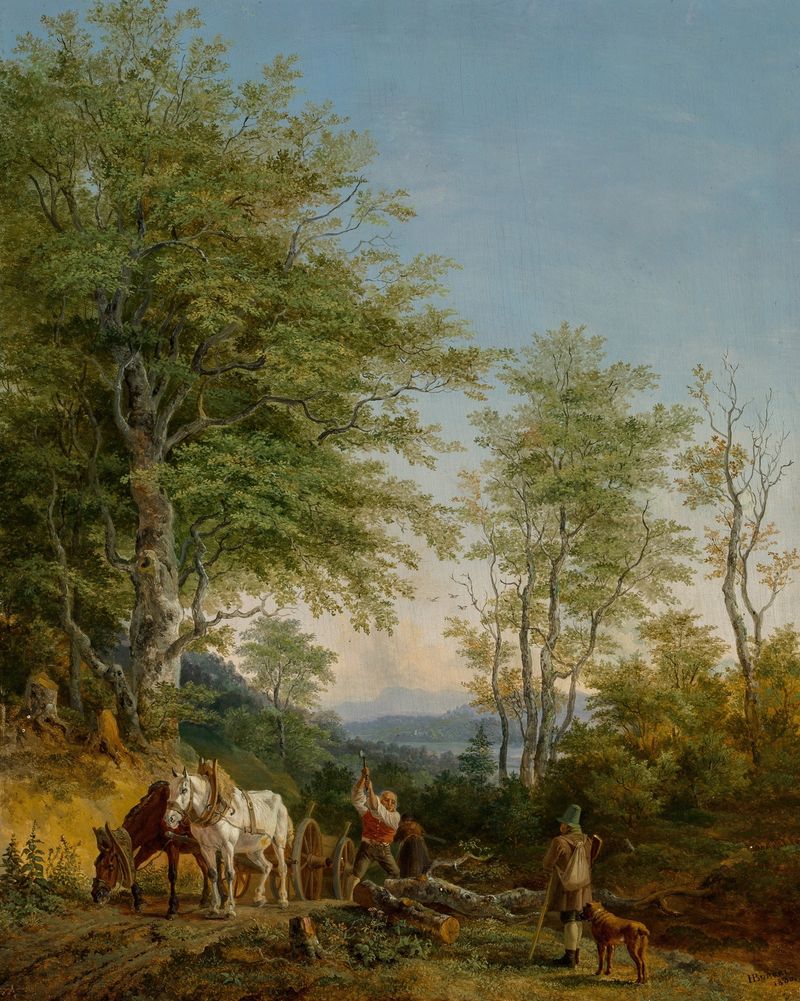
An Italianate wooded landscape with a woodcutter and his team of horses and a passerby with his dog
Heinrich Bürkel
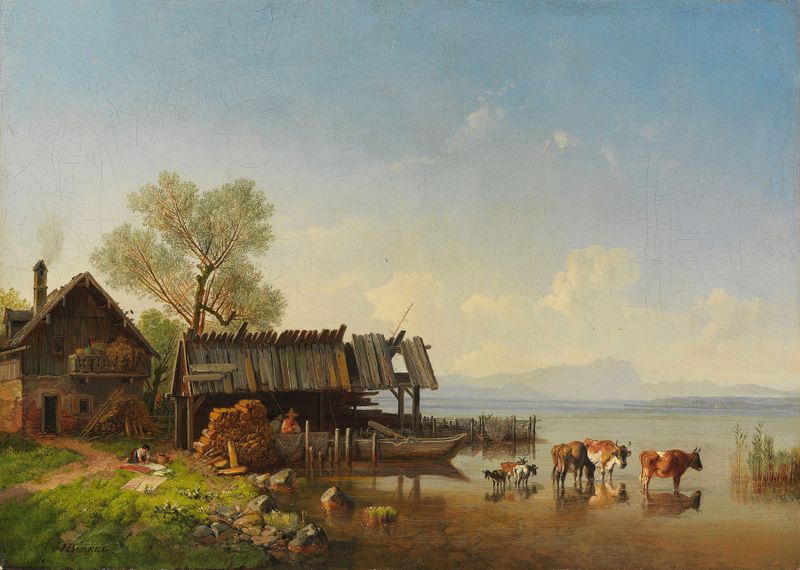
Der Starnberger See mit Blick auf das Wettersteingebirge
Heinrich Bürkel
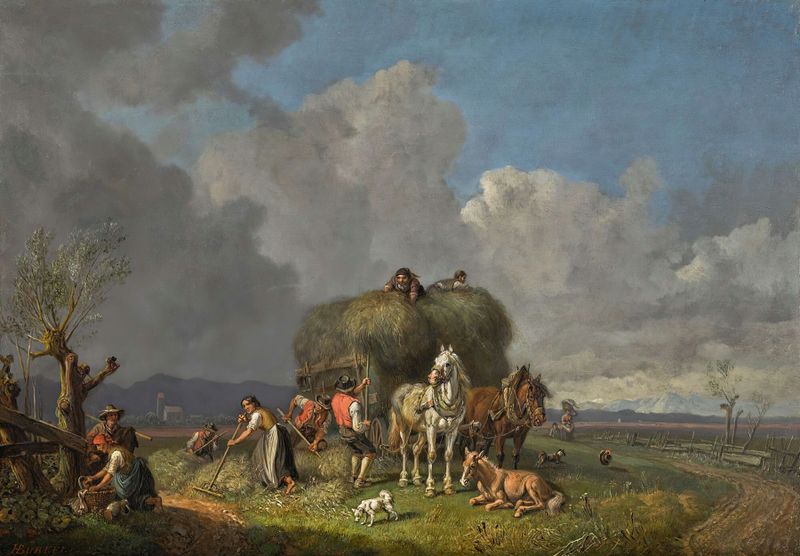
The Hay Harvest
Heinrich Bürkel
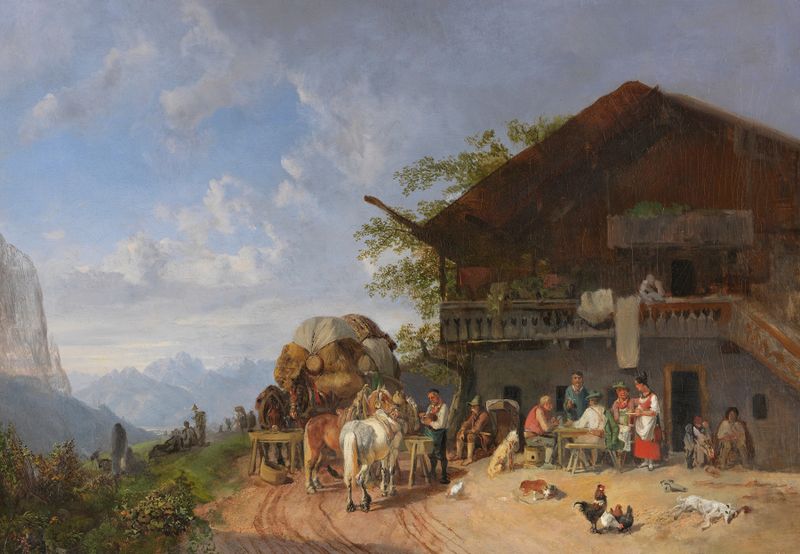
Rast vor einem Gasthof in den Bergen
Heinrich Bürkel

Blick auf den Monte Circeo
Heinrich Bürkel





