Discover insights about this artwork
Red Rocks by Åsgårdstrand — History & Facts
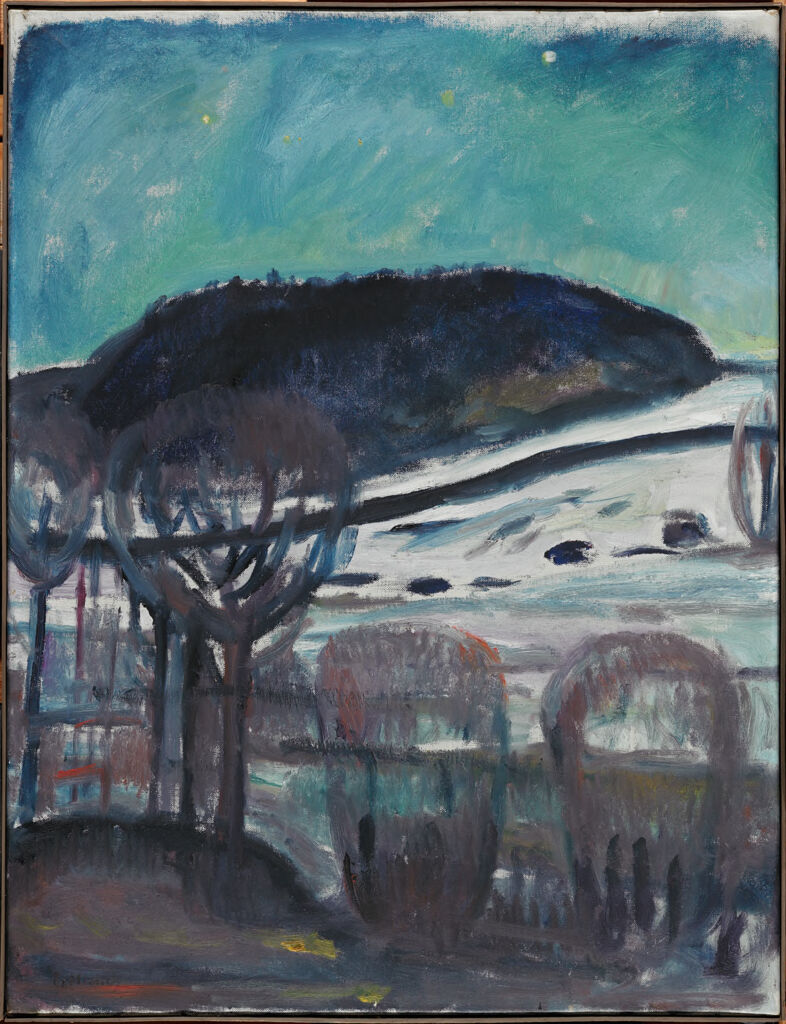
In Red Rocks by Åsgårdstrand, Edvard Munch captures a striking landscape filled with vibrant reds and deep blues. The painting features rocky formations set against a tumultuous sky, creating a dramatic atmosphere. The colors are bold and expressive, typical of Munch's style, drawing the viewer into the scene.
The overall composition evokes a sense of movement and energy within the natural setting. The painting is executed in oil on canvas, a medium that allows for rich color application and texture. Munch employs thick brushstrokes, giving the rocks a rugged appearance and enhancing the emotional impact of the landscape. The dimensions are approximately 90 x 70 cm, making it a medium-sized work that can be appreciated up close.
Viewers can observe the intricate details in the brushwork and the layering of colors. Edvard Munch, known for his exploration of psychological themes, painted Red Rocks by Åsgårdstrand around the turn of the 20th century. This work reflects his interest in the Norwegian landscape, which often served as a backdrop for his emotional narratives. An interesting fact about this painting is that it showcases Munch's transition towards a more expressive style, moving away from realism.
The vibrant colors and dynamic forms mark a significant moment in his artistic development.