
Regent Street, from Piccadilly — History & Facts
In an era teetering on the brink of revolution, the landscape of urban life transforms in hues and strokes. Focus your gaze on the bustling thoroughfare, where figures in stark contrast scatter across the canvas. The foreground draws you in, revealing elegantly dressed pedestrians and horse-drawn carriages, all caught in a moment of vibrant movement. Notice how the soft blues and greens of the shopfronts harmonize with the warm browns of the buildings, creating a rhythm that feels alive, echoing the pulse of 19th-century London.
The light dances across the scene, illuminating the details of clothing and architecture, inviting you to explore each corner of this lively street. Yet, beneath the surface of this idyllic portrayal lies an undercurrent of tension. The juxtaposition of the elegant facade with the palpable energy of the crowd speaks to the social changes brewing beneath the surface of society. The figures, though seemingly harmonious, are part of a city grappling with the rapid advancements of the Industrial Revolution, hinting at the shifting dynamics of class and power.
Each stroke contributes not only to the aesthetic but to the narrative of an evolving world. In 1822, when this work was created, Shepherd was navigating the evolving landscape of London, capturing its essence amid a bustling art scene led by the likes of Turner and Constable. The city was on the cusp of modernity, and Shepherd's depiction of Regent Street reflects the excitement and anxiety of transformation, marking a shift in both artistic expression and urban life during a critical period in history.
More Artworks by Thomas Hosmer Shepherd
Browse all →
A View of the Bank of England
Thomas Hosmer Shepherd

East India House
Thomas Hosmer Shepherd
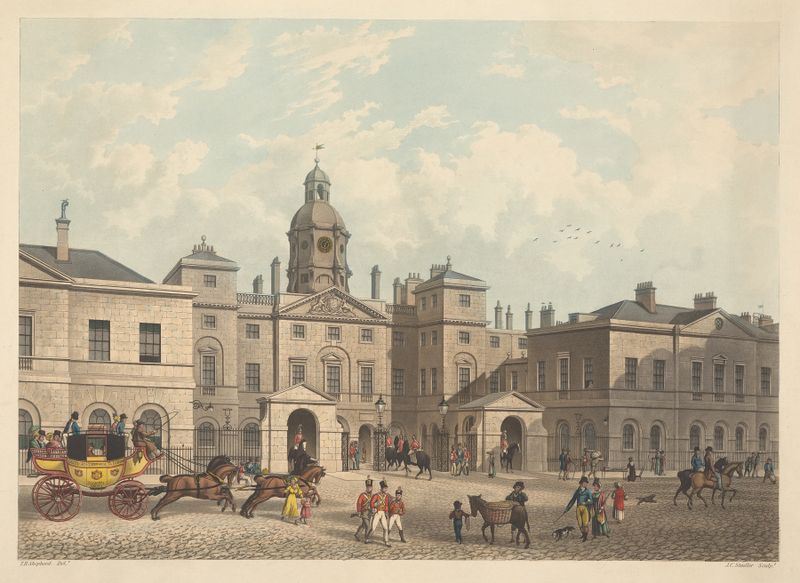
A View of Horse Guards from Whitehall
Thomas Hosmer Shepherd

St. Paul’s Cathedral
Thomas Hosmer Shepherd
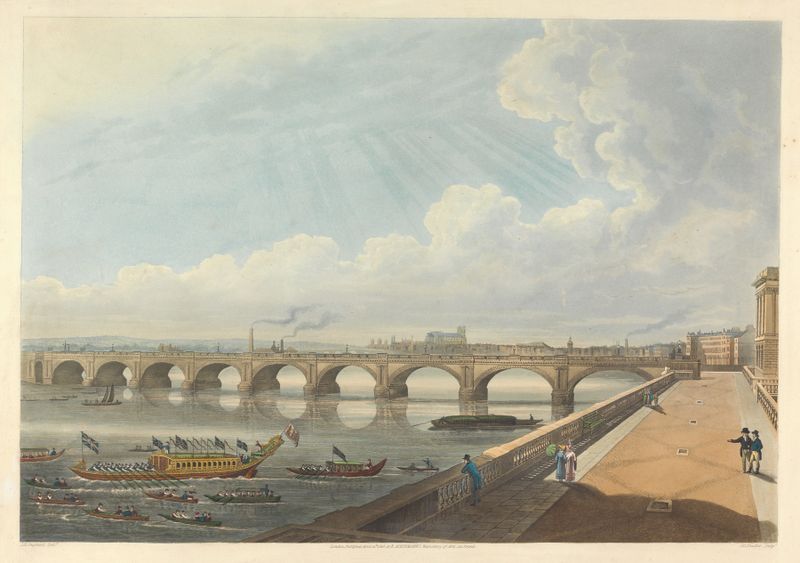
View of Waterloo Bridge from the East End of Somerset House Terrace
Thomas Hosmer Shepherd
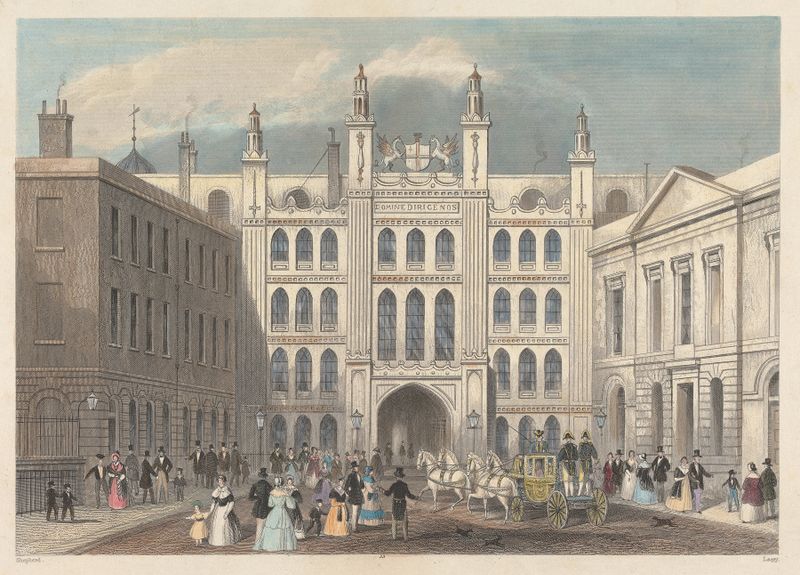
Guildhall, King Street
Thomas Hosmer Shepherd
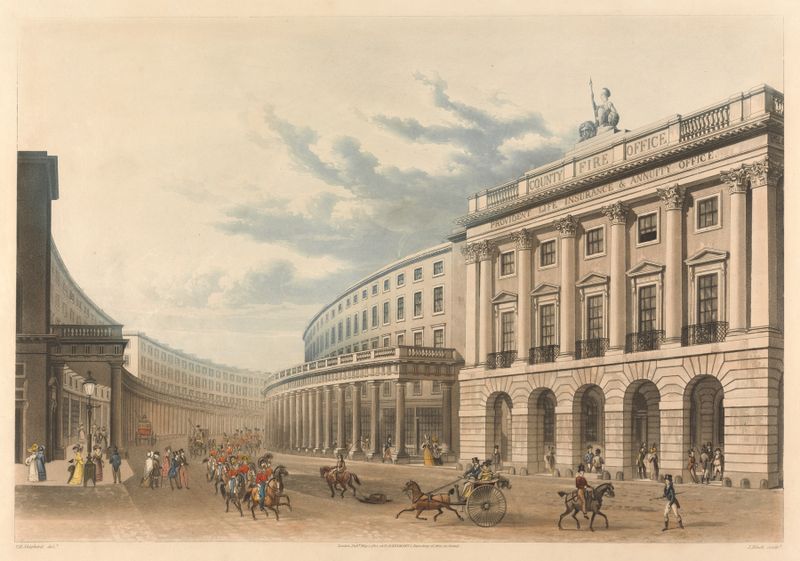
The Quadrant – Regent Street
Thomas Hosmer Shepherd

A View of the Bank of England
Thomas Hosmer Shepherd

A View of the Royal Exchange
Thomas Hosmer Shepherd
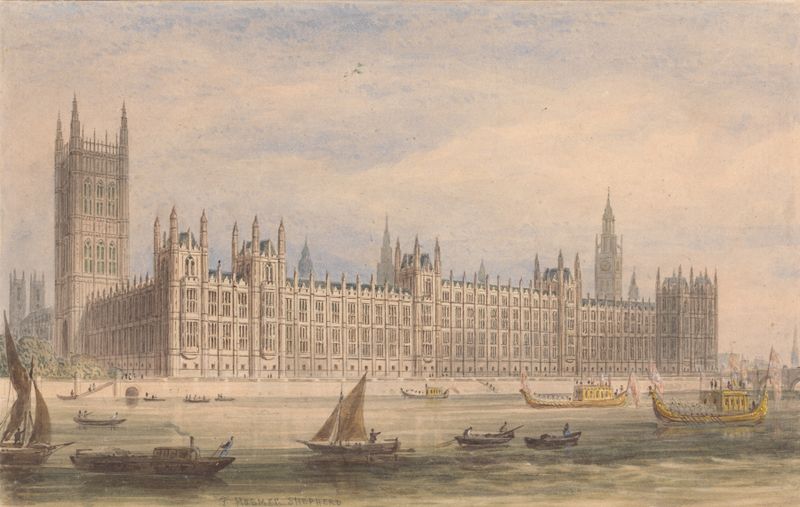
The Houses of Parliament
Thomas Hosmer Shepherd





