Report — History & Facts
When Report was completed in 1838, Taras Shevchenko was still an art student in St. Petersburg, not yet the celebrated poet and national figure he would become. The work stands out as one of his earliest known attempts to capture the bureaucratic rituals of Russian imperial life, a subject rarely chosen by his contemporaries.
Scholars note that this painting may have been inspired by Shevchenko’s own experiences as a serf, observing the machinery of authority from the margins. Its precise date, 1838, also marks the year Shevchenko was bought out of serfdom by a group of Russian intellectuals—an act that would alter the course of his life and career. The scene unfolds in a dimly lit office, where a young official presents a document to a stern superior seated behind a cluttered desk. The tension is palpable: the subordinate’s posture is rigid, his gaze fixed on the paper, while the older man’s hand hovers over an inkwell, ready to approve or reject the report.
Shevchenko’s attention to the details of uniform—epaulettes, buttons, the glint of a signet ring—anchors the painting in the world of tsarist bureaucracy. The play of light draws the eye to the document itself, making it the silent protagonist of the drama. Unlike the grand historical canvases of Karl Bryullov, Shevchenko’s focus is intimate and psychological, highlighting the quiet anxieties of daily life under autocracy. The medium of Report remains uncertain, as the painting has survived only in archival photographs and descriptions, with the original presumed lost or held in a private collection.
Its early date places it among Shevchenko’s student works, preceding his more famous portraits and genre scenes. While the painting’s provenance is unclear, it is often cited in studies of Shevchenko’s formative years, illustrating his early interest in social themes and his keen observational skill. Today, Report is referenced in Ukrainian art history as a rare glimpse into the artist’s engagement with the realities of authority and subordination before his emergence as a national icon.
More Artworks by Taras Shevchenko
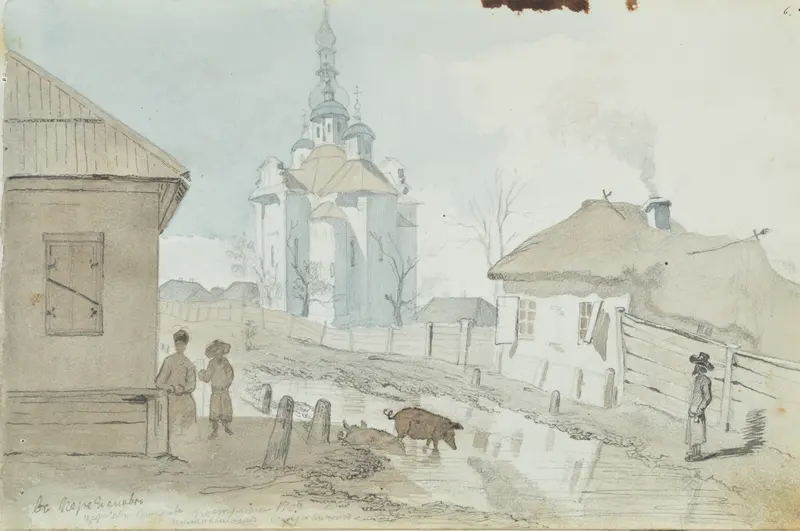
1845 Sh Sketchbook f.06r
Taras Shevchenko

1845 Sh Sketchbook f.04r
Taras Shevchenko

1848 Bilia vohnu
Taras Shevchenko
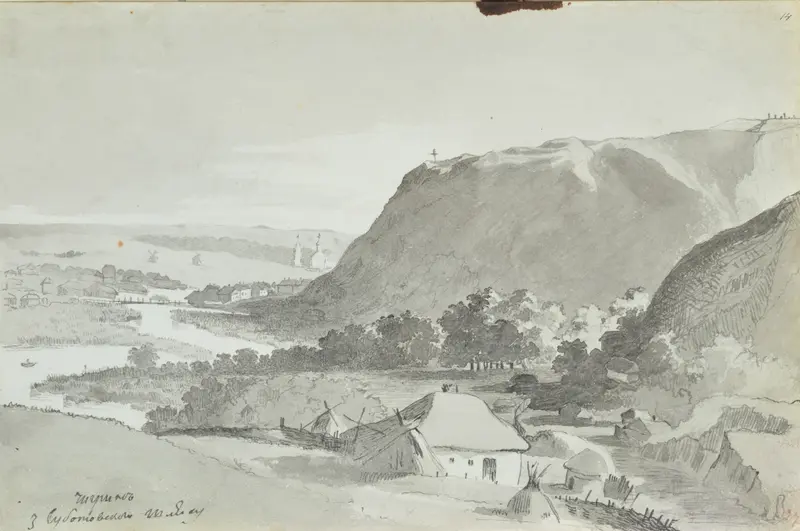
1845 Sh Sketchbook f.14r
Taras Shevchenko
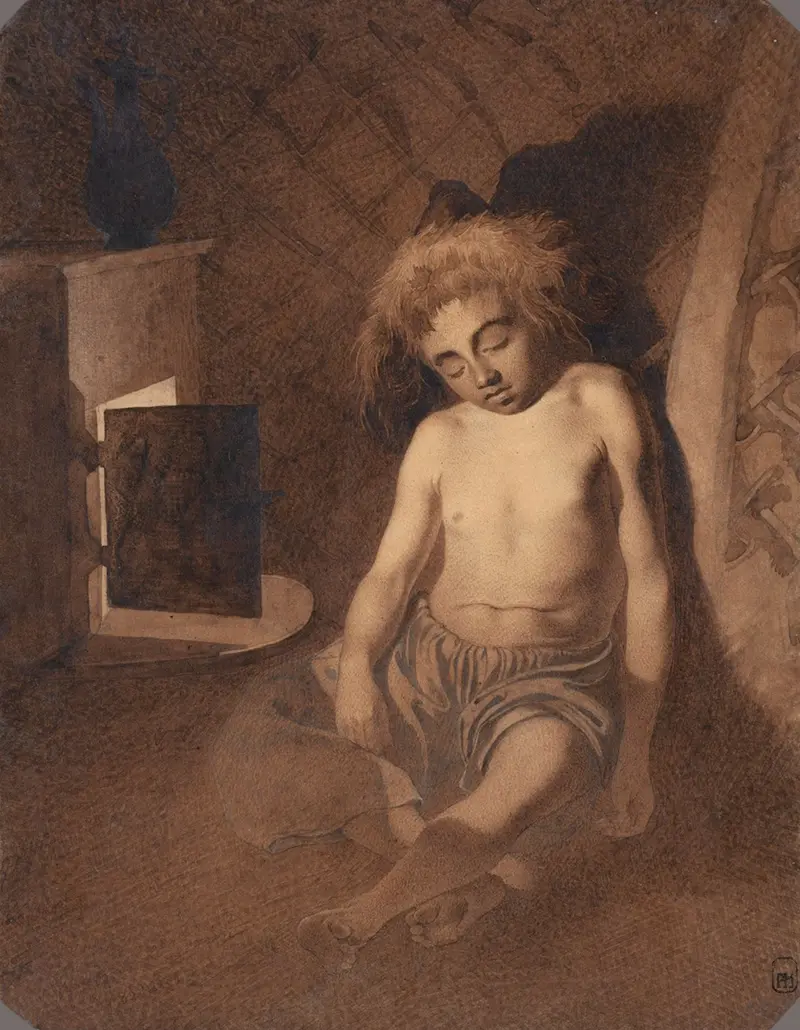
1848 Hlopcyk zasnuv
Taras Shevchenko
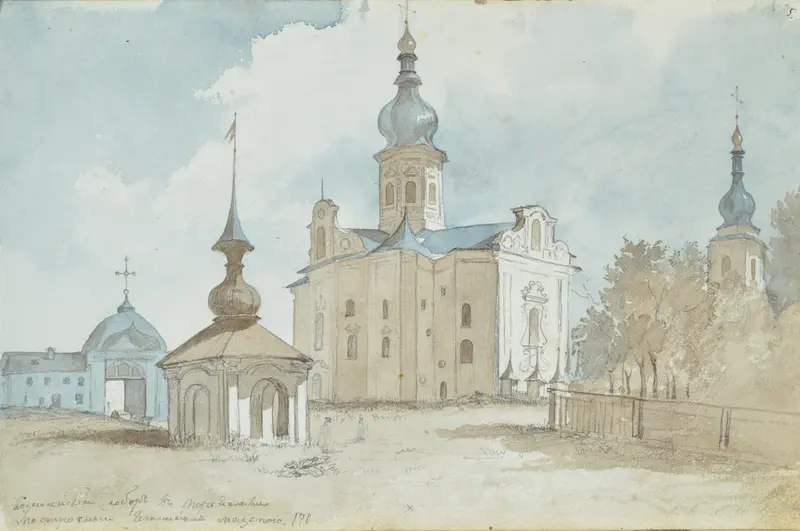
1845 Sh Sketchbook f.05r
Taras Shevchenko
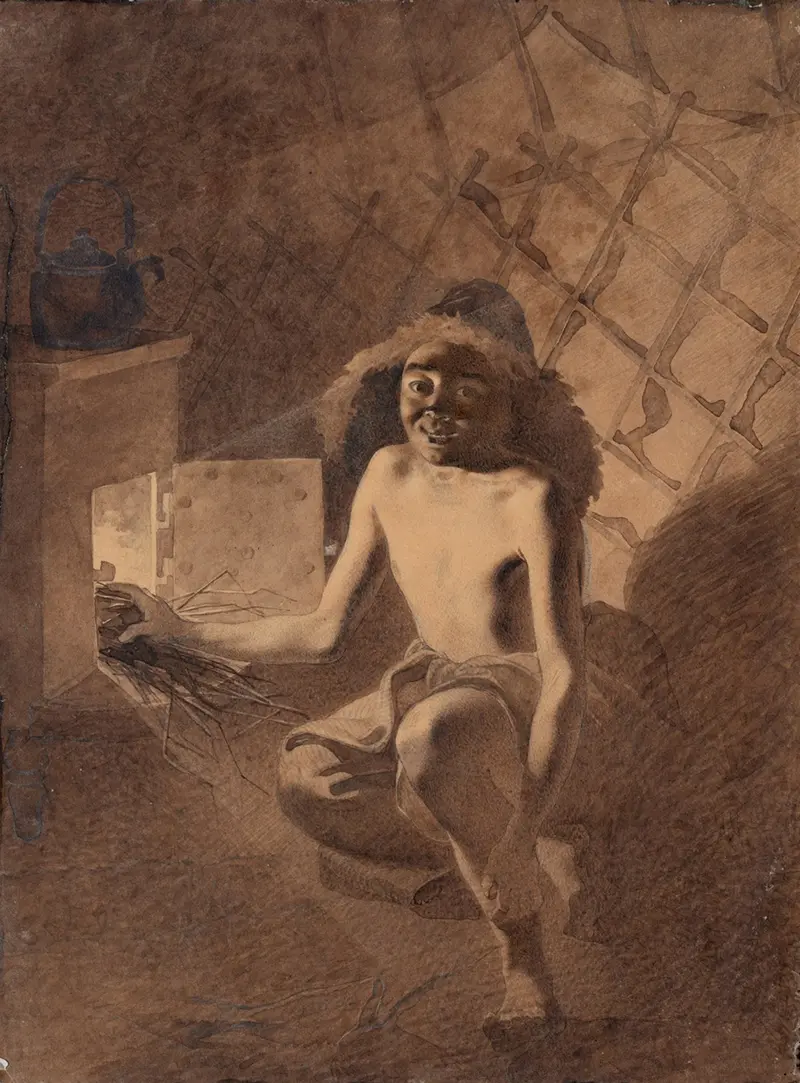
1848 Hlopcyk rozpalije
Taras Shevchenko
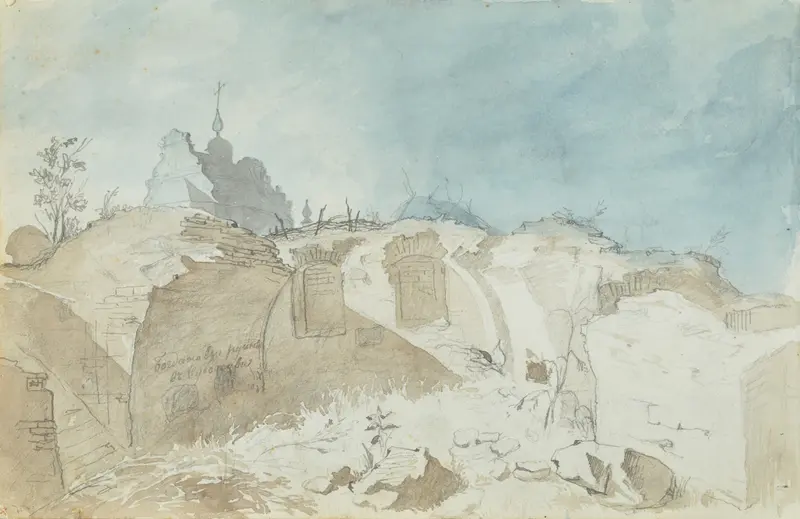
1845 Sh Sketchbook f.12v
Taras Shevchenko
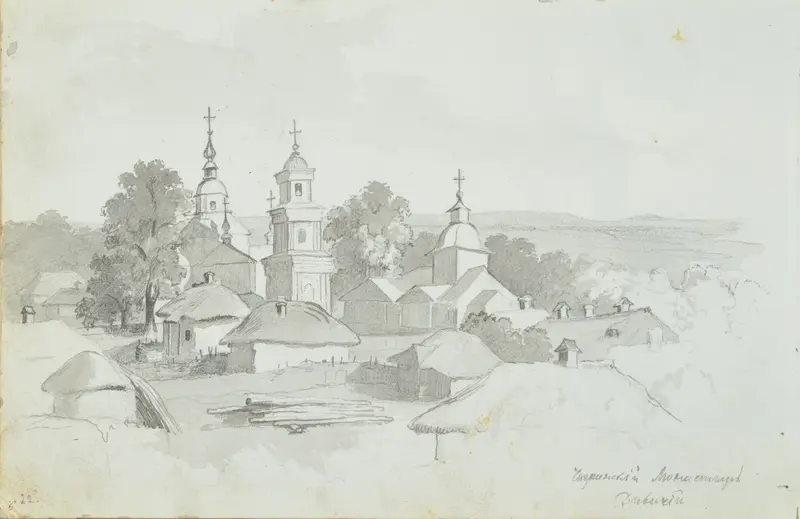
1845 Sh Sketchbook zz f.11v
Taras Shevchenko
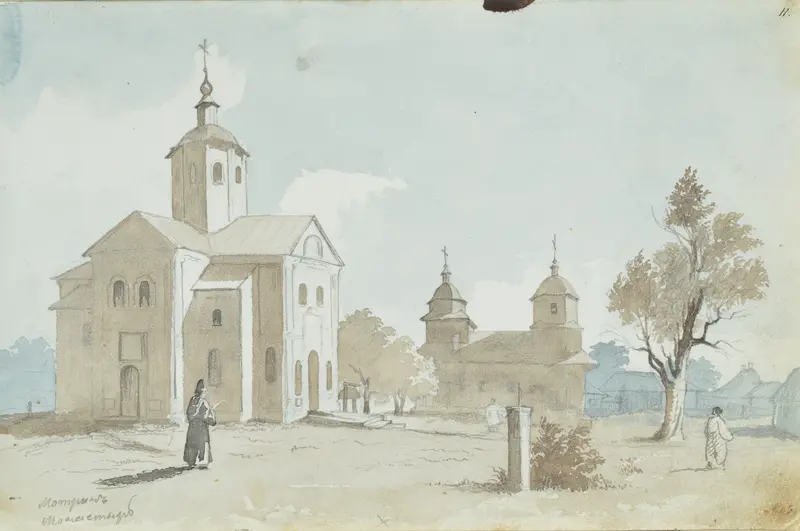
1845 Sh Sketchbook f.11r
Taras Shevchenko