
Rest in front of a Tavern — History & Facts
Memories linger like shadows, often hidden beneath layers of light and color. In Rest in front of a Tavern, a fleeting moment captures the essence of fleeting joy and unspoken sorrow, where life pauses for reflection. Look to the center of the canvas, where the tavern’s rustic facade invites weary travelers to take refuge. The warm, golden hues envelop the scene, highlighting the figures lounging against the rustic wall, their postures relaxed yet contemplative.
Notice the soft play of light filtering through the trees, casting gentle shadows that dance upon the cobblestones, evoking a sense of peace amidst the bustling world. Beneath the serene exterior, a tension brews—a contrast between the jovial atmosphere of the tavern and the quiet introspection of its patrons. The slight downturn of a figure’s gaze hints at unspoken burdens, while the carefree laughter of others serves as a reminder of fleeting pleasures. These intricacies weave a narrative of memory, nostalgia, and the bittersweet nature of life, where every laugh may conceal a sigh. In 1650, while creating Rest in front of a Tavern, the artist found himself amidst a vibrant Dutch landscape, reflecting the burgeoning art movement that celebrated everyday life.
Berchem’s attention to natural light and daily activities mirrored the world around him, as the Dutch Golden Age flourished with a focus on realism and human emotion, allowing him to poignantly capture the essence of human experience.
More Artworks by Nicolaes Pietersz Berchem
Browse all →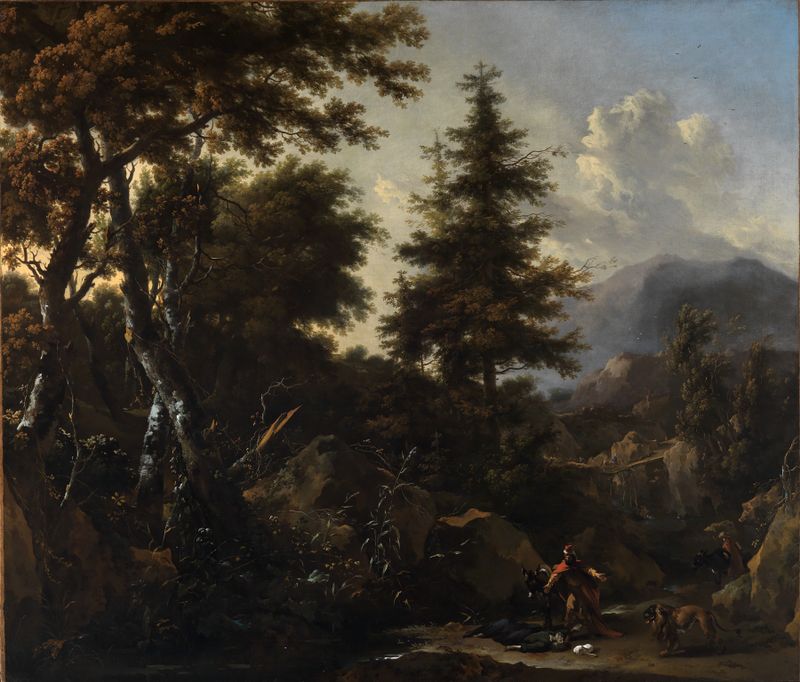
Schlucht im Bergwald mit alttestamentlicher Staffage
Nicolaes Pietersz Berchem
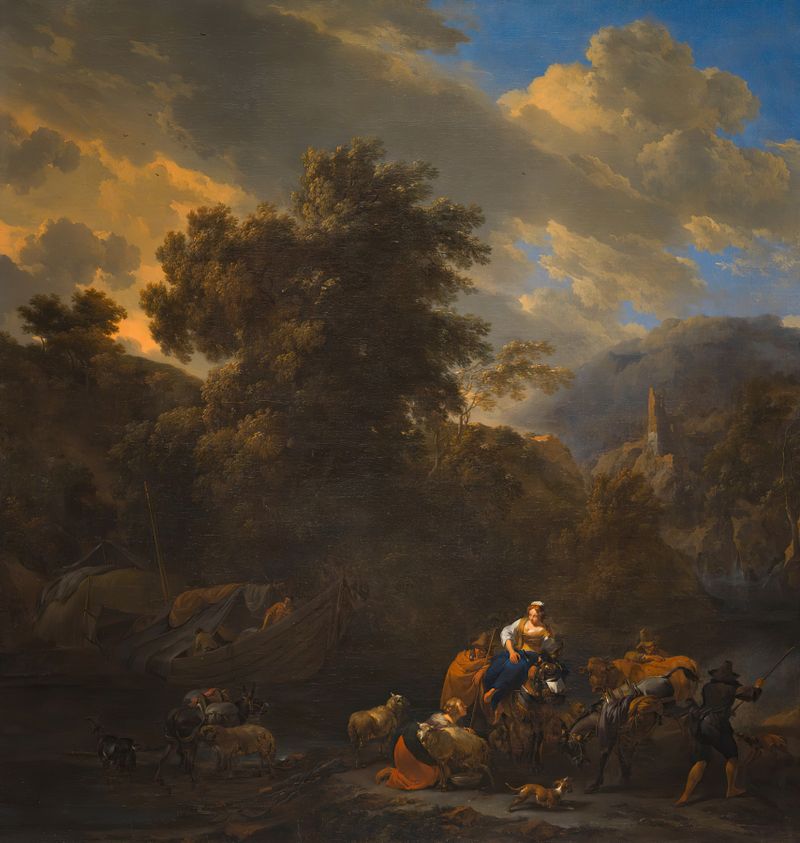
Italianate Landscape with Figures and Pack Animals on the Banks of a River
Nicolaes Pietersz Berchem
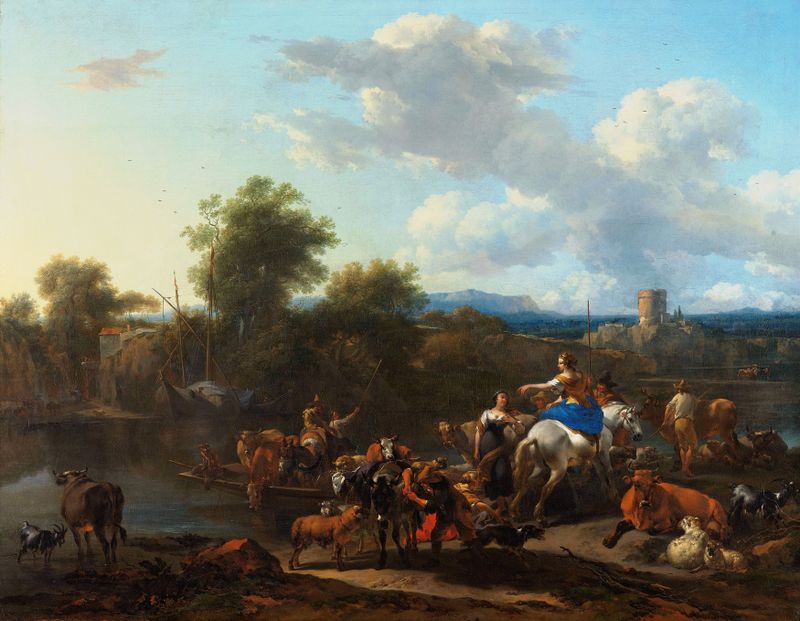
The Cattle Ferry
Nicolaes Pietersz Berchem
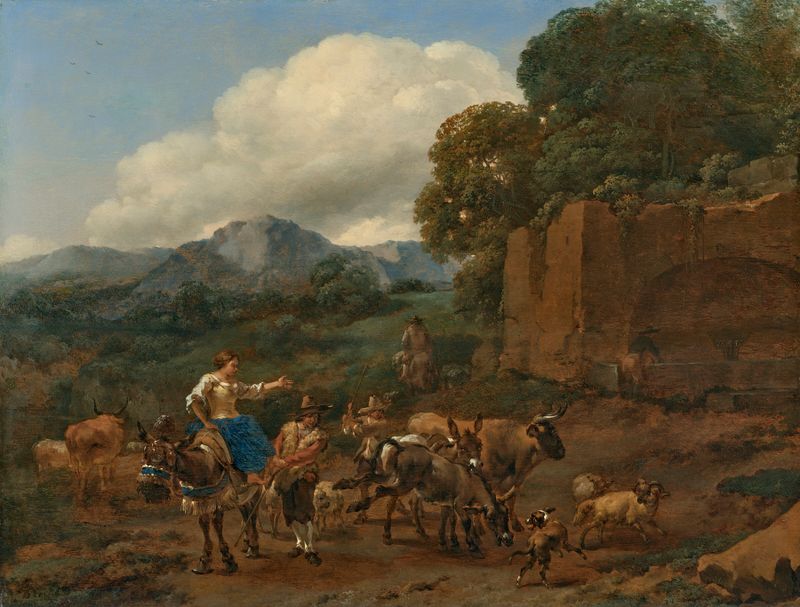
An Italianate landscape with a shepherdess on a mule and a shepherd, herding cattle, sheep, donkeys and dogs on a mountain track next to ruins
Nicolaes Pietersz Berchem
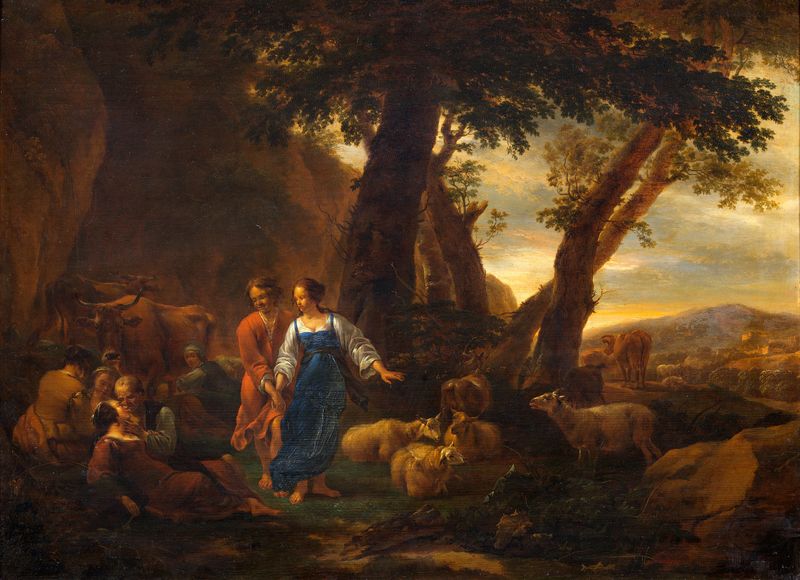
Landscape with Peasants and Cattle
Nicolaes Pietersz Berchem
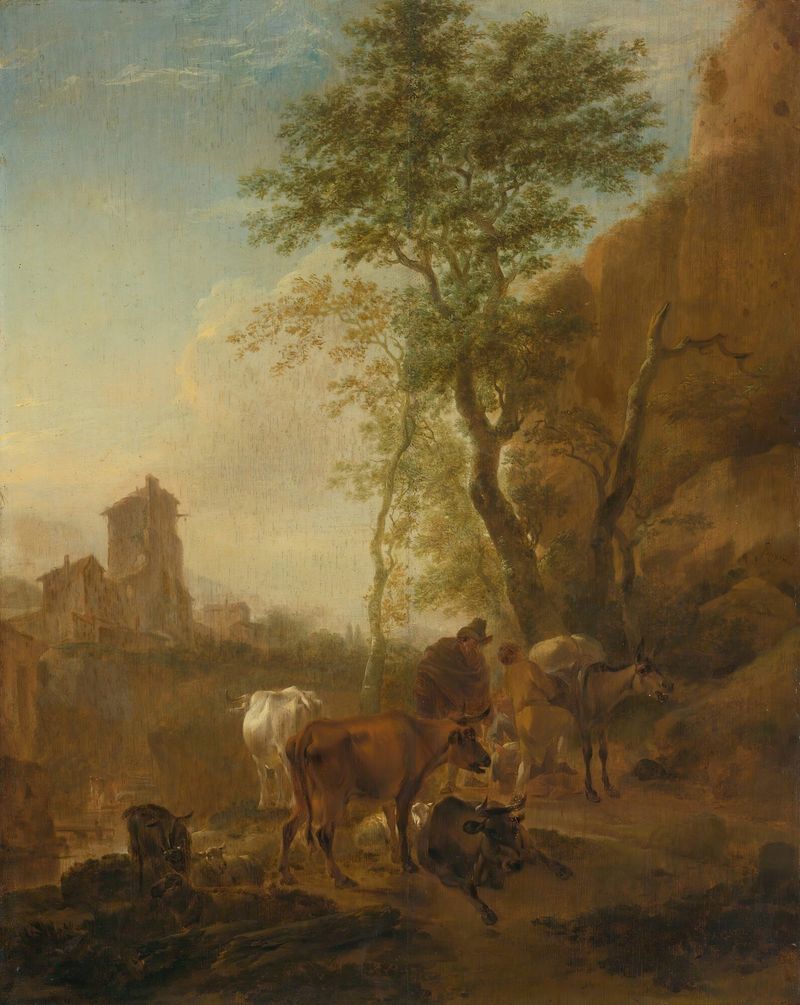
Italianate Landscape With Cows
Nicolaes Pietersz Berchem
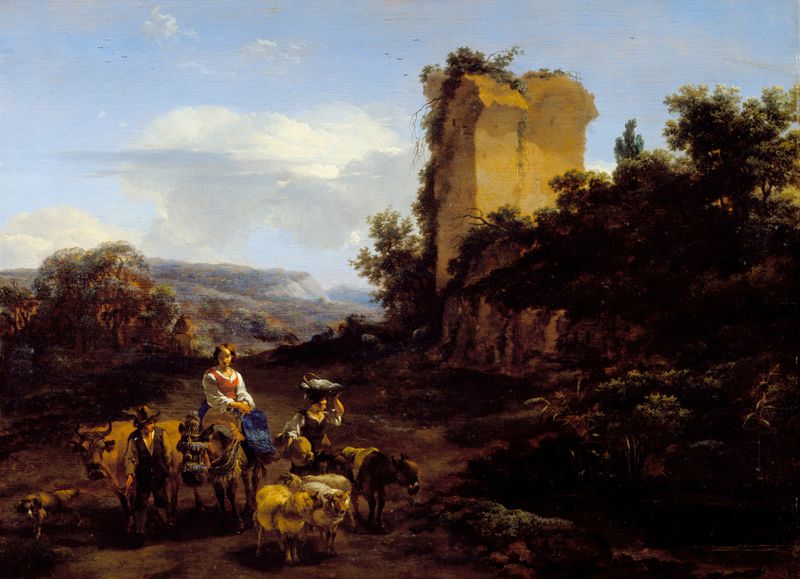
Landscape with Ruins and Travelers
Nicolaes Pietersz Berchem
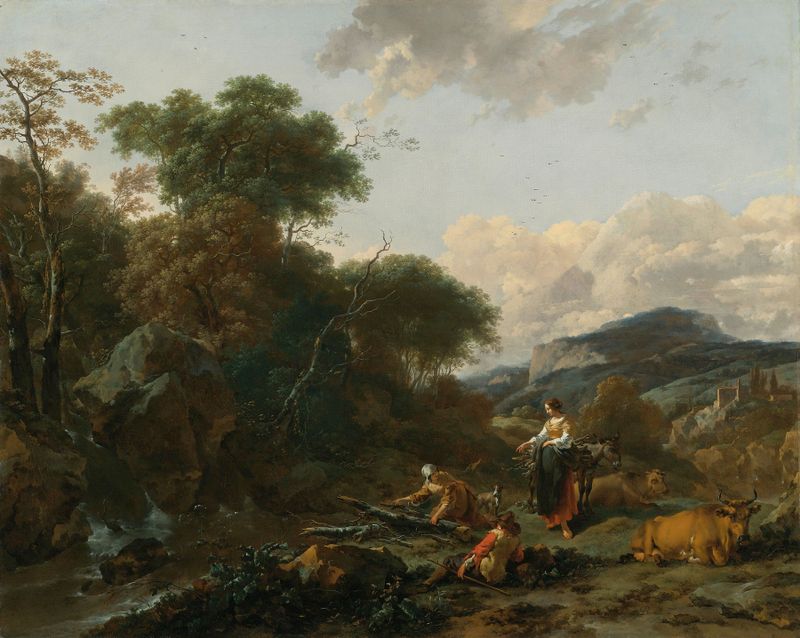
A Landscape With Figures
Nicolaes Pietersz Berchem
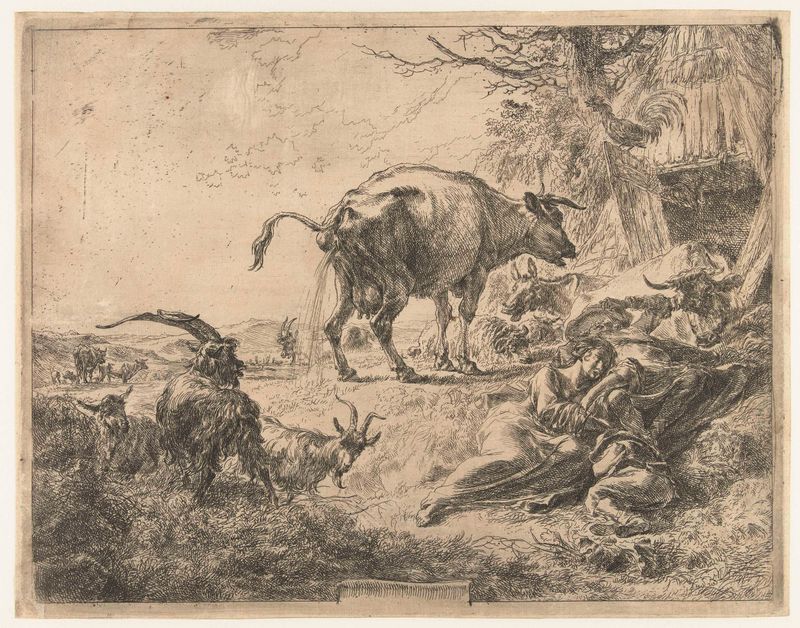
Slapende herdersfamilie en rustend vee
Nicolaes Pietersz Berchem
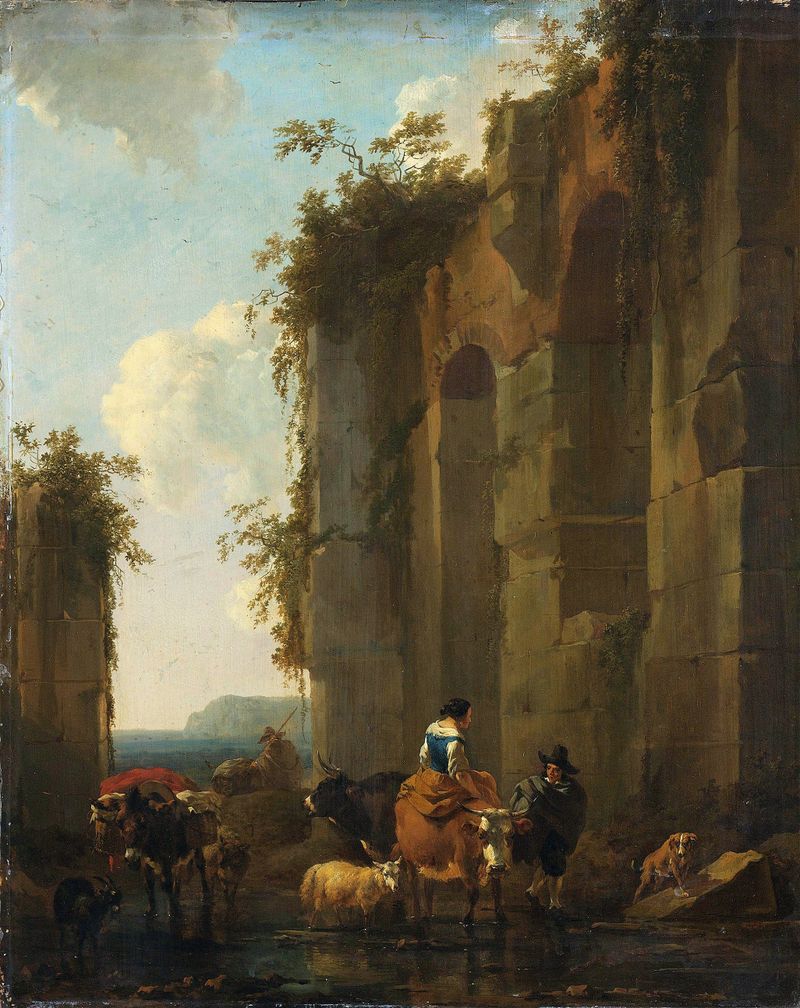
Ruins in Italy
Nicolaes Pietersz Berchem





