
Retour du Marché de St. Jean-de-Mont — History & Facts
In the stillness of the moment captured, layers of emotion linger like the soft shadows cast upon the cobbled streets, inviting reflection on what has been lost. Look to the left at the villagers, their weary figures returning from market, carrying bundles that seem heavier than mere goods. Notice how the muted palette of earthy browns and grays evokes a sense of nostalgia, while the gentle brushstrokes impart a softness that contrasts with the burdens they bear. The composition draws the eye to the horizon, where a faint light breaks through the clouds, hinting at hope amidst the melancholic scene. Within this tranquil setting, the quiet exchanges between the figures speak to unspoken sorrow and shared experiences.
The juxtaposition of the joyful act of trading against the backdrop of an impending dusk suggests the inevitability of change and the loss each character carries. Subtle details, like the way a woman clutches her basket close to her chest, reveal deep personal histories intertwined with collective memory—echoes of what once was. In 1910, Auguste Louis Lepère painted this poignant work during a time of significant socio-political change in France, which was grappling with modernization and the aftermath of war. Living in Paris, Lepère was influenced by the burgeoning movements of Impressionism and Post-Impressionism, infusing his pieces with a delicate balance of realism and emotional depth, reflective of the sentiments of his era.
More Artworks by Auguste Louis Lepère
Browse all →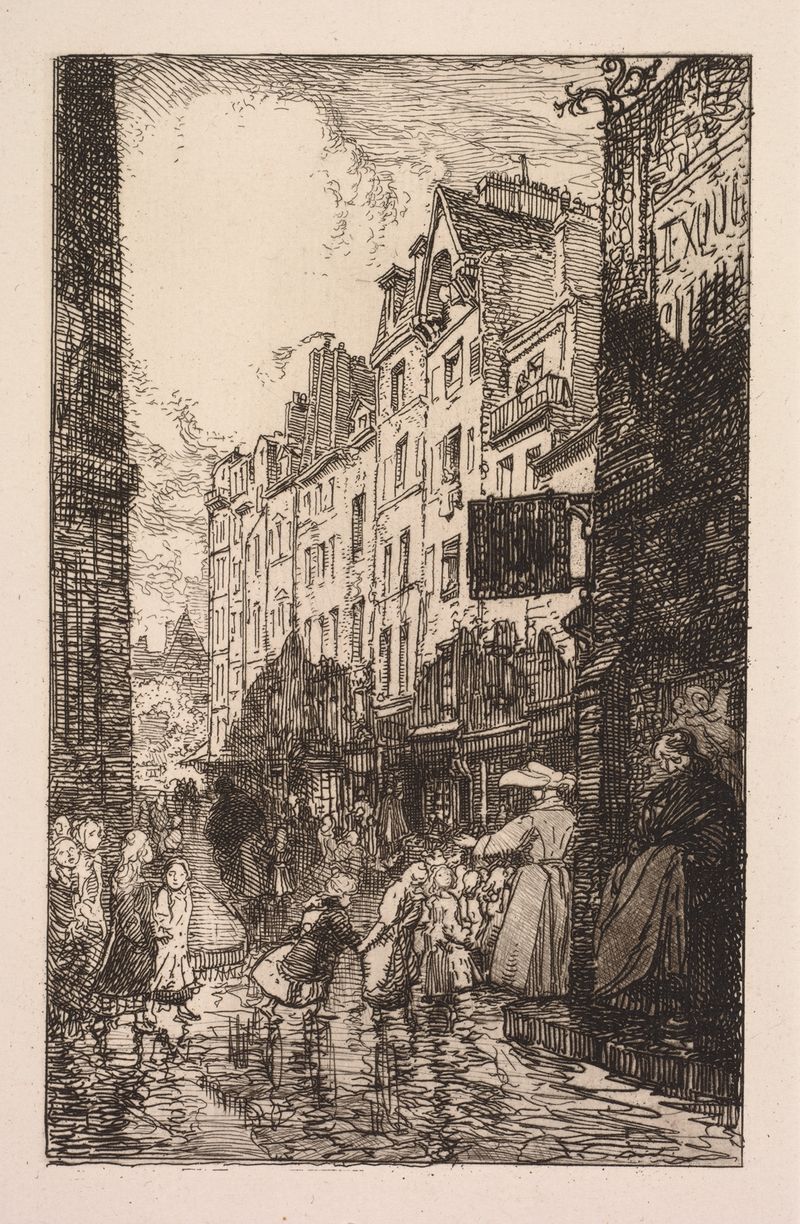
La Rue des Prêtres Saint-Séverin
Auguste Louis Lepère
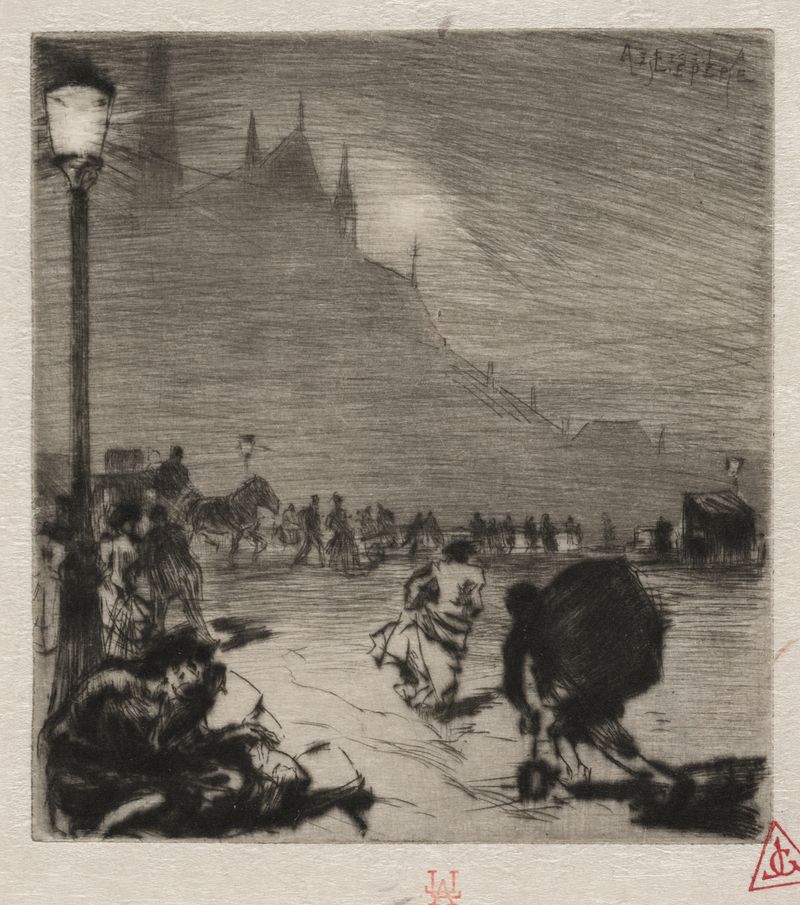
Au Coin du Pont-aux-Doubles
Auguste Louis Lepère
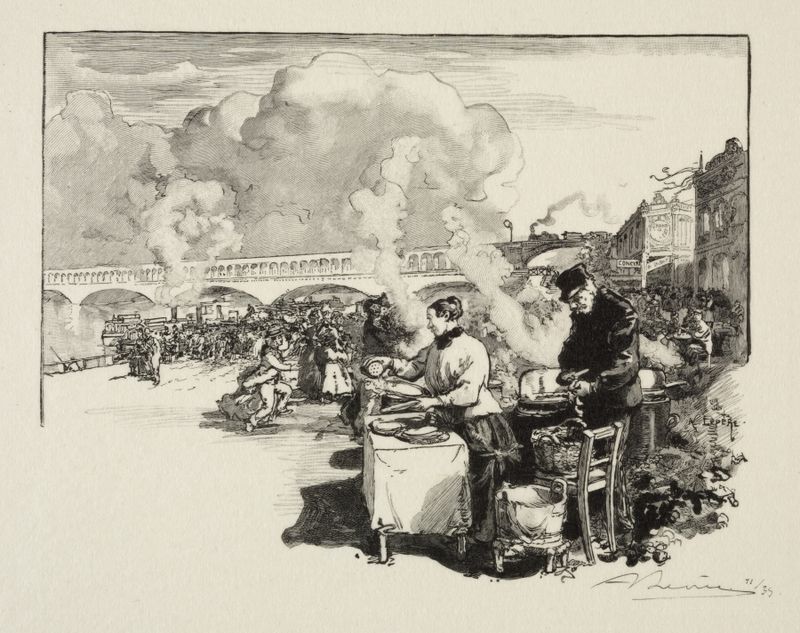
Debarcadère des bateaux-omnibus
Auguste Louis Lepère

La Seine, au quai de la Rapée
Auguste Louis Lepère
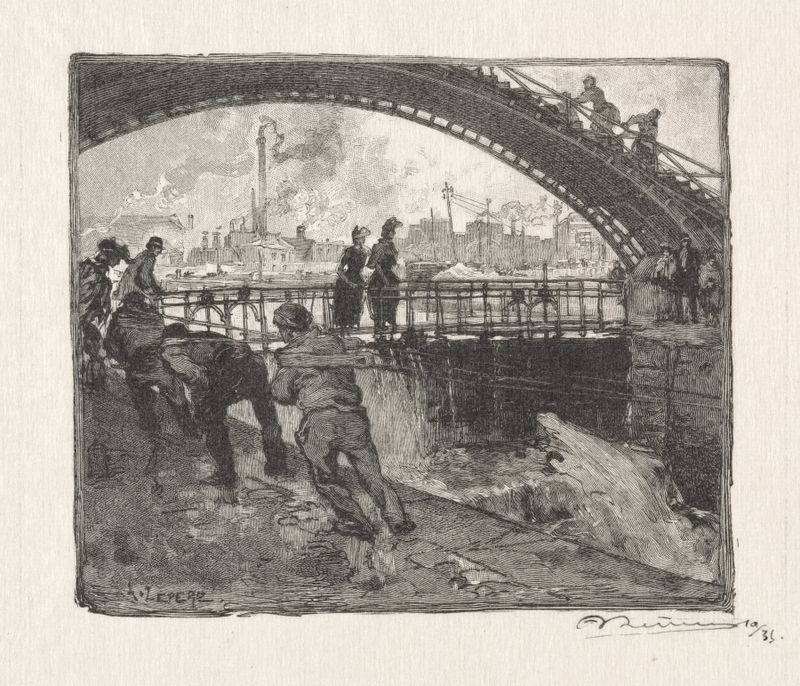
L’Ecluse du Canal St. Martin
Auguste Louis Lepère

Le Boulevard Montmartre, le Soir
Auguste Louis Lepère

Une Chasse au Mont Gérard
Auguste Louis Lepère
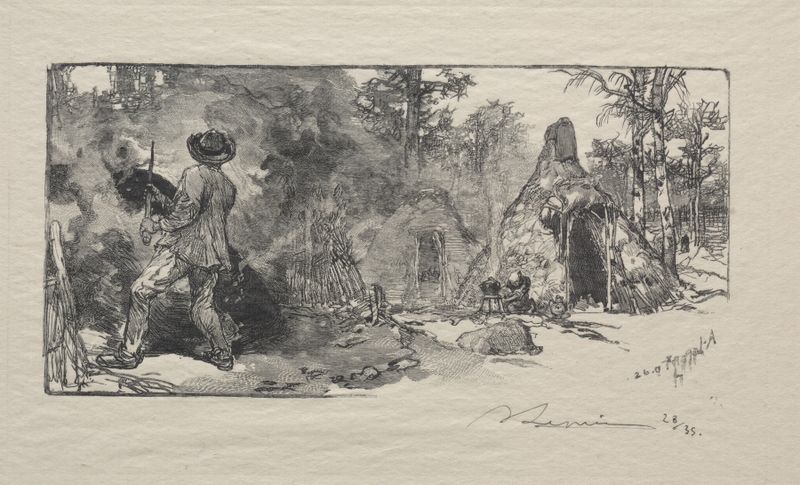
Les Charbonniere
Auguste Louis Lepère
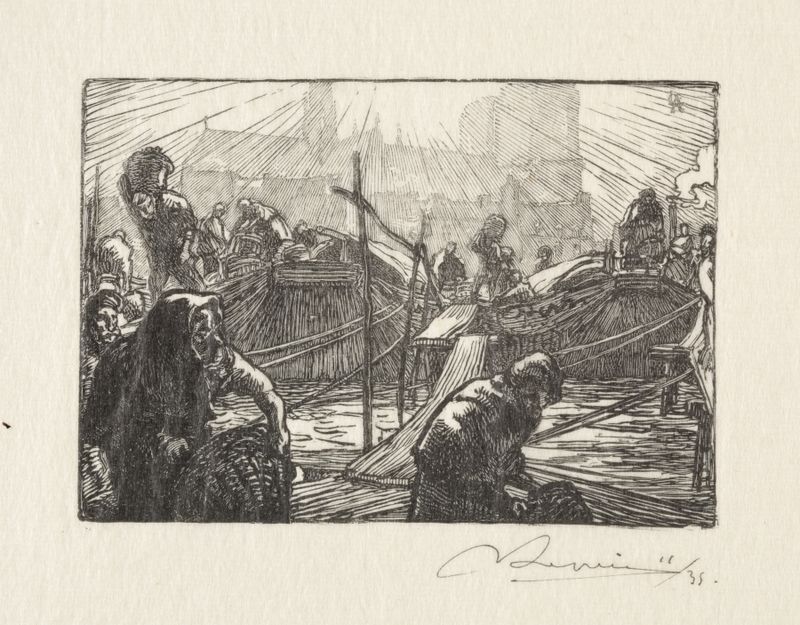
Notre Dame vue du Marché aux pommes
Auguste Louis Lepère

Le Palais des Arts Liberaux, Intèrieur
Auguste Louis Lepère





