
Return of the Fishing Boats at Collioure, near the Spanish Border — History & Facts
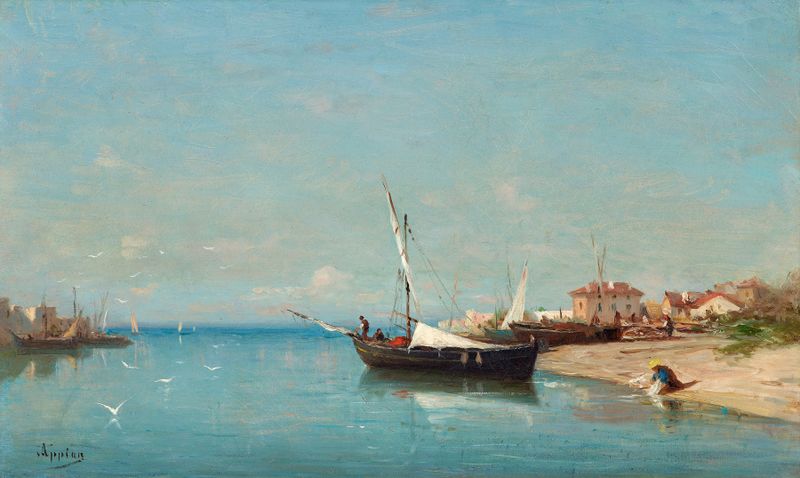
Where does light end, and longing begin? In the shimmering dance of water and sky, a world awakens, revealing the eternal struggle between nature and human endeavor. Look to the horizon, where the vibrant blues of the approaching night embrace the golden glow of the setting sun. The fishing boats, their sails taut with promise, emerge from the soft waves like whispers of hope. Notice how Appian’s brushstrokes meld colors into a fluid harmony, capturing the essence of twilight—a moment suspended between potential and farewell.
The sky, a canvas of oranges and purples, invites you to linger, drawing the eye toward the quiet strength of the boats as they return home. Hidden within the gentle ripples are stories of resilience. The juxtaposition of the calm sea against the labor of the fishermen suggests a profound connection to nature's bounty, yet an underlying tension lingers—an awareness of vulnerability. Each boat seems to carry not just nets and fish, but dreams and aspirations, illuminated by the fading light.
This delicate balance of tranquility and anticipation resonates deeply, inviting the viewer to reflect on their own journeys of arrival and departure. In 1878, Adolphe Appian found himself in Collioure, a coastal town near the Spanish border, where the Impressionist movement was blossoming. At this time, he sought to capture the interplay of light and landscape in a way that spoke to both the present moment and the enduring essence of nature. Appian’s work emerged amid a burgeoning appreciation for the ephemeral beauty of daily life, reflecting his commitment to bridging the gap between realism and emotional expression.
More Artworks by Adolphe Appian
Browse all →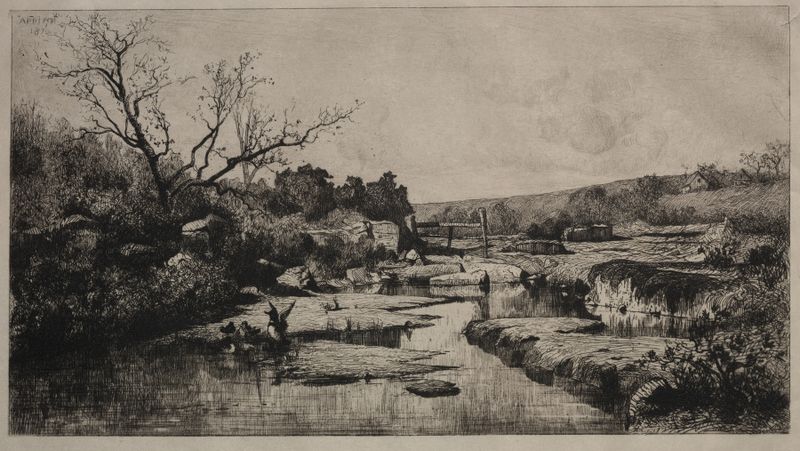
Source of the Albarine
Adolphe Appian
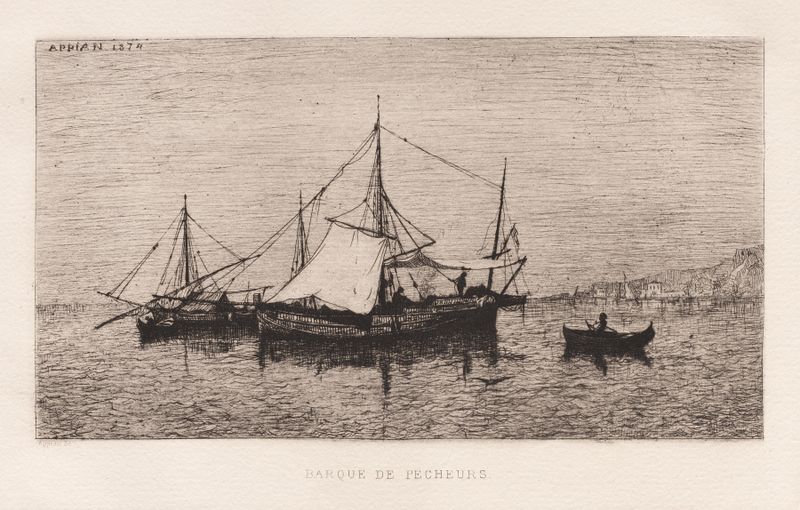
Barque de Pecheurs
Adolphe Appian
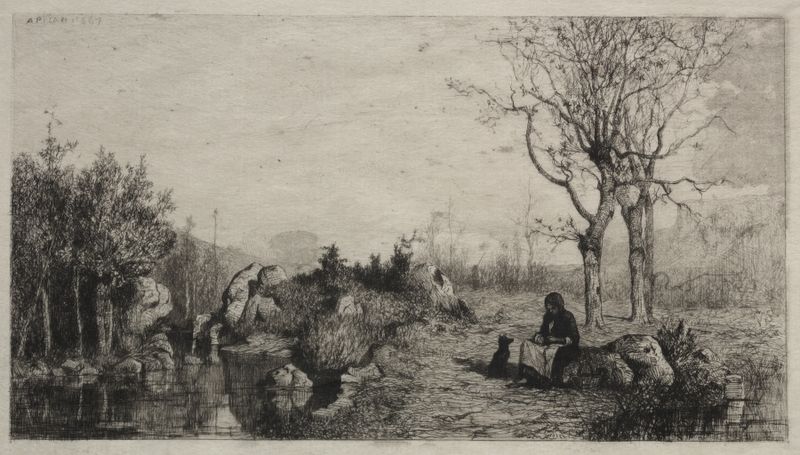
Shore of a Stream at Rossillon
Adolphe Appian

A Pond
Adolphe Appian

At Valromay (Ain)
Adolphe Appian

Woman Seated at the Edge of a Pond
Adolphe Appian
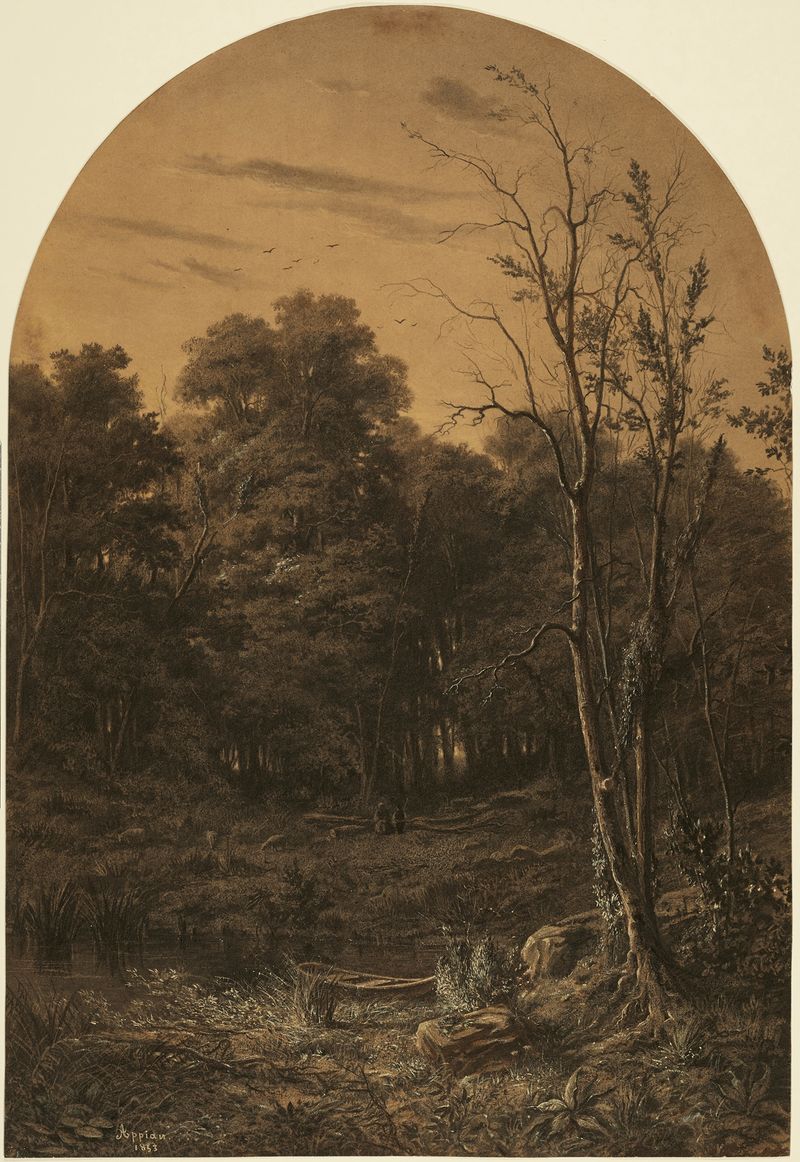
Forest Landscape near a Pond
Adolphe Appian
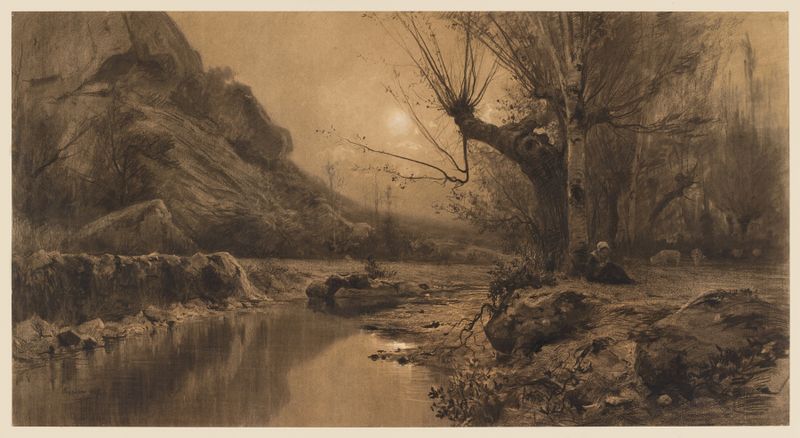
In the Valromey Valley, near the Rhône River
Adolphe Appian
Bord de mer
Adolphe Appian

Pond at the Edge of the Wood
Adolphe Appian





