
Rhätische Bahn, Schloss Tarasp — History & Facts
What first seizes the eye in Rhätische Bahn, Schloss Tarasp is the almost theatrical contrast between the glowing oranges and deep blues that sweep across the mountainsides, drawing the viewer up from the lush valley floor to the distant, sunlit fortress perched on its solitary hill. The composition is a crescendo: the dark forests rise in bold, graphic strokes, giving way to the radiant slopes and finally to the jagged, snow-dusted peaks that dominate the horizon. At the heart of this landscape, Schloss Tarasp stands as a beacon—small yet commanding—its pale walls catching the light as if to promise safety or adventure to travelers below.
Every color choice feels deliberate, with the palette setting a mood of crisp Alpine air and the thrill of discovery, while the flattened forms and simplified shapes guide the eye upward, never letting it rest for long. Created around 1913, this work belongs to a world where the poster was both art and invitation, a bridge between the burgeoning age of tourism and the romance of the Swiss landscape. The Rhätische Bahn—the Rhaetian Railway—was emblematic of modernity reaching into the wild heart of the Alps, and artists like Emil Cardinaux were commissioned to capture that allure for a growing audience of travelers. Such posters were not mere advertisements but icons of national pride and aspiration, blending the clarity of graphic design with the drama of landscape painting.
Though little is recorded about the journey of this specific piece, its bold style and vivid optimism are hallmarks of early twentieth-century Swiss travel art, urging us to imagine ourselves on that train, rounding the bend toward the castle and the mountains beyond.
More Artworks by Emil Cardinaux
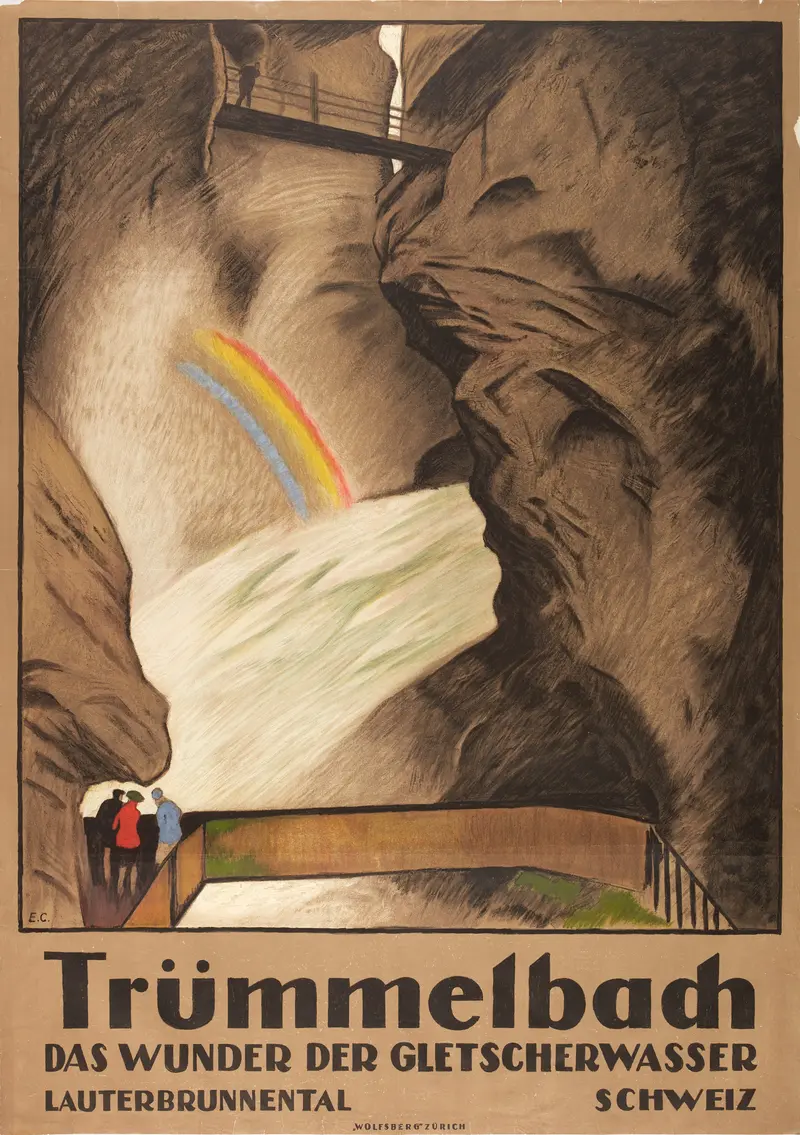
Trümmelbach
Emil Cardinaux
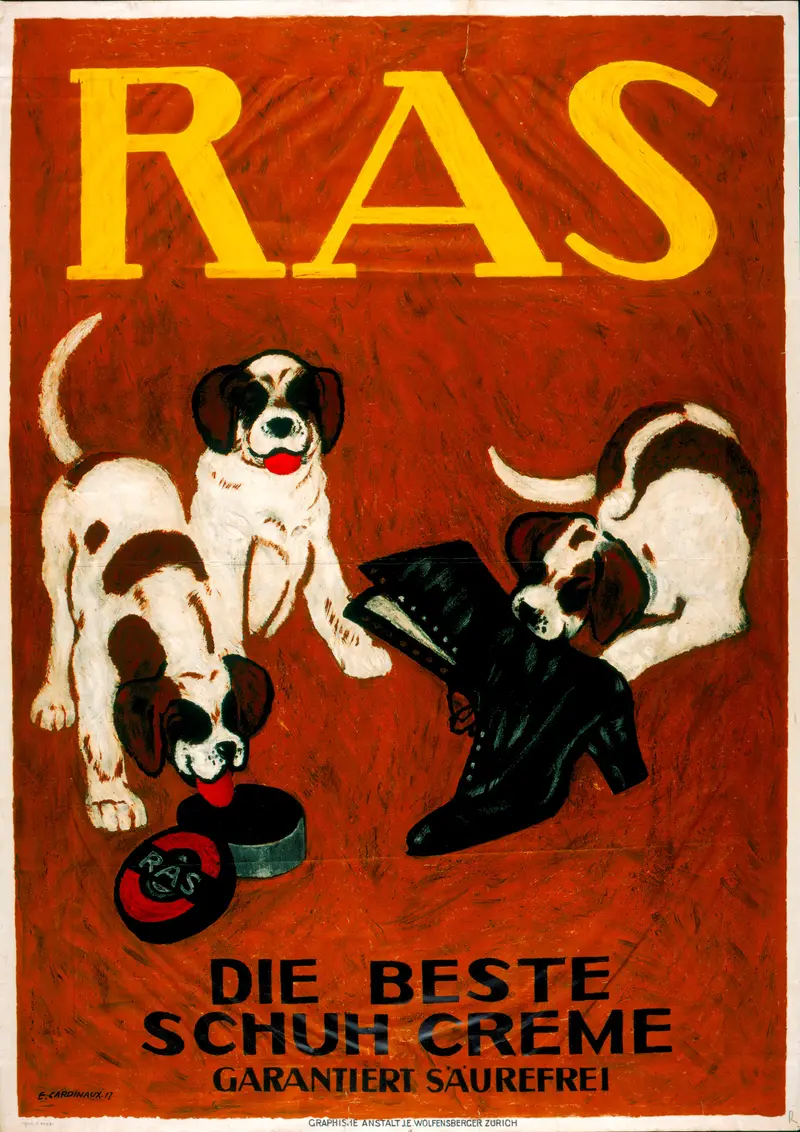
RAS, die beste Schuhcrème
Emil Cardinaux
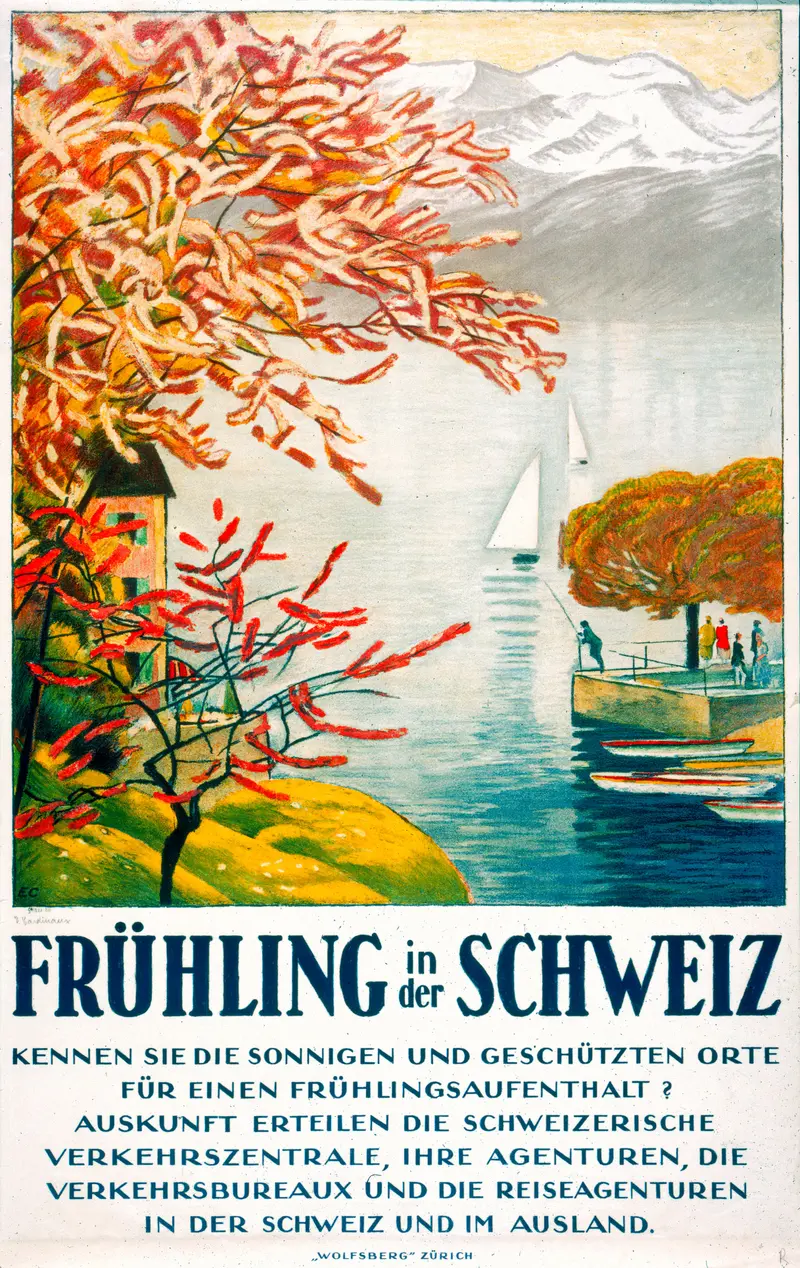
Frühling in der Schweiz
Emil Cardinaux
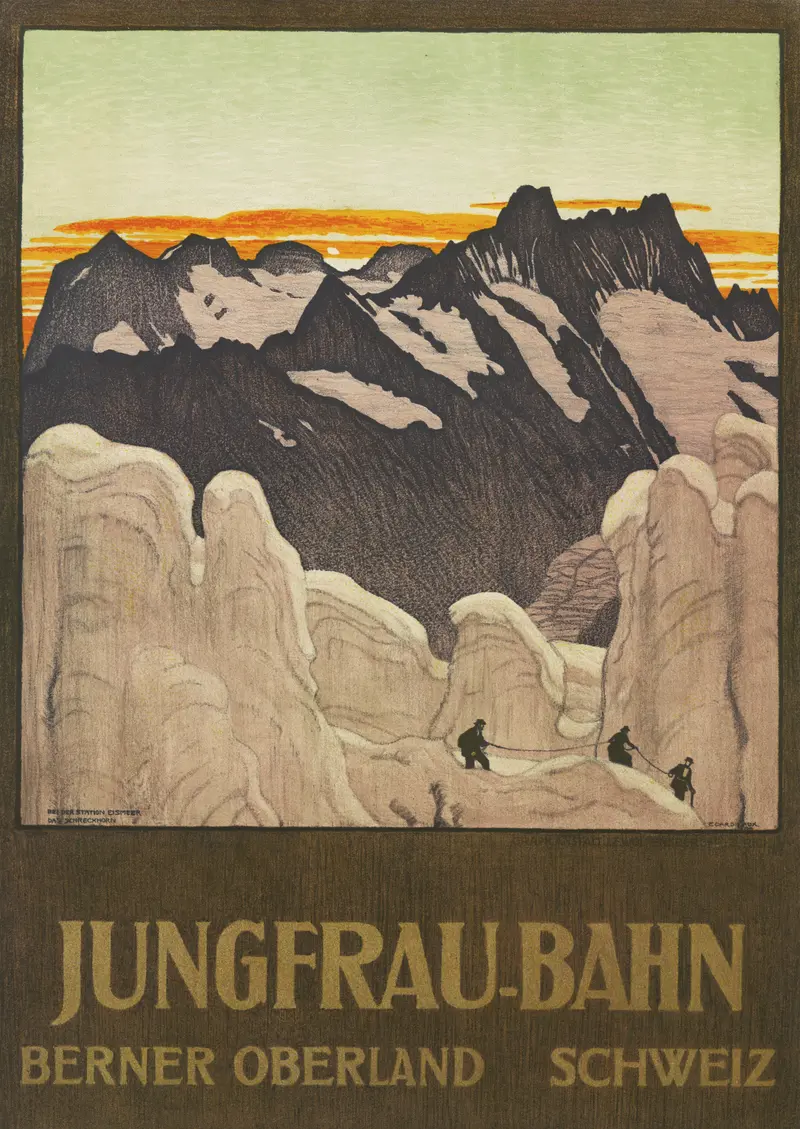
Jungfrau-Bahn, Berner Oberland
Emil Cardinaux
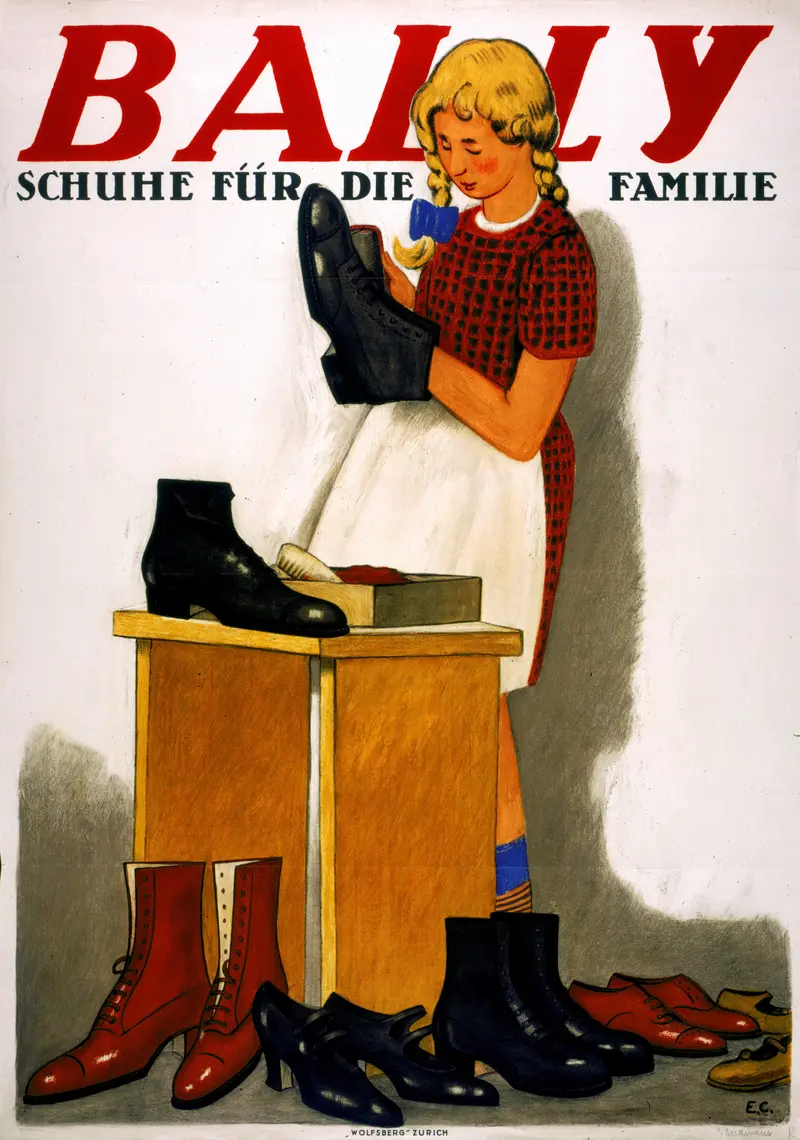
Bally – Schuhe für die Familie
Emil Cardinaux

Winter in Switzerland
Emil Cardinaux
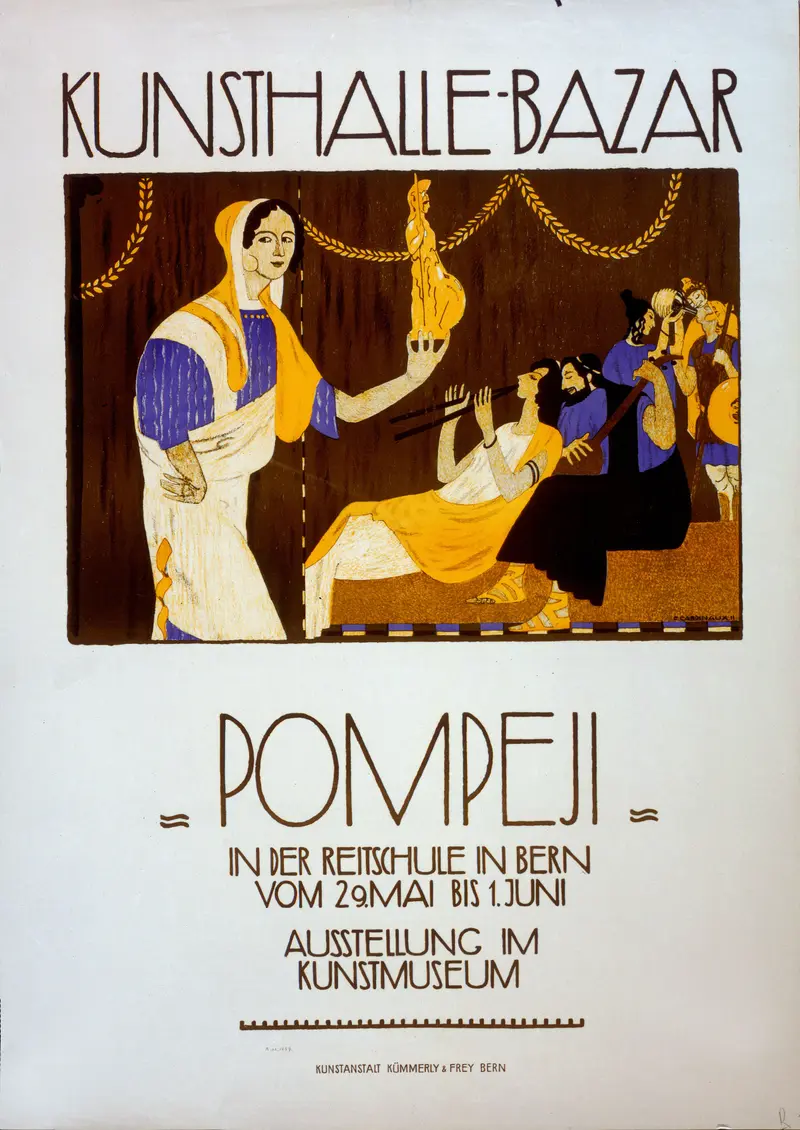
Kunsthalle-Bazar Pompeji, Bern 1911
Emil Cardinaux
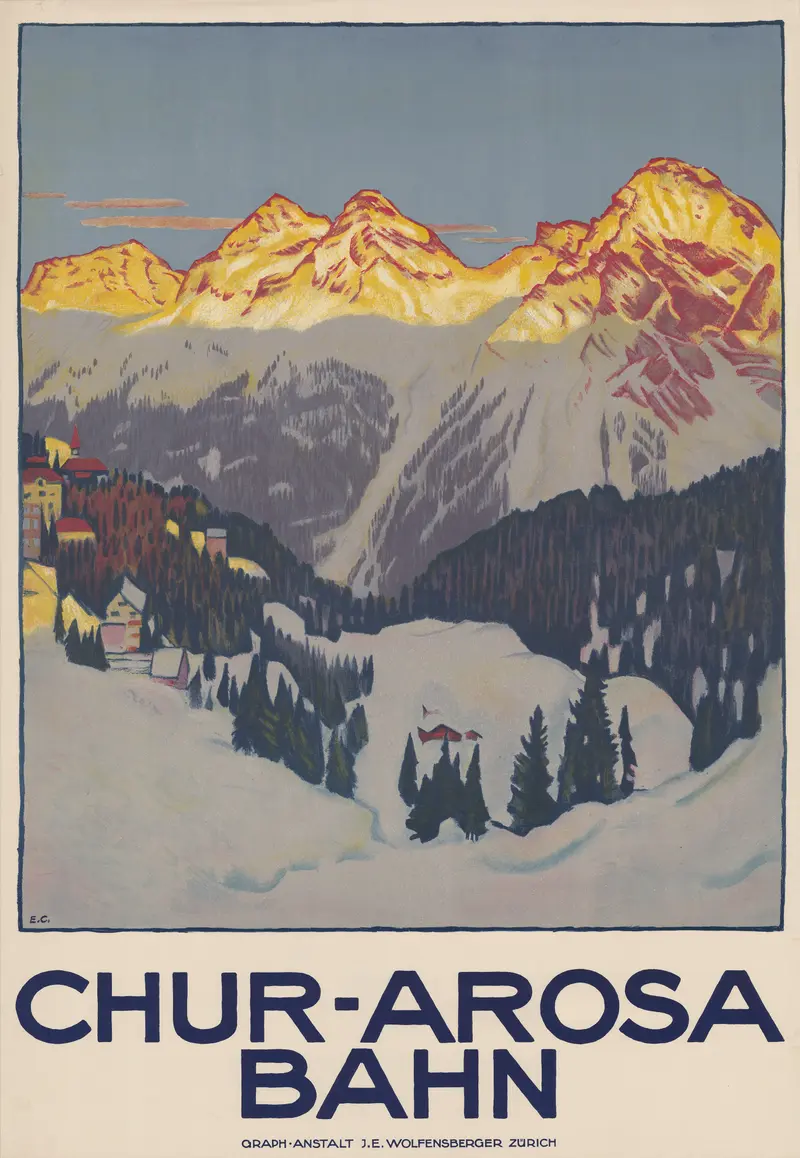
Chur-Arosa-Bahn
Emil Cardinaux
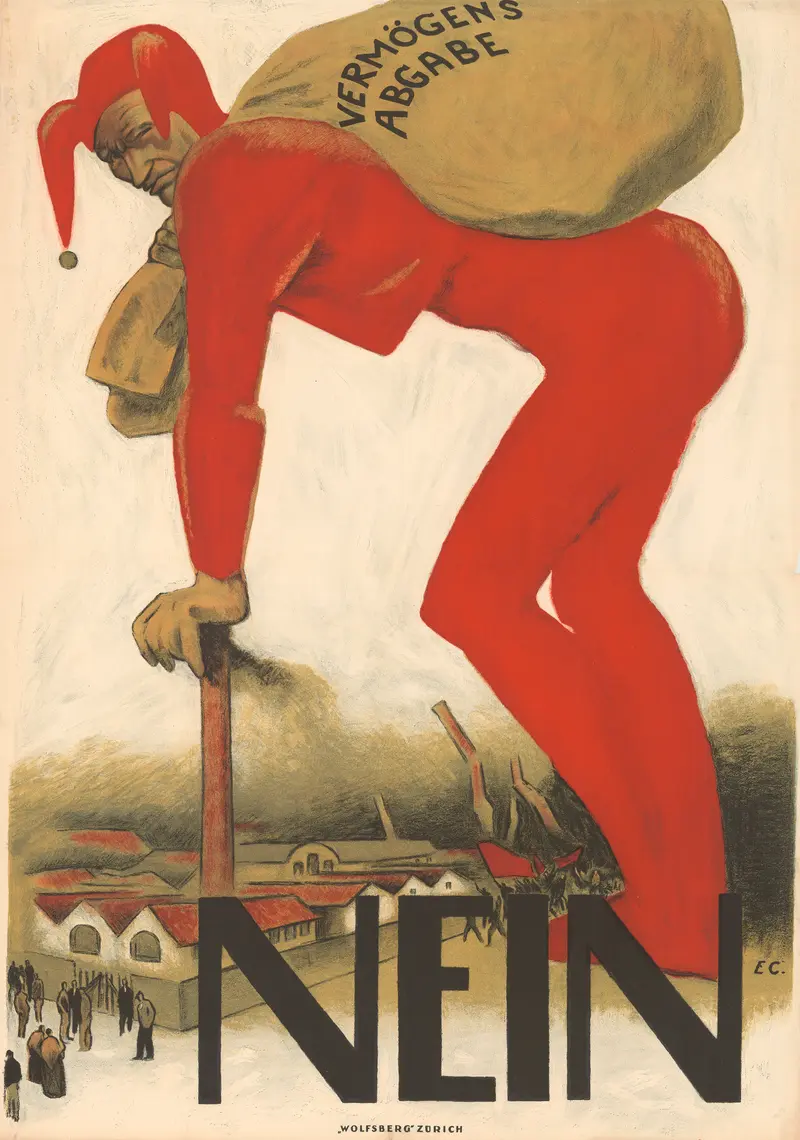
Vermögensabgabe – Nein
Emil Cardinaux
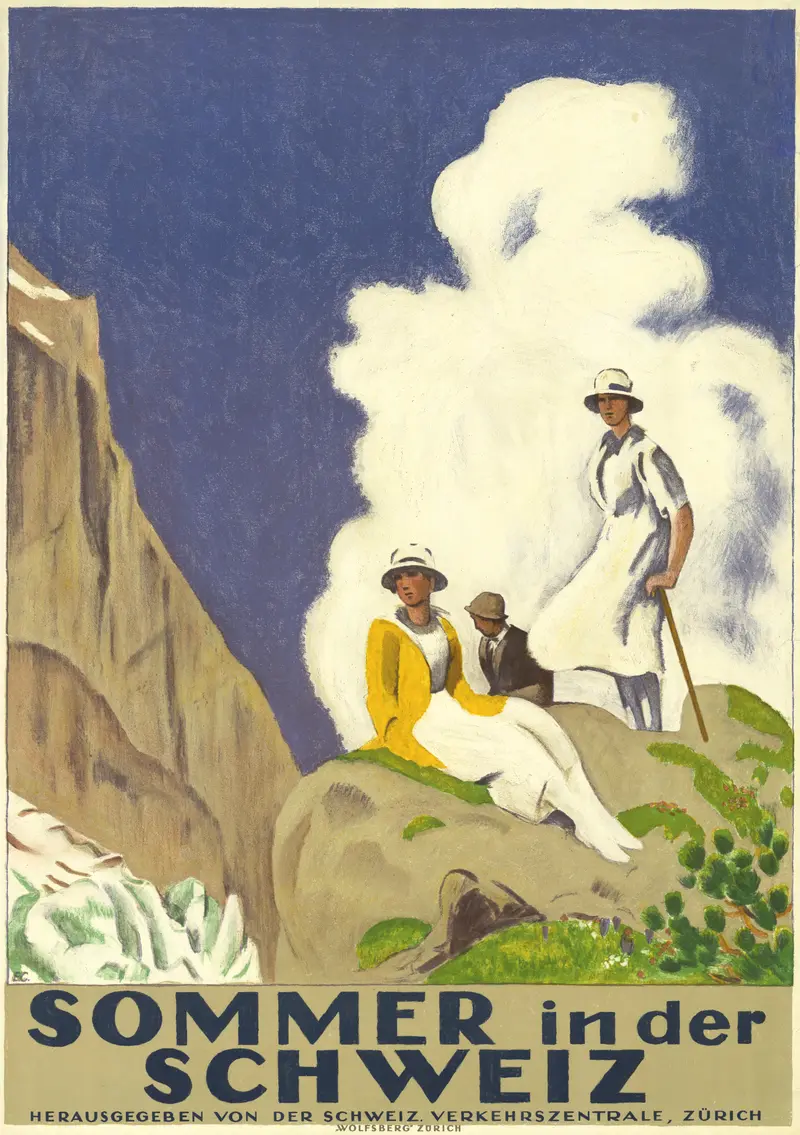
Sommer in der Schweiz
Emil Cardinaux
More Landscape Art

The Starry Night
Vincent van Gogh

View of Delft
Johannes Vermeer

Water Lilies
Claude Monet

The Grand Canal, Venice, looking north-west from the Ca' Corner to the Ca' Contarini degli Scrigni, with the campanile of Santa Maria della Carità
Canaletto

Windsor Castle
Canaletto

The Grand Canal looking North-East from the Palazzo Dolfin-Manin to the Rialto Bridge
Canaletto