
River Landscape — History & Facts
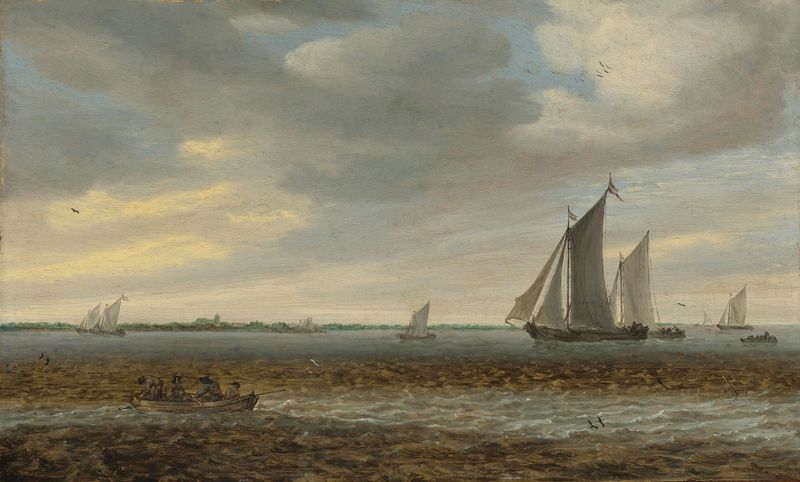
Could beauty survive in a century of chaos? In River Landscape, tranquility flows like the gentle current depicted in the scene, an emblem of hope amidst the tumultuous 17th century. Look to the left at the majestic towering trees, their leaves brushed with hues of green and gold, capturing the fleeting light of the day. The river winds through the composition, its surface shimmering with reflections that dance against the muted sky. Notice how the delicate strokes create a contrast between the serene foreground and the billowing clouds above, hinting at impending storms.
The careful layering of pigments reveals depth, inviting the viewer into a world both inviting and foreboding. It is in this juxtaposition of serenity and potential unrest that emotional tensions arise. The river's smooth flow suggests continuity and life, yet the darker clouds loom, reminding us of the uncertainties life holds. Small details, such as the distant figures tending to a modest boat, speak volumes about human perseverance, echoing the quiet resilience of nature itself.
This balance between hope and foreboding resonates deeply, reflecting the artist's own contemplation of the world. In 1644, the artist created this piece during a time of both personal and artistic evolution. Living in the Dutch Republic, a period marked by prosperity yet shadowed by political strife, he sought to capture the dualities of existence. Influenced by the burgeoning movement of landscape painting, he found solace in nature, channeling both beauty and tension into his work, ultimately embodying the age's complex spirit.
More Artworks by Jacob Salomonsz. van Ruysdael
Browse all →
River Landscape With Fishermen And Cattle, The Grote Kerk Of Alkmaar Beyond
Jacob Salomonsz. van Ruysdael
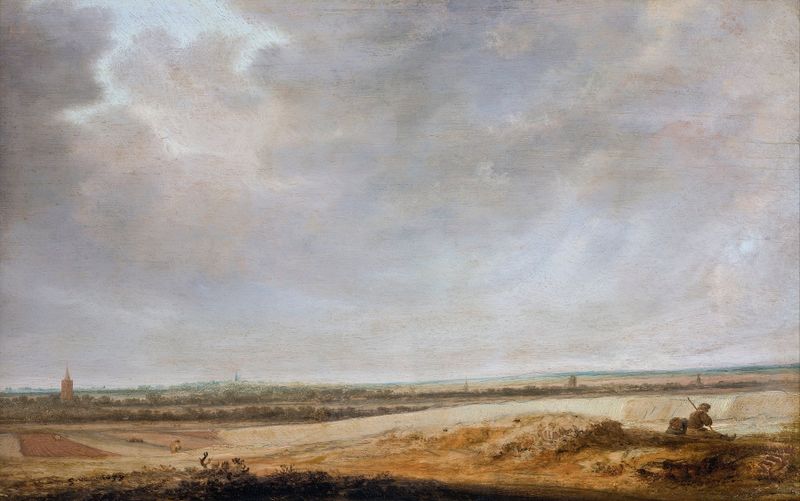
Landscape with Cornfields
Jacob Salomonsz. van Ruysdael

View of Sailing Boats on a Lake
Jacob Salomonsz. van Ruysdael
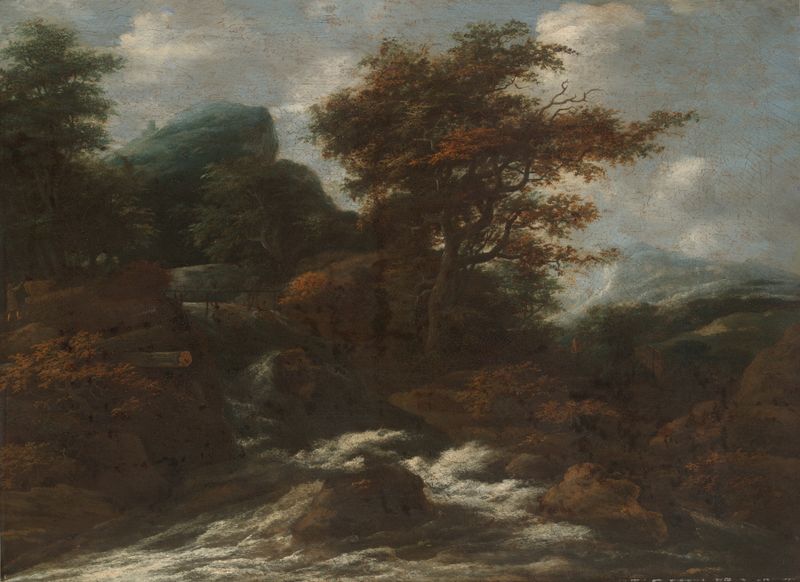
Landscape with Waterfalls
Jacob Salomonsz. van Ruysdael
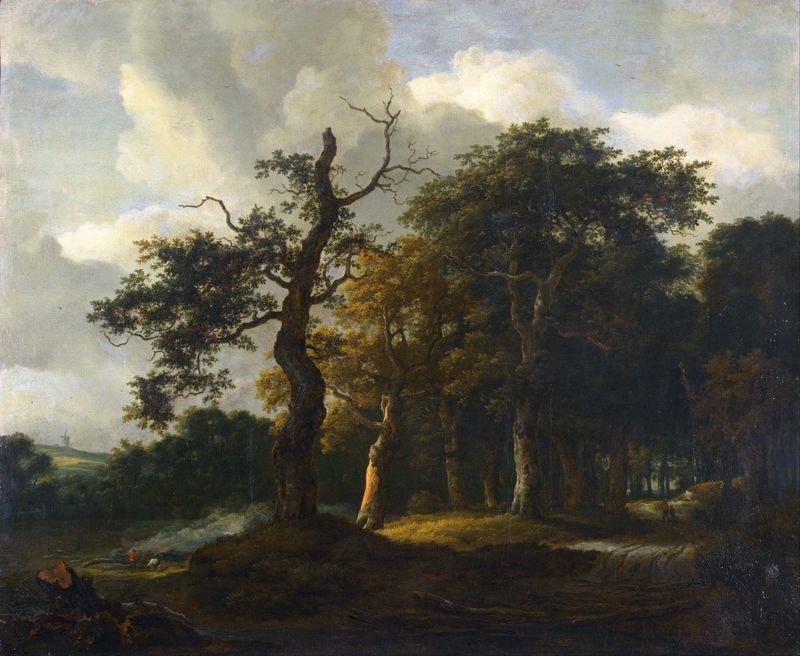
A Road through an Oak Wood
Jacob Salomonsz. van Ruysdael
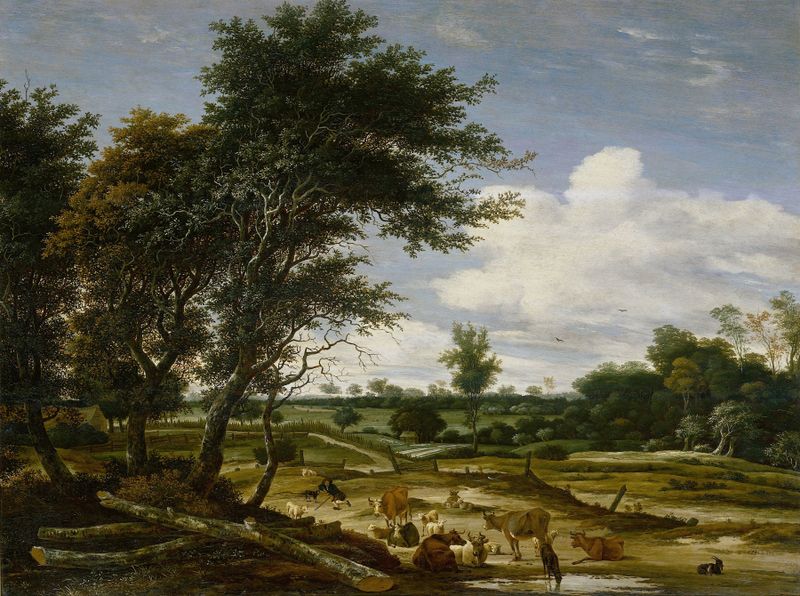
Landscape with herdsmen and cattle
Jacob Salomonsz. van Ruysdael
Sailboats And A Rowboat In Coastal Waters
Jacob Salomonsz. van Ruysdael

Marine
Jacob Salomonsz. van Ruysdael

A Dune Landscape
Jacob Salomonsz. van Ruysdael

Ferry Boat With Cattle On The River Vecht Near Nijenrode
Jacob Salomonsz. van Ruysdael





