
Marine — History & Facts
Can beauty exist without sorrow? In the delicate balance of nature's splendor, often we find echoes of melancholy nestled within the awe-inspiring. Look to the center of the canvas where the turbulent sea meets a moody sky, a dance of deep blues and soft grays. The artist’s masterful brushwork conjures the frothy waves, each crest catching faint glimmers of light. Notice the horizon, where the tumultuous clouds hang heavy—this interplay of light and shadow reveals not just the beauty of the marine vista, but also the inherent unpredictability of the ocean.
The figures, small and seemingly insignificant against the vastness, draw your eyes subtly, reminding us of our place within the monumental forces of nature. Within this artwork, the contrast between the serene and the chaotic emerges powerfully. The calmness of the foreground with its gently rolling waves stands in stark opposition to the brooding sky above, producing an emotional tension that resonates deeply. Additionally, the distant sails of ships hint at human ambition, while the turbulent waters speak to nature’s ferocity, embodying an eternal struggle between mankind and the elements.
These nuances invite contemplation about the coexistence of vulnerability and grandeur in the natural world. In 1650, the artist crafted this piece amidst a flourishing period for Dutch landscape painting, where the beauty of the world was rendered with both precision and emotional depth. Living in Haarlem, he was influenced by the vibrant art scene that celebrated the interplay of light and nature. It was a time when artists sought to evoke emotion through the landscape, capturing both its majesty and its latent peril, a reflection of the very essence of life itself.
More Artworks by Jacob Salomonsz. van Ruysdael
Browse all →
River Landscape With Fishermen And Cattle, The Grote Kerk Of Alkmaar Beyond
Jacob Salomonsz. van Ruysdael
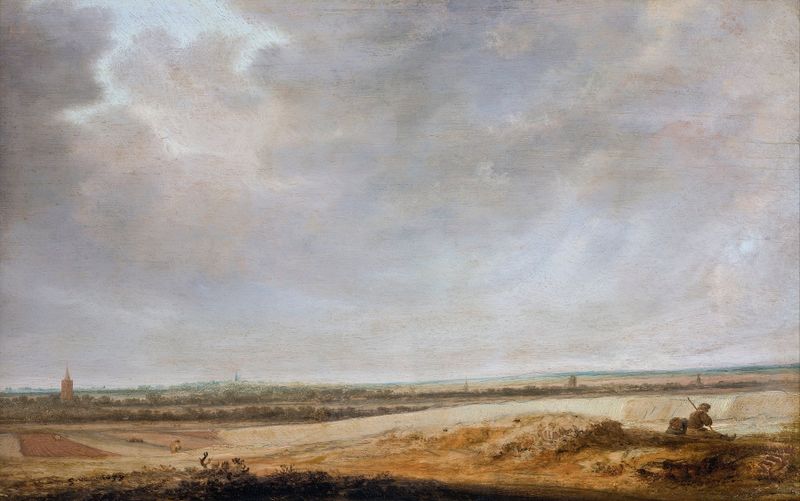
Landscape with Cornfields
Jacob Salomonsz. van Ruysdael

View of Sailing Boats on a Lake
Jacob Salomonsz. van Ruysdael
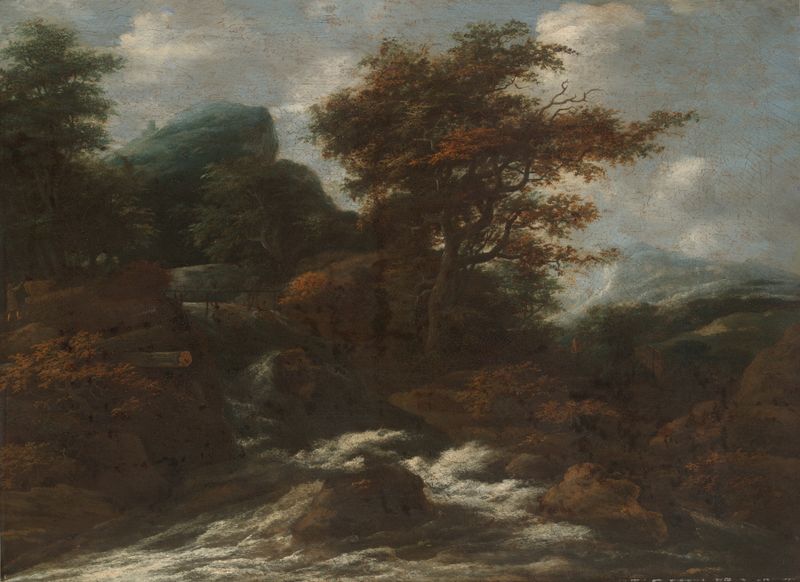
Landscape with Waterfalls
Jacob Salomonsz. van Ruysdael
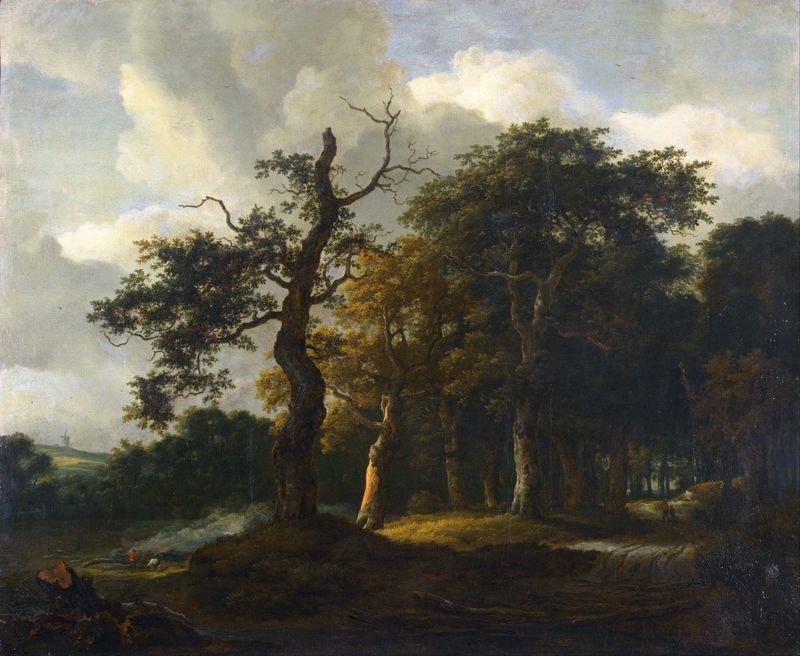
A Road through an Oak Wood
Jacob Salomonsz. van Ruysdael
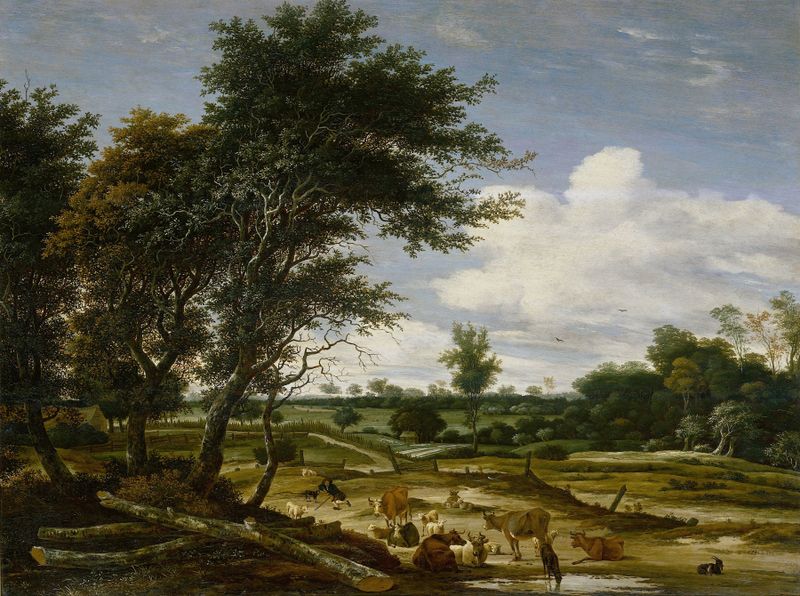
Landscape with herdsmen and cattle
Jacob Salomonsz. van Ruysdael
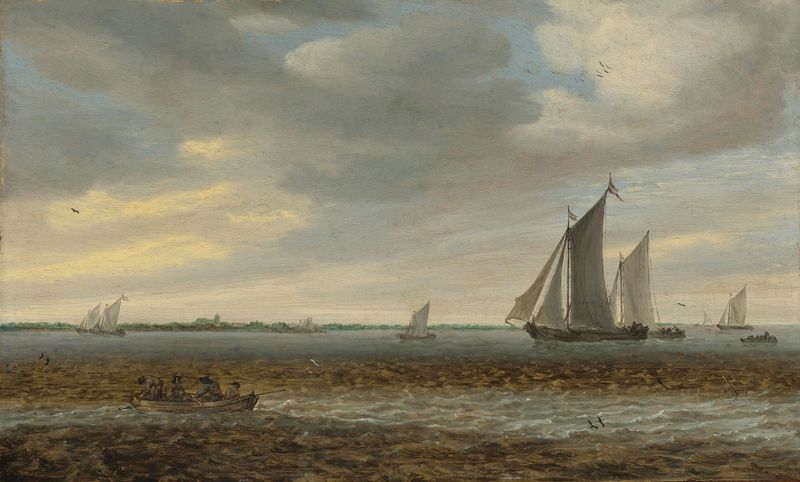
Sailboats And A Rowboat In Coastal Waters
Jacob Salomonsz. van Ruysdael

River Landscape
Jacob Salomonsz. van Ruysdael

A Dune Landscape
Jacob Salomonsz. van Ruysdael

Ferry Boat With Cattle On The River Vecht Near Nijenrode
Jacob Salomonsz. van Ruysdael





