
A Dune Landscape — History & Facts
What if silence could speak through light? In A Dune Landscape, tranquility weaves a quiet narrative, inviting us into a world where the whispers of nature create harmony. Look to the left at the gentle curve of the dune, its soft, sandy textures captured with delicate brushwork. The mid-afternoon sunlight bathes the landscape, illuminating the rich greens and browns, while wispy clouds hover in a pearlescent sky. Notice how the horizon line draws your gaze toward infinity, creating a sense of vastness that contrasts with the intimate details of the foreground, where small tufts of grass sway in the breeze. In this landscape, there exists a profound stillness, a moment suspended in time.
The interplay between light and shadow evokes feelings of solitude and contemplation, encouraging introspection. The sparse composition suggests isolation, yet an undeniable beauty emanates from the simplicity of the scene. It speaks to the balance of nature, where every element, from the undulating dunes to the flickering sunlight, seamlessly coexists. Created in 1643, this piece reflects Jacob Salomonsz.
van Ruysdael's masterful ability to portray landscapes infused with emotion. At this time, he was deeply engaged with the emerging Dutch landscape tradition, a period characterized by an appreciation for nature’s beauty in everyday life. The artist's personal journey and his surroundings influenced this work, capturing both the serenity of the Dutch countryside and the nuanced relationship between human presence and the natural world.
More Artworks by Jacob Salomonsz. van Ruysdael
Browse all →
River Landscape With Fishermen And Cattle, The Grote Kerk Of Alkmaar Beyond
Jacob Salomonsz. van Ruysdael
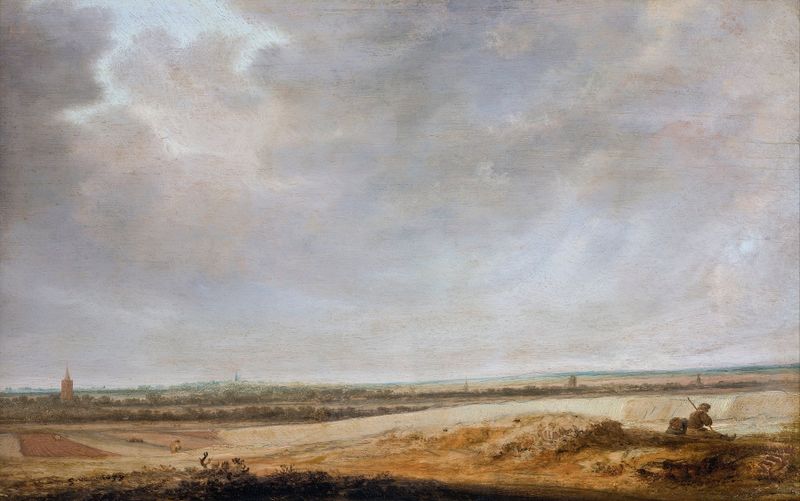
Landscape with Cornfields
Jacob Salomonsz. van Ruysdael

View of Sailing Boats on a Lake
Jacob Salomonsz. van Ruysdael
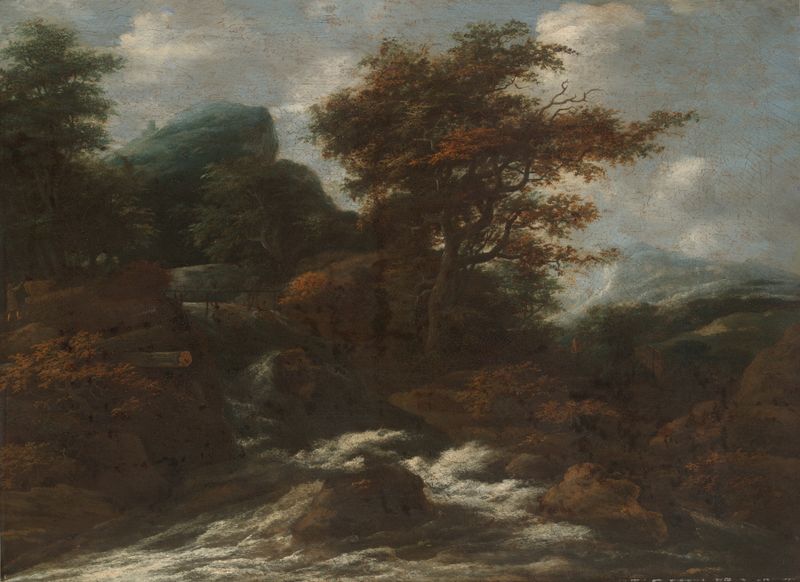
Landscape with Waterfalls
Jacob Salomonsz. van Ruysdael
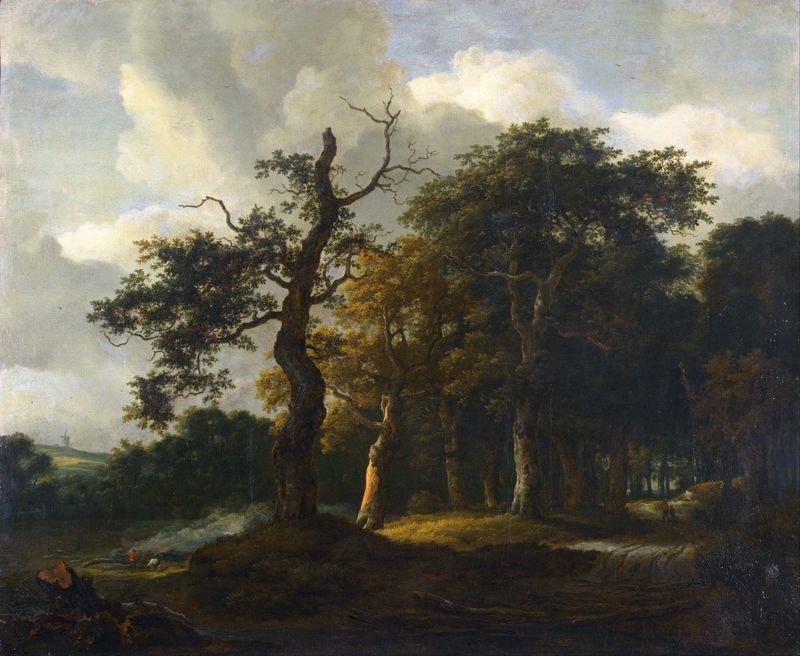
A Road through an Oak Wood
Jacob Salomonsz. van Ruysdael
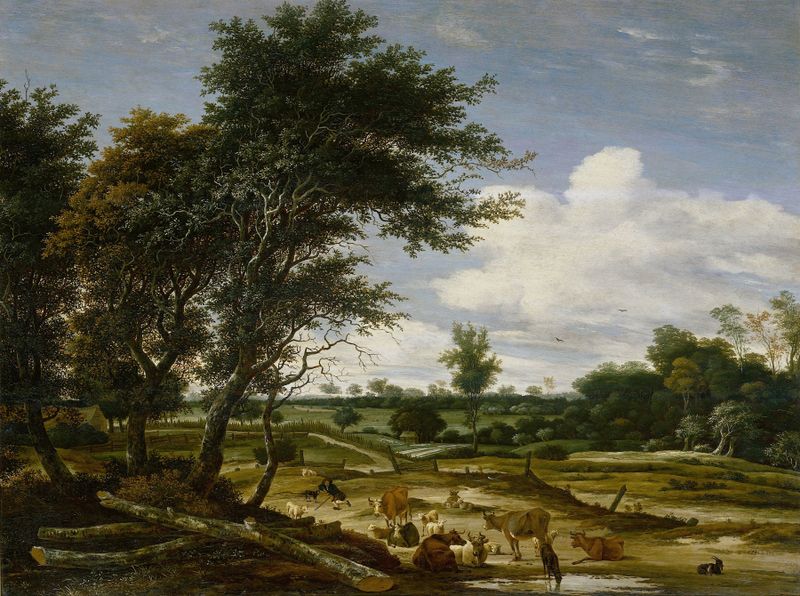
Landscape with herdsmen and cattle
Jacob Salomonsz. van Ruysdael
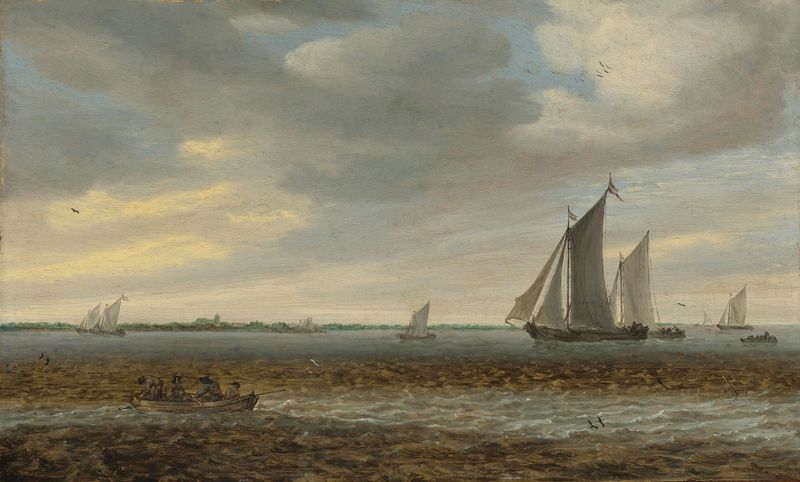
Sailboats And A Rowboat In Coastal Waters
Jacob Salomonsz. van Ruysdael

Marine
Jacob Salomonsz. van Ruysdael

River Landscape
Jacob Salomonsz. van Ruysdael

Ferry Boat With Cattle On The River Vecht Near Nijenrode
Jacob Salomonsz. van Ruysdael





