
River Landscape with Woodcutters — History & Facts
A hush settles over the riverbank, pierced only by the glint of moonlight on water and the faint, purposeful movement of figures at work. In River Landscape with Woodcutters, the viewer is drawn first to the luminous orb of the moon, half-veiled by clouds, its reflection carving a path of silver across the dark water. The eye is then led, almost by stealth, to the laborers at the river’s edge—tiny, intent, dwarfed by the towering trees and the vast, brooding sky.
The fallen trunks and scattered branches in the foreground tell of recent toil, while the dense, shadowed woods suggest both the promise and the threat of untamed nature. Every detail—the angled axes, the hunched postures, the careful placement of logs—serves to anchor the human presence in a world ruled by the rhythms of light and darkness. Painted in 1641, this work belongs to the era when Dutch artists like Aert van der Neer found poetry in the everyday and drama in the landscape itself. Scenes like this were prized by a new class of collectors who saw their own world reflected in the interplay of commerce, labor, and the land.
The river, a lifeline for transport and trade, is rendered here not as a mere backdrop but as a living artery, its stillness interrupted by work and weather. The painting now resides in the Dordrechts Museum, a fitting home in a region shaped by water and wood, where the memory of such scenes lingers in every bend of the river. Step closer and let your eyes adjust to the dusk—the story of the land and its people is written in every shadow and shimmer.
More Artworks by Aert van der Neer

A Moonlit River Landscape With Figures Standing By A Gate, A Village Beyond
Aert van der Neer
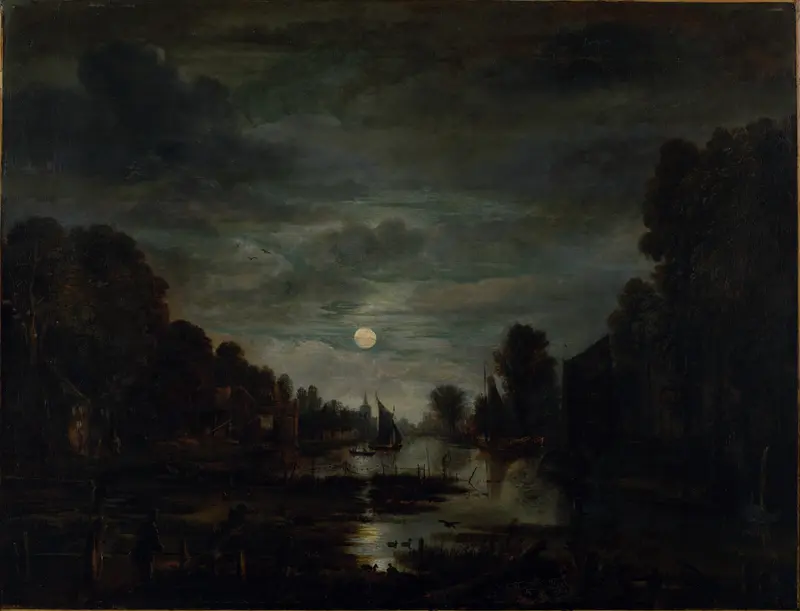
River Landscape in Moonlight
Aert van der Neer
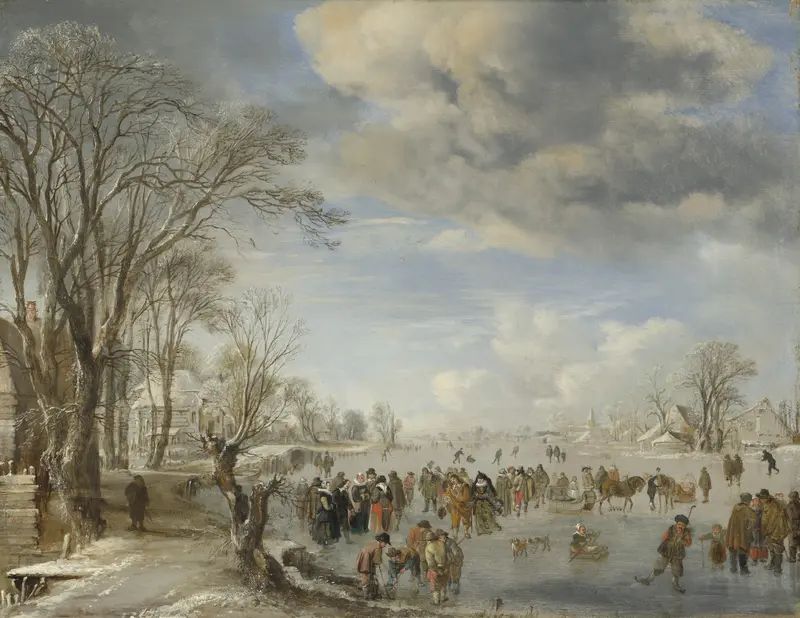
Winter in Holland – Skating Scene
Aert van der Neer

River Landscape
Aert van der Neer
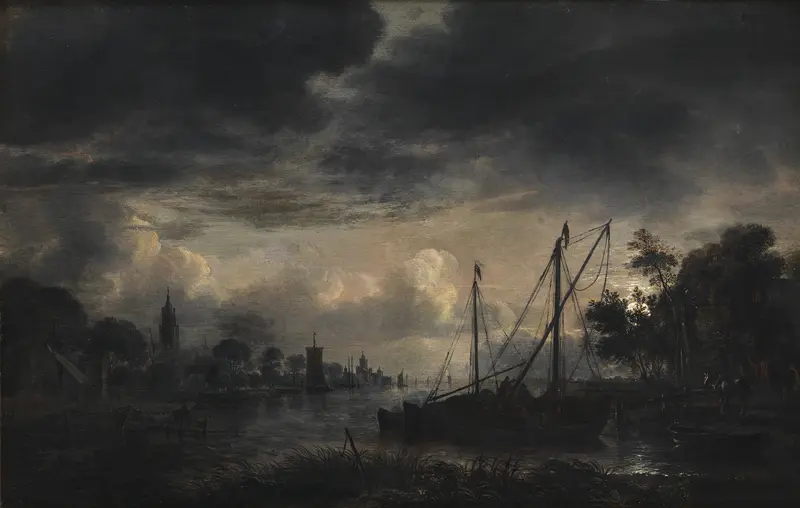
River Landscape in Moonlight
Aert van der Neer
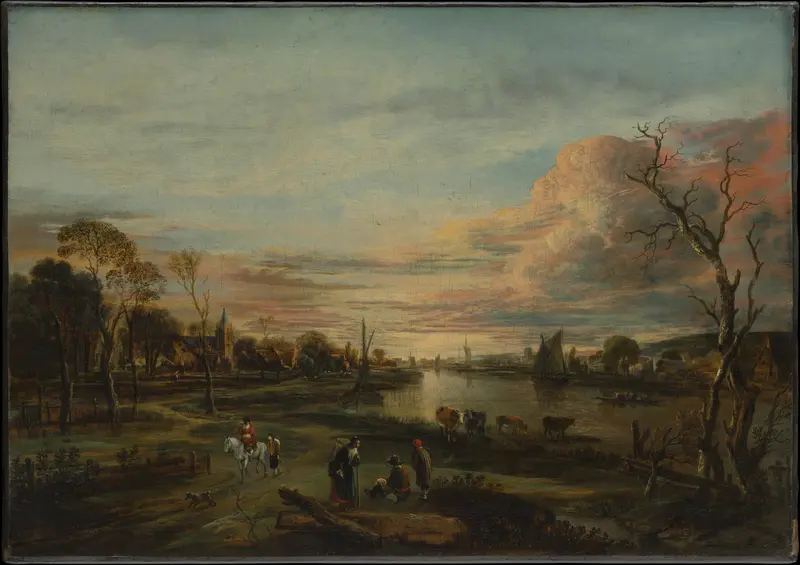
Landscape at Sunset
Aert van der Neer
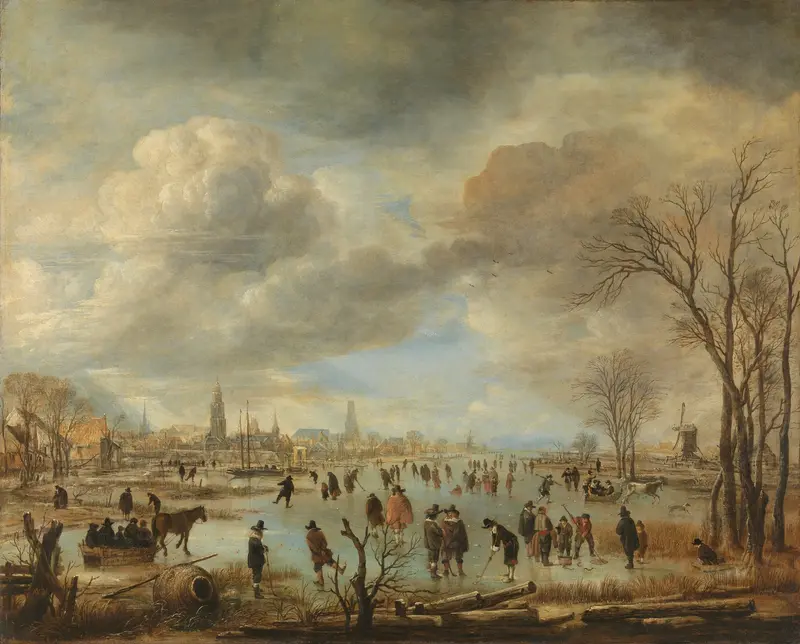
Winter Landscape near a Town with Kolf Players and Horse-Drawn Sleighs
Aert van der Neer

Winter Landscape with Skaters on a Frozen River
Aert van der Neer
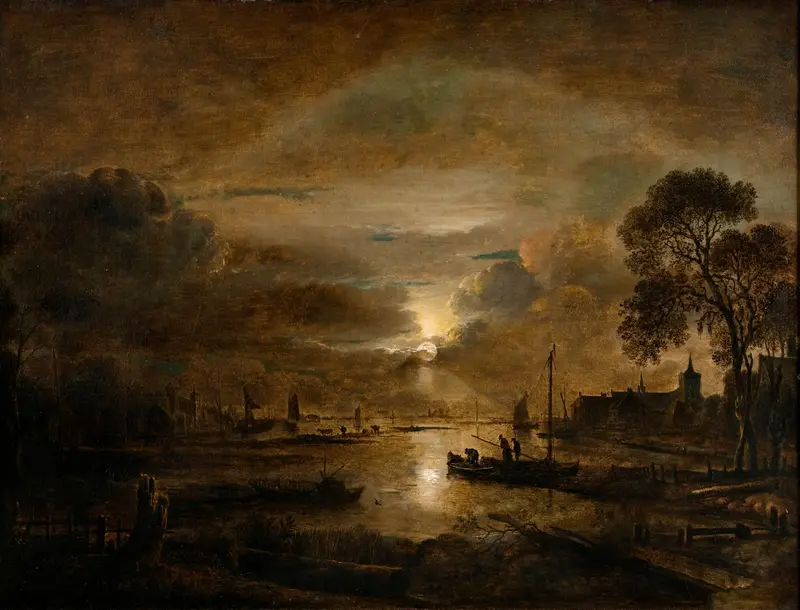
Moonlight at a Dutch River
Aert van der Neer
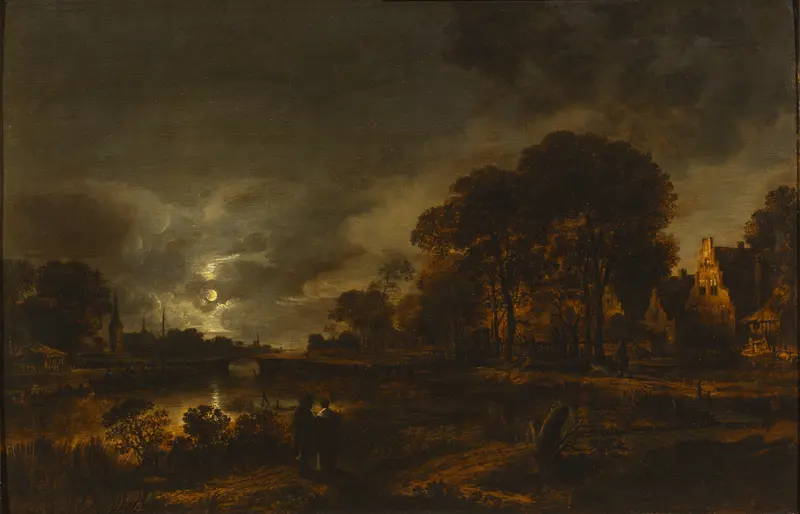
Moonlight Landscape
Aert van der Neer
More Landscape Art

The Starry Night
Vincent van Gogh

View of Delft
Johannes Vermeer

Water Lilies
Claude Monet

The Grand Canal, Venice, looking north-west from the Ca' Corner to the Ca' Contarini degli Scrigni, with the campanile of Santa Maria della Carità
Canaletto

Windsor Castle
Canaletto

The Grand Canal looking North-East from the Palazzo Dolfin-Manin to the Rialto Bridge
Canaletto