
Road to the village — History & Facts
In the brushstrokes of Julian Falat, faith emerges through the interplay of light and shadow, guiding the viewer on an introspective journey. As you delve into Road to the Village, look to the left where a winding path beckons, flanked by soft greenery that seems to whisper secrets. Notice the gentle gradation of colors—from rich earth tones at the base to vibrant greens and the faint whispers of a blue sky above. The sunlight filters through the trees, casting dappled patterns on the ground, creating a rhythm that pulls you into the heart of the scene. Underneath the idyllic landscape lies a deeper resonance of life’s journeys.
The winding road, while inviting, symbolizes both the solace and uncertainty of faith in the mundane. The seemingly tranquil village in the distance stands as a beacon of hope, yet its obscured details evoke a sense of mystery—a reminder that the psyche often veils the significance of our paths. Each brushstroke reflects the dual nature of faith, capturing both the clarity and ambiguity of belief. In 1916, Julian Falat painted this work during a time marked by global turmoil and change.
Living in Poland, he was influenced by the shifting dynamics of both the political landscape and the art world, seeking solace in the pastoral beauty that surrounded him. This piece reflects his deep affinity for rural life, all while engaging with the broader existential questions of his time, fusing personal faith with universal truths.
More Artworks by Julian Falat
Browse all →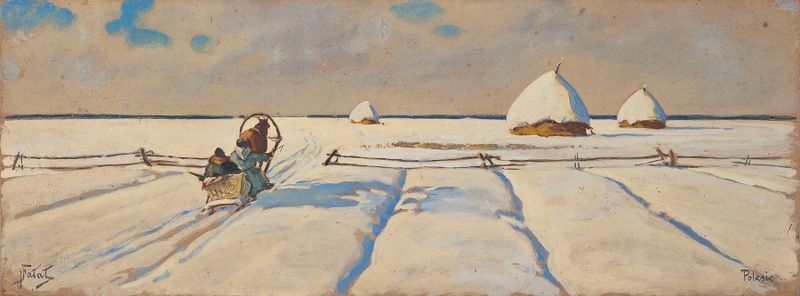
Sleigh in a snowy field – Polesia
Julian Falat
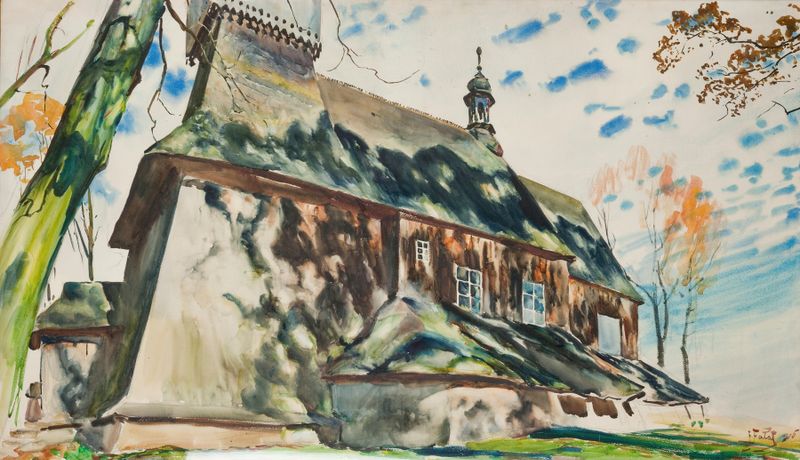
Church in Osiek
Julian Falat
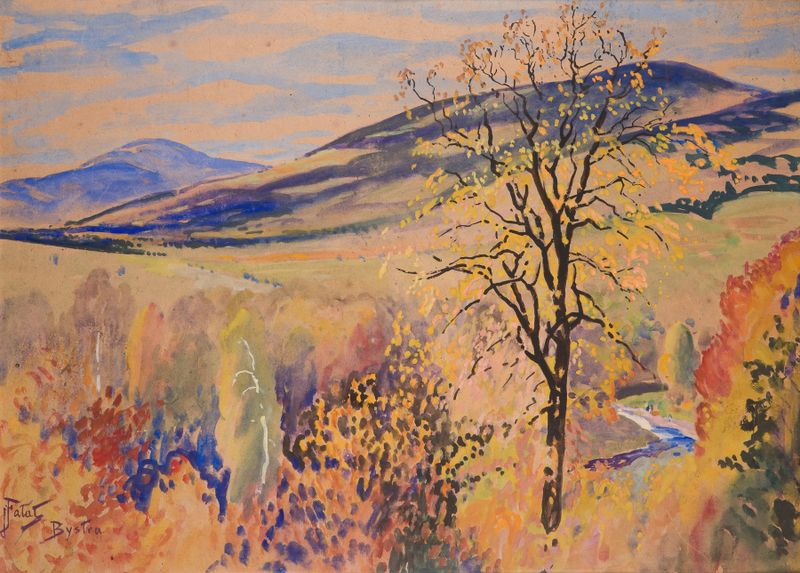
Pejzaż jesienny z Bystrej
Julian Falat
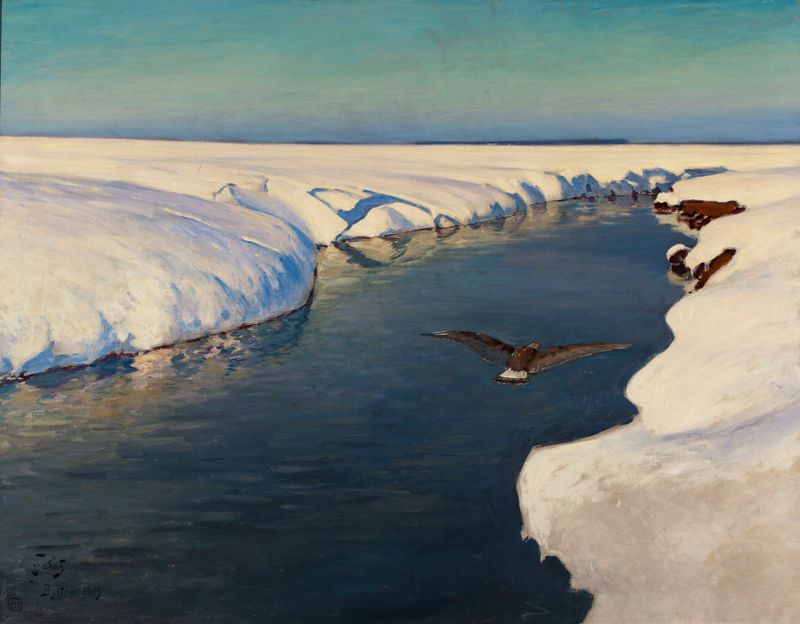
Winter landscape with a river and a bird
Julian Falat
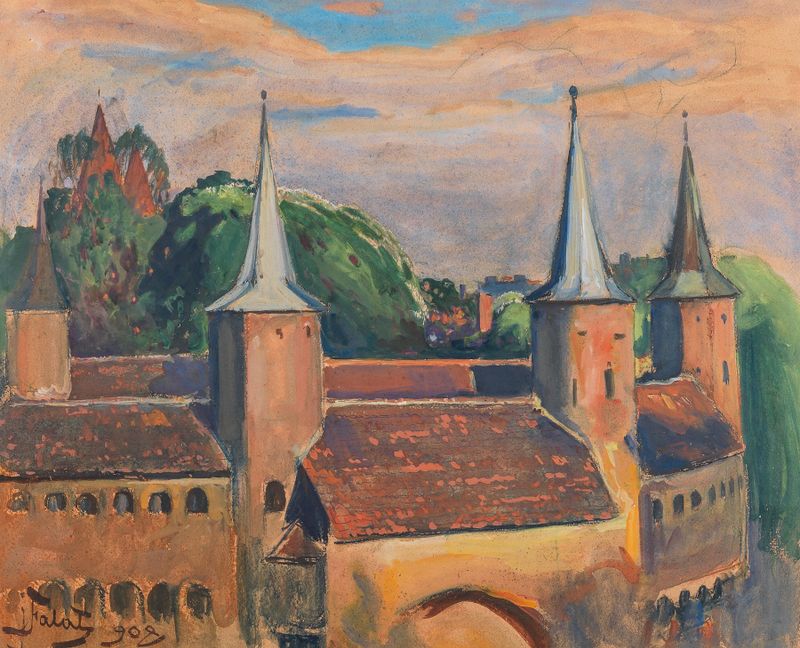
The Kraków Barbican
Julian Falat
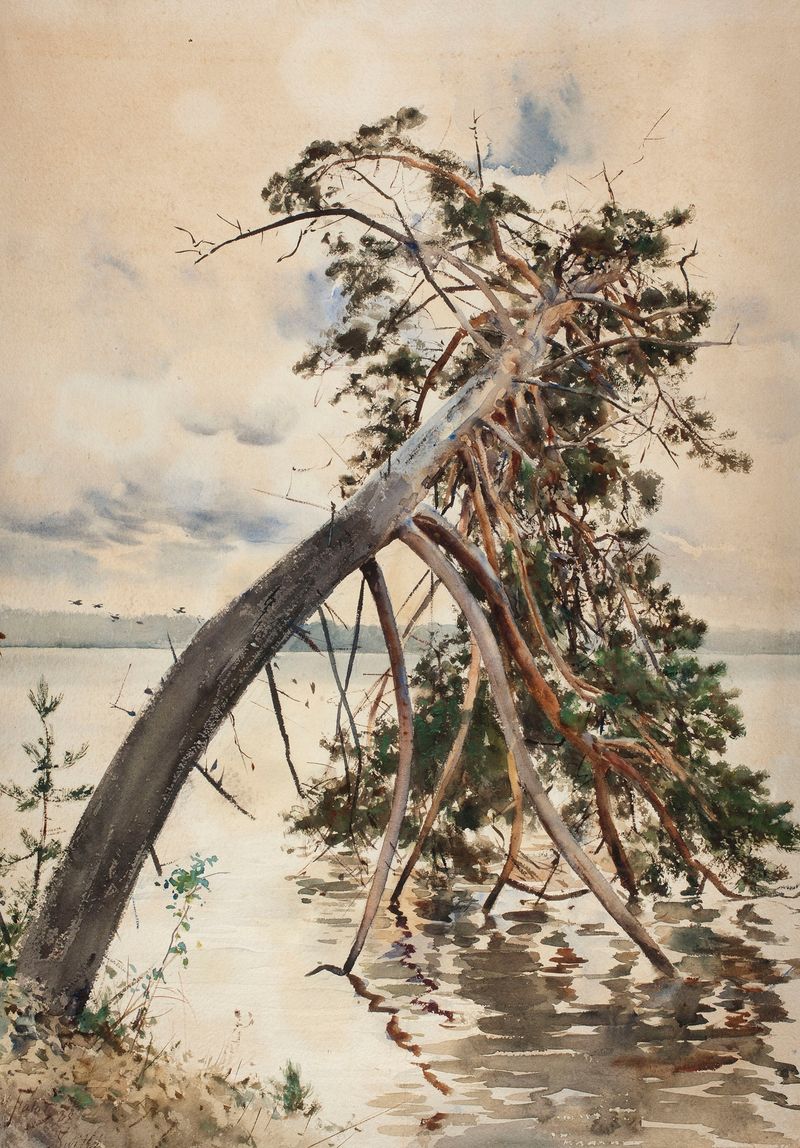
Świteź
Julian Falat
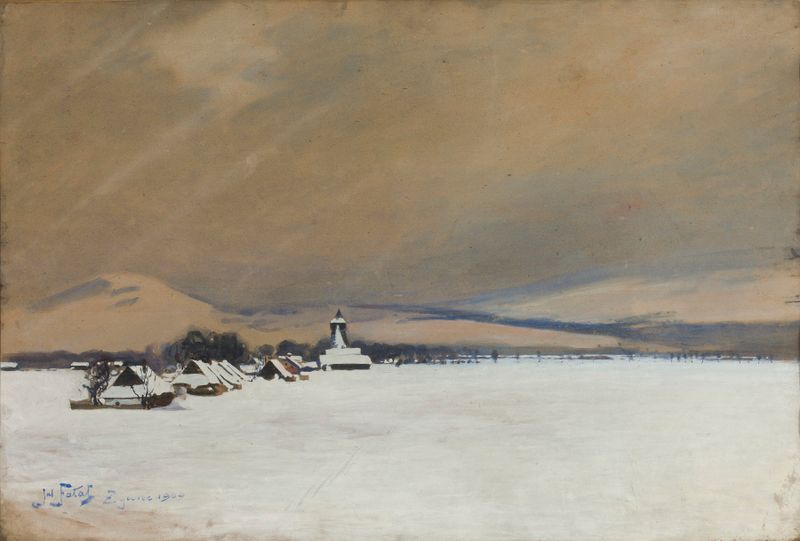
Winter landscape from Żywiec
Julian Falat
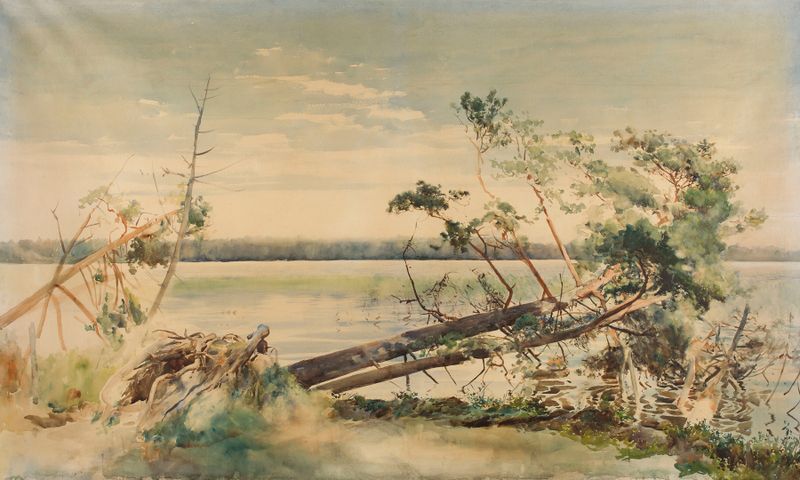
Świteź
Julian Falat
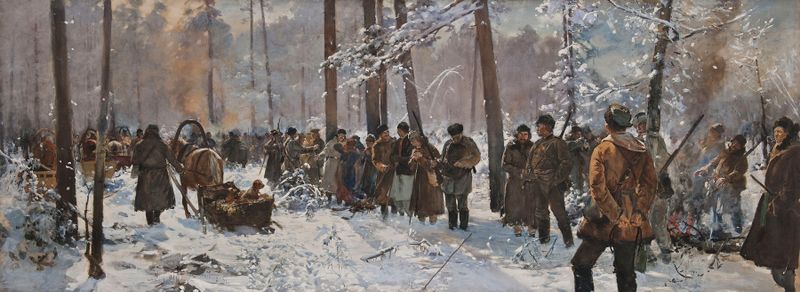
Battue at a hunt in Nieśwież
Julian Falat
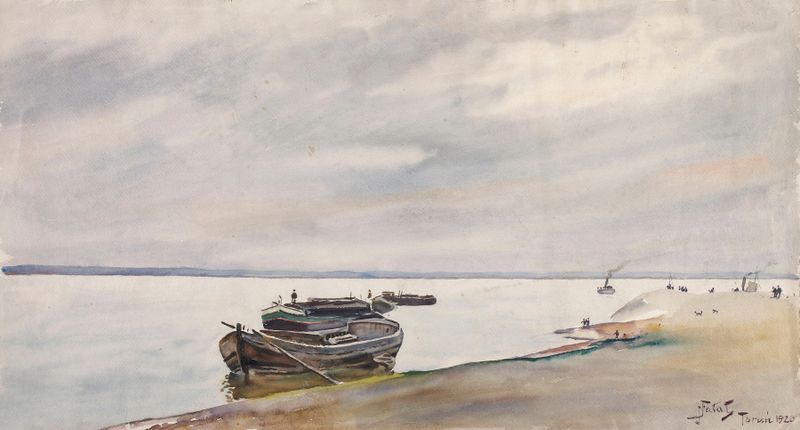
Boats and steamship on the Vistula near Toruń
Julian Falat





