
Rock Bound Coast — History & Facts
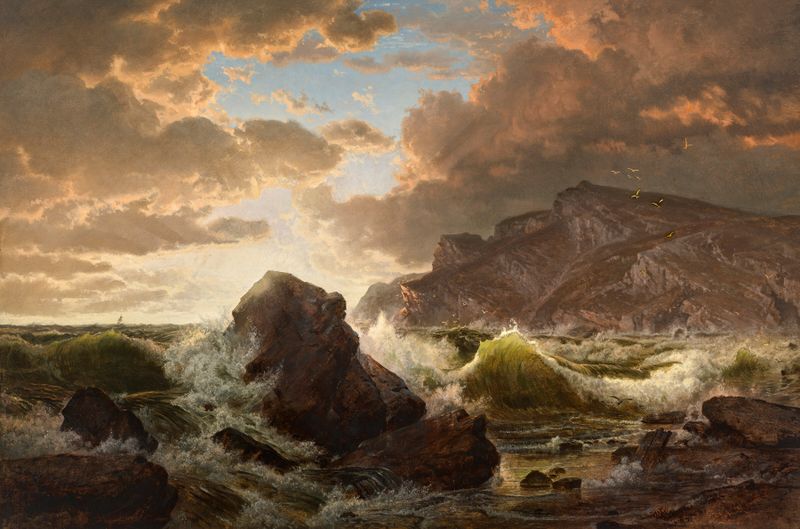
Could a single brushstroke hold eternity? In Rock Bound Coast, the artist captures a timeless struggle between land and sea, enveloping the viewer in a haunting emptiness that resonates deeply within. Look to the foreground where jagged rocks jut defiantly from the water, their textured surfaces contrasting sharply against the soft, rolling waves. The muted palette of blues and greens is punctuated by flashes of white, where the surf crashes against the stone. Notice how the gentle brushstrokes evoke the movement of the water, while the play of light creates a shimmering effect, drawing our gaze deeper into the scene.
The horizon, a delicate line of light meeting the sky, beckons, hinting at vastness beyond the frame. Yet, beneath this serene interplay lies an emotional tension. The rough, imposing rocks symbolize resilience in the face of relentless tides, while the gentle waves convey an ephemeral beauty, ever-persistent yet fleeting. This duality reflects the human experience—the struggle against the inevitable passage of time and the search for permanence in a world defined by change.
The emptiness of the composition invites introspection, allowing viewers to confront their own feelings of solitude and longing. In 1885, while painting this piece, the artist was deeply engaged with the American natural landscape, seeking to elevate the genre of landscape painting. Living in Pennsylvania, he was influenced by the Romantic movement and the emerging appreciation for nature's sublime qualities. This period in art history marked a growing desire to convey not just the beauty of nature, but also its power and emotional depth, a pivotal moment leading to his acclaimed status as a master of coastal scenery.
More Artworks by William Trost Richards
Browse all →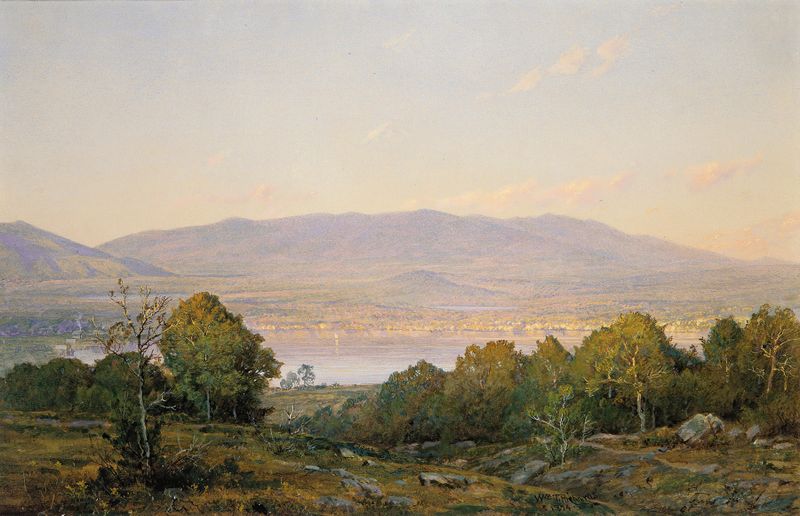
Sundown at Centre Harbor, New Hampshire
William Trost Richards
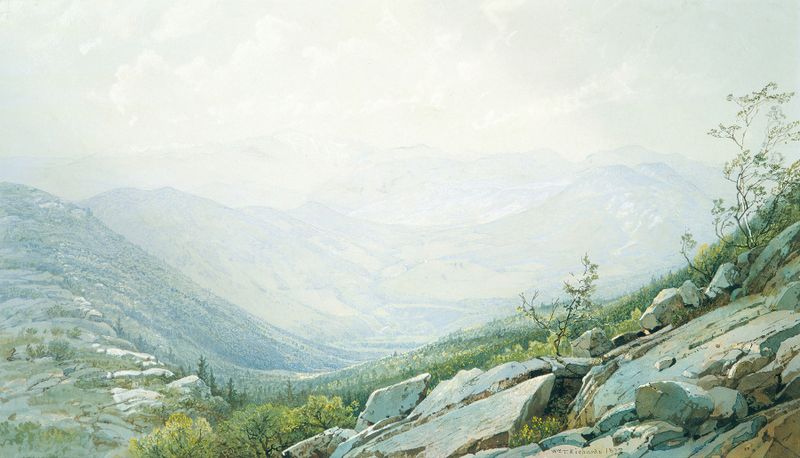
The Mount Washington Range, from Mount Kearsarge
William Trost Richards
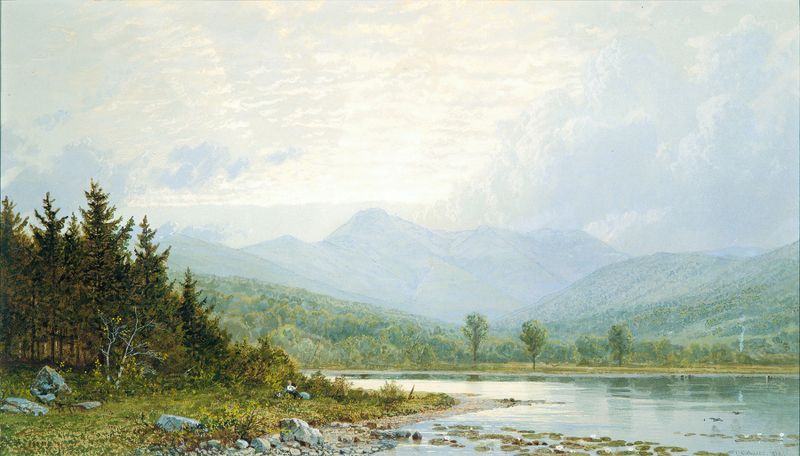
Sunset on Mount Chocorua, New Hampshire
William Trost Richards
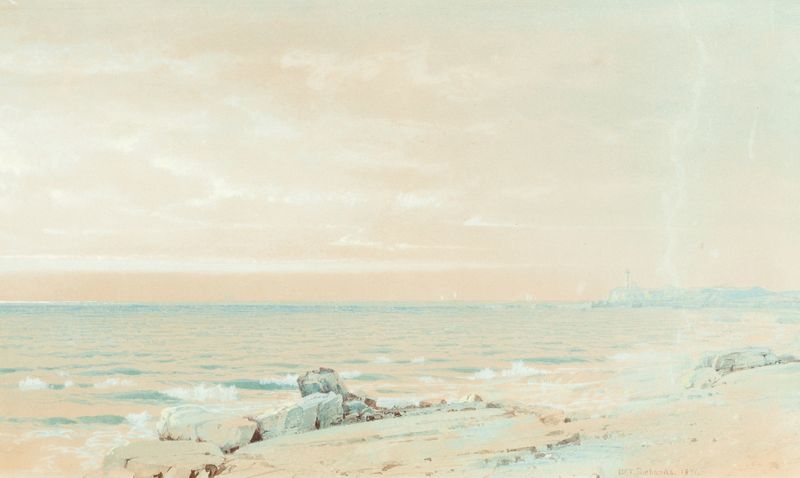
Point Judith
William Trost Richards

Moonlight on Mount Lafayette, New Hampshire
William Trost Richards

Point Judith
William Trost Richards

Dunes Near Atlantic City
William Trost Richards

Near Lands End, Cornwall
William Trost Richards
Coastal Scene
William Trost Richards

Crashing Waves
William Trost Richards





