
Rocky Mountain Sheep — History & Facts
A single ram stands sentinel atop a jagged outcrop, his horns sweeping in a bold arc that draws the viewer’s gaze upward into the swirling mountain air. The animal’s stance is not one of repose, but of challenge—his body angled toward the light, his gaze fixed on some unseen horizon. Around him, mist and snow dissolve the edges of the world, while two quieter shapes—other sheep, partly lost in the haze—remind us of the herd’s vulnerability.
The stark contrast between the ram’s sharply lit form and the shadowed void behind him heightens the sense of isolation and watchfulness, as if this moment is balanced between calm and crisis. Painted circa 1884, this work belongs to the age when American artists like Albert Bierstadt turned their eyes westward, seeking both grandeur and drama in the continent’s wild places. Such paintings were often commissioned by collectors hungry for visions of untamed nature, or by railroad companies eager to promote the mythic landscape beyond the Mississippi. Bierstadt was known for his sweeping panoramas, but here he narrows his focus, letting the animal’s presence carry the weight of the mountains themselves.
The painting’s journey has left few public traces, but its appearance in a Christie’s auction hints at a quieter afterlife, waiting for new eyes to discover its story. Stand before it and let the ram’s steady gaze pull you into the storm.
More Artworks by Albert Bierstadt

A Storm in the Rocky Mountains, Mt. Rosalie
Albert Bierstadt
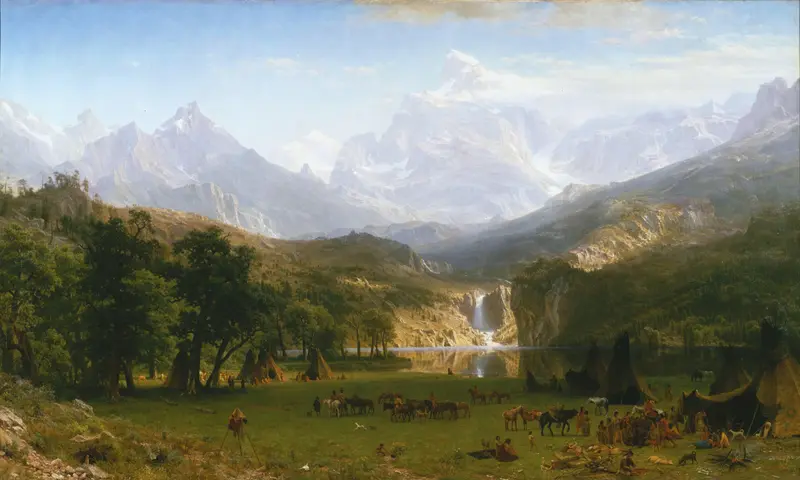
The Rocky Mountains, Lander's Peak
Albert Bierstadt
Niagara from the American Side
Albert Bierstadt
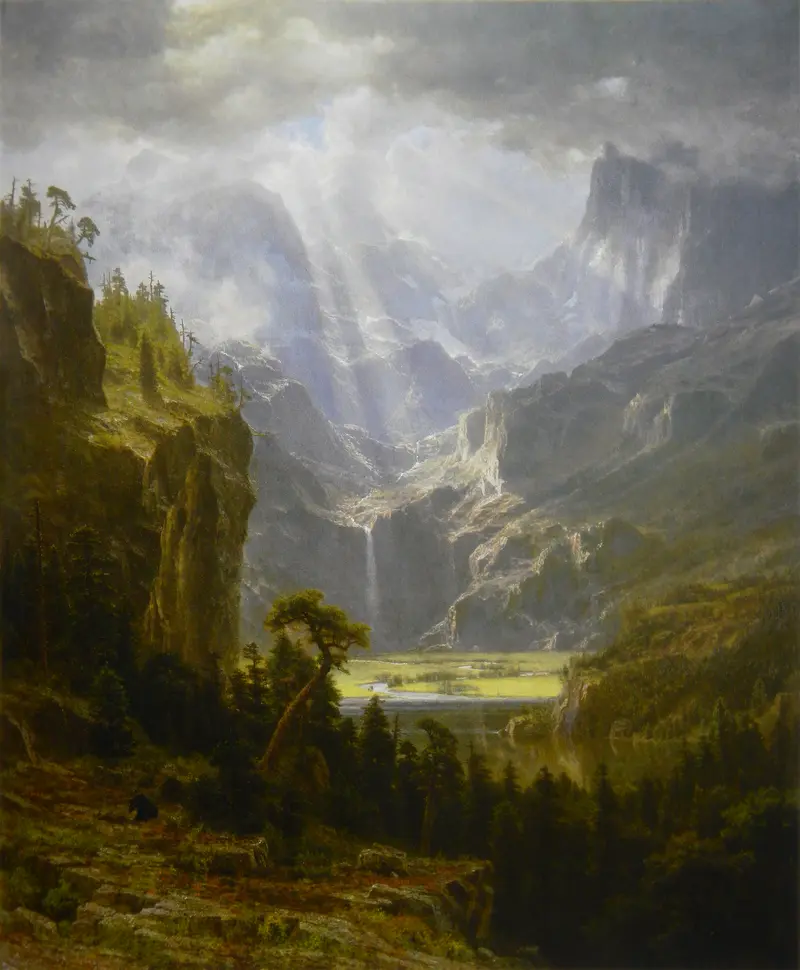
Rocky Mountains, Lander’s Peak
Albert Bierstadt

Valley of the Yosemite
Albert Bierstadt
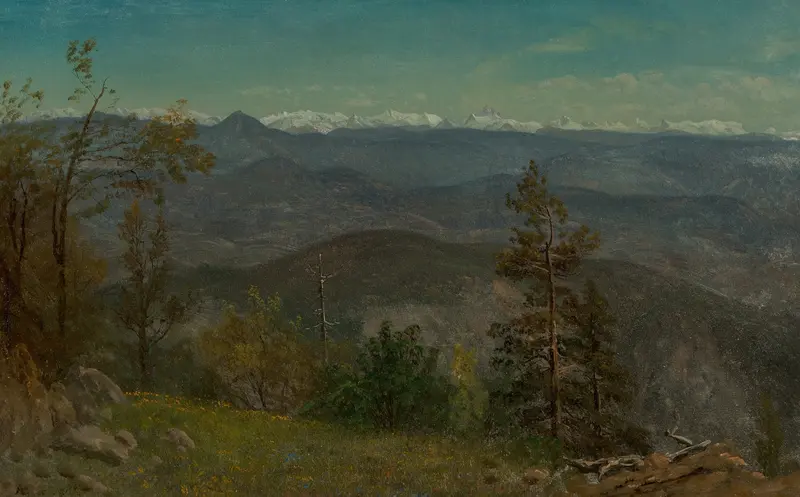
Yosemite Valley, California
Albert Bierstadt
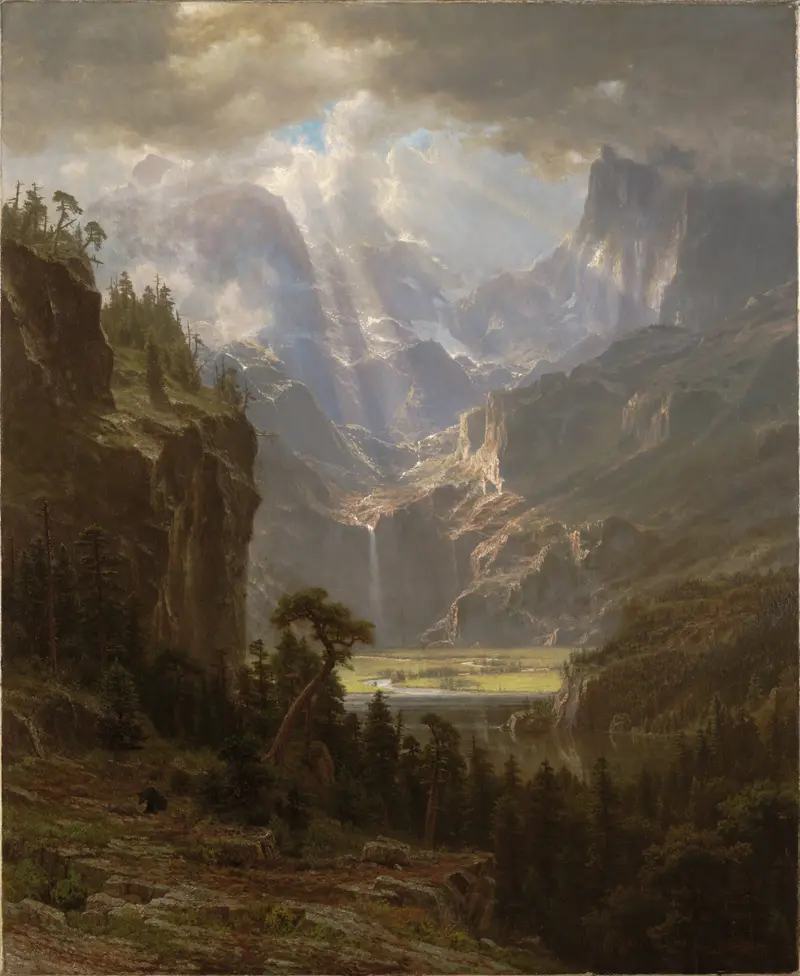
Rocky Mountains, "Lander's Peak"
Albert Bierstadt

Laramie Peak
Albert Bierstadt
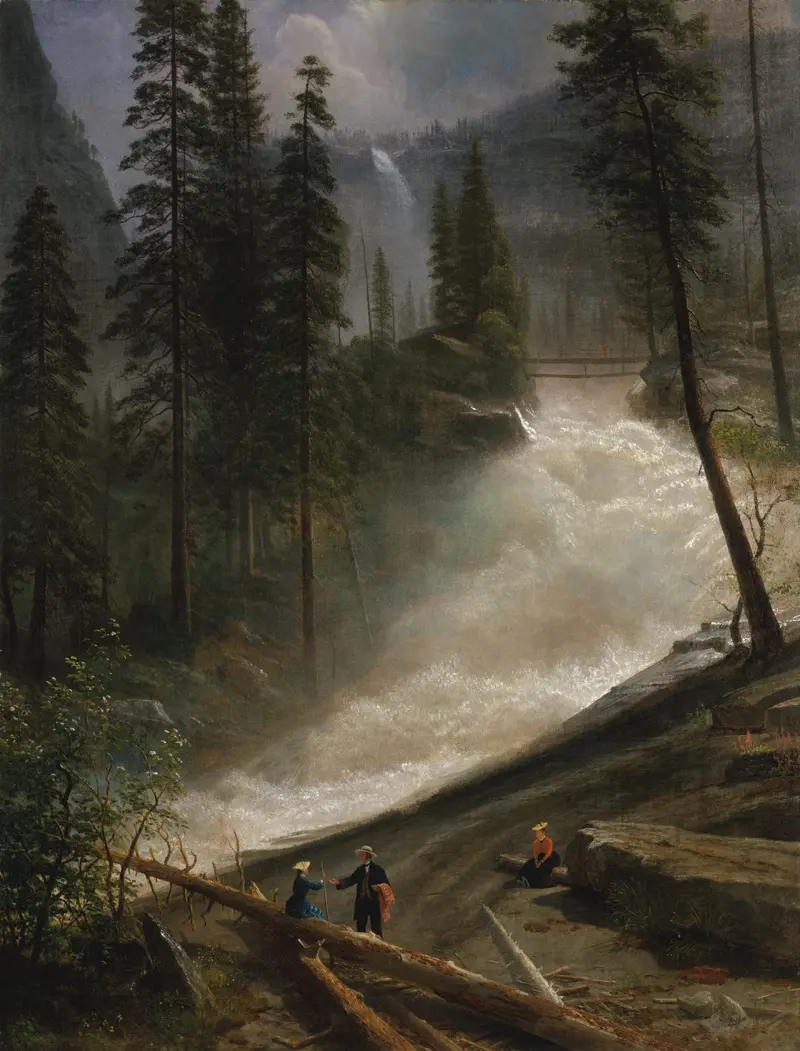
Nevada Falls, Yosemite
Albert Bierstadt
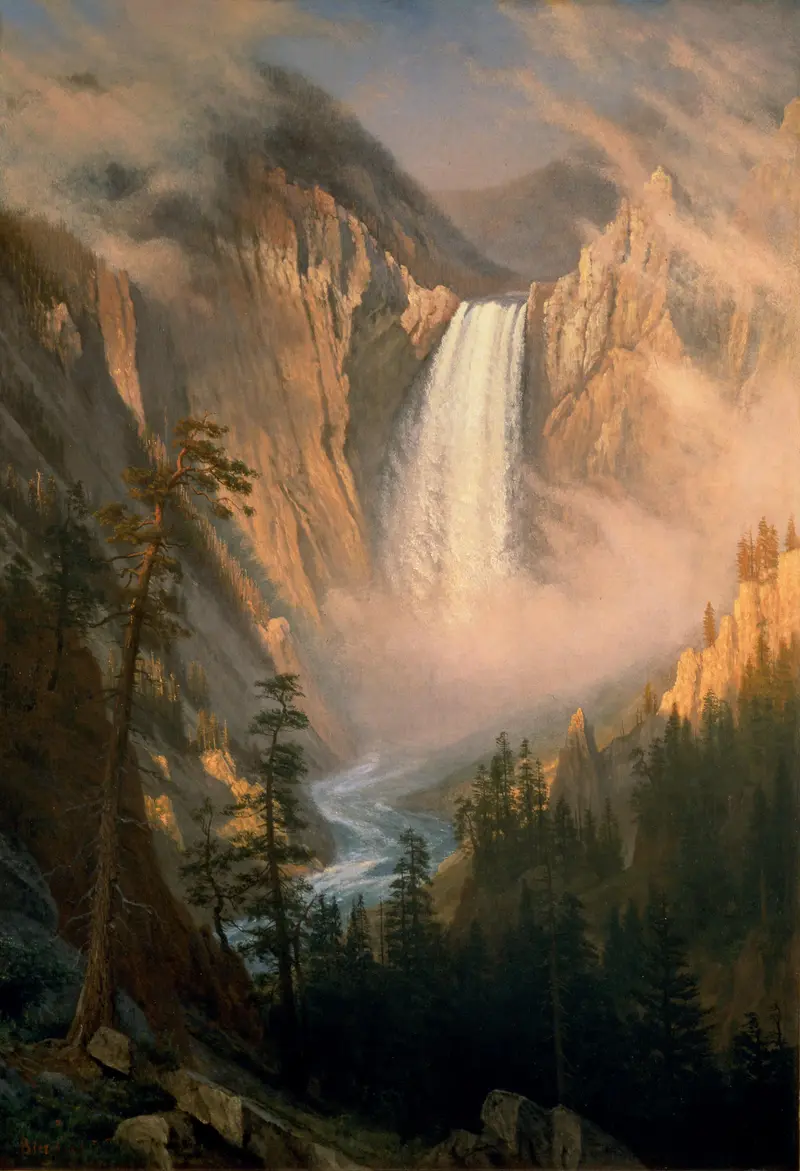
Yellowstone Falls
Albert Bierstadt





