
Rocky Pool, Bash-Bish Falls — History & Facts
Can paint confess what words never could? In Rocky Pool, Bash-Bish Falls, the essence of nature’s transformation is captured in a moment that transcends mere observation, inviting introspection and awe. Look to the center of the canvas, where the crystalline waters pool beneath the majestic cascade. Notice how the sunlight dances across the surface, creating a shimmering veil of light that draws the eye and invites the viewer to linger. The rocks, rugged and steadfast, frame the scene, while the lush greenery embraces the edges, hinting at the harmony that exists between strength and softness in nature.
Kensett’s skilled brushwork renders both the texture of the stones and the fluidity of the water, evoking a sense of movement and life within stillness. Delve deeper into the contrasts present in this work; the rough, unyielding rocks juxtapose the gentle cascade of water, which symbolizes life’s persistent flow. The interplay between light and shadow hints at the duality of existence: the serene surface of the pool conceals the turbulent waters beneath. Each element in the painting speaks to transformation—both the geological and the emotional—as time quietly shapes the landscape while offering a moment of reflection in its beauty. In 1865, when this piece was painted, John Frederick Kensett was deeply engaged in the Hudson River School movement, which celebrated the American landscape with a romantic lens.
Living in a time when the country was wrestling with change, both socially and environmentally, Kensett’s work brought forth an enduring appreciation for nature, urging viewers to connect with the sublime in a rapidly changing world.
More Artworks by John Frederick Kensett
Browse all →
White Mountains from Shelburne, NH
John Frederick Kensett

An October Day in the White Mountains
John Frederick Kensett
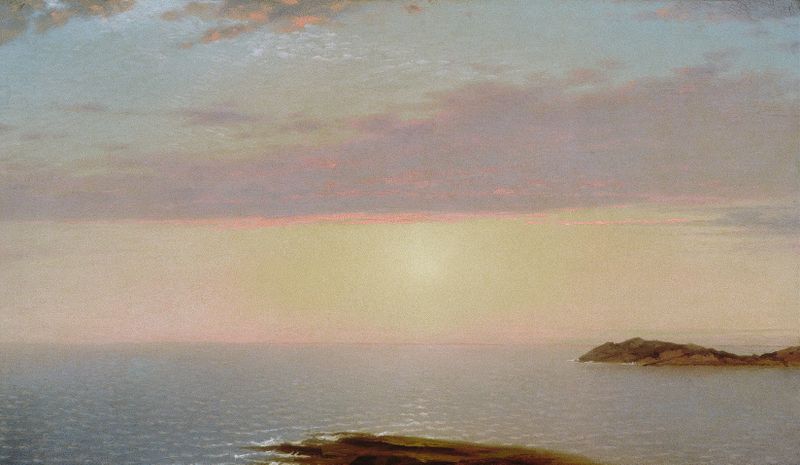
Sunset
John Frederick Kensett
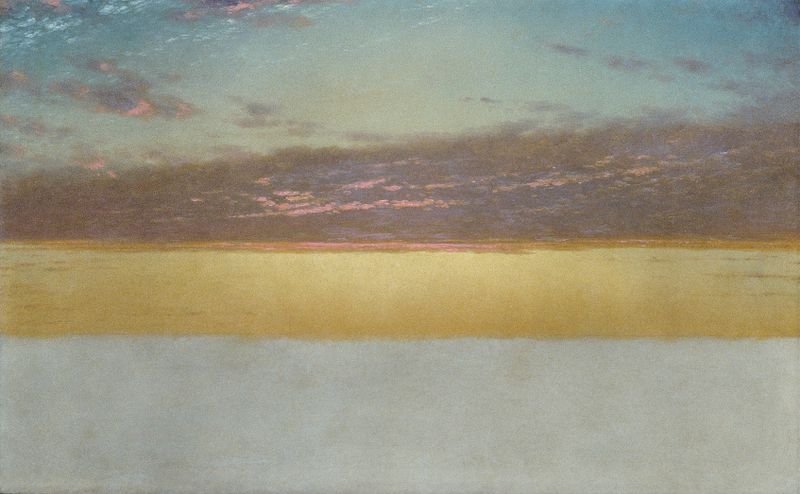
Sunset Sky
John Frederick Kensett
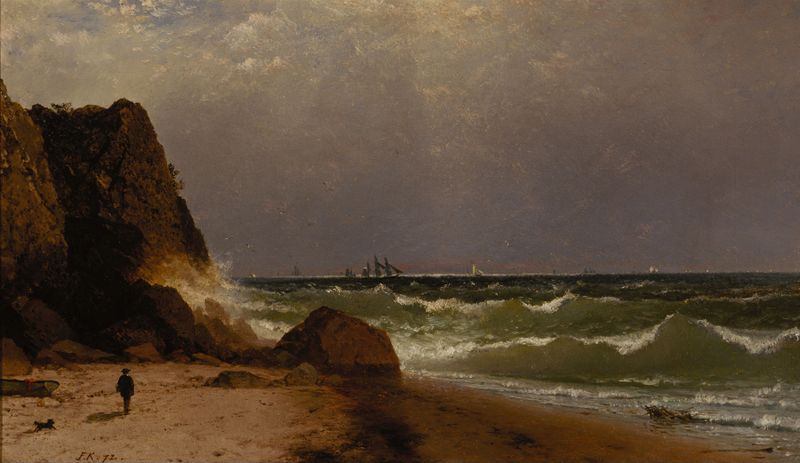
Near Newport, Rhode Island
John Frederick Kensett
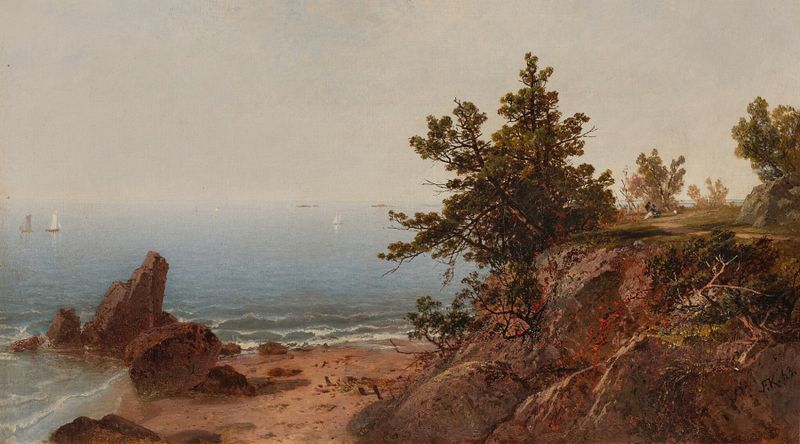
View from the Cliff (Noon on the Seashore)
John Frederick Kensett
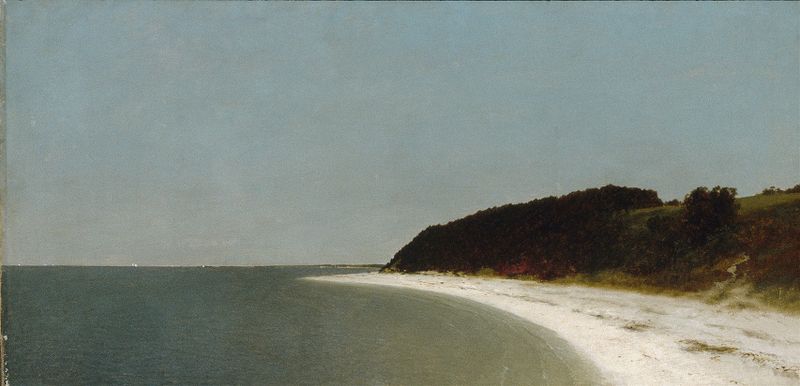
Eaton’s Neck, Long Island
John Frederick Kensett
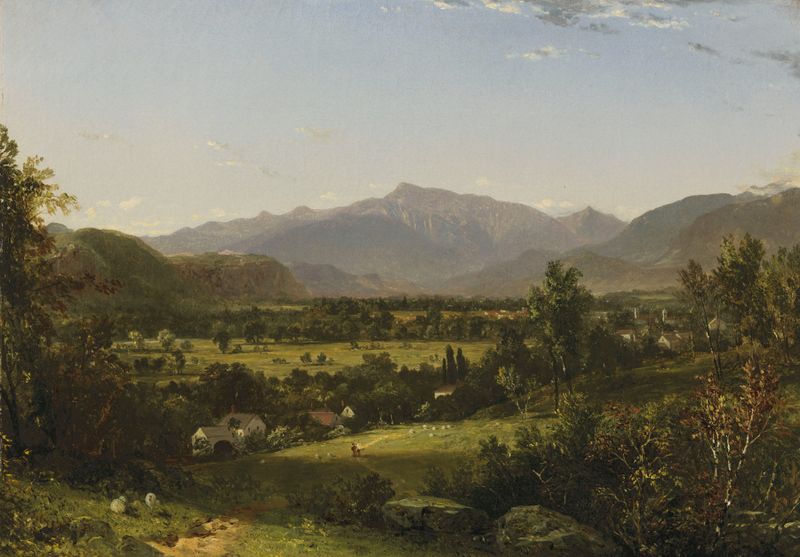
Mount Washington from North Conway
John Frederick Kensett
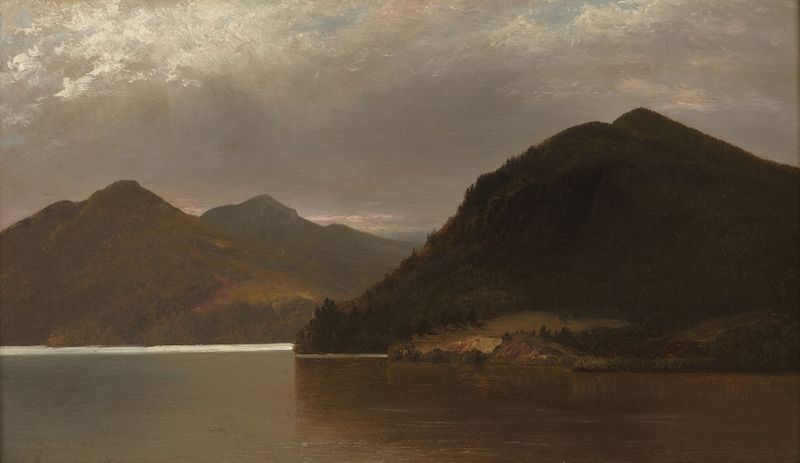
Lake George
John Frederick Kensett
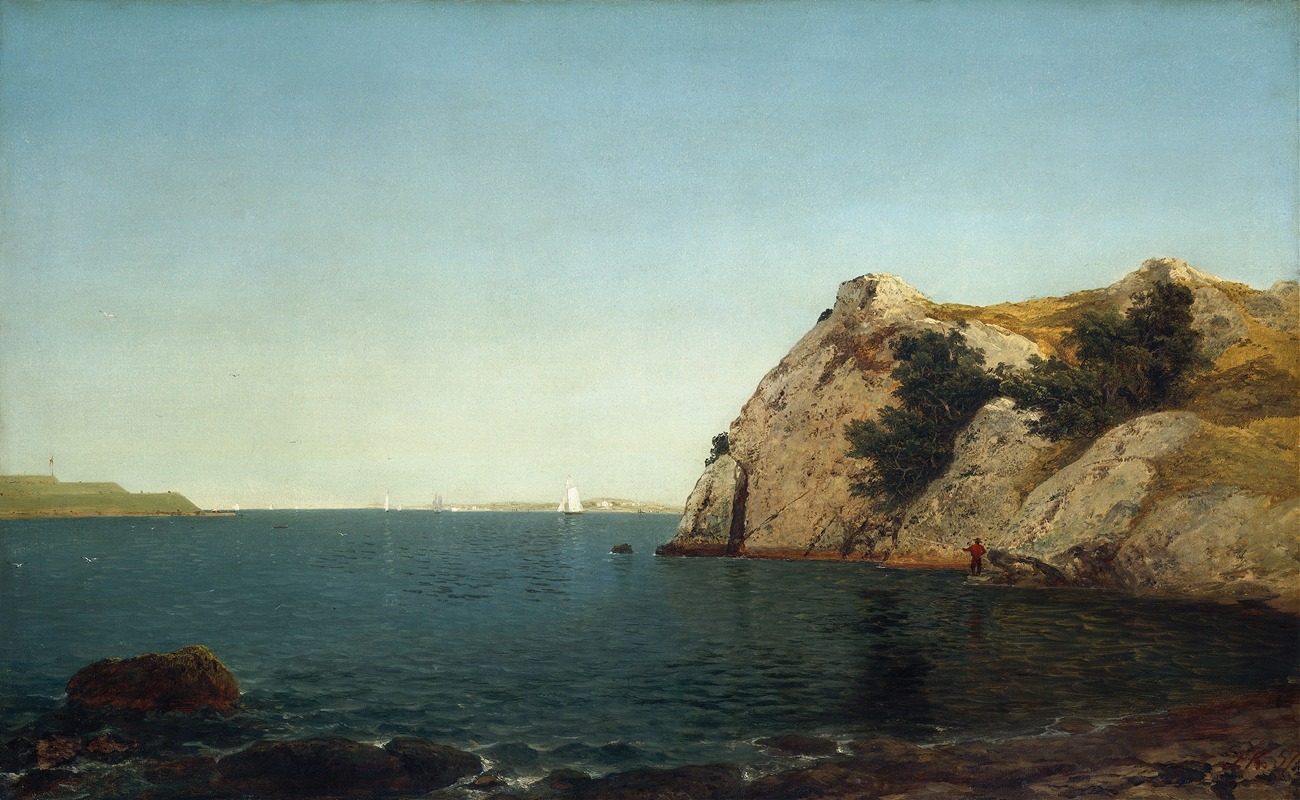
Near Newport
John Frederick Kensett





