
Rue Clovis, mur de Philippe-Auguste. — History & Facts
In the stillness of an urban alley, fate lingers in the shadows. Each cobblestone whispers stories of lives lived, while the ancient wall stands as a steadfast witness to time's passage. Here, the past and present intertwine in a fragile dance, inviting contemplation of what has been and what could be. Look to the left at the towering remnants of the Philippe-Auguste wall, its weathered stones bearing the weight of history.
Notice the interplay of light and shadow, where soft sunlight illuminates the textured surface, contrasting vividly with the dim recesses that suggest untold secrets. The color palette, dominated by earthy tones, evokes a sense of nostalgia, grounding the viewer in the essence of this Parisian street. Within this composition lies a rich tapestry of emotions. The juxtaposition of the vibrant life bustling outside the frame and the quiet solitude of the wall hints at the inexorable passage of time, exploring how destiny shapes the lives of individuals.
Each figure, rendered in delicate detail, signifies fleeting moments—existences on the brink of change, framed by the permanence of the wall that has witnessed countless stories unfold. In 1844, the artist created this piece during a transformative period for Paris, marked by rapid urbanization and artistic evolution. Bénard, a French painter influenced by Romanticism, sought to capture the essence of the city’s enduring architecture amidst the flux of modern life. As he painted, the world around him buzzed with innovation, yet his work anchored itself in the timeless narrative of place and memory.
More Artworks by Auguste-Sébastien Bénard
Browse all →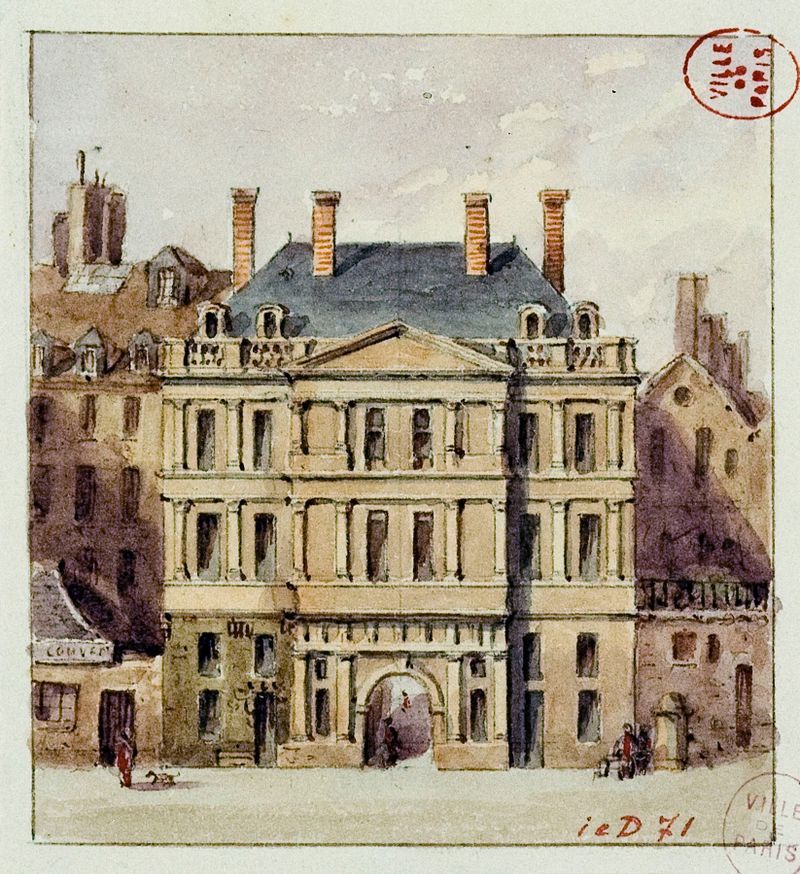
Cour de la Sainte Chapelle.
Auguste-Sébastien Bénard
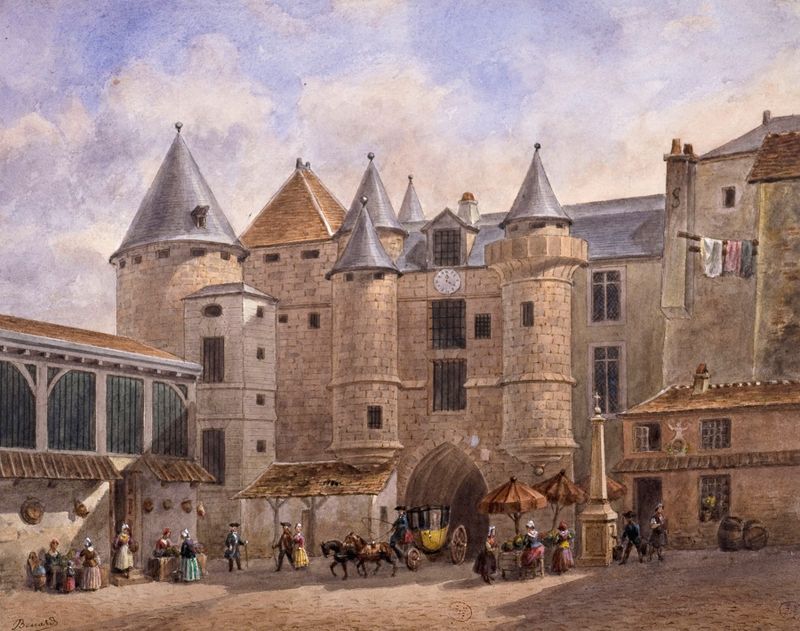
Le Grand Châtelet du XVIIIème siècle.
Auguste-Sébastien Bénard

Place de l’Hôtel de Ville.
Auguste-Sébastien Bénard

Salle souterraine du Palais de Justice.
Auguste-Sébastien Bénard

Voûtes du quai de Gesvres
Auguste-Sébastien Bénard

Monument expiatoire élevé à la mémoire du duc de Berry, à l’emplacement de l’ancien Opéra
Auguste-Sébastien Bénard
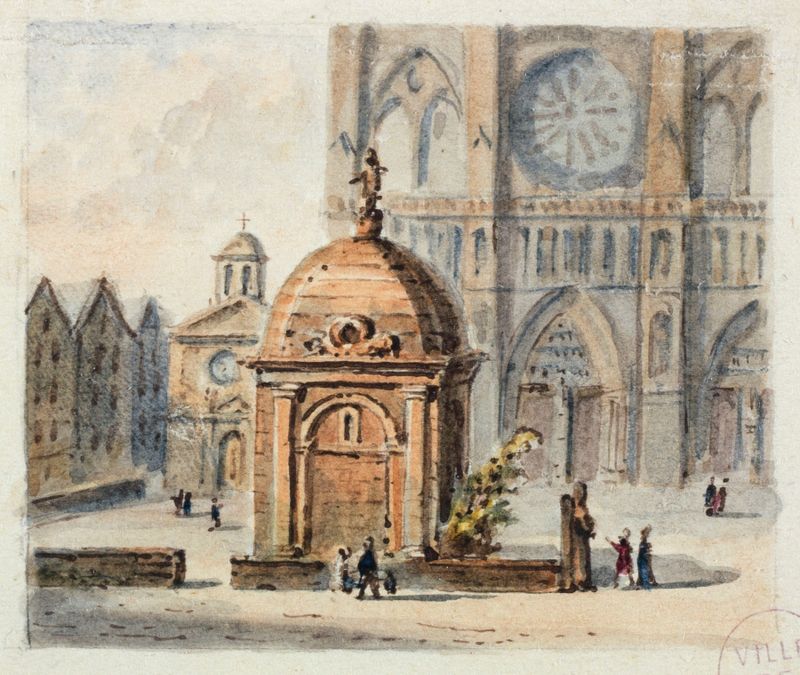
Le parvis de Notre-Dame de Paris
Auguste-Sébastien Bénard

Rue des chantres (entre le quai aux fleurs et la rue Chanoinesse).
Auguste-Sébastien Bénard

L’entrée de l’ancienne forteresse du Grand Châtelet, un jour de Carnaval
Auguste-Sébastien Bénard
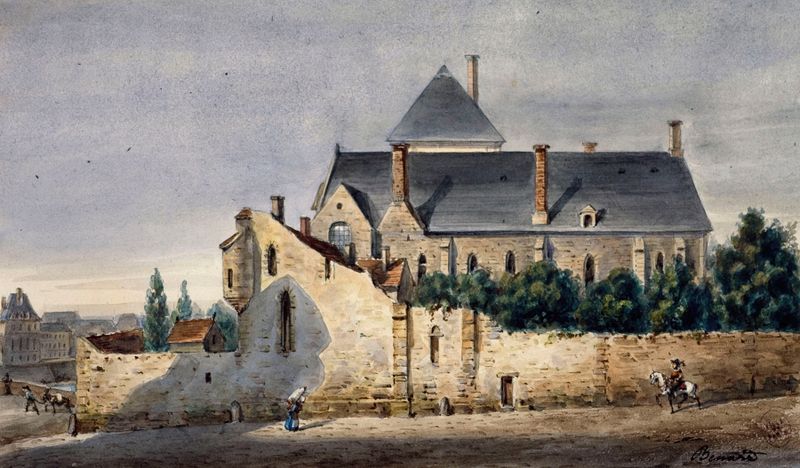
Les restes des bâtiments de l’hôtel du Petit Bourbon.
Auguste-Sébastien Bénard





