
Ruin of a Church — History & Facts
Is this a mirror — or a memory? The remnants of a once-majestic church stand solemnly against the backdrop of a fading sky, inviting contemplation of time’s passage and humanity's fleeting creations. Look to the left at the crumbling stonework, where intricate arches twist skyward, now embraced by creeping vines. The light plays delicately across the ruins, illuminating fragments of stained glass that still shimmer with echoes of color, hinting at the vibrancy that once filled this place. The muted palette of ochres and soft grays captures a melancholic beauty, expertly guiding the viewer’s gaze through the layers of decay, suggesting both loss and resilience. Beneath the surface, the painting evokes a profound tension between destruction and nostalgia.
The church, a symbol of faith and community, stands as a testament to the passage of time, its decay speaking volumes about impermanence. The scattered stones and overgrown flora offer a haunting juxtaposition—what was once revered and cherished now succumbs to nature's reclamation, reminding us that memory, much like the ruins, is a blend of clarity and obscurity. In 1849, Rudolf von Alt created this work during a period marked by a growing interest in Romanticism, which sought to explore the emotional and sublime aspects of reality. Living in Vienna, he was deeply influenced by the changing landscapes of Europe and the historical narratives that shaped cultural identities.
This artwork reflects not only his personal engagement with the past but also the broader artistic missions of his time, capturing the tension between history and memory that resonates powerfully today.
More Artworks by Rudolf von Alt
Browse all →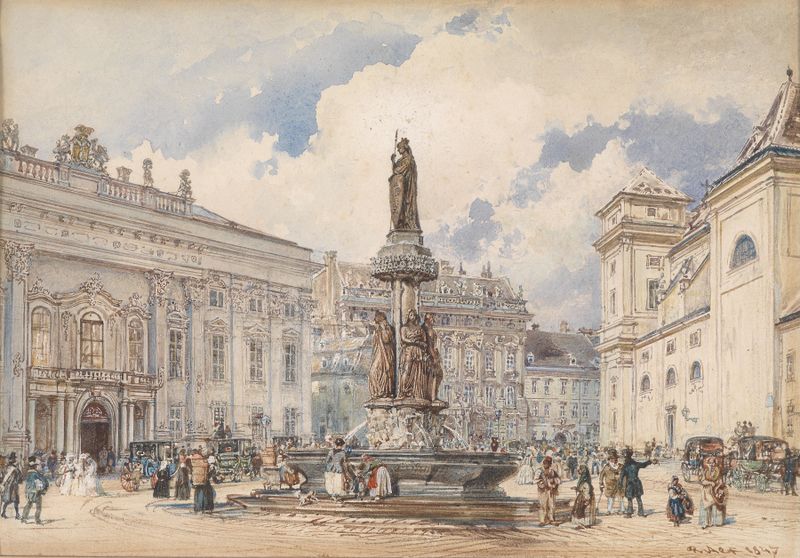
Freyung mit Austriabrunnen
Rudolf von Alt

The Interior of the Cathedral of Saint Stephen at Vienna
Rudolf von Alt
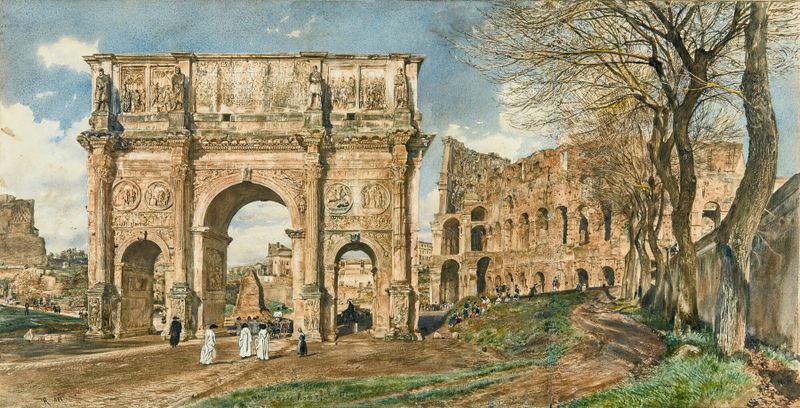
The Arch Of Constantine And The Colosseum, Rome
Rudolf von Alt

The Fleischmarkt in Vienna with the Greek-Orthodox Church of the Holy Trinity
Rudolf von Alt

Der Stephansdom in Wien
Rudolf von Alt
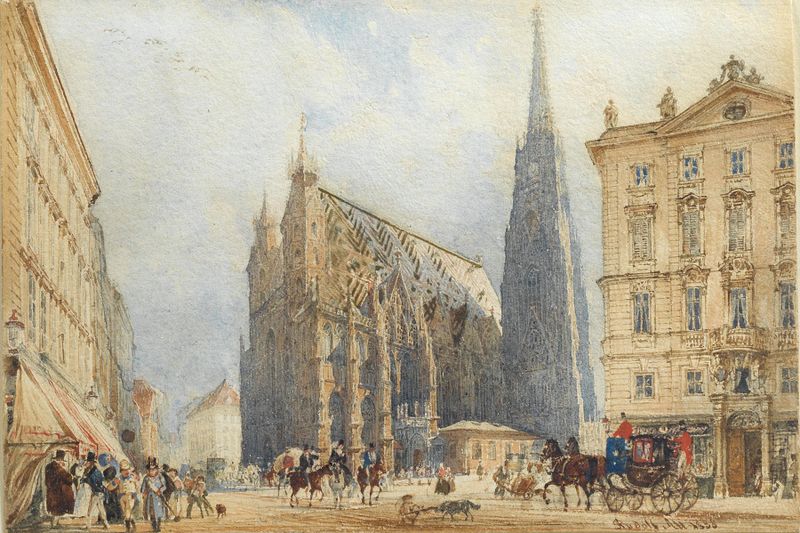
Stephansplatz
Rudolf von Alt
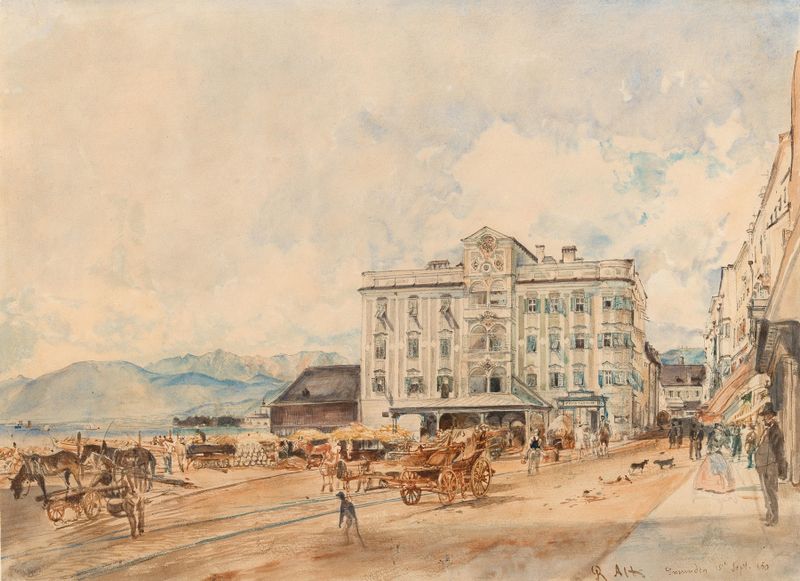
The Town Hall in Gmunden
Rudolf von Alt

View from Sant’Onofrio on Rome
Rudolf von Alt
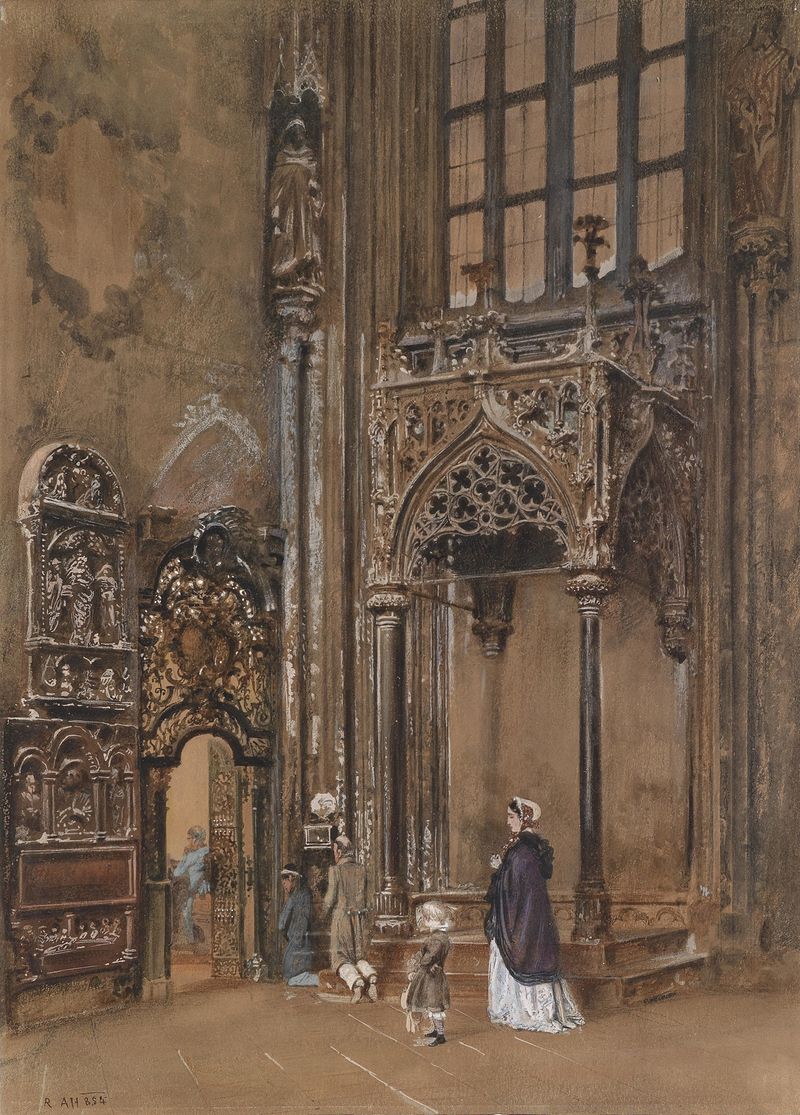
Kircheninneres
Rudolf von Alt
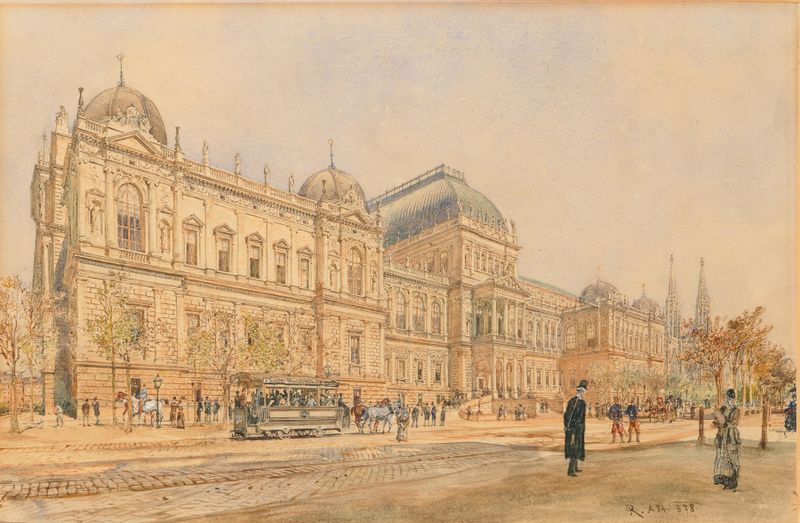
The University of Vienna on the Ringstrasse, with Horse-Drawn Tram and Figures, a view of the building still under construction in 1878 (erected by Heinrich von Ferstel 1873-1884)
Rudolf von Alt
More Architecture Art
Browse all →
The statue of Liberty
Frédéric Auguste Bartholdi

View of Houses in Delft, Known as ‘The Little Street’
Johannes Vermeer

View of Houses in Delft, Known as ‘The Little Street’
Johannes Vermeer

The Cathedral in Rouen. The portal, Grey Weather
Claude Monet

The yellow house
Vincent van Gogh

The Church in Auvers-sur-Oise, View from the Chevet
Vincent van Gogh