
Ruins of the abbey of Villers — History & Facts
In a fleeting moment, we are reminded of how nostalgia can wrap its tender fingers around our memories, intertwining past and present in a silent embrace. Begin your exploration on the left side of the canvas, where light softly caresses the crumbling stone of the abbey. Notice how the artist deftly captures the intricate details of the architecture, where vines creep over the remnants, merging the man-made with nature. The muted palette of earthy browns and soft greens evokes a sense of decay and beauty, inviting the viewer to linger on the harmony found within ruins.
The contrasting brightness of the sky above creates a poignant sense of hope amidst the desolation, leading the eye to wander through the landscape. Delve deeper into the emotional layers of this work. The juxtaposition of light and shadow reflects the passage of time, hinting at both loss and enduring beauty. Each cracked wall and weathered stone tells stories of those who once sought solace within, now overshadowed by the relentless march of time.
The surrounding foliage represents nature’s reclamation, a gentle reminder of resilience, as it wraps around the remnants of human endeavor, suggesting that life, though fleeting, continues in different forms. François Stroobant painted this piece between 1852 and 1878 during a period of personal reflection and artistic exploration. Living in Belgium, he sought to capture the romanticism of ruins, a popular theme in the mid-19th century as artists began to embrace the interplay between nature and architecture. This work reflects his engagement with the nostalgic longing for a bygone era, as the world around him rapidly industrialized and transformed.
More Artworks by François Stroobant
Browse all →
Interior of the church of Notre Dame du Sablon at Brussels
François Stroobant
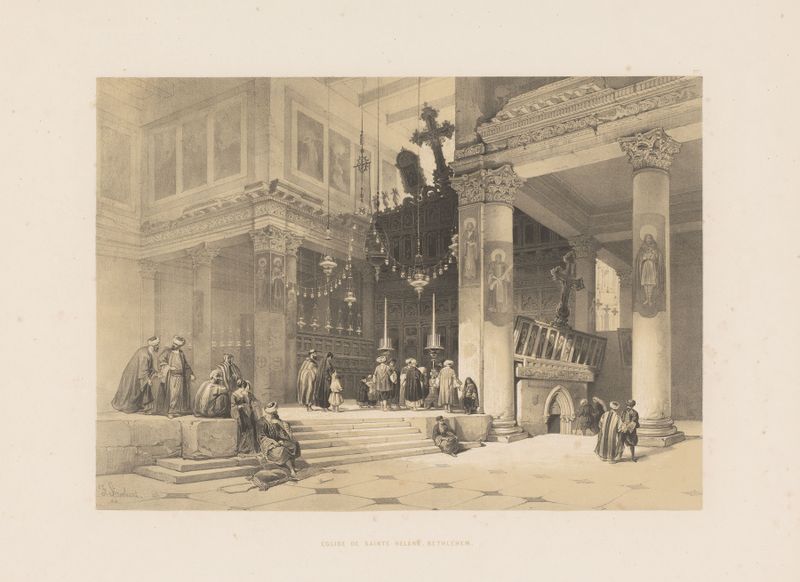
Église de sainte Hélène. Bethléhem
François Stroobant
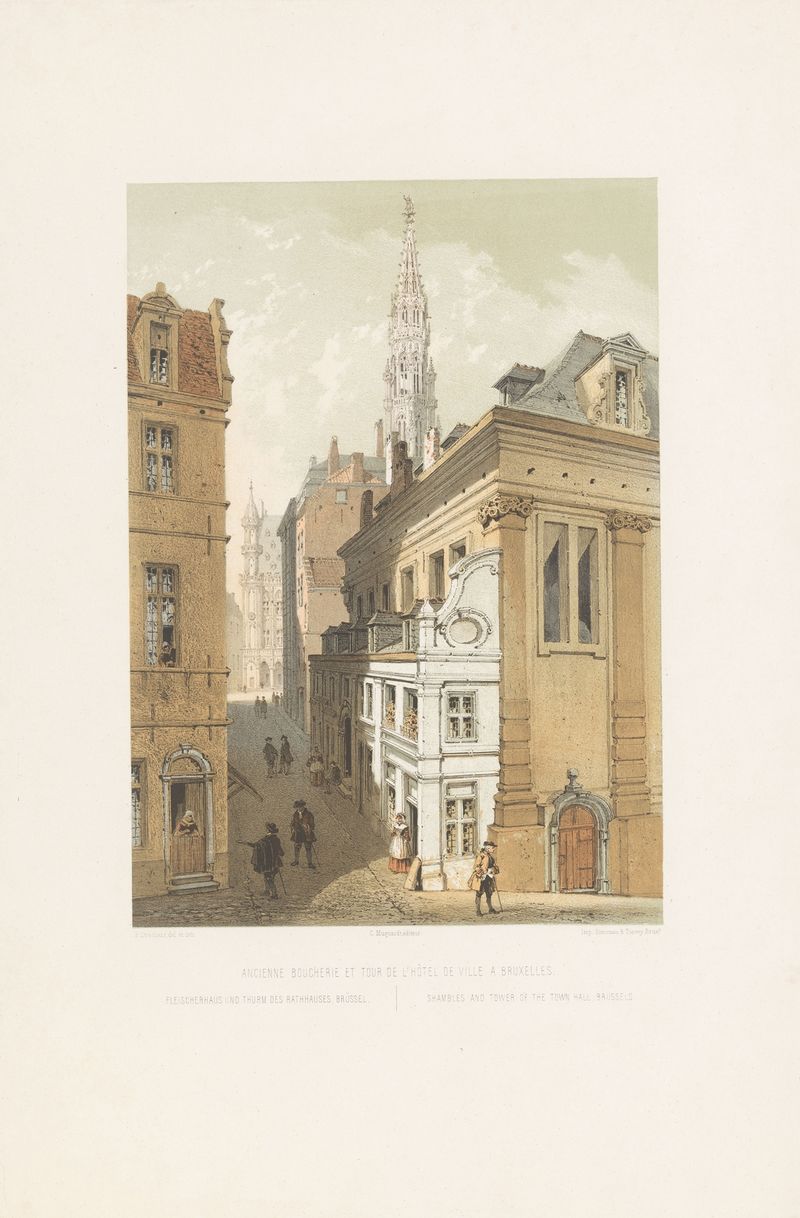
Shambles and tower of the town hall, Brussels
François Stroobant

Intérieur de l’église Grecque du Saint-Sépulcre
François Stroobant
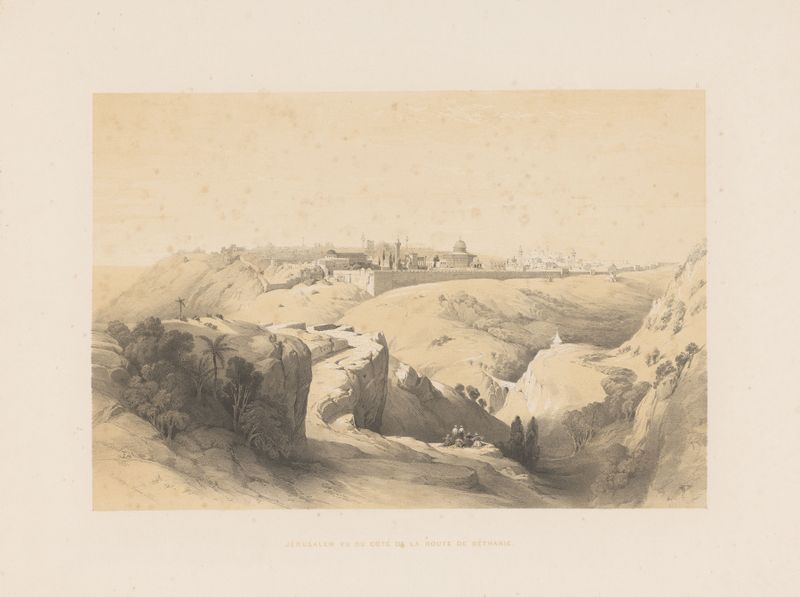
Jérusalem vu du coté de la route de Béthanie
François Stroobant

Le tabernacle du Saint-Sépulcre
François Stroobant

Town hall Brussels
François Stroobant

Fontaine de Jacob à Sichem
François Stroobant
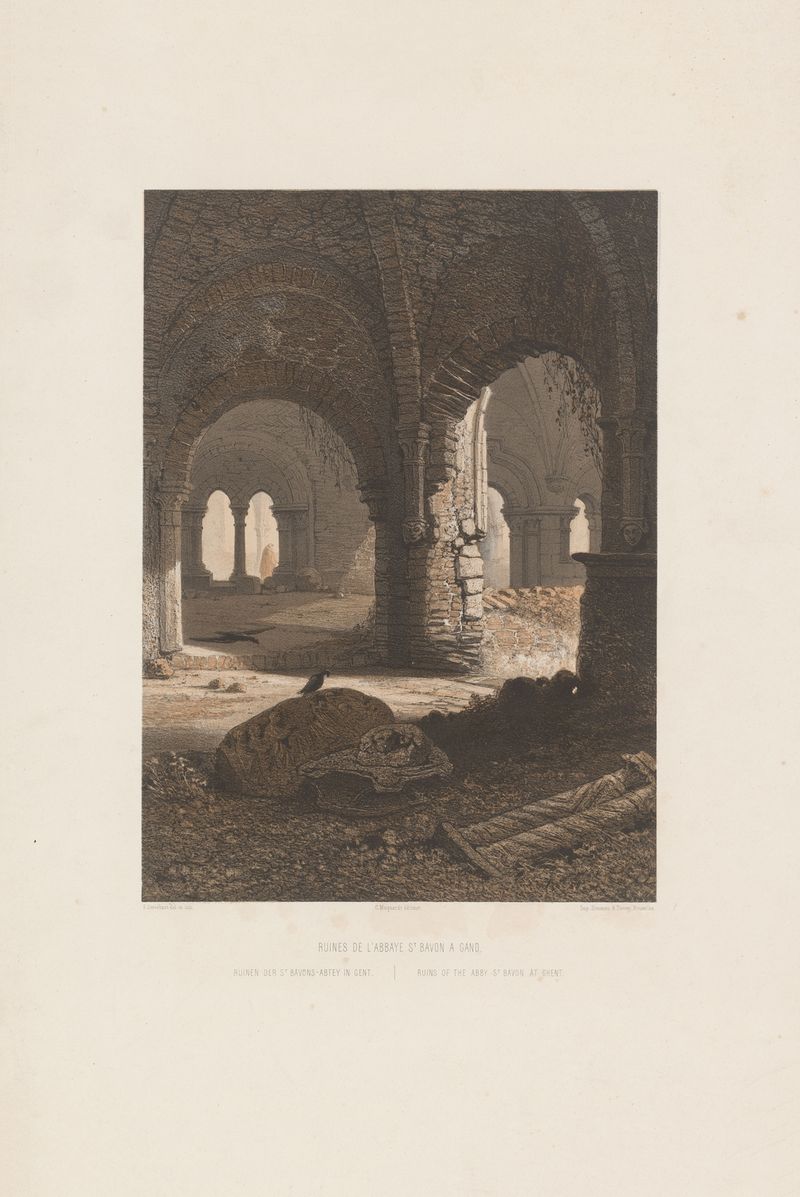
Ruins of the abby St Bavon at Ghent
François Stroobant

Vue de Naplouse
François Stroobant
More Architecture Art
Browse all →
The statue of Liberty
Frédéric Auguste Bartholdi

View of Houses in Delft, Known as ‘The Little Street’
Johannes Vermeer

View of Houses in Delft, Known as ‘The Little Street’
Johannes Vermeer

The Cathedral in Rouen. The portal, Grey Weather
Claude Monet

The yellow house
Vincent van Gogh

The Church in Auvers-sur-Oise, View from the Chevet
Vincent van Gogh