
Saint Cecilia (Rallis) — History & Facts
The first thing that draws the viewer in is the hush that seems to settle over the figure, as if she is caught mid-prayer or deep in a silent reverie. Her eyes are closed, her lips gently pressed together, and the entire composition is pared down to her head and shoulders, set against a bare, unadorned ground. The artist uses soft washes of color to create the folds of her veil and gown, letting the delicate transparency of the fabric frame her face.
Gold accents at her headband and collar catch the light, hinting at sanctity and status, while the absence of background or narrative detail keeps all attention on her inward focus. This is a portrait not of action, but of stillness and inner life. Painted between 1873 and 1909, Saint Cecilia (Rallis) belongs to a period when artists across Europe were turning to themes of devotion and the early Christian saints, often as a way to explore ideals of purity and spiritual beauty. Works like this were typically commissioned for private devotion or as part of the growing interest in historicizing religious subjects with archaeological accuracy.
Theodoros Ralli, active in the late nineteenth century, was known for his refined technique and his ability to evoke atmosphere with the lightest touch of the brush. History has kept few traces of this particular painting’s journey, but its quiet dignity and careful restraint invite the viewer to linger, searching for meaning in the gentle shadows and closed eyes.
More Artworks by Theodoros Ralli

The Sleeping Concubine
Theodoros Ralli
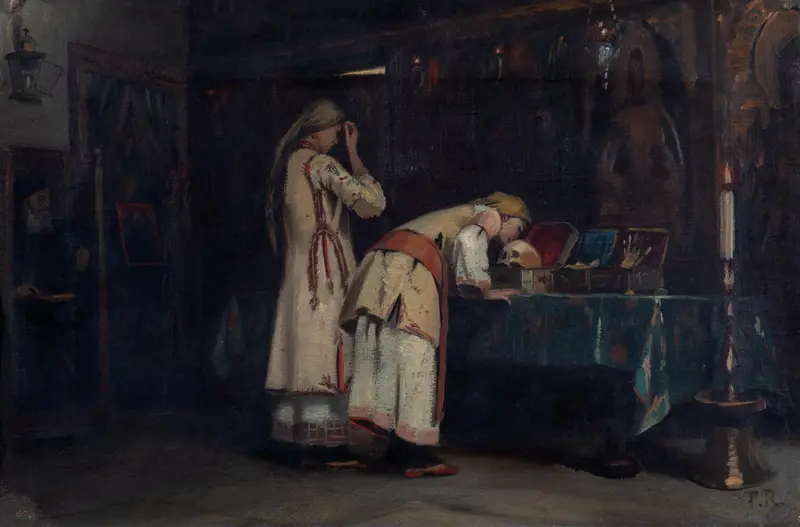
Holy Relics
Theodoros Ralli
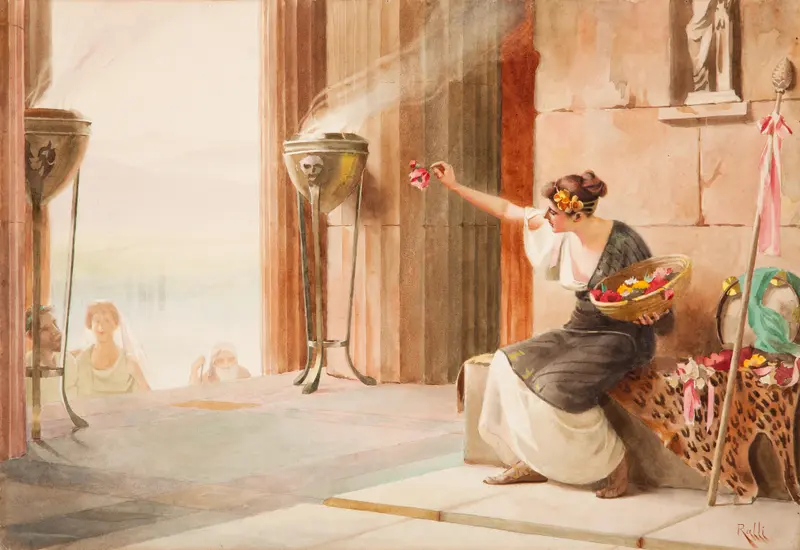
Flower Seller at the Parthenon
Theodoros Ralli
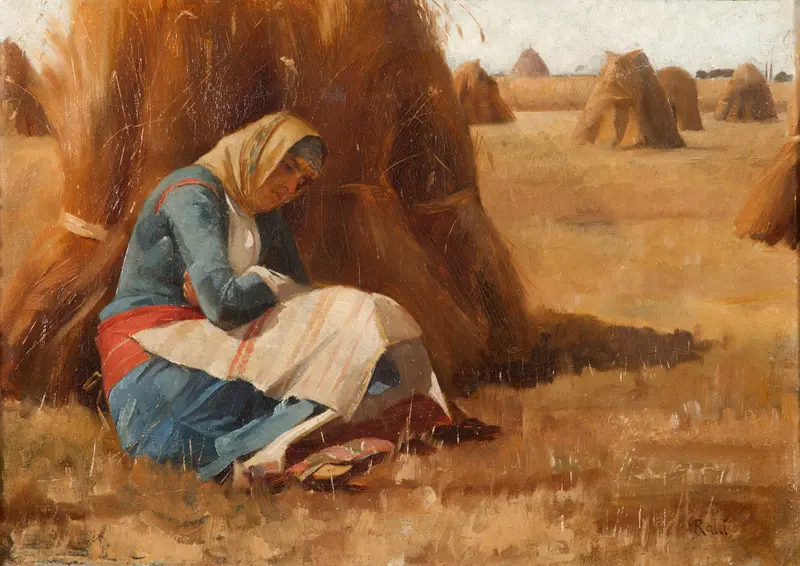
Resting by a Haystack
Theodoros Ralli
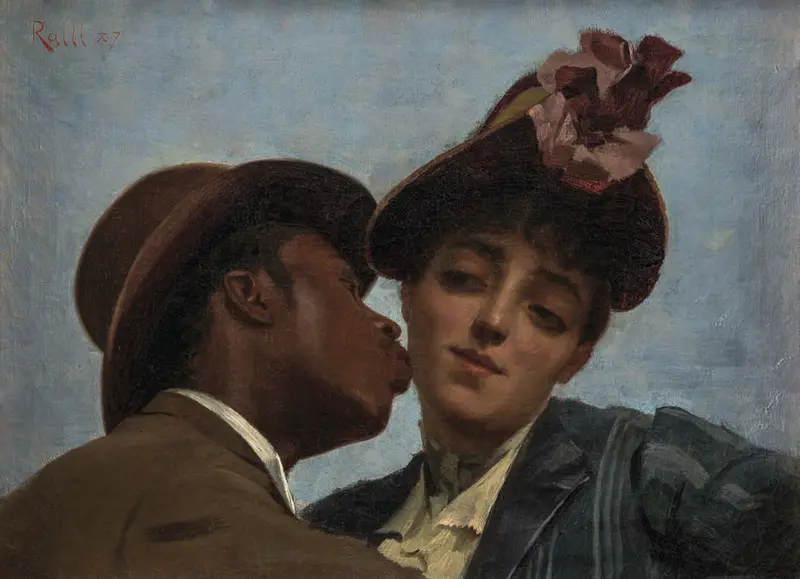
The Kiss (Ralli)
Theodoros Ralli
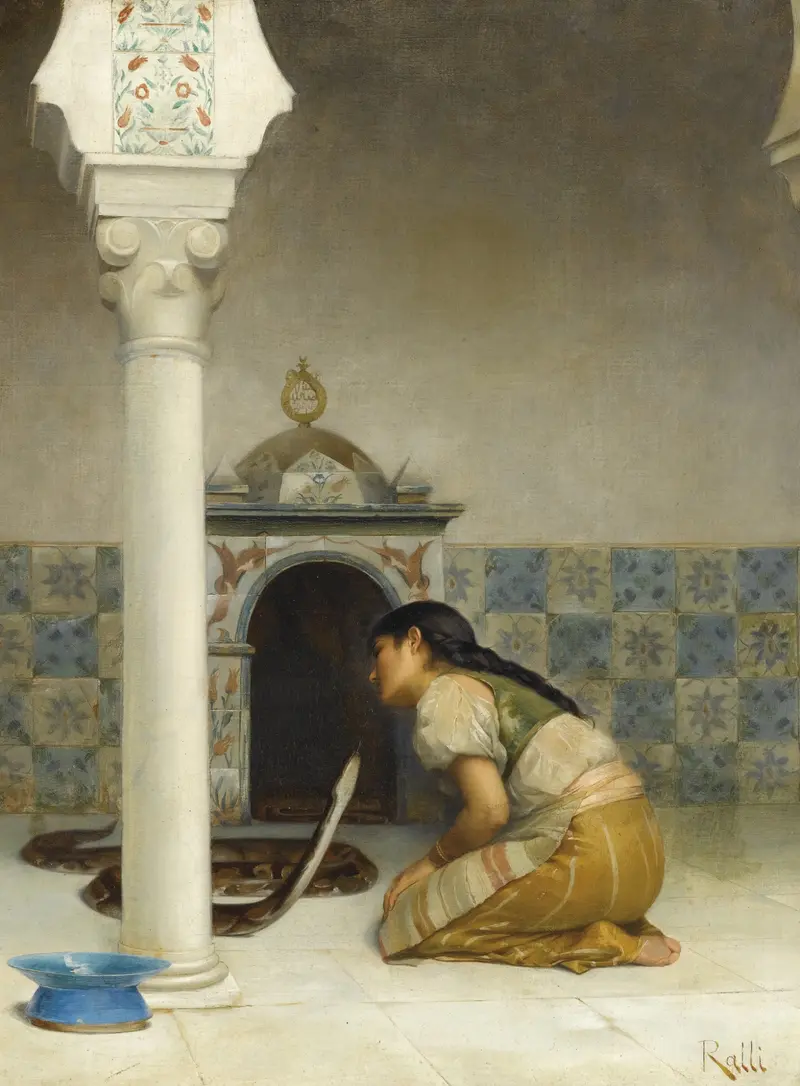
The Sacred Serpent
Theodoros Ralli
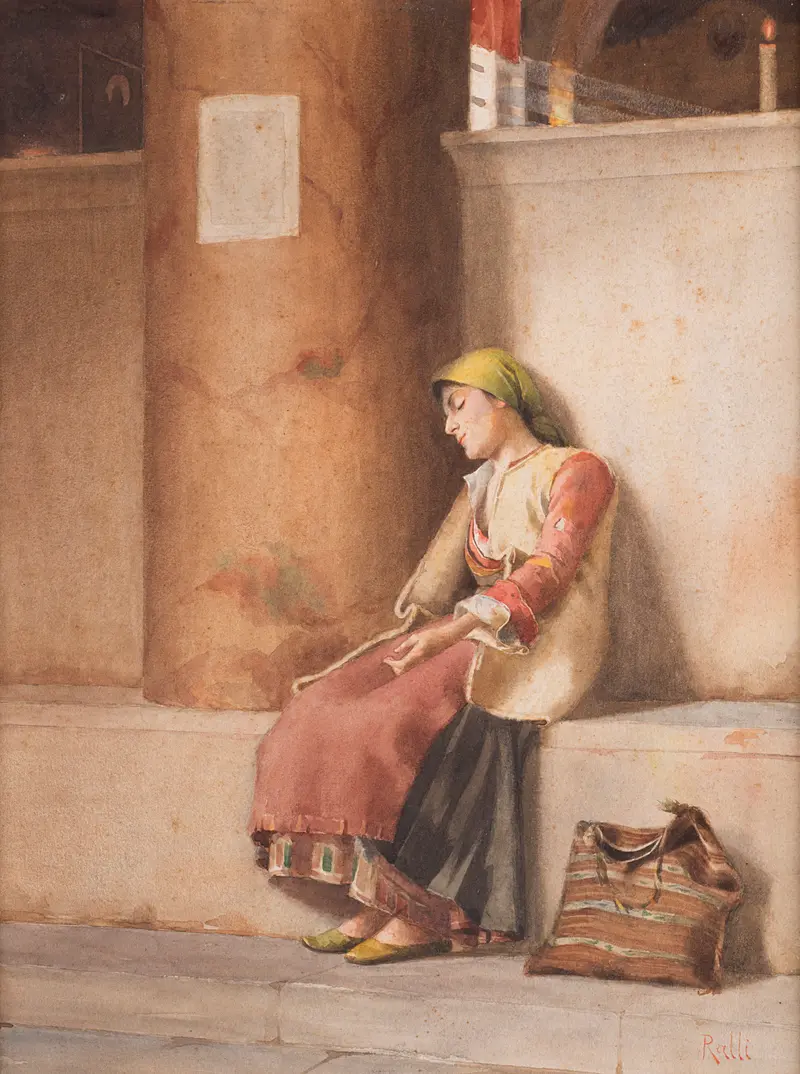
A Moment of Reflection
Theodoros Ralli
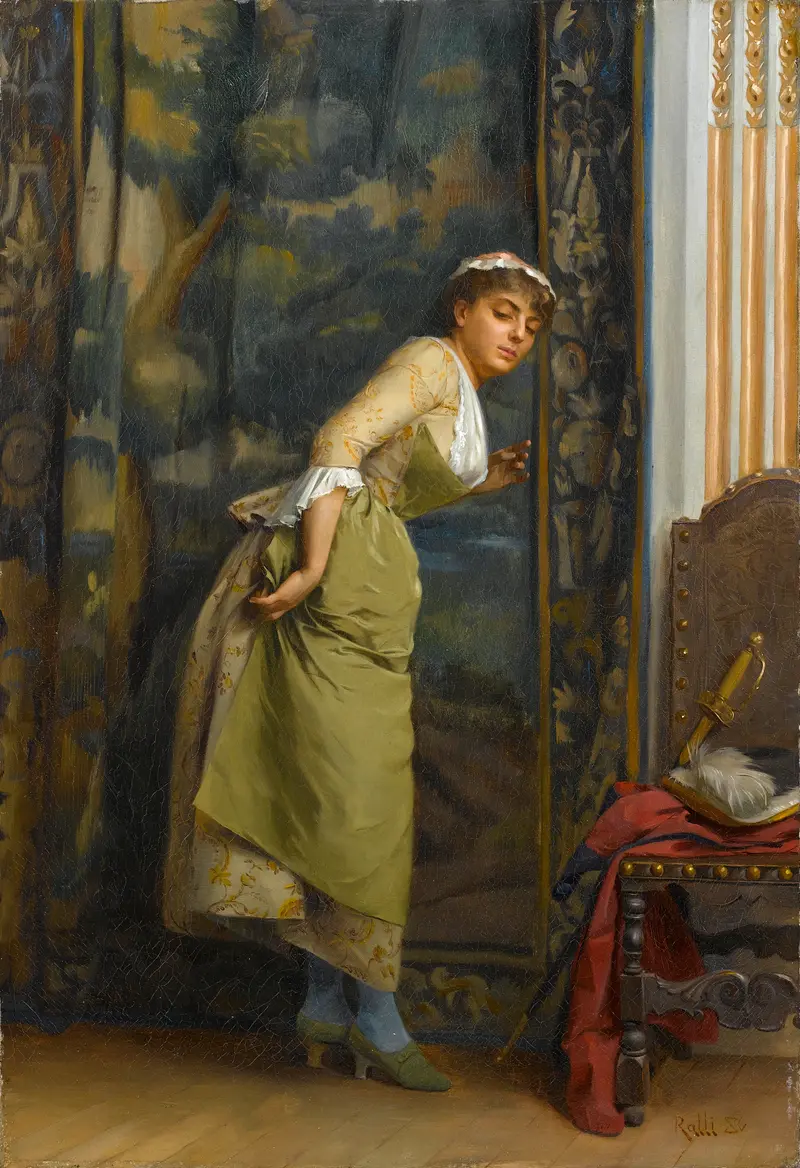
Eavesdropping (Ralli)
Theodoros Ralli
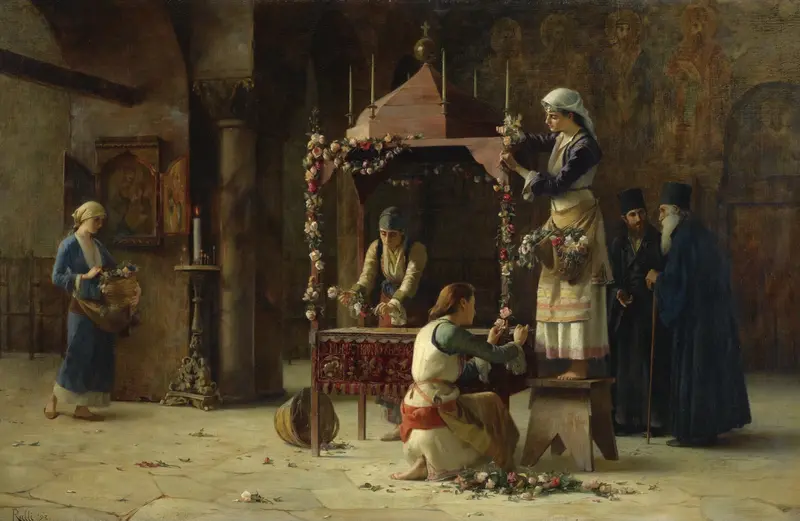
Holy Friday, Greece
Theodoros Ralli
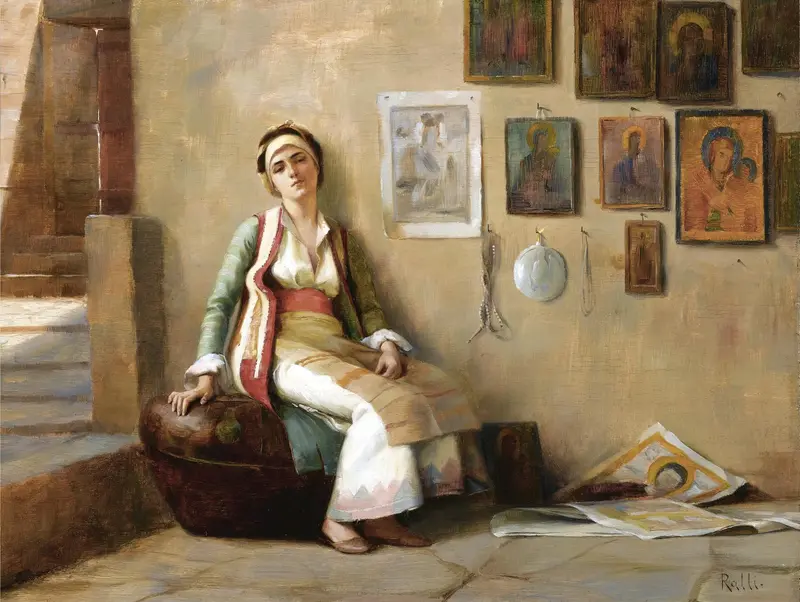
A Moment's Rest
Theodoros Ralli





