
Saint Francis’ Grotto on Monte Verna — History & Facts
Who listens when art speaks of silence? In Saint Francis’ Grotto on Monte Verna, color becomes a powerful voice, evoking the serene dialogue between nature and the spiritual. Here, the canvas invites us into a moment where the vibrant hues suggest a landscape teeming with life, yet it whispers with an air of tranquility that urges contemplation. Look to the foreground, where gentle strokes of green grass cradle the rocks. This lush landscape is punctuated by warm ochres and soft blues, leading your gaze deeper into the grotto’s embrace.
Notice how the dappled light filters through the trees, casting a gentle glow on the saint's humble abode. The play of light and shadow creates an inviting atmosphere, as if the scene itself breathes with a meditative rhythm, emphasizing the harmony between the divine and the natural world. Within this peaceful tableau, hidden meanings emerge through the juxtaposition of light and darkness. The lush greenery symbolizes the flourishing of faith, while the rugged stones hint at the trials of the human spirit.
The scene suggests a sacred conversation, one where solace can be found amidst life's struggles. The carefully rendered details, from the fluttering leaves to the textured rocks, speak of both solitude and interconnectedness in a divine presence. In 1801, Jacob Philipp Hackert painted this serene work during a time of personal and artistic reflection while residing in Italy. Influenced by the Romantic movement, he aimed to capture the sublime beauty of nature and its spiritual dimensions.
This canvas stands as a testament to his skill in harmonizing landscape with profound thematic depth, resonating with viewers who seek solace in both art and the natural world.
More Artworks by Jacob Philipp Hackert
Browse all →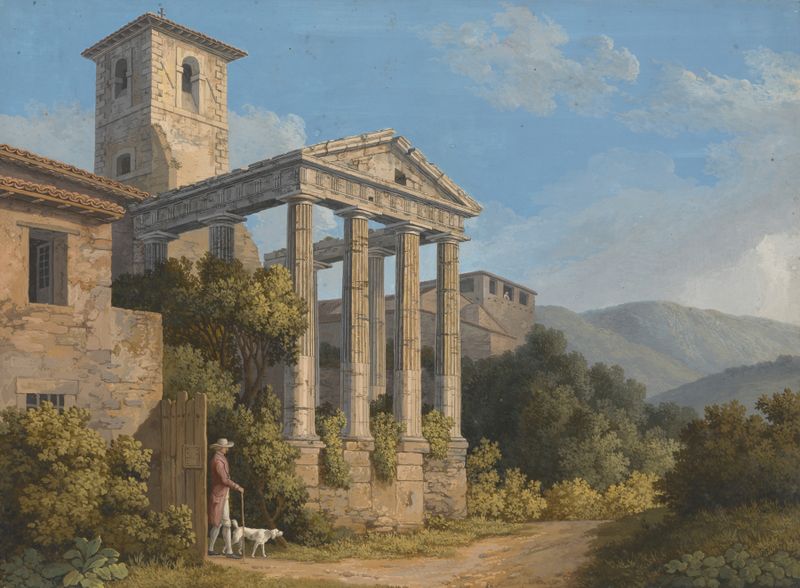
The Temple of Hercules in Cori near Velletri
Jacob Philipp Hackert
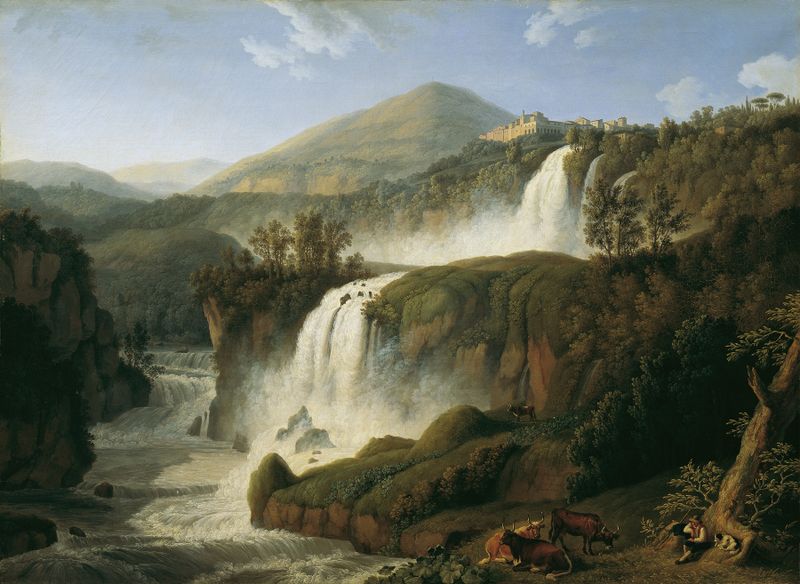
Der große Wasserfall von Tivoli bei Rom
Jacob Philipp Hackert
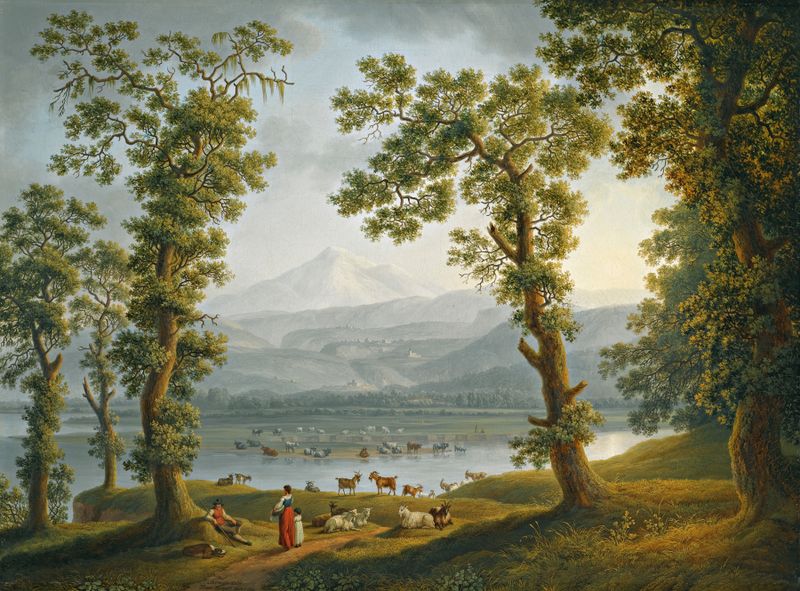
A View Across The Volturno River Towards Alife, Piedimonte Matese, And The Matese Mountains Rising Beyond
Jacob Philipp Hackert
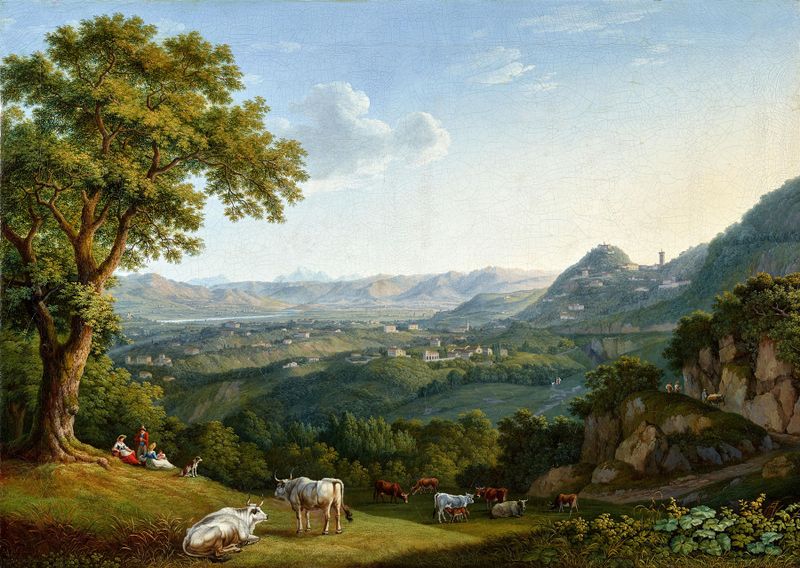
Blick auf das Arnotal und Fiesole
Jacob Philipp Hackert

A View Along The Valley Of The River Tiber Towards Poggio Mirteto, And Beyond The Sabine Mountains Lit Up By The Evening Sun
Jacob Philipp Hackert
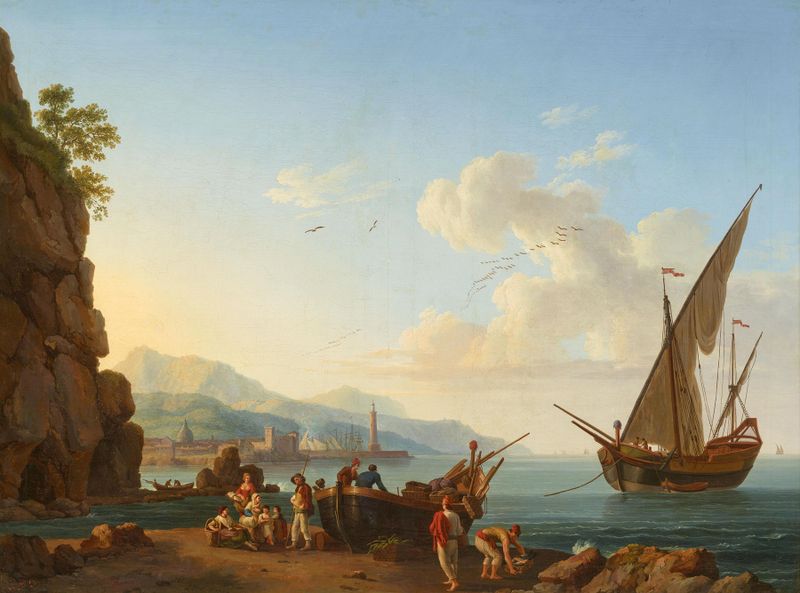
Fischer mit Boot am Strand
Jacob Philipp Hackert

Paysage
Jacob Philipp Hackert
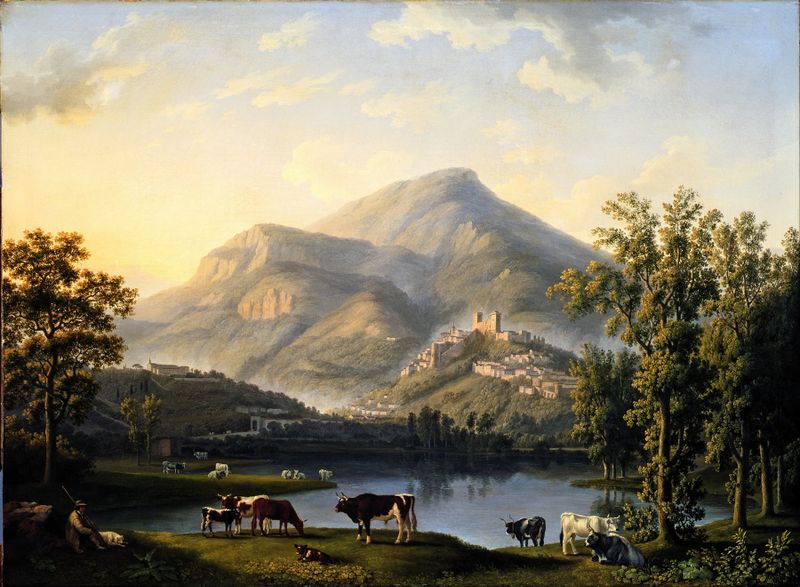
Veduta d’Itri (Landscape with a View of Itri)
Jacob Philipp Hackert
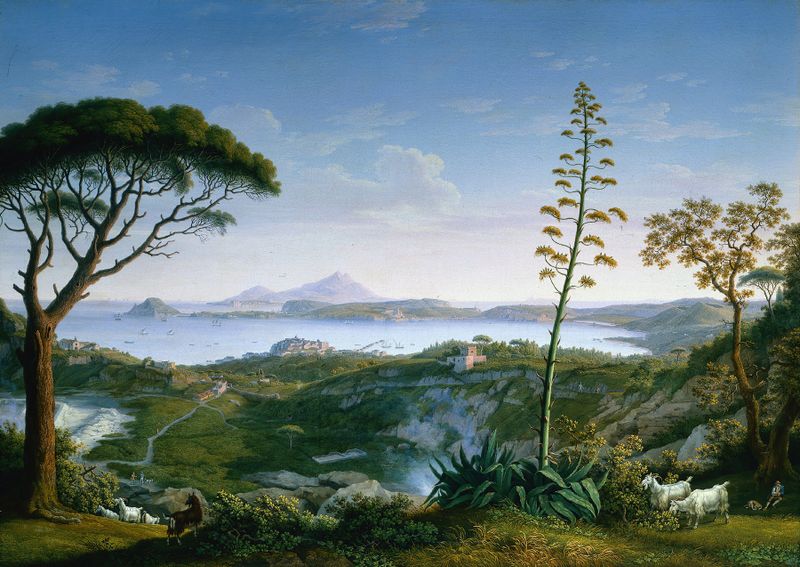
View of the Gulf of Pozzuoli from Solfatara
Jacob Philipp Hackert

View of Saint Peter’s in Rome
Jacob Philipp Hackert





