Saint-Nic (grève près de Pen-Trez) — History & Facts
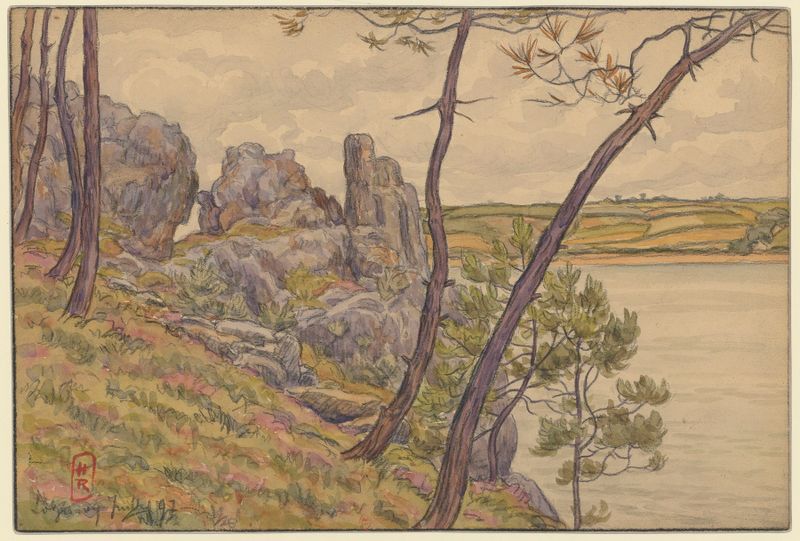
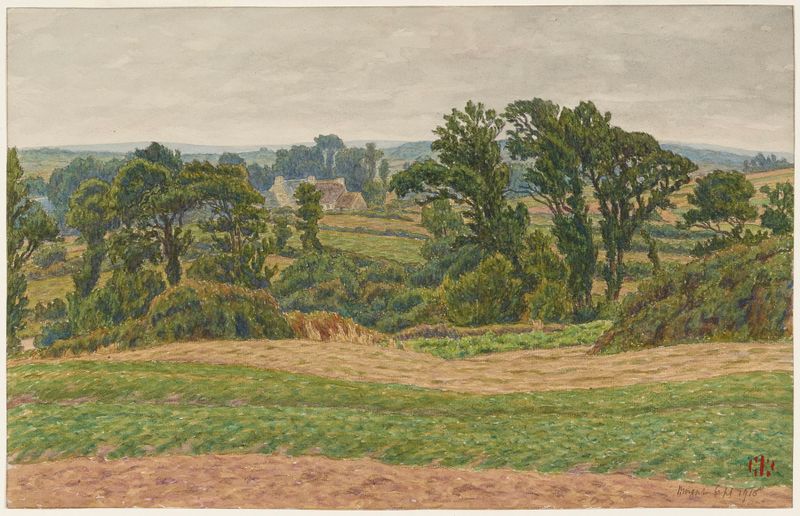
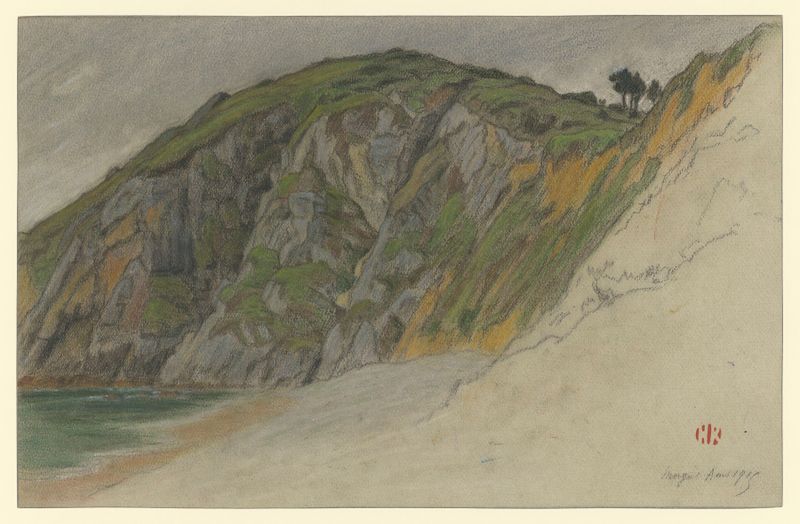
What if beauty was never meant to be finished? In Henri Rivière's Saint-Nic (grève près de Pen-Trez), the delicate interplay of land and sea echoes this sentiment, inviting contemplation on loss and incompleteness. Look to the center of the canvas, where the rugged shoreline meets turbulent waves, swirling in shades of indigo and emerald. The artist employs soft, impasto strokes to evoke the churning energy of the ocean, while the muted sky looms overhead, its cloud formations suggesting a brewing storm. The interplay of light and shadow highlights the rocky outcrops, creating a dramatic contrast that draws the eye and enhances the sense of impending change. The figures of solitary fishermen, mere silhouettes against the vastness of nature, embody both connection and isolation.
Their smallness starkly contrasts with the grandeur of the landscape, provoking a sense of vulnerability in the face of nature's relentless power. This tension permeates the work, suggesting a poignant reminder of the temporal nature of human endeavors and the inevitable passage of time. In 1912, while Rivière painted this piece, he was immersed in the Symbolist movement and reflecting on the transformative power of the natural world. Living in Paris and influenced by the coastal scenery, he sought to capture the fleeting beauty of his surroundings as he grappled with personal and artistic loss.
This period marked a turning point in his career, as he began to explore more emotive and abstract interpretations of landscapes, forever reshaping his artistic voice.