Salome — History & Facts
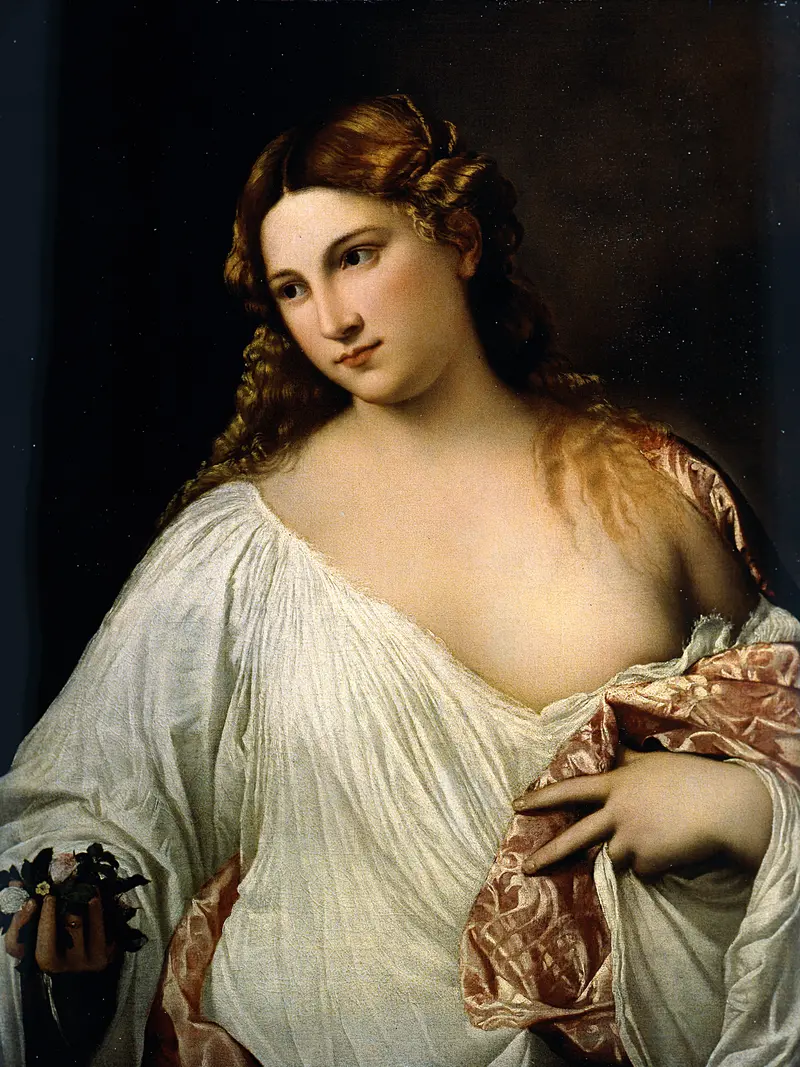
Few subjects in Renaissance art have inspired as many versions as the story of Salome, and Titian’s Salome of 1550 stands among the most enigmatic. The painting’s authorship and precise meaning have sparked debate for centuries, with some early catalogues even confusing it with depictions of Judith. What sets this work apart is not only its ambiguous iconography, but also the way Titian chose to paint Salome herself: not as a villain, but as a figure of beauty and introspection, inviting viewers to question her role in the biblical drama. At the heart of the scene is the moment after Salome has received the head of John the Baptist, a story drawn from the Gospels.
She holds the platter with the severed head, her face turned away, eyes lowered—not in triumph, but in apparent contemplation or regret. The sumptuous fabrics and pearls she wears signal her royal status, while the delicate handling of flesh and fabric is typical of Titian’s Venetian style. Unlike Caravaggio’s later, brutal Salome with the Head of John the Baptist, Titian’s version is quieter, almost meditative, focusing on the psychological complexity of the protagonist rather than the violence of the act. The early provenance of Salome is uncertain, as is often the case with works from Titian’s mature period, when his studio produced several paintings on similar themes for various patrons across Europe.
Scholars believe this work was painted around 1550, a time when Titian was at the height of his fame and frequently experimenting with both religious and mythological subjects. Over the centuries, the painting has been attributed alternately to Titian himself and to his workshop, reflecting the blurred lines between master and assistants in Venetian practice. Today, Salome is recognized as a significant example of Titian’s late religious painting, notable for its psychological depth and painterly richness, and it continues to invite new interpretations from viewers and historians alike.