
Sand Dunes, Harlech, North Wales — History & Facts
Did the painter know this moment would outlive them? In the captured solitude of the landscape, an echo of grief lingers, as if the sands themselves weep for lost time. Look to the foreground, where the undulating dunes stretch languidly across the canvas, their golden hues kissed by the tender light of a fading day. Notice how the painter's brushstrokes evoke a sense of movement, the grains shifting subtly, reminiscent of fleeting memories. The delicate interplay of shadows and light creates a rhythmic dance, guiding your gaze toward the distant hills that loom like guardians over the serene scene. Yet, beneath this tranquil surface, emotional tensions simmer.
The vastness of the dunes invites contemplation, evoking feelings of isolation and longing. Each curve and contour seems to speak of the weight of unspoken farewells, while the cool blues of the sky contrast sharply with the warmth of the earth, symbolizing the dichotomy of hope and despair. In this landscape lies a melancholic beauty, suggesting that even in stillness, life’s sorrows are inextricably woven into its fabric. In 1899, George Elbert Burr created this piece during a time of great personal reflection.
Living in New Jersey and influenced by the American Impressionist movement, he sought to capture the ephemeral moments of nature. As the world shifted and modernity encroached, Burr's devotion to the serene and untouched landscapes served as both a tribute and a farewell to a quieter past, encapsulating the longing for connection amid the changes of the times.
More Artworks by George Elbert Burr
Browse all →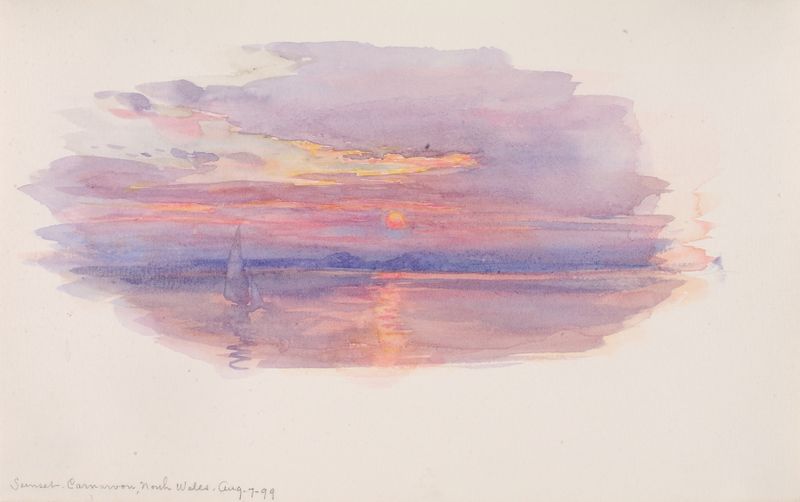
Sunset, Caernarvon, North Wales
George Elbert Burr

From Pincio, Rome
George Elbert Burr

The Wye near Ross
George Elbert Burr

Venice
George Elbert Burr
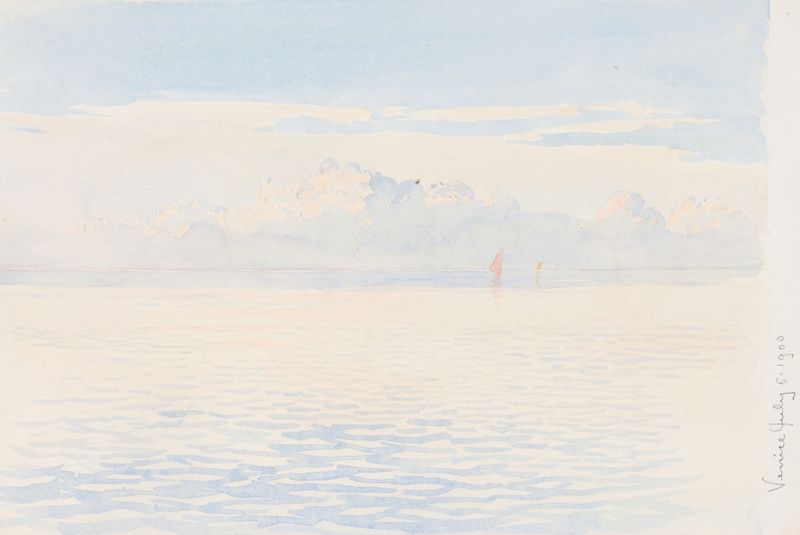
Venice II
George Elbert Burr

Shore at Pwllheli, N. Wales
George Elbert Burr

The Wye at Wilton Castle (Wales)
George Elbert Burr

Venice
George Elbert Burr

Criccieth, N. Wales II
George Elbert Burr

Old Bridge near Bettws-y-Coed, North Wales
George Elbert Burr





